
Cultural Highlight: Exploring Museums In South Korea
Hello everyone, this is Hunter Panoch, and I am Gammelgården Museum’s Social Media and Marketing Director. I’ve had a lifelong passion for traveling, cultural immersion, and sharing world cultures, so that’s what I am here to share with you today. We here at Gammelgården Museum take special interest in highlighting stories and history from all around the world through our own focus on Swedish immigration to the Midwest, the promotion of immigration stories, and our yearly rotating cultural festival, Spelmansstämman, which highlights a different culture every year.
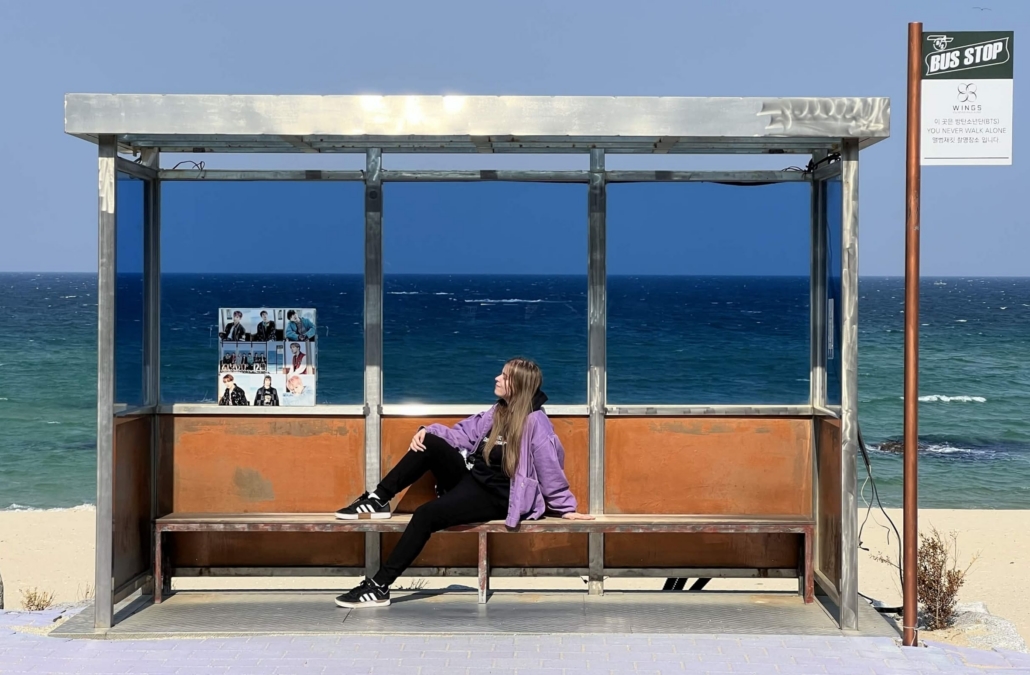
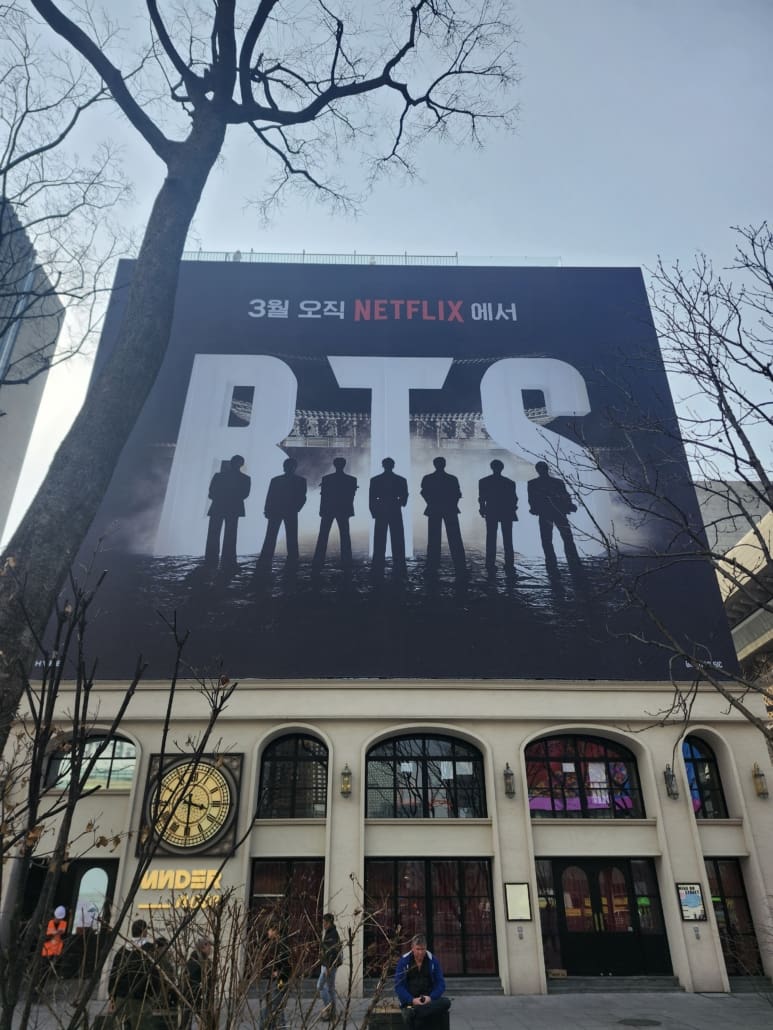
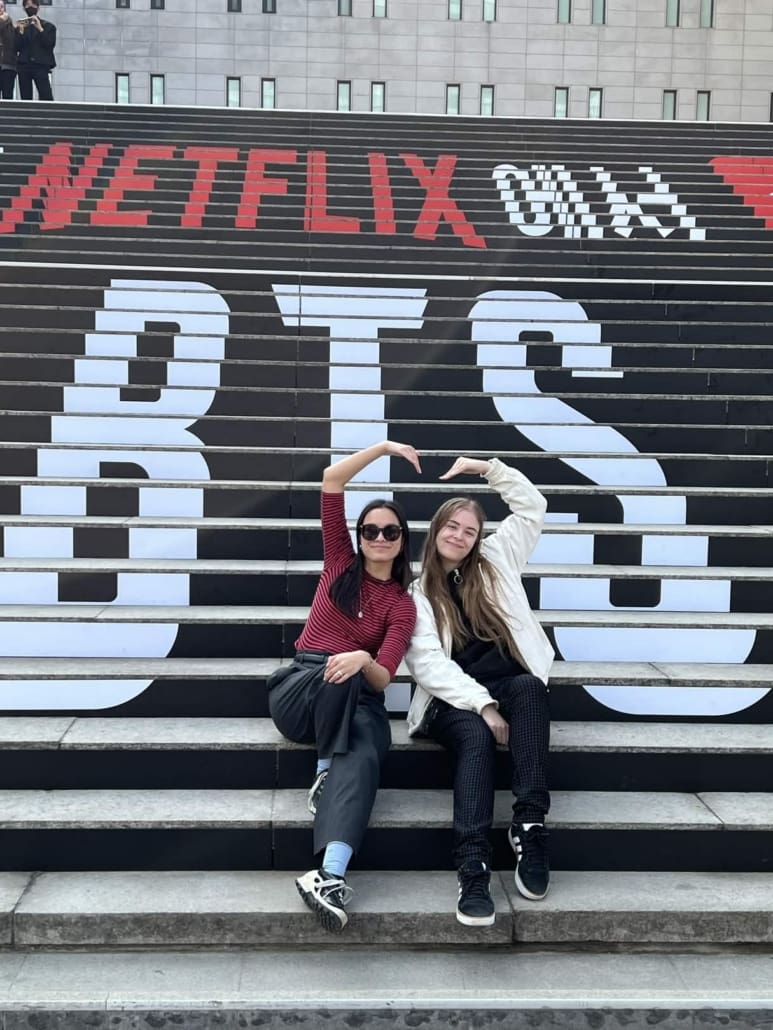
This past month, I completed my dream trip to travel across South Korea during one of the country’s most pop-culturally significant events of recent history– the return of the kings, aka BTS, to the public eye following the end of their mandatory military enlistment. This trip marked my 10th country outside of the United States, but Korea is only the second country I’ve had the privilege to explore in such depth, rivaled only by my five-month stay in Scotland for school in 2022. South Korea has held a place of fascination, respect, and deep interest to me since first falling in love with the music, culture, and media back in February of 2017 when I first discovered the now world-renowned global icons, BTS (방탄소년단).
South Korea is a beautiful, culturally rich, and historic center of cultural power in Asia. As a historian myself, a major highlight of my trip was exploring cultural sites and museums, so in this blog, I am going to share my experience and recommend some of my favorite spots for you to save for your next trip.
National Museum of Korean Contemporary History
We visited this museum multiple times on our trip, as it is located squarely within Gwanghwamun Square, an area where we spent much of our trip. On our first visit, we explored the rotating special exhibit, which, while we were there, was the “Korea After Dark: Nightscapes of Modern Times”.
The exhibit is described as follows: Today, the night is no longer a time of sleep. Even after darkness falls, cities filled with lights remain lively, and our daily lives continue without pause. Yet such freedom of the nighttime was not granted to us from the start. For centuries, darkness severely limited our activities, and the extent of the night available to us remained confined to the small circle illuminated by candlelight. The introduction of electric lighting gradually brightened the streets, but that did not immediately guarantee freedom. The curfew, in effect from 1945 until 1982, deprived people of the right to enjoy the night. When the curfew was lifted in 1982, Koreans finally regained a complete twenty-four hours. The initial sense of release briefly turned the night into a space of unrestrained revelry, but before long, the night settled into what it is today-a time open to everyone, a shared and accessible part of daily life.
The second time we visited the museum we were on a mission to find the BTS time capsule, which had been moved that week for more public display because of the citywide event “BTS The City Arirang” experience happening across the entirety of Seoul for the BTS Comeback.
During this visit, we also explored the Interactive Gallery. Its bright colors and bold design initially felt geared toward a younger audience, but a closer look revealed a surprising level of depth.
Described as the following: The hands-on exhibits let visitors from the present to get a glimpse of how the members of different generations lived. Here is an opportunity for you to feel at least indirectly the ups and downs that earlier generations underwent, thereby broadening your understanding of the values and cultural characteristics of others who came before.
When we finally found the BTS time capsule, we stopped and reflected on the length and legacy of these 7 men that my friend and I, as well as millions of others around the world, have followed so closely for over a decade now. Their legacy and impact are absolutely palpable while walking through the streets of Seoul. Seeing them positioned as the representatives of a generation of idols now not only shaping the global entertainment industry but also the next generation of youths with their inspiring messages was deeply moving.
Their impact is undeniable in every local you meet. You can feel the pride people have in seeing them represent Korean culture on the world stage. That pride has never been more evident than during this comeback, “Arirang.” The concept draws from a centuries-old and ever-evolving “song of the soil,” one that represents traditional and regional cultures from across Korea. Over time, it has taken on hundreds of different forms, each shaped by the unique communities that created them. Now, the concept of Arirang is being carried forward and immortalized by the biggest band in the world, ensuring that its importance is not forgotten by future generations.
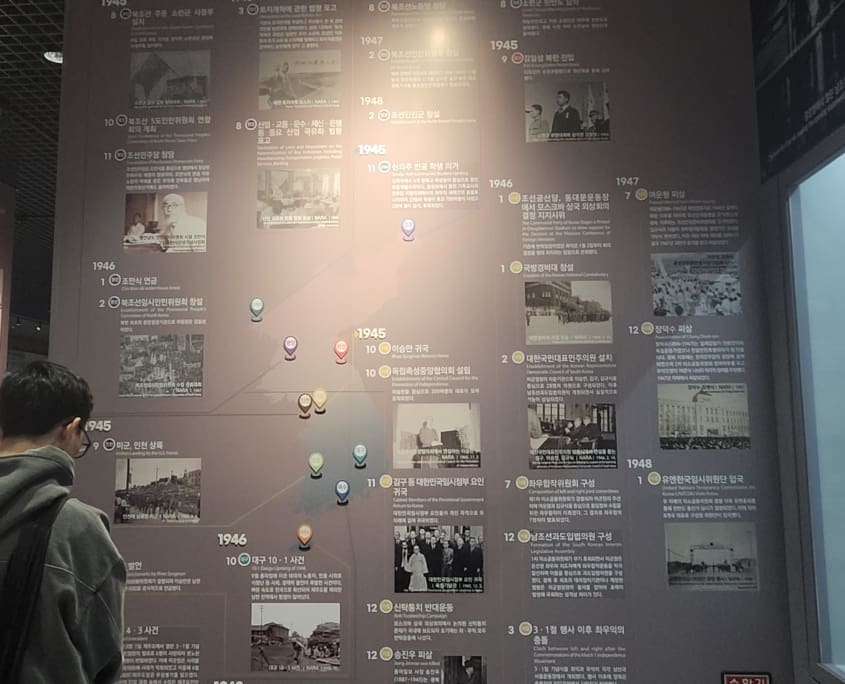
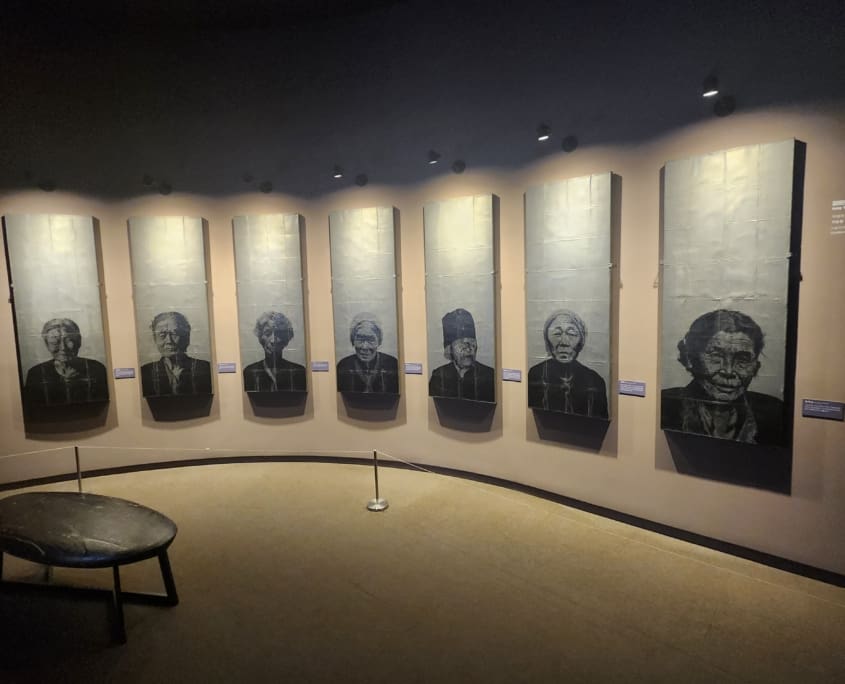
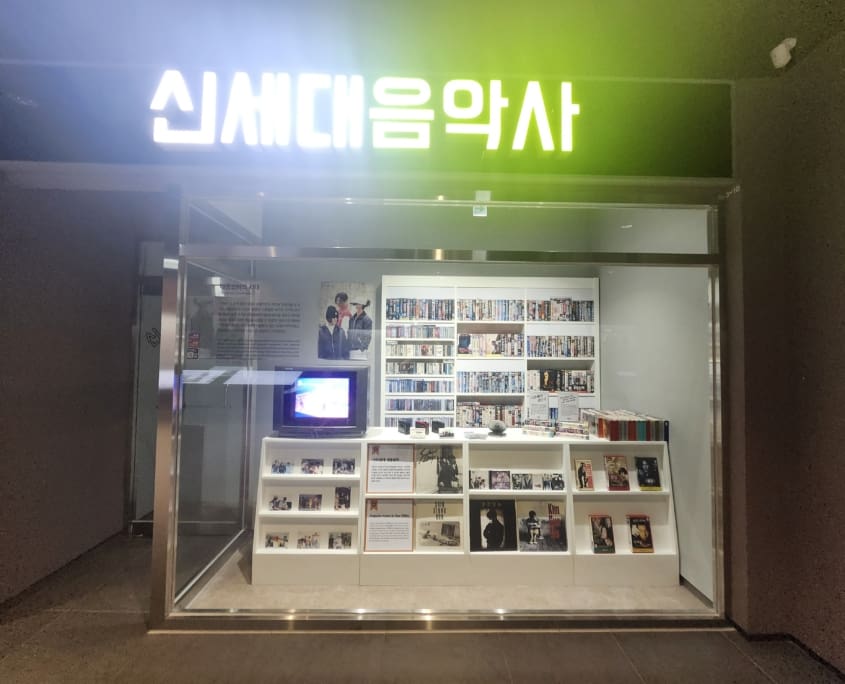
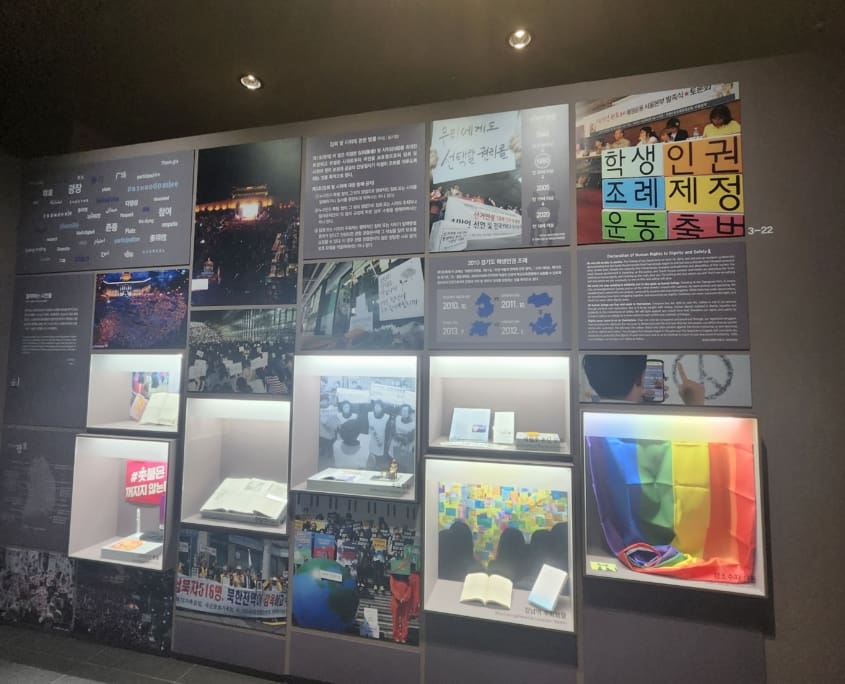
The third and final time I visited this museum, I went alone. It was my final day in Korea and my final excursion in the country. I visited the museum’s permanent exhibit, The History Gallery, which walks you through the history of Korea from the 1890’s to modern day. As you weave through the exhibits’ maze-like layout, you are taken through the deep turmoil and conflict rooted within the country, and learn about a people that are forged in a fire of overcoming diversity and persevering through resistance and resilience over many decades of hardship.
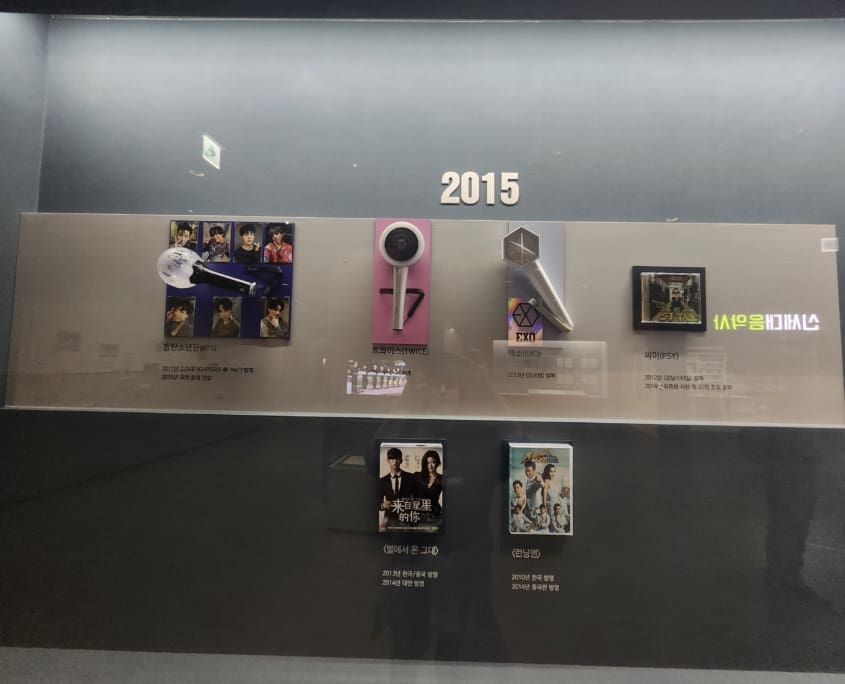
I can’t recommend this exhibit hall enough, as it was a historical highlight of my trip. From the Korean War, to Korea’s own industrial revolution (through companies like Hyundai and Samsung), and into the Hallyu Wave of the mid 90’s into present day (from things like the Olympics, the spread of KDramas around the world, and the evolution of Kpop from the Seo Taji Boys of 1992 to BTS and hundreds of other world renowned idol groups today). This exhibit does a wonderful job of representing the cultural and economic breadth of the country and its people.
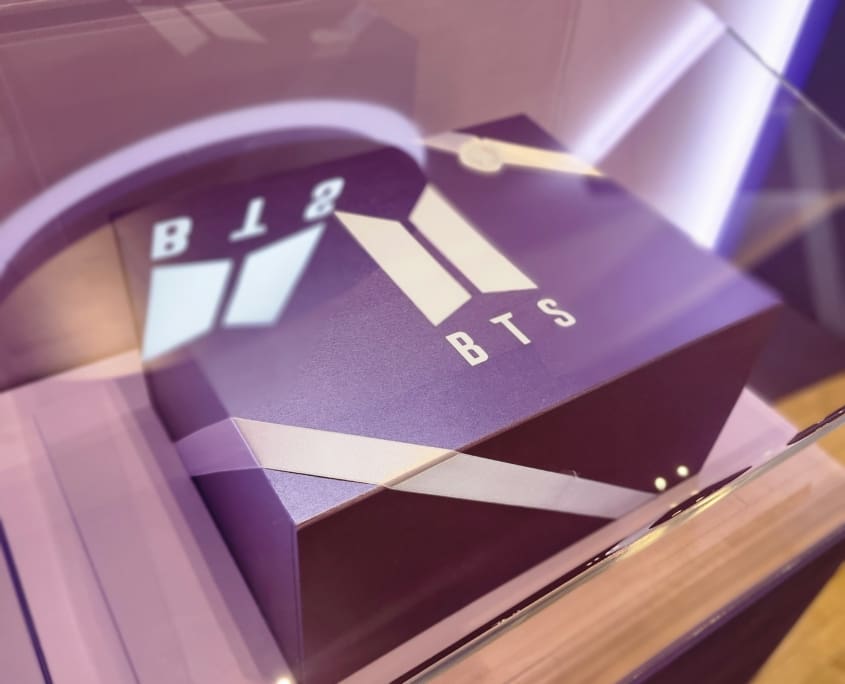
BTS Time Capsule
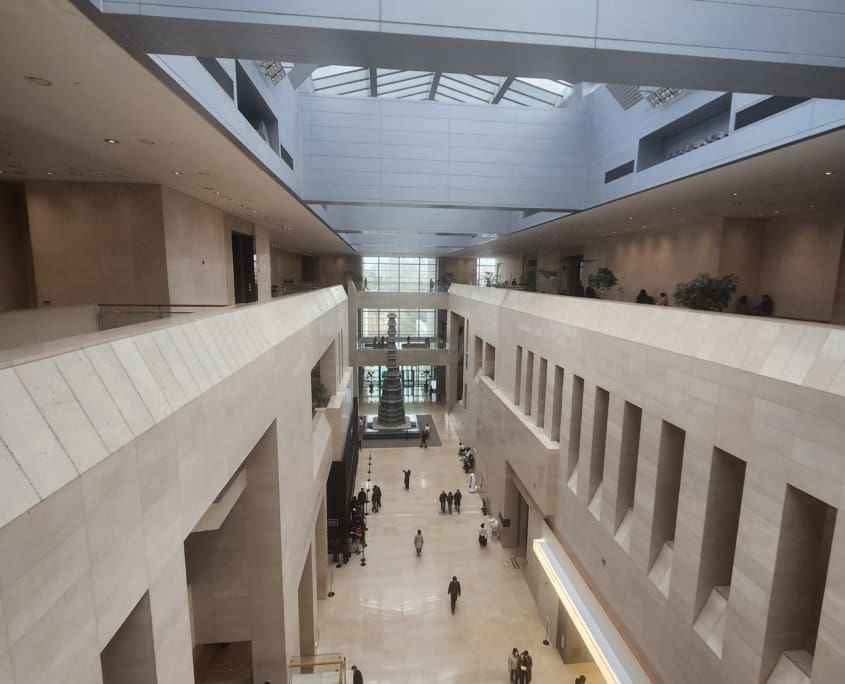
National Museum of Korea
At this point in my travels, I’ve visited enough national museums to be a bit of a tough critic– they often share many similarities. However, as my first major museum experience in Asia, the National Museum of Korea was still captivating.
We spent about 2 and a half hours exploring and my highlights were certainly the traditional Korean and Asian artwork throughout the museum and the exhibit highlighting the 4 murals and folklore significance of a tomb.
Described as the following: The exhibition features the murals from Jinpa-ri Tomb No.1 in Pyeongyang, superbly reproduced to provide a rare opportunity to see one of the most famous murals from the Goguryeo period. With visual aids such as 3D animated videos, visitors can learn more about the context and the beauty of the Four Deities. The four deities, which are Blue Dragon, Red Phoenix, White Tiger, and Black Tortoise, with each symbolizing Spring/East/Wood, Summer/South/Fire, Fall/West/Metal, and Winter/North/Water, were the central theme of Goguryeo tomb murals. The exhibition shows the highly advanced quality of ancient paintings of Korea through the murals from Jinpa-ri Tomb No.1, one of the representative tombs of the late Goguryeo period.
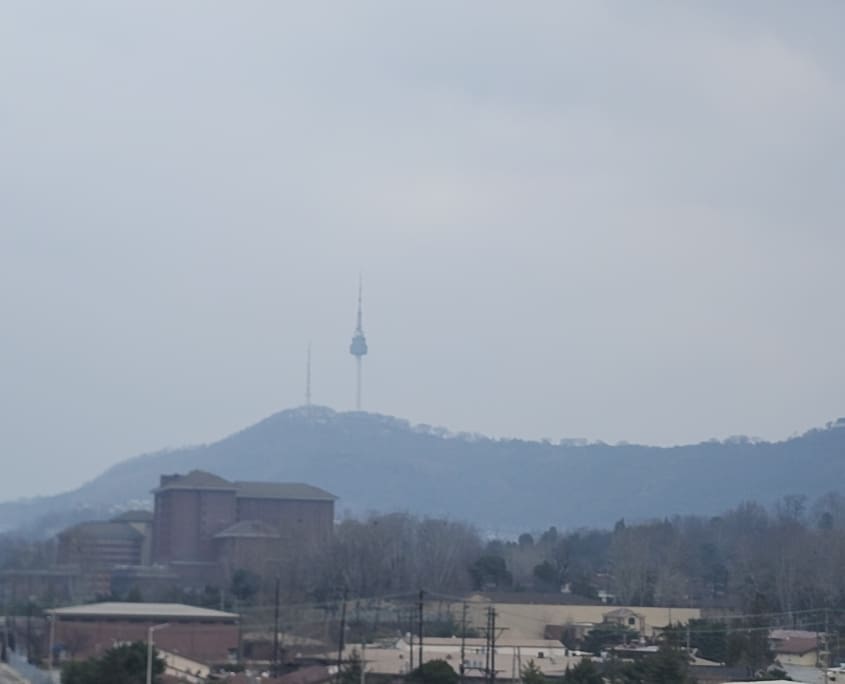
While here, don’t forget to climb the stairs outside the museum to take in the view of Namsam Tower in the distant hills, as well as the National Museum of Korea’s famous Mirror Pond in front of the building and its brilliantly colored traditional pavilion.
Korean Folk Village
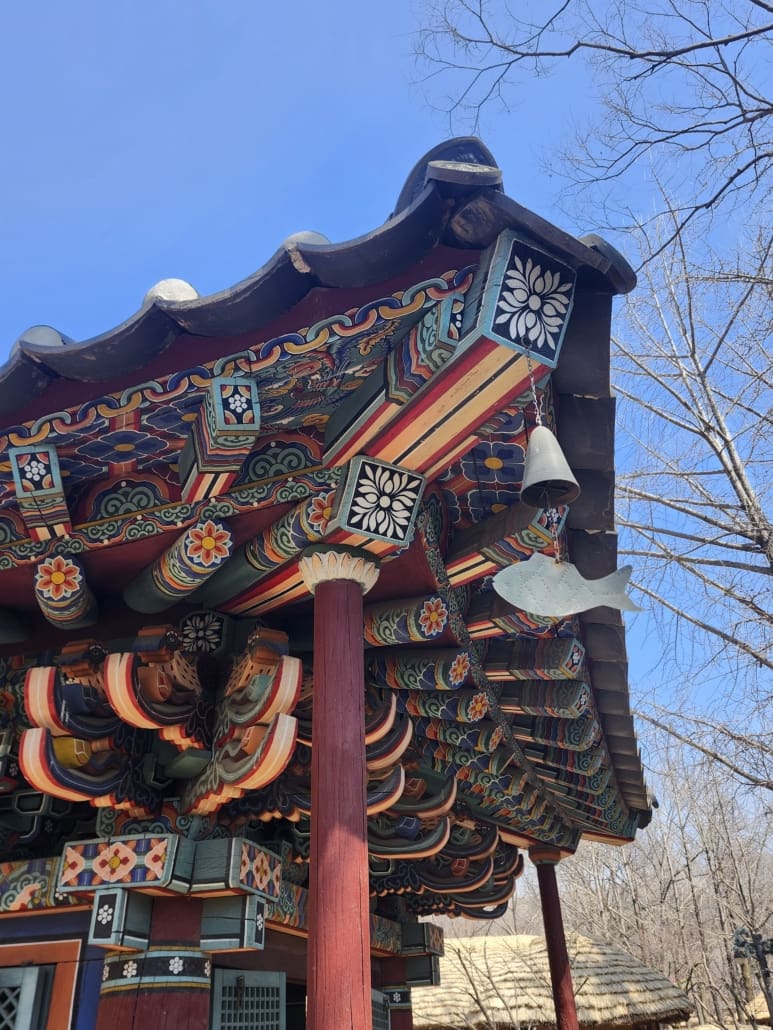
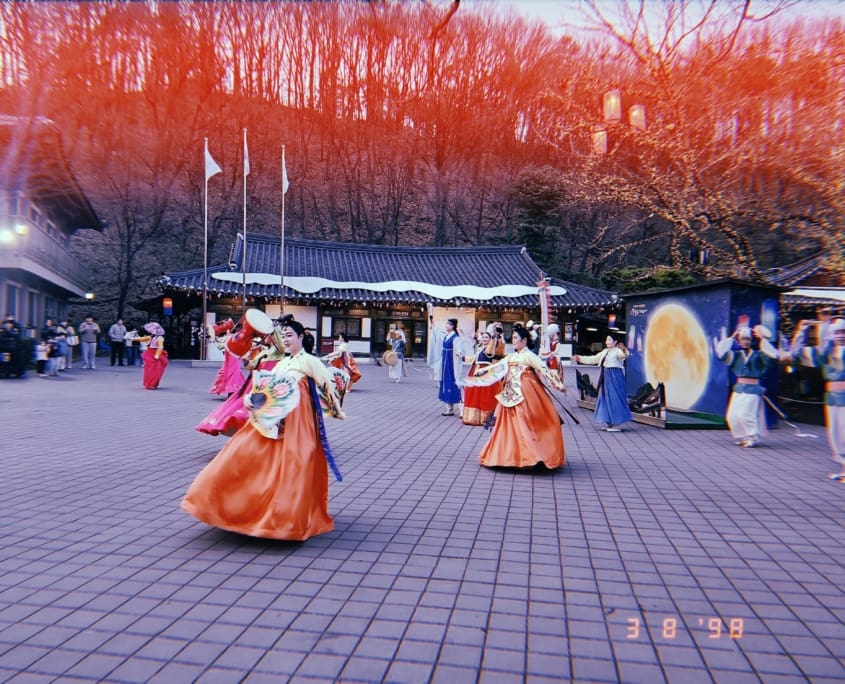
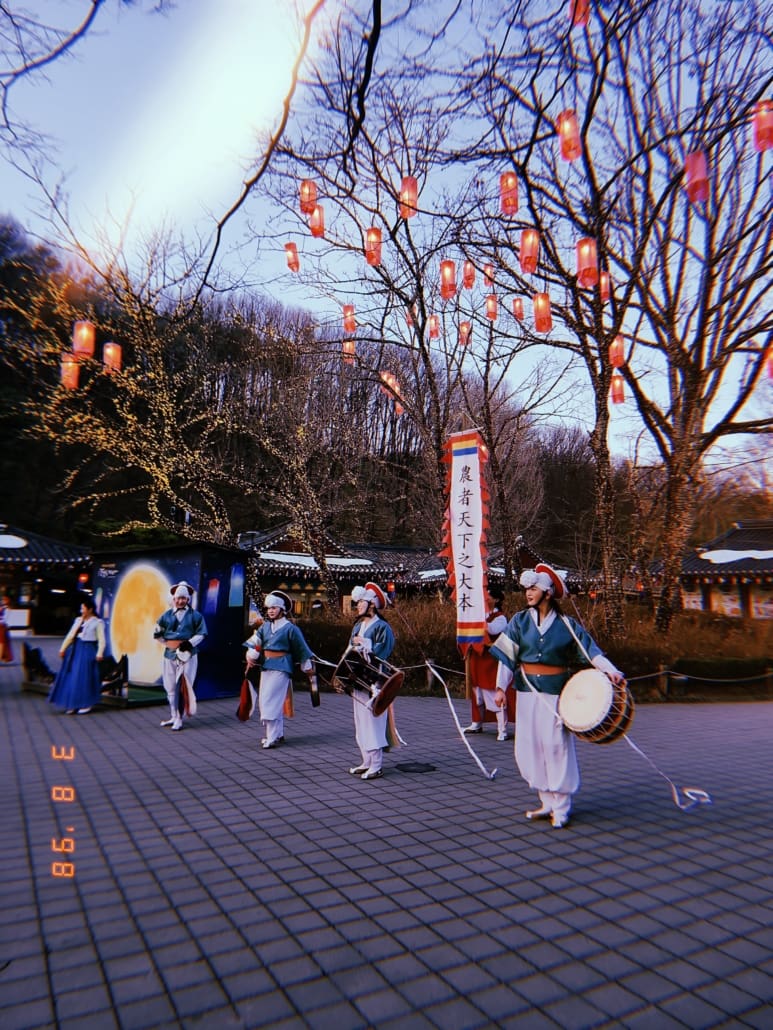
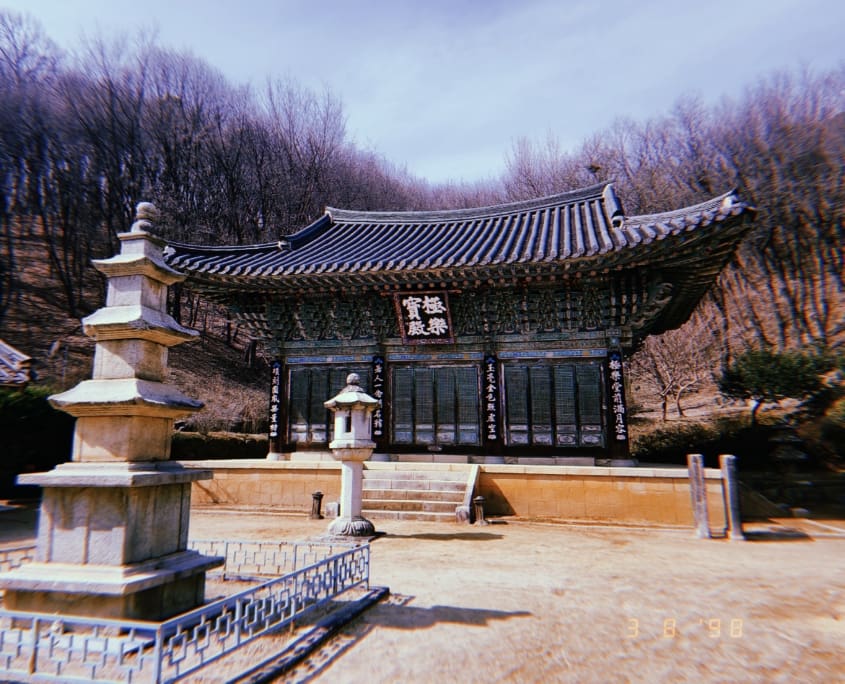
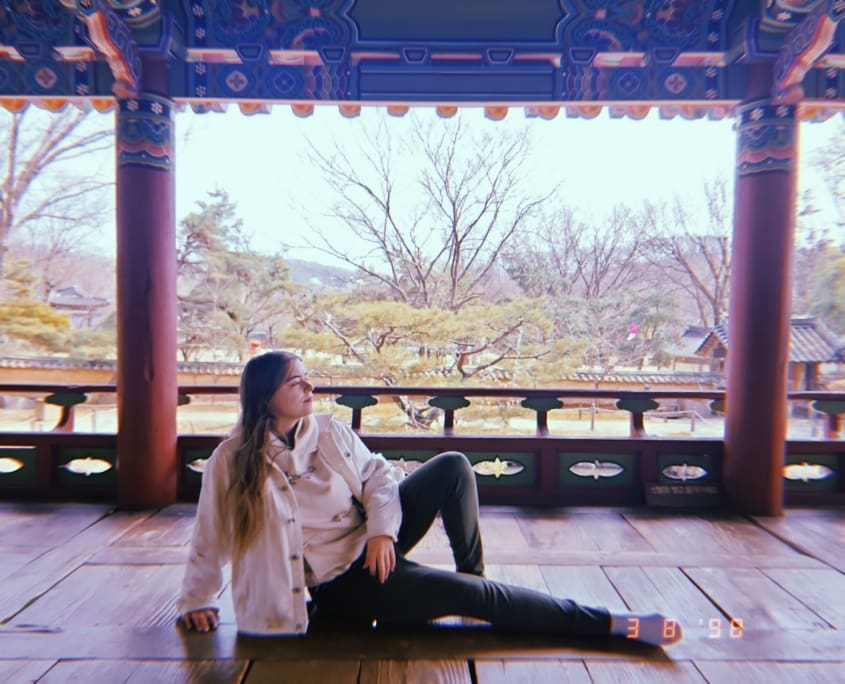
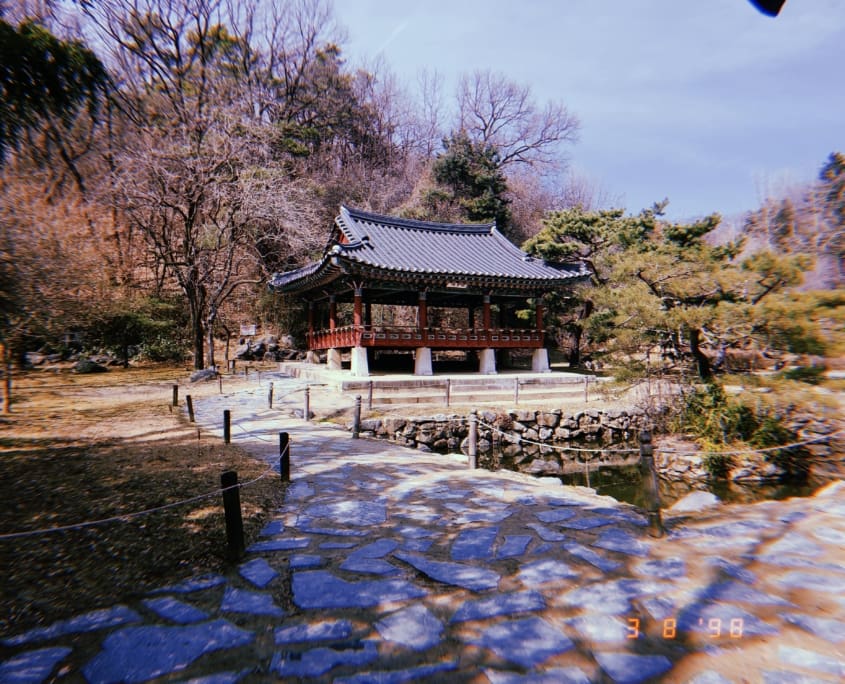
The Korean Folk Village, located in Youngin Korea, about an hour taxi ride outside of Seoul, is most definitely worth the inconvenience of getting there. This amazing and large-scale outdoor open-air museum easily took up our entire day as we spent at least 6 hours exploring and soaking in the location.
From live shows, horse riding, traditional bow and arrow, norigae making, games, food, daily cultural parades, gift shops, indoor exhibits, rotating season performances and displays, and dozens of acres of traditionally preserved late Joseon period buildings to explore there is no shortage of things to do here. All of this, not even including the small amusement park attached to the park, which is included in your entry fee. This spot is a must visit if you’re a history lover, or if you’re simply looking for a good spot to take photos and immerse yourself if the feeling of Korea and its past.
Jeju Haenyeo Museum
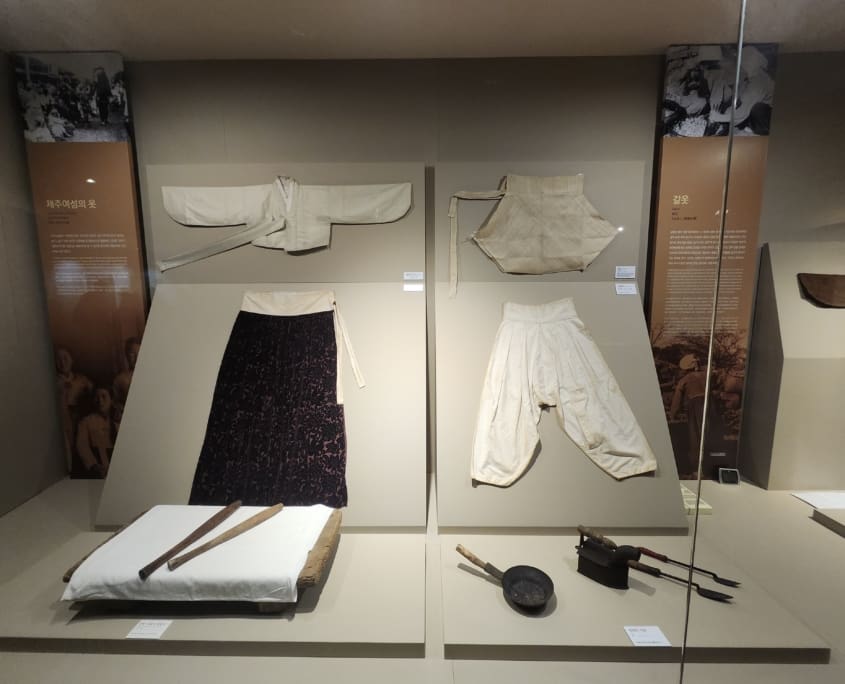
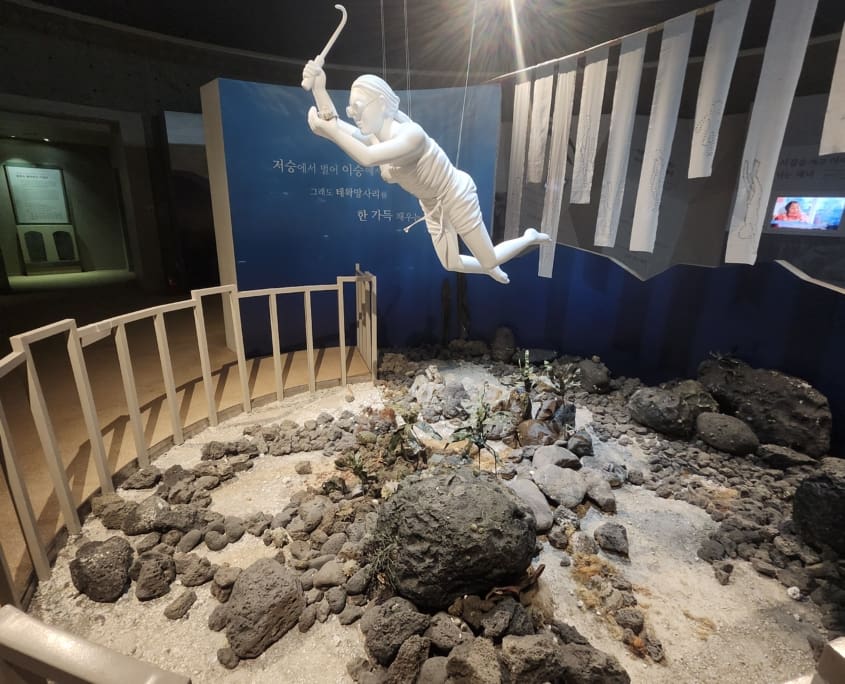
Possibly my favorite museum of the entire trip. Located on the east shore of Jeju Island the Jeju Haenyeo Museum highlights the amazing story and history of Jeju’s famous haenyeo women. I’ve always loved specialized museums, and this one does an exceptional job explaining the cultural significance of these divers. Haenyeo are women who free-dive without mechanical equipment to harvest seafood, supporting their families and local economy. This tradition has been passed down for centuries and is recognized by UNESCO as an Intangible Cultural Heritage.
Last year in 2025, haenyeo women were featured in the well-renowned and award-winning K-Drama, When Life Gives You Tangerines, which follows the hardships of life growing up on the island from the 1950s-2000s. The sweet but tragic story follows a generation of family growing up enduring the hardships and economic and cultural struggles experienced in Korea and being born on the island. This show put the museum on my radar, and it was a must visit for my 3 days in Jeju, and I was very glad we made the stop.
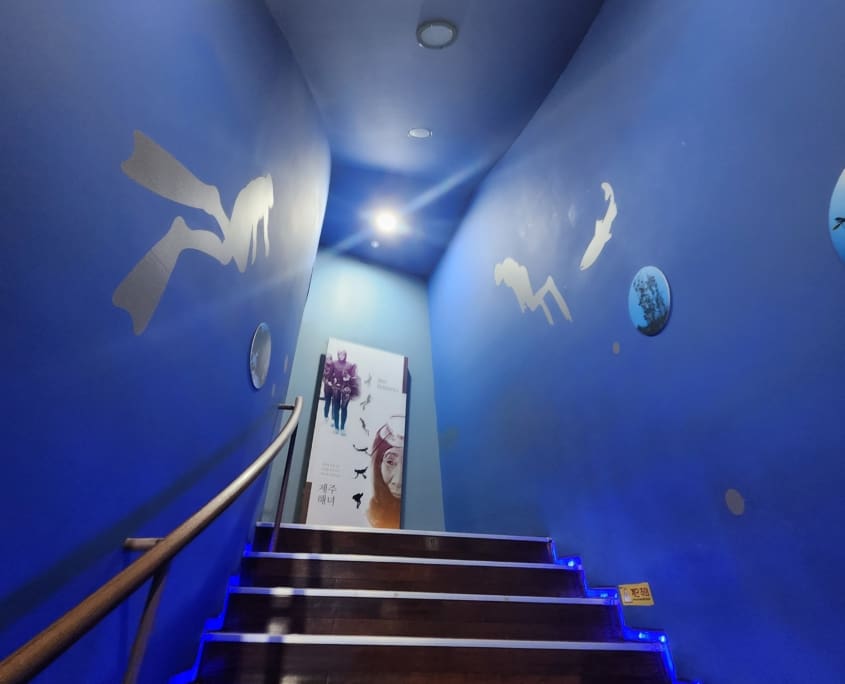
Each level of the museum went in depth on a different part of the culture and the significance of the preservation of the legacy and power of the haeyneo women and how they served their communities.
Spirited Garden
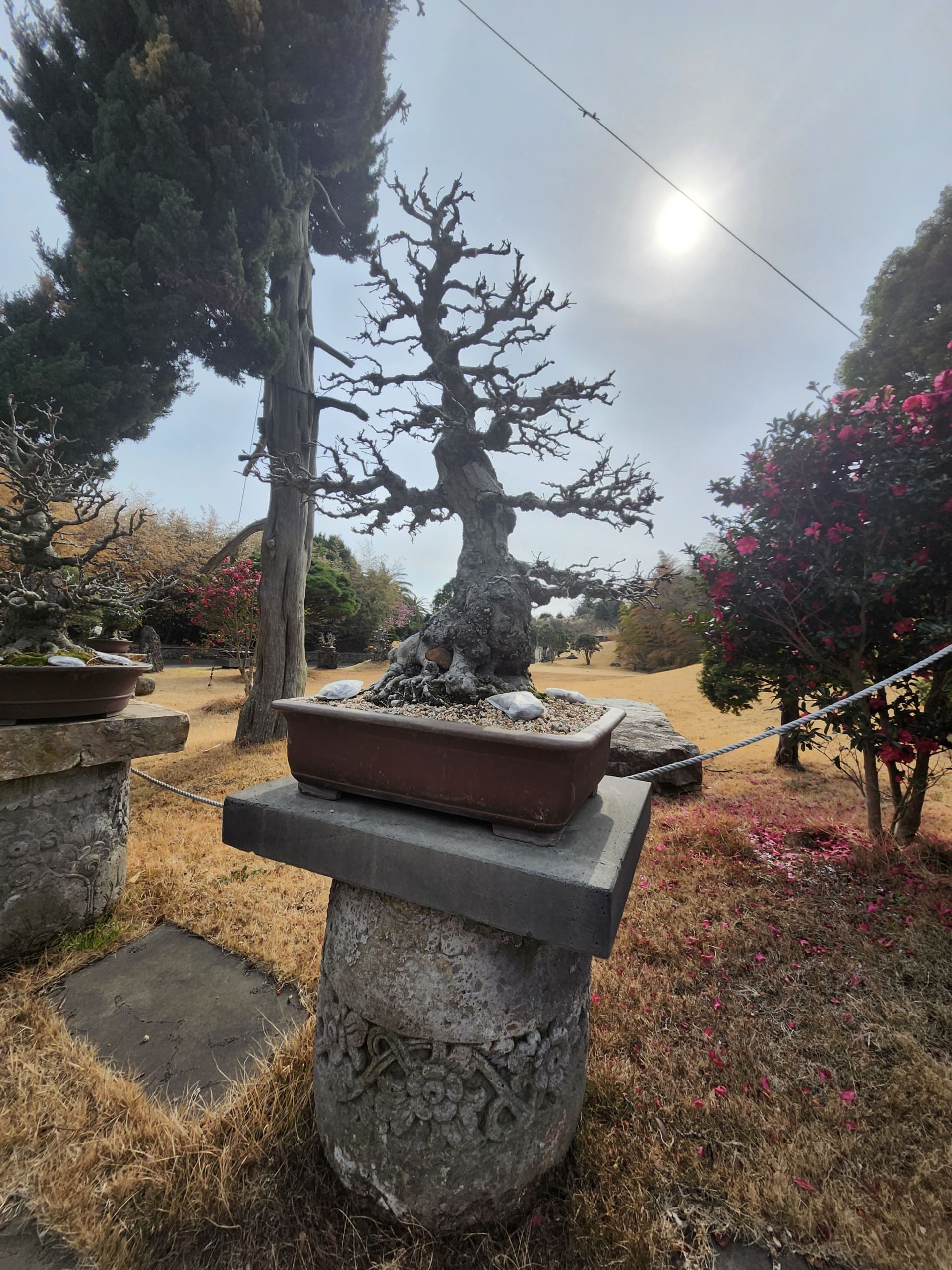
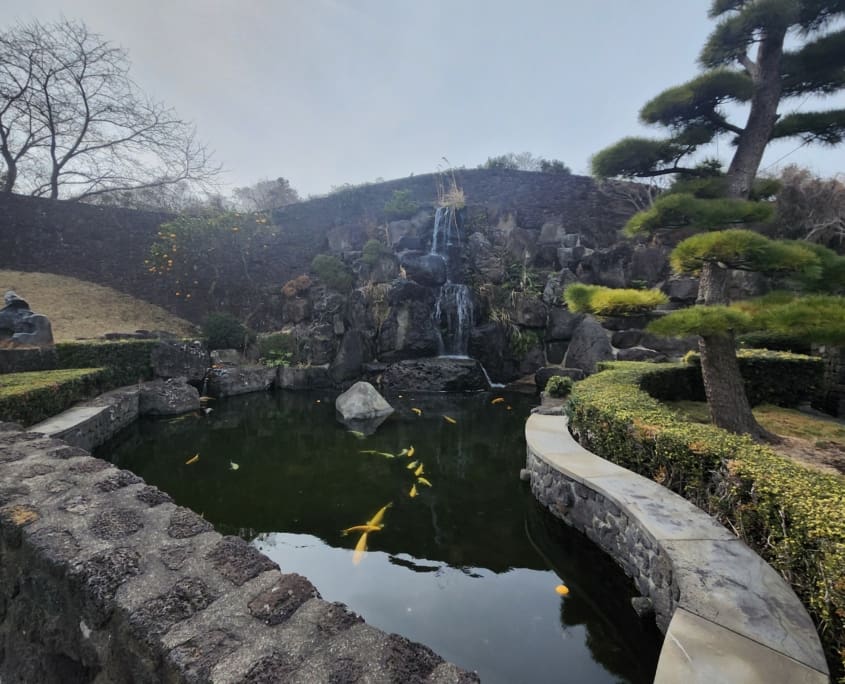
A hidden gem located on Jeju Island. While definitely meant to be visited in the spring and blooming months of the year, this unique spot showcases the decades worth of worth cultivating a zen and deeply meditative and reflective collection of traditional bonsais, asian plant, native Jeju oranges, and a beautiful landscaped rock garden.
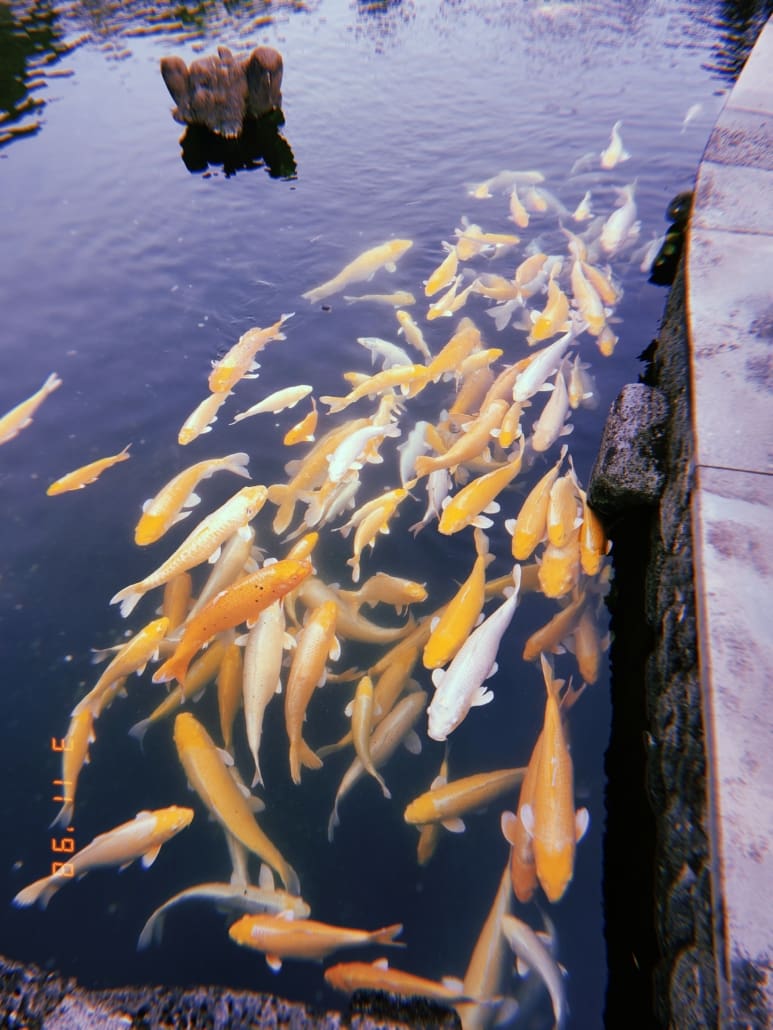
This unique location is the life’s work of one dedicated man and is well worth the stop to enjoy the scenery and clear passion that has went into curating the space. Adorned with a beautiful walking path, stunning foliage, and man-made rivers and waterfalls throughout the space. There are ample spots to stop and take photos and hundreds of beautiful koi fish that you have the opportunity to feed.
We would definitely come again when the garden is in bloom, as we definitely missed out on the true beauty of the garden (but the entry fee is worth it to see the koi fish alone if you’ve never seen a truly immense amount of the beautiful fish before in person).
Jeju Folklore and Natural History Museum
The Jeju Folklore and Natural History Museum is located in the heart of Jeju City and isn’t a far travel from the airport. We joked walking around it that parts of it were the most “Animal Crossing” like museum we had ever seen, and I stand by that description.
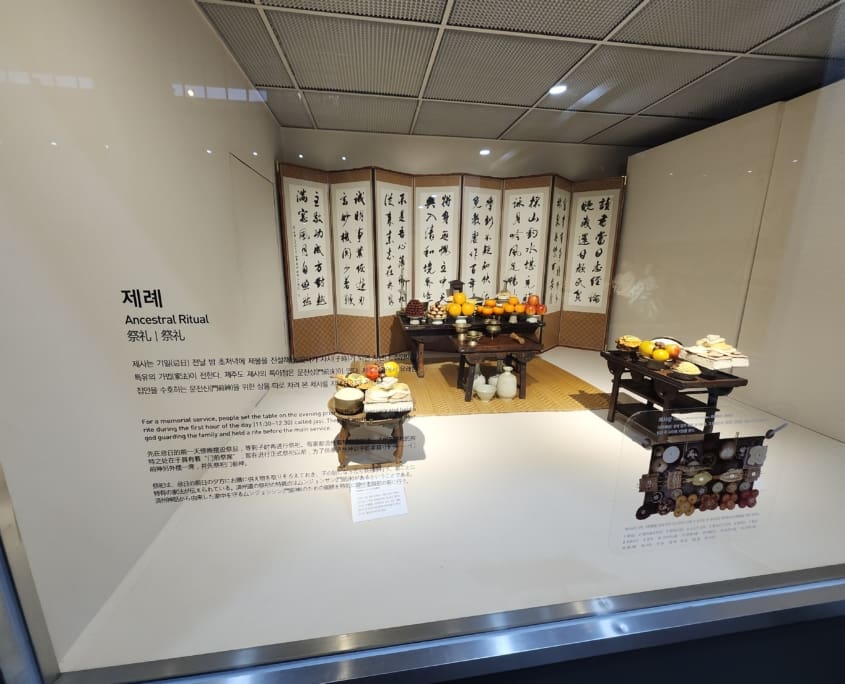
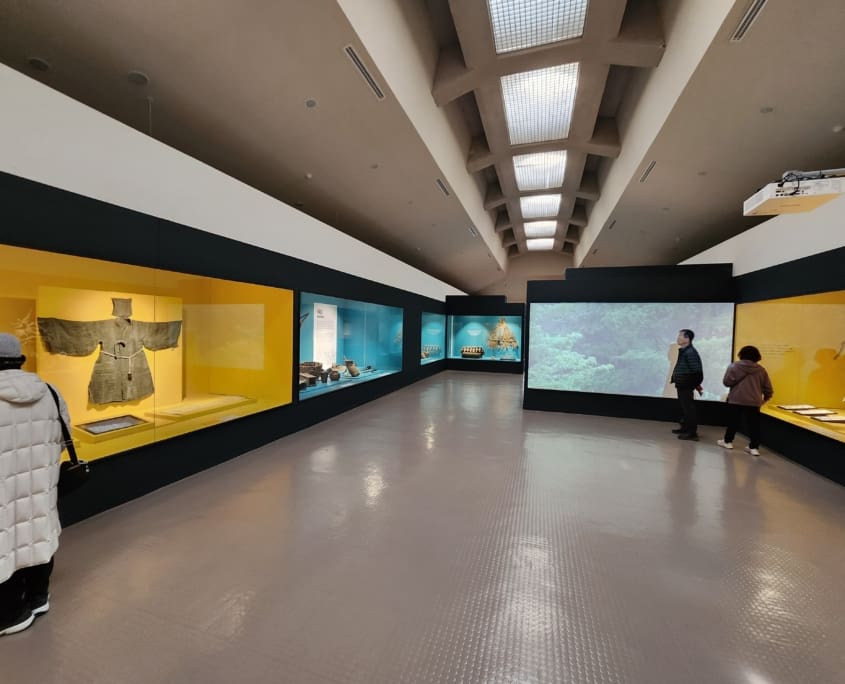
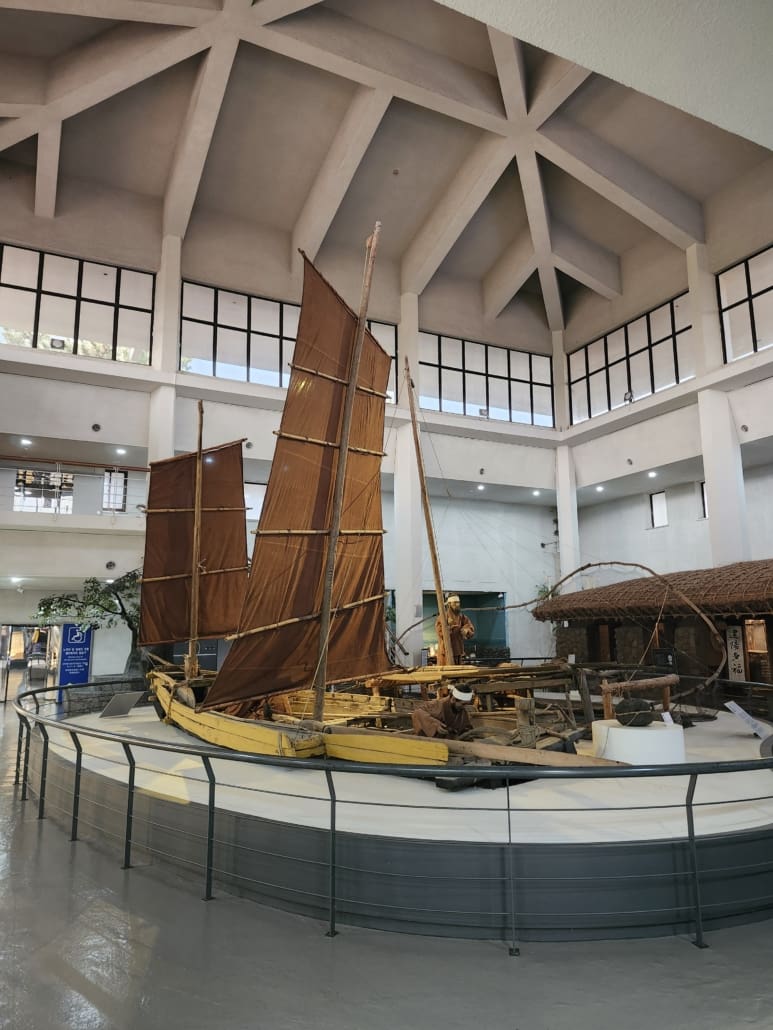
The focus of this museum is on the preservation of the unique culture of the island and it felt like a privilege to be learning about the livelihood and history of the small island community and being able to compare it to mainland Korea. This museum, as well as the Jeju Haenyeo Museum also held nautical and boat displays that reminded me of my time exploring museums in Norway and Sweden, notably Stockholm’s Vasa Museum and Oslo’s Kon Tiki Museum, but on a much smaller scale.
Outside the museum is a beautiful garden featuring various shapes and sizes of Jeju’s iconic Dol Hareubang (or “stone grandfather”) statue guardians which are carved from the porous volcanic basalt rock, symbolizing protection and fertility on Jeju Island, South Korea. This same rock can be seen everywhere throughout the island, including in the sidewalks of the streets, along the beaches, and in the construction of buildings.
Haedong Yonggungsa Temple
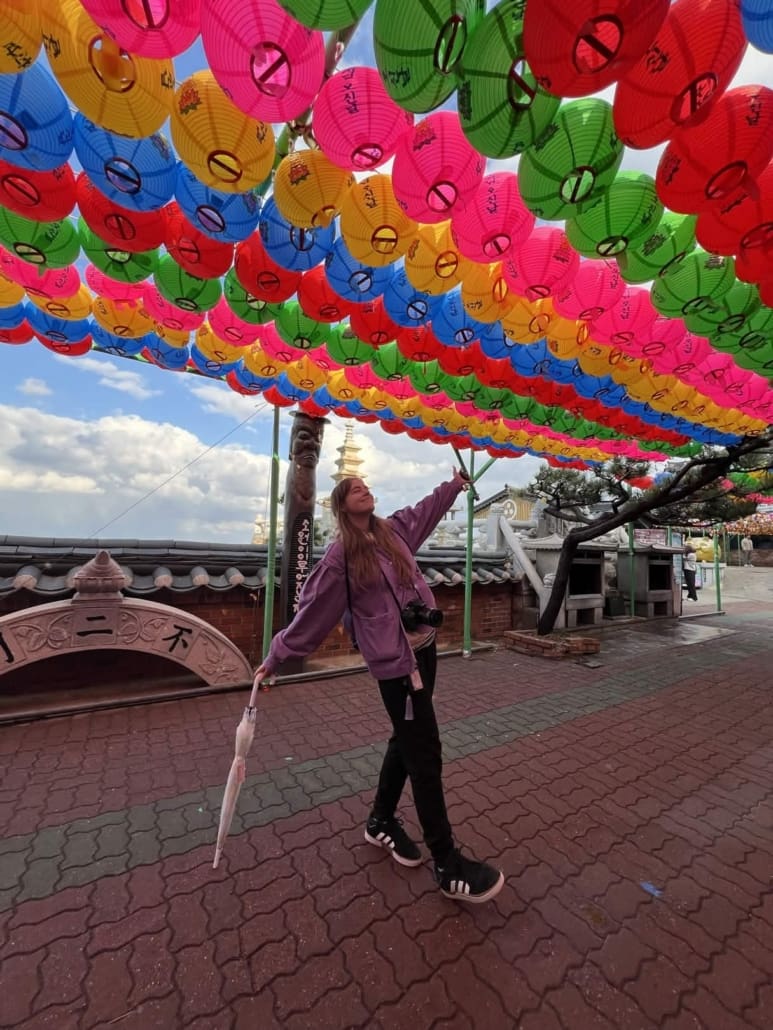
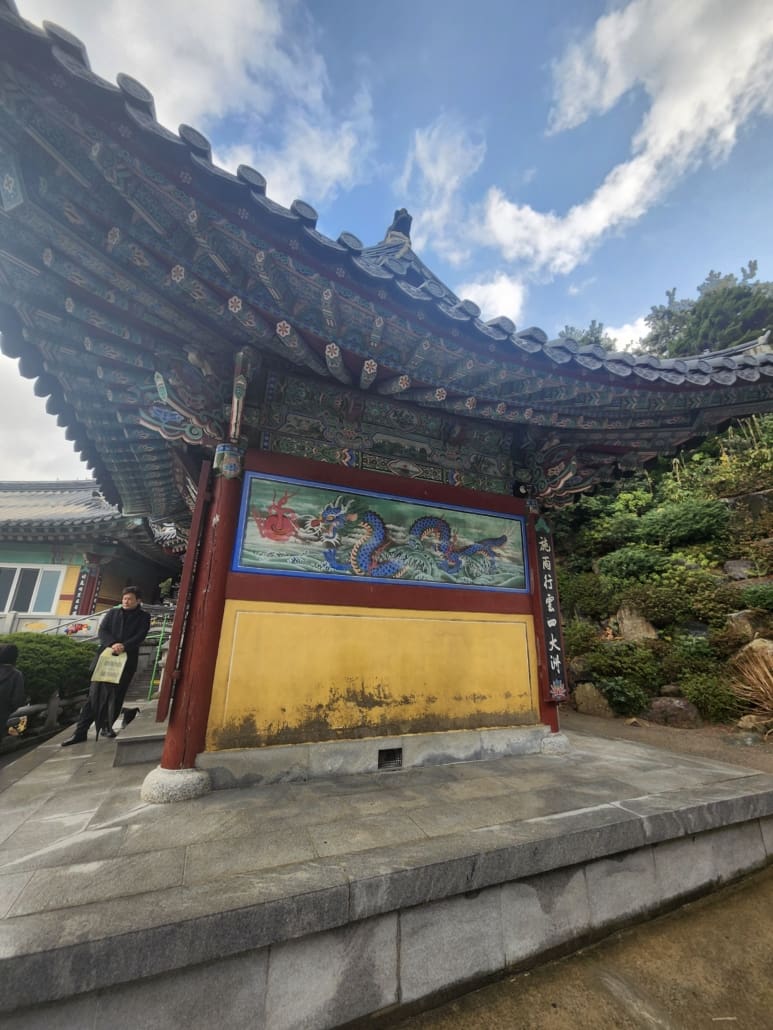
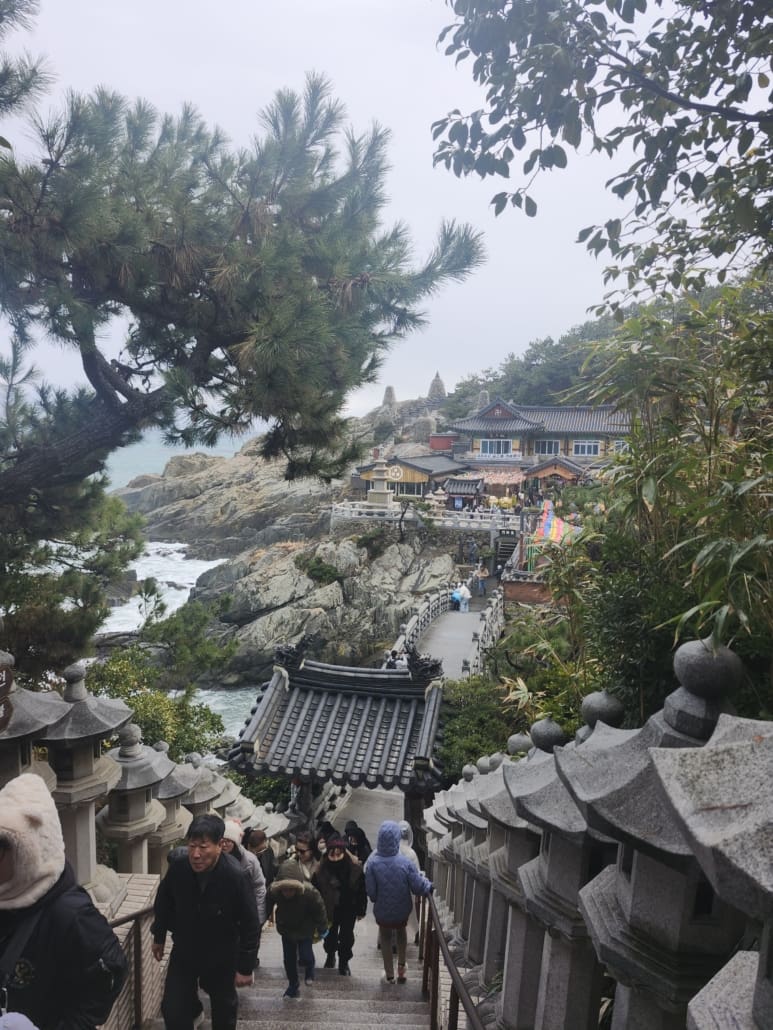
Located just outside of Busan along the rocky coastline, Haedong Yonggungsa Temple is a beautiful site to see in person, even if it was rainy and cloudy like it was for our visit. Unlike most temples, which are tucked away in mountainous regions, this one is uniquely set right along the sea. This creates a striking contrast between the crashing waves and the intricate, colorful architecture of the temple grounds, which stretch along the cliffs.
Walking down the long stone stairway toward the temple overlooking the sea makes you think of the millions of people whose feet have stepped there before you. Each step reveals a new perspective of the coastline and the stunning and complex structures below. The path is lined with statues, lanterns, and small shrines, each adding to the layered sense of history and spirituality embedded in the space.
Gamcheon Cultural Village
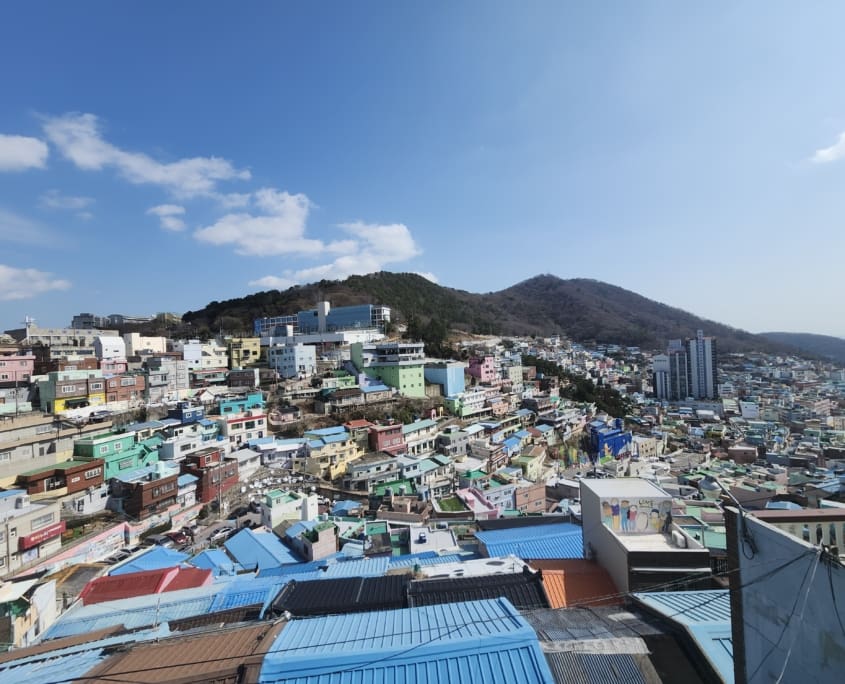
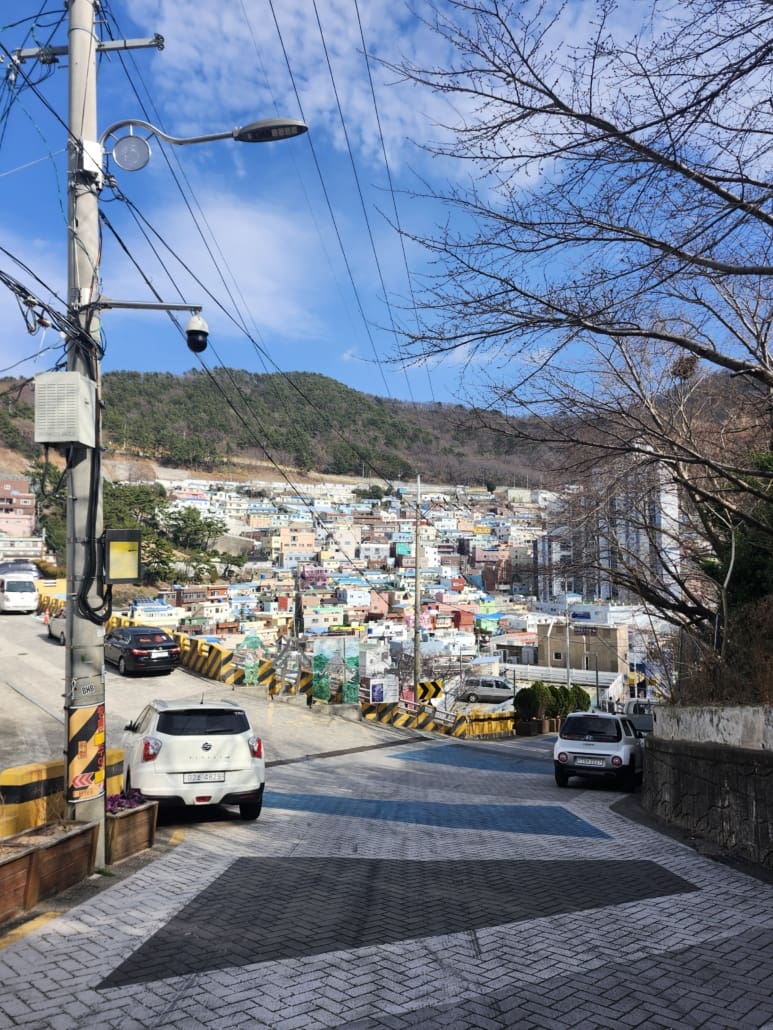
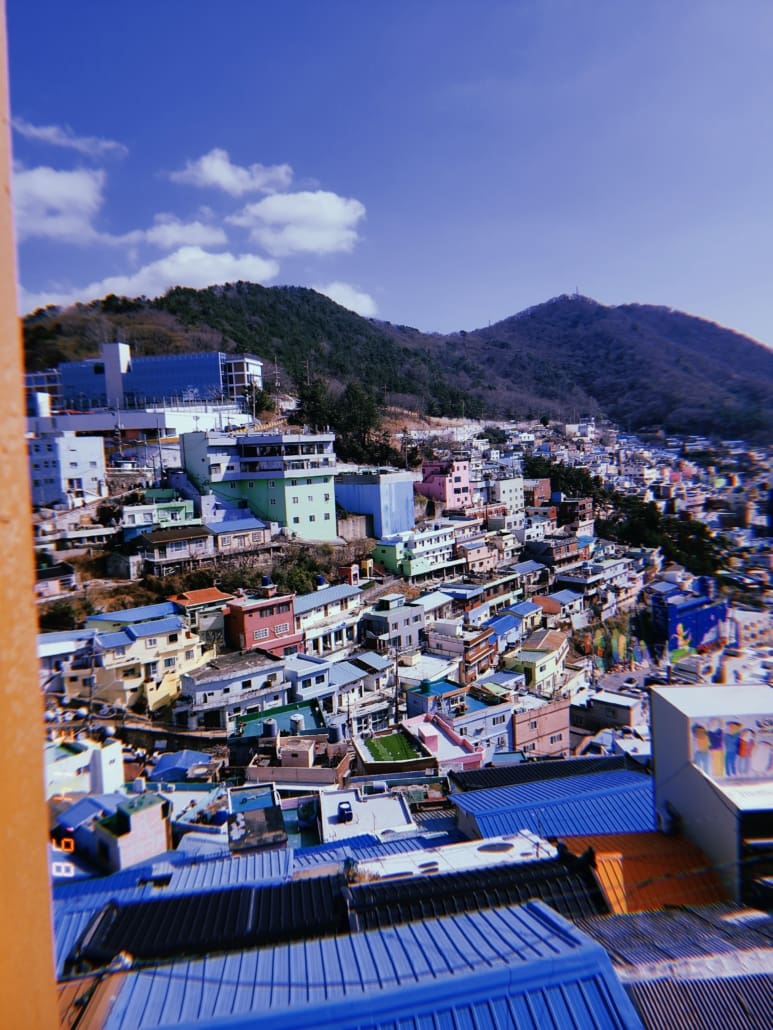
Also located in Busan, Gamcheon Cultural Village is one of the most visually unique places I’ve ever explored. The bright and colorful village is built into the side of a mountain, with starkly contrasting colored homes stacked in a cascading maze like layout.
What makes this space so special is not just its appearance, but its history. Originally formed as a community housing, the impoverished area boomed in population and expanse stemming from a post-war recovery period. Today, the area has been transformed into a vibrant cultural hub and tourist hot spot for the city of Busan and is filled with art installations, small galleries, cafes, and local shops.
Wandering through the narrow alleyways and overlooking the tapestry of colorful, tiny houses feels like stepping into a living art piece. Around every corner, there is something new to see, from plentiful murals, sculptures, interactive installations, street food, and hidden viewpoints that offer incredible photo opportunities.
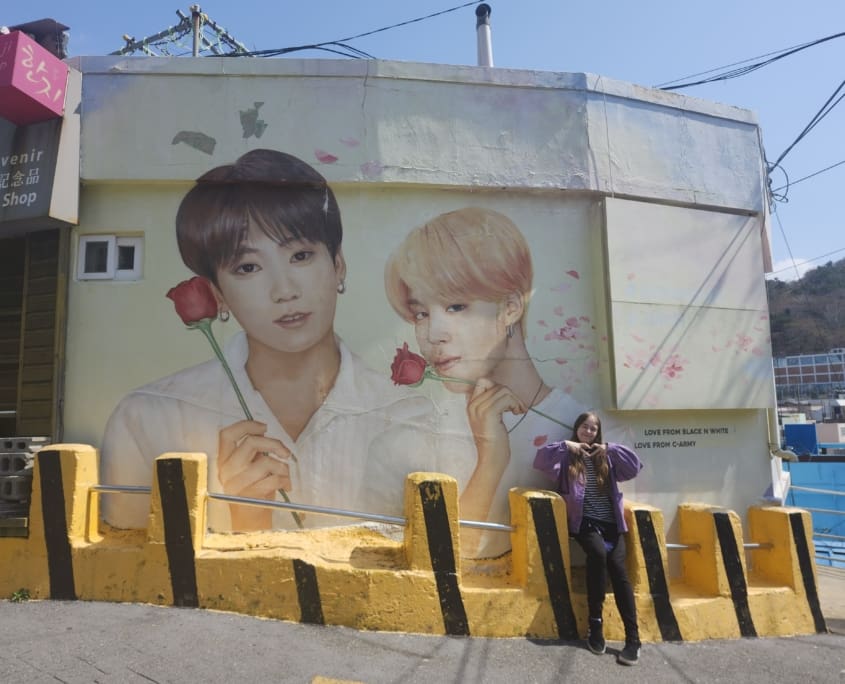
All of this is not to mention the now-famous Jimin and Jungkook mural, the two members of BTS originally from Busan, and the very popular Little Prince Statue. Both of these pieces alone attract large crowds and pilgrimages of fans to visit. It’s the kind of place where you want to take your time, get a little lost, and let yourself discover things organically. (Which we definitely did as we got thoroughly lost afterwards while trying to make our way down the hill through the maze of alleyways trying to leave the area.)
Gyeongbokgung Palace and Gwanghwamun Square
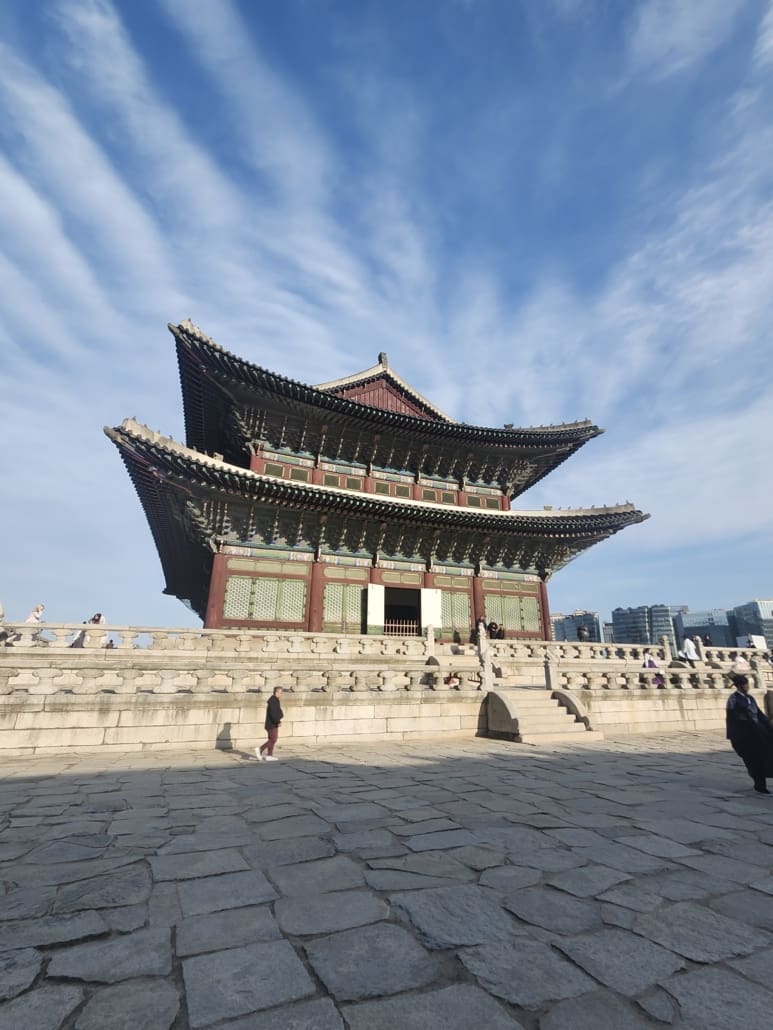
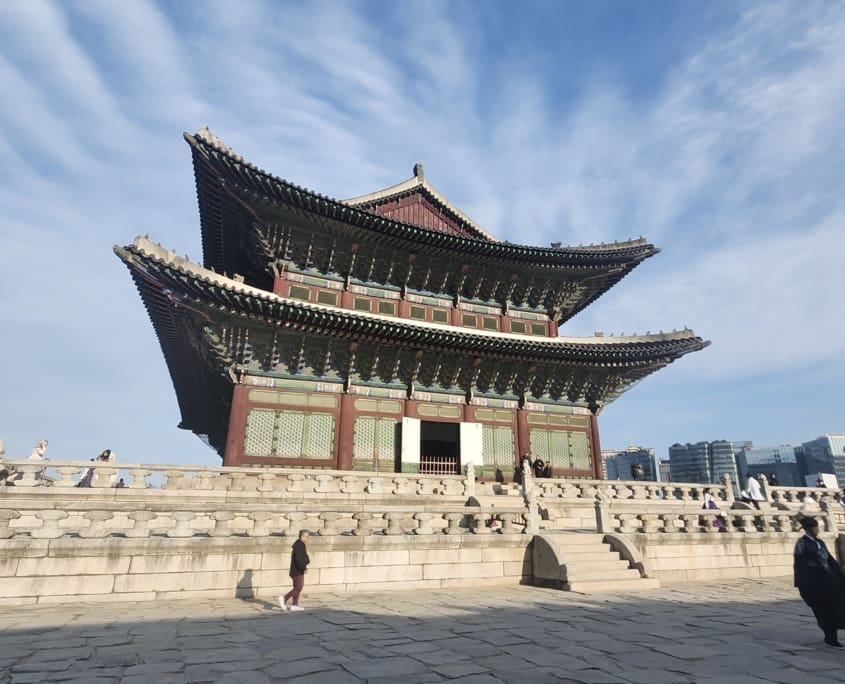
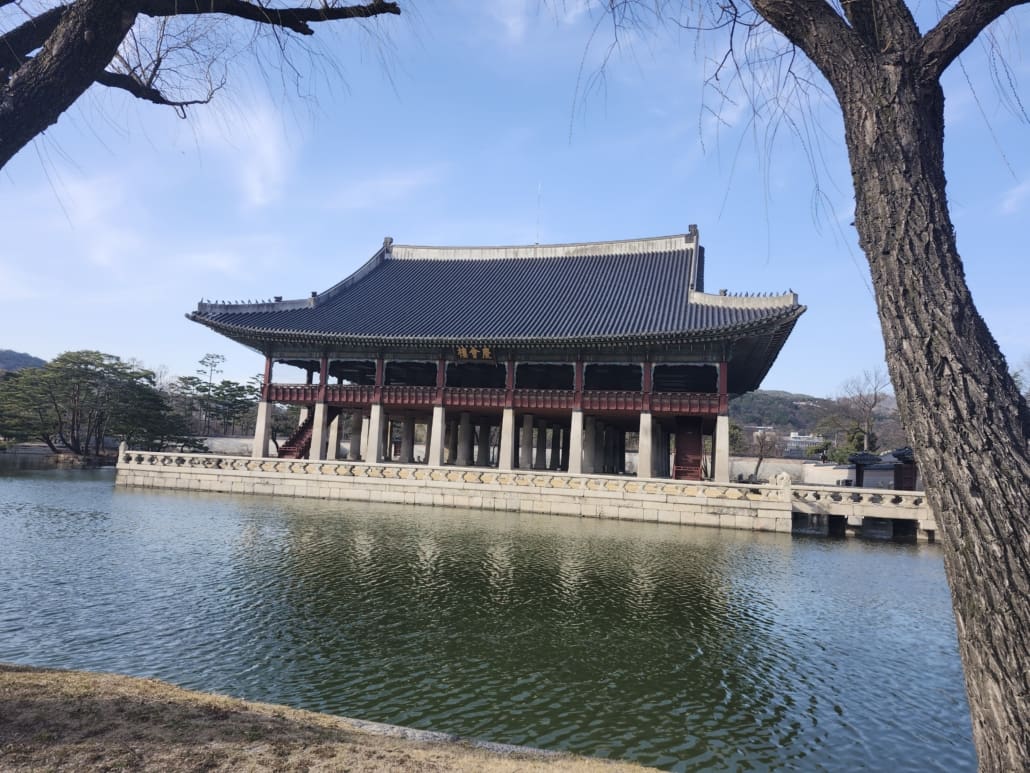
Lastly, I would be deeply remiss to not talk about Seoul’s shining gem, the Gyeongbokgung Palace at the head of Gwanghwamun Square. No trip to Seoul is complete without a visit to the palace, but unfortunately, due to our poor timing, we went on one of our last days and only had about an hour and a half to explore.
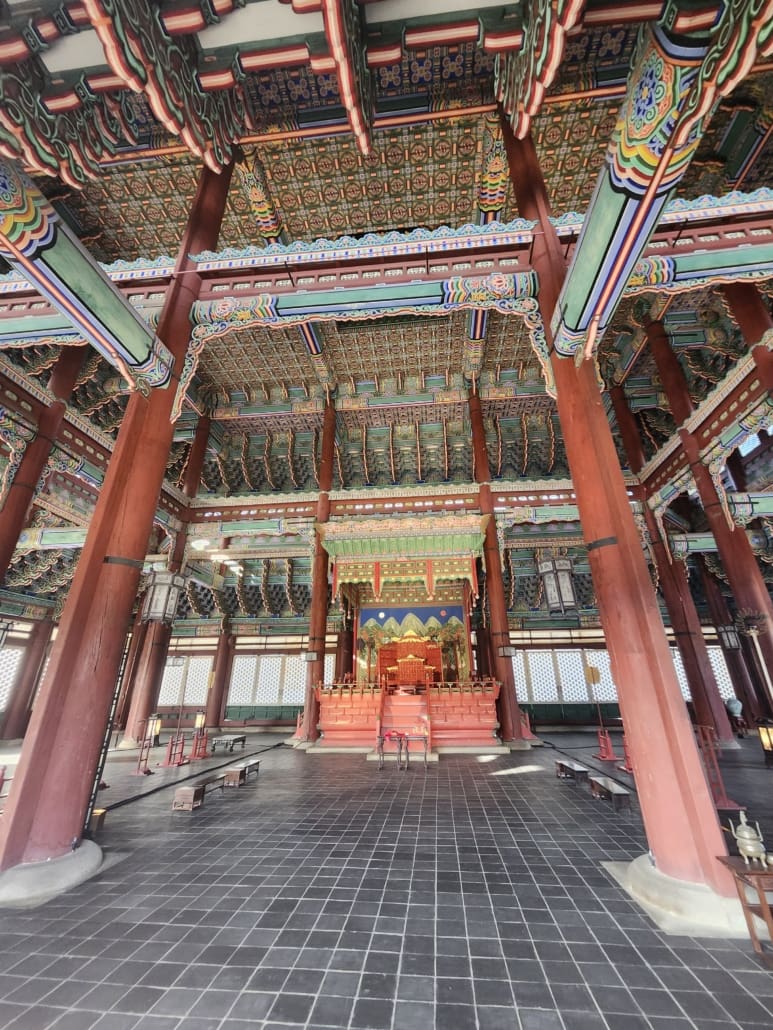
Gyeongbokgung Palace, the largest and most historically significant of the Five Grand Palaces built during the Joseon Dynasty. From the moment you enter through the massive main gate, you’re immediately struck by the scale and symmetry of the palace grounds. The architecture is both grand and incredibly detailed, with vibrant colors and intricate designs that reflect the artistry, religion, and cultural values of the time period.
One of the highlights of visiting is witnessing the changing of the guard ceremony, which offers a glimpse into royal traditions and adds a dynamic, living-history element to the experience. This is compounded by the museum’s offering of free admittance to those who attend in traditional Korean hanbok which adds a certain beauty and heritage to the grounds, walking around seeing hundreds of people, both Korean and foreign, honoring the traditional wear of the country.
Throughout the palace, you can view various halls, courtyards, and living quarters that once housed royalty and government officials. What stood out to me most to me was the way the palace itself is framed by the surrounding mountains, and the modern skyscrapers of Seoul on the opposing side.
Walking through Gyeongbokgung feels like stepping directly into Korea’s past and leaving the bustling city of well over 10 million people behind the massive front gate. It’s a place that not only showcases the grandeur of the Joseon Dynasty, but also serves as a reminder of the resilience of Korean history, the palace having been destroyed and rebuilt multiple times over the centuries.
Our experience was highlighted by a lovely new city tour guide we ran into at the front gate who offered us a free tour to practice his routine and English. Though my travel partner Anna and I both knew a good amount about the palace and Joseon history already, it was honestly a great experience getting to hear the story from a local and hear his additional comments and fun facts. I would definitely recommend splurging on a tour guide or guided tour if you have the means.
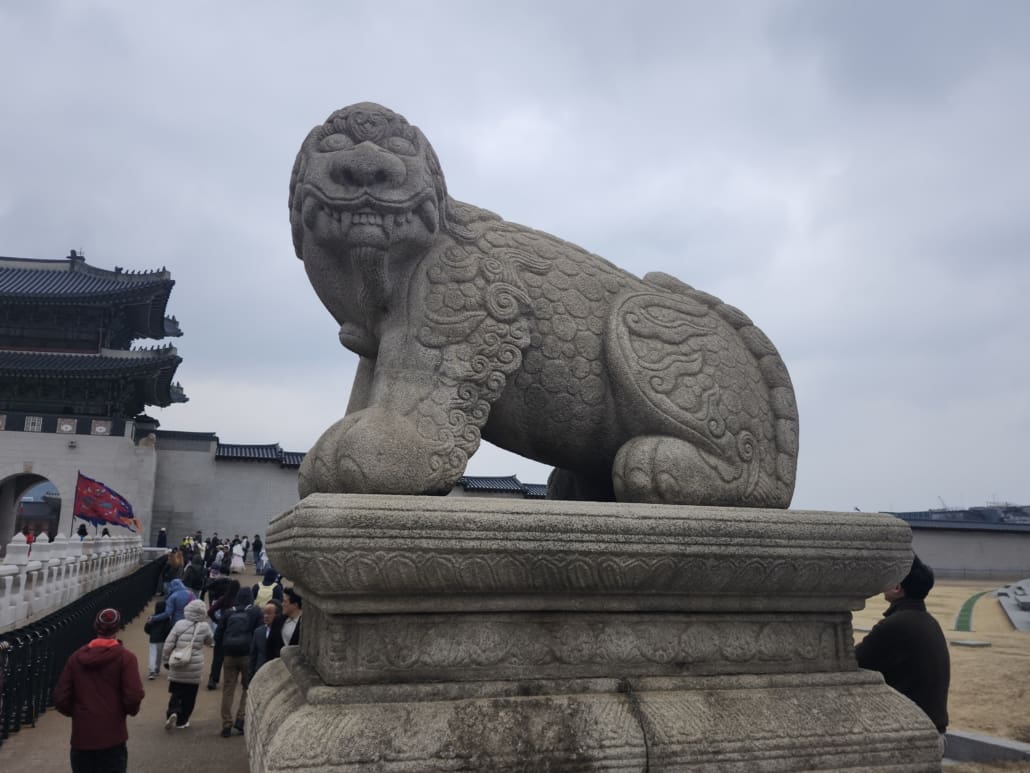
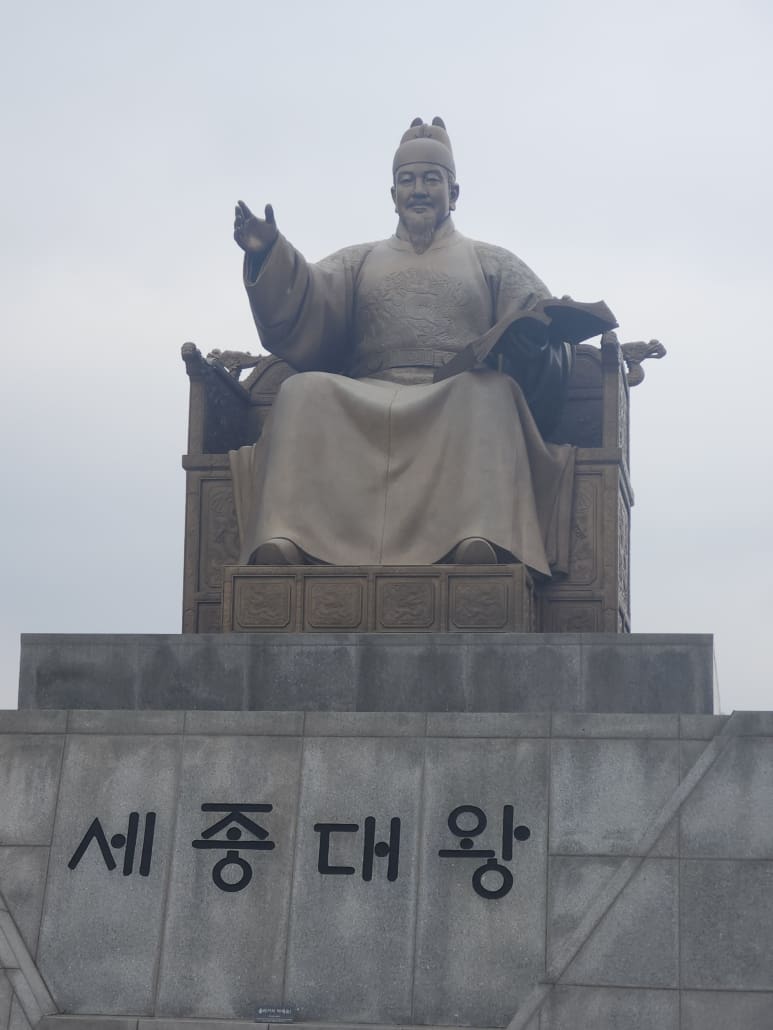
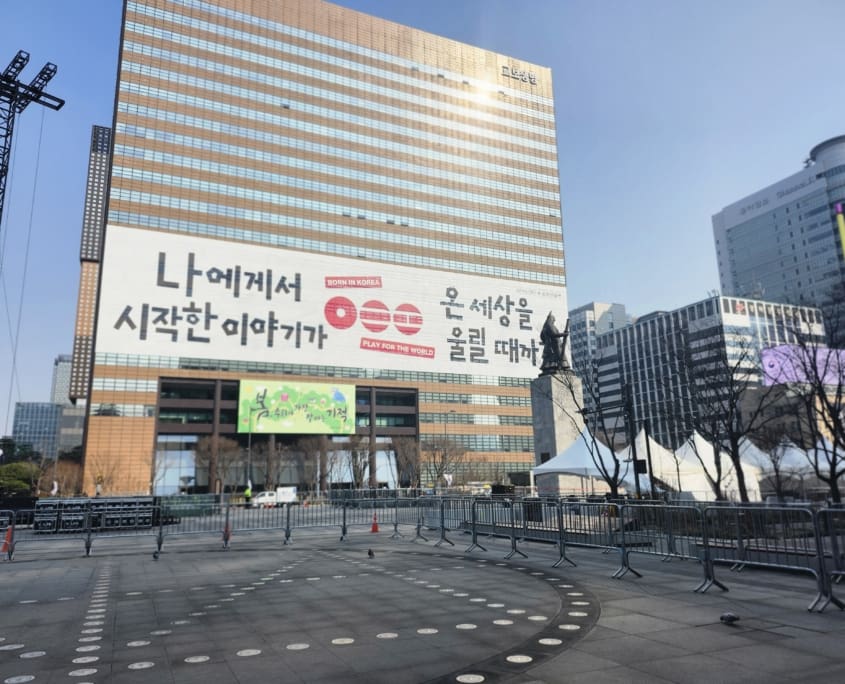
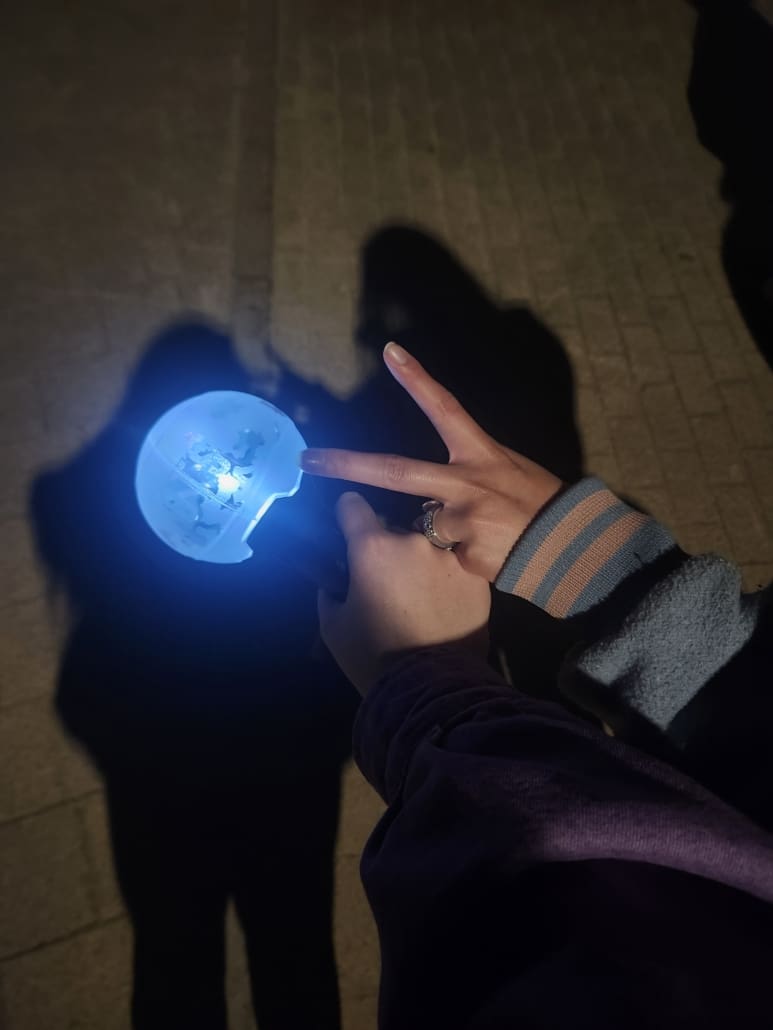
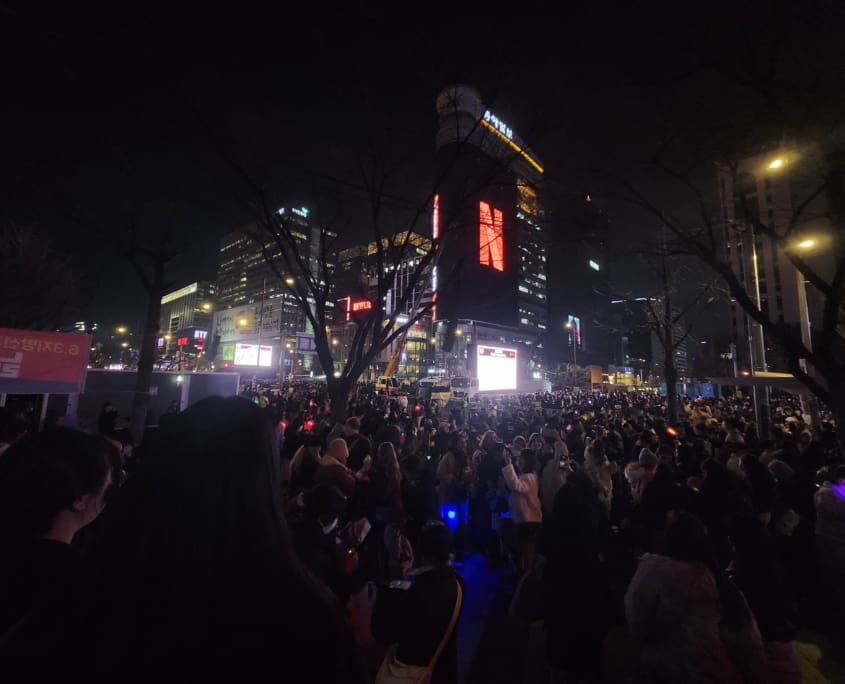
Gwanghwamun Square in front of the palace is not to be missed as well. Stop to enjoy and read the various placards and statues throughout the large sprawling street. Our experience was especially unique as the square was completely transformed into a living, breathing, and evolving by-the-day shrine to BTS and their comeback. A comeback which ended our trip with a once in a life time, never-before-done-before, concert held in the very streets of Seoul, framed by the grand historic palace itself at the end of the King’s Mile. The concert drew staggering numbers. Well over 100,000 people filled the streets of Gwanghwamun that evening, from every corner of the world, and over 18 million joined virtually, all to witness the return of BTS.
Closing Tips and Tricks For Travel
Has this trip inspired or helped you plan a trip to Korea? Here are some additional trips to help you explore and navigate in peace:
- Google Maps doesn’t work in Korea; Naver Maps is a must to get around the city.
- Taxis are cheap! Use them! Orange taxis usually have international speaking drivers, Uber works well in most major areas, you can always flag an empty cab (part of the fun is getting very confused with a Korean speaking ajussi, so I recommend doing it at least once).
- Get a T Money card or a Climate Card from a local convenience store and charge it in the subway station to be able to take buses and trains around Seoul.
- International ATM’s absolutely hated me and would not work anywhere outside of the airport. Make sure you figure out a cash situation in the early days of your trip because many street vendors will only take cash, and local food is not something you want to miss out on in Korea.
- Make sure you carve out some time to learn some basic phrases in Korean before your trip. Thank you, excuse me, how much, and please give me– these are all necessities.
Thank you for joining me on this recounting of my beautiful trip. Korea was absolutely amazing, and this list doesn’t even begin to touch all of the amazing things I was able to experience and attend outside of heritage sites and museums. Korea is a country best explored at a slow pace, as it truly has something for everyone.
읽어주셔서 감사합니다
Hunter Panoch
Gammelgården Museum
Social Media, Marketing, and Exhibits
