Fur Trade in MinnesotaExploring the World of ImmigrantsFolk Dräkt - Toarp, SwedenBirch: Art & FunctionScandinavian Fish and FishingComparisons of Swedish and Mexican Culture1975: Celebrating 50 Years of Minnesota HistoryBeyond the Yule Goat: Exploring Goat Folklore & Mythology Across CulturesHoliday Exhibit
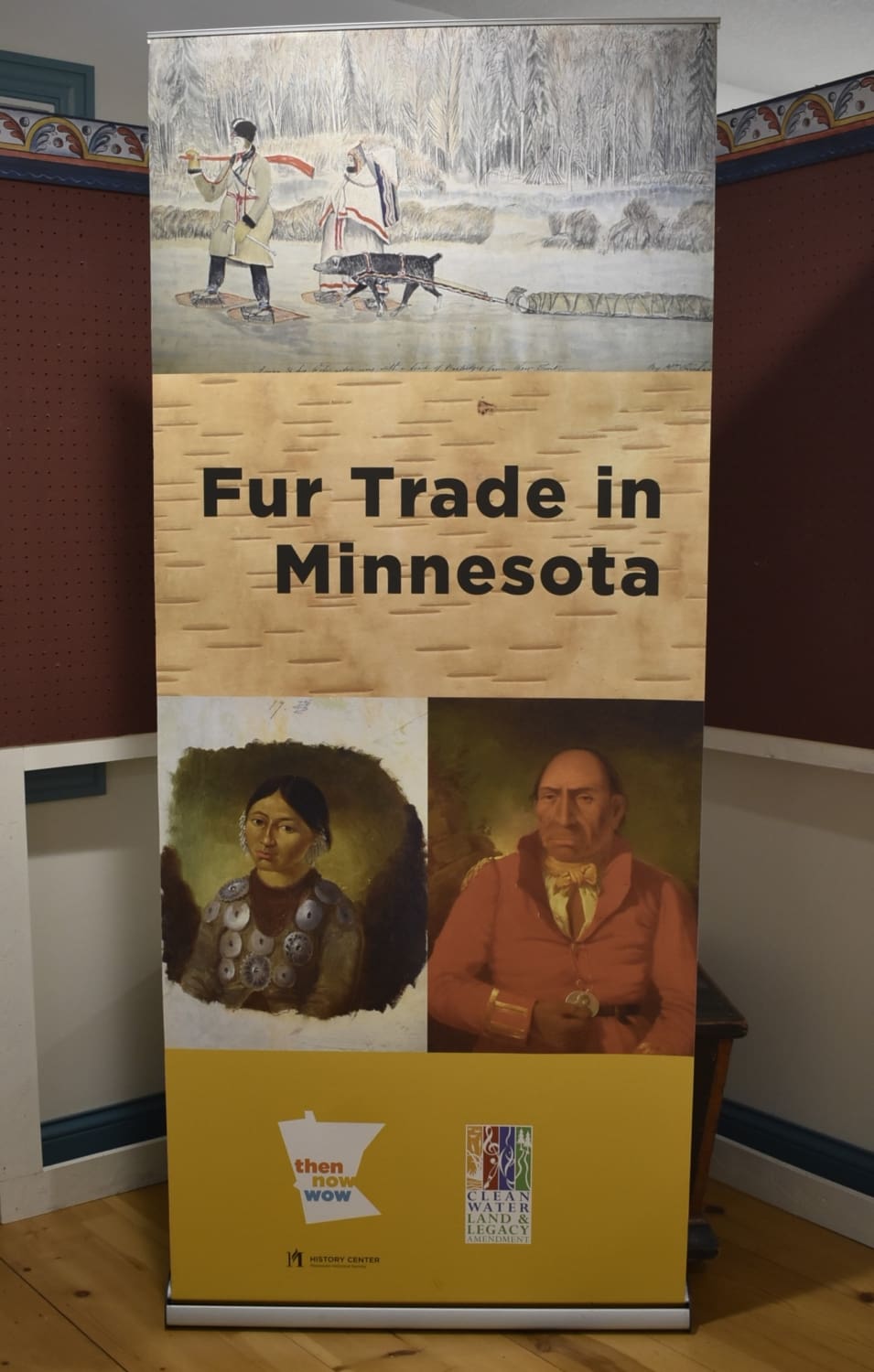
Fur Trade in Minnesota
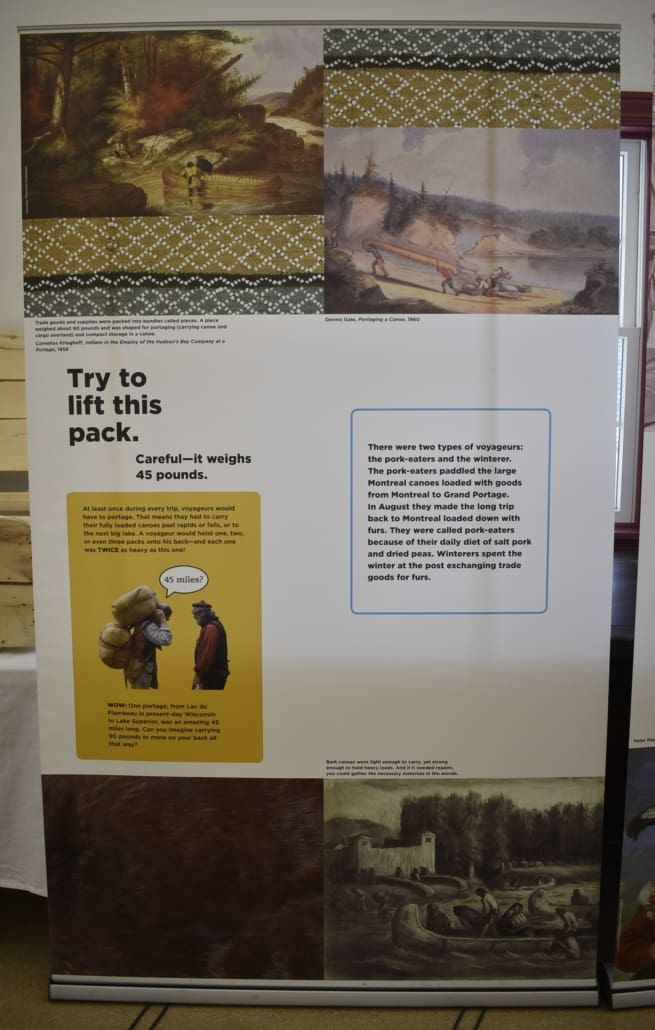
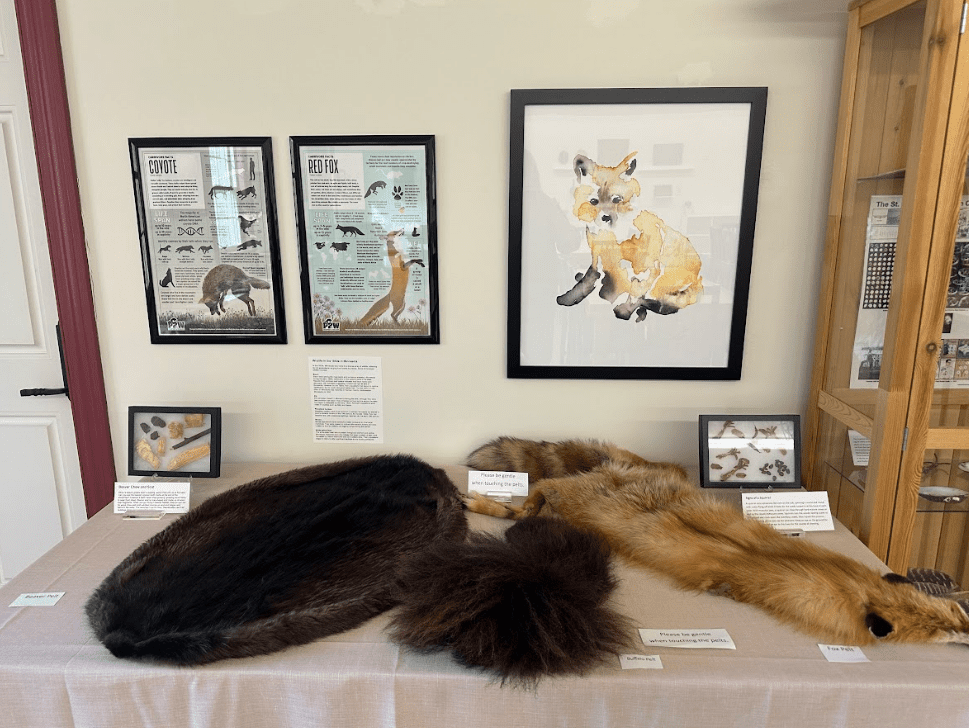
“Discover an 1800s-era international industry along the Great Lakes and in Minnesota. This traveling exhibit, rich with activities and objects, shows how plentiful beaver and furbearers brought together native people, explorers, and international trade.
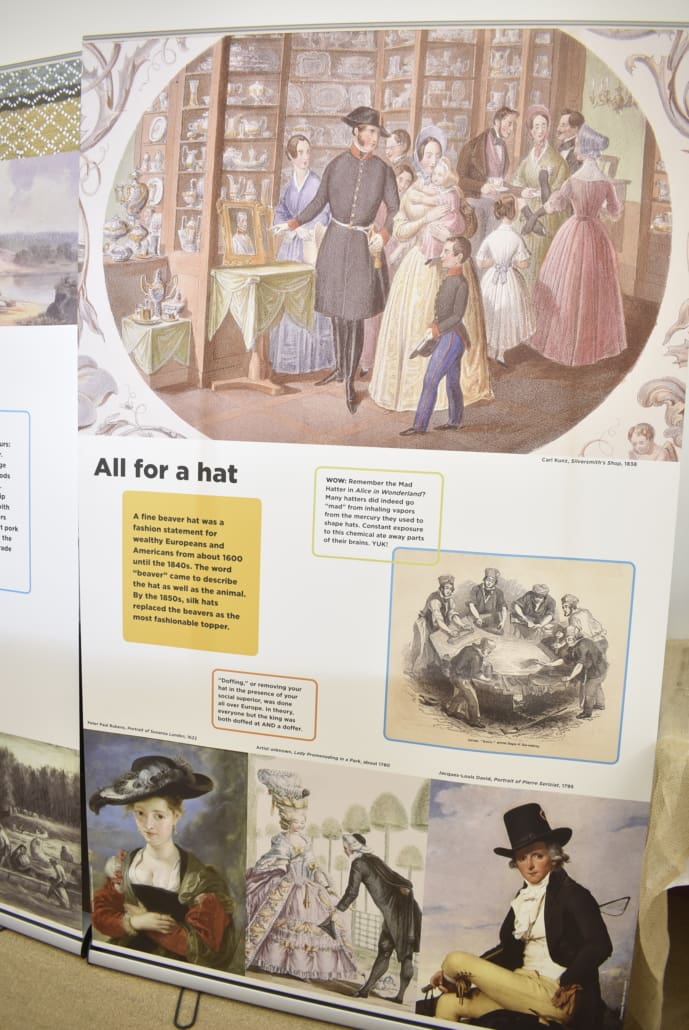
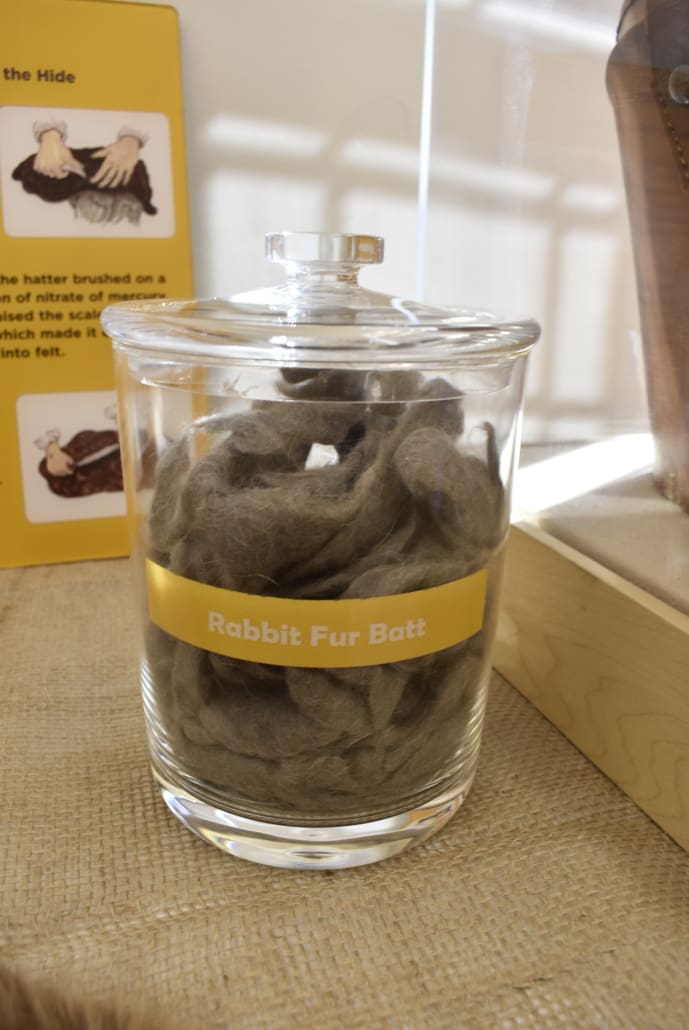
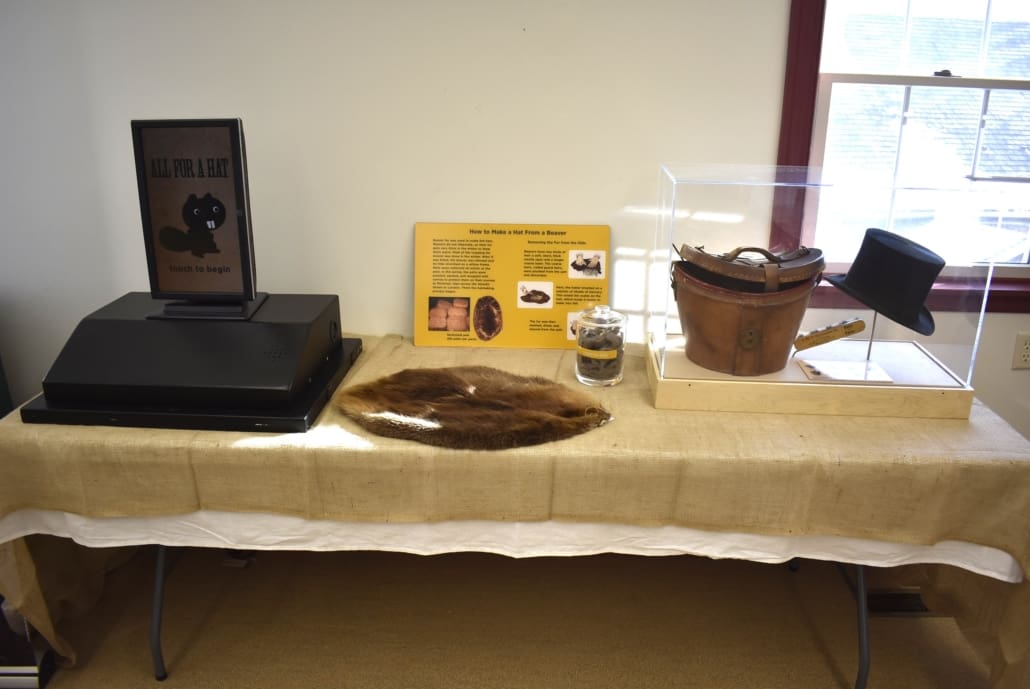
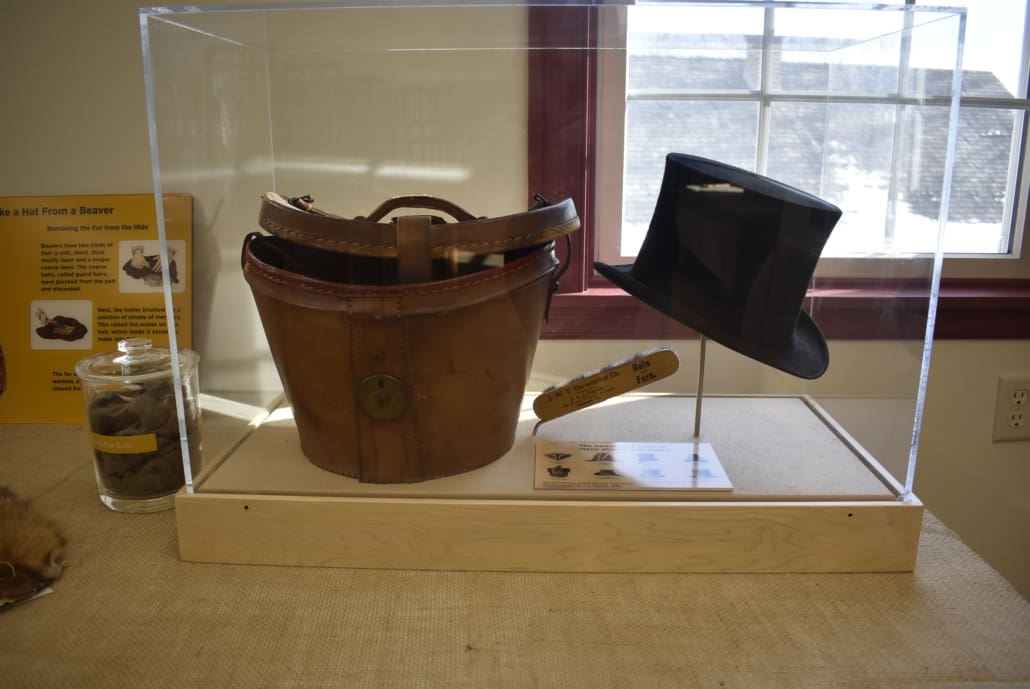
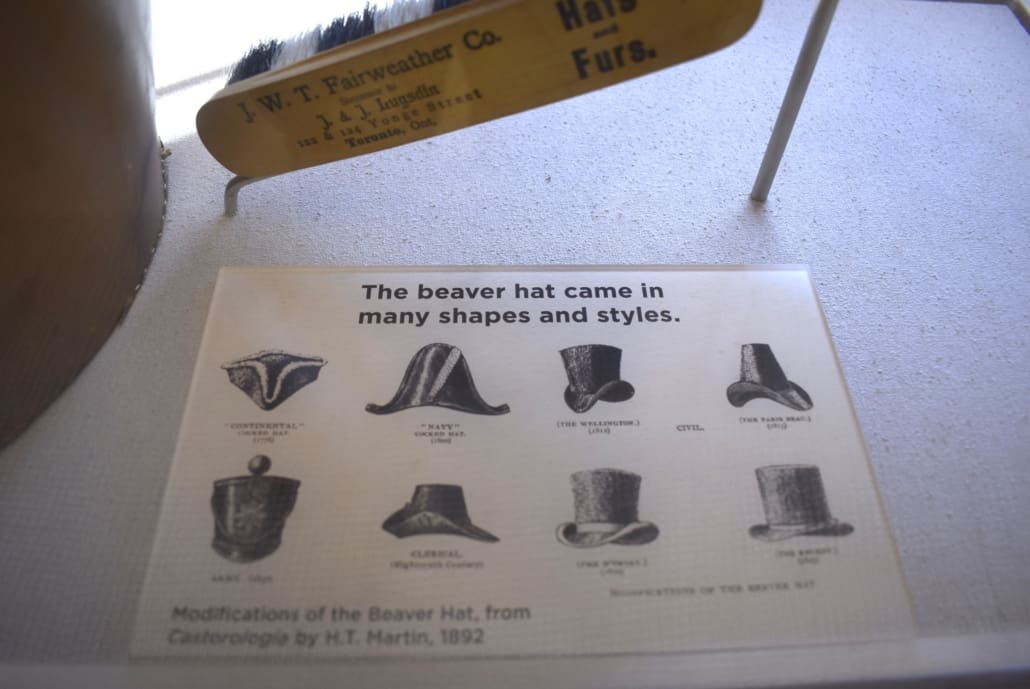
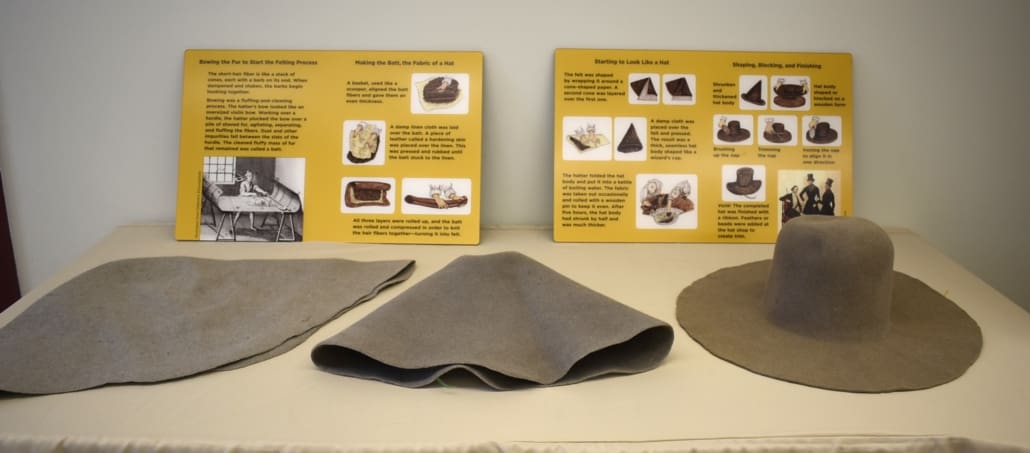
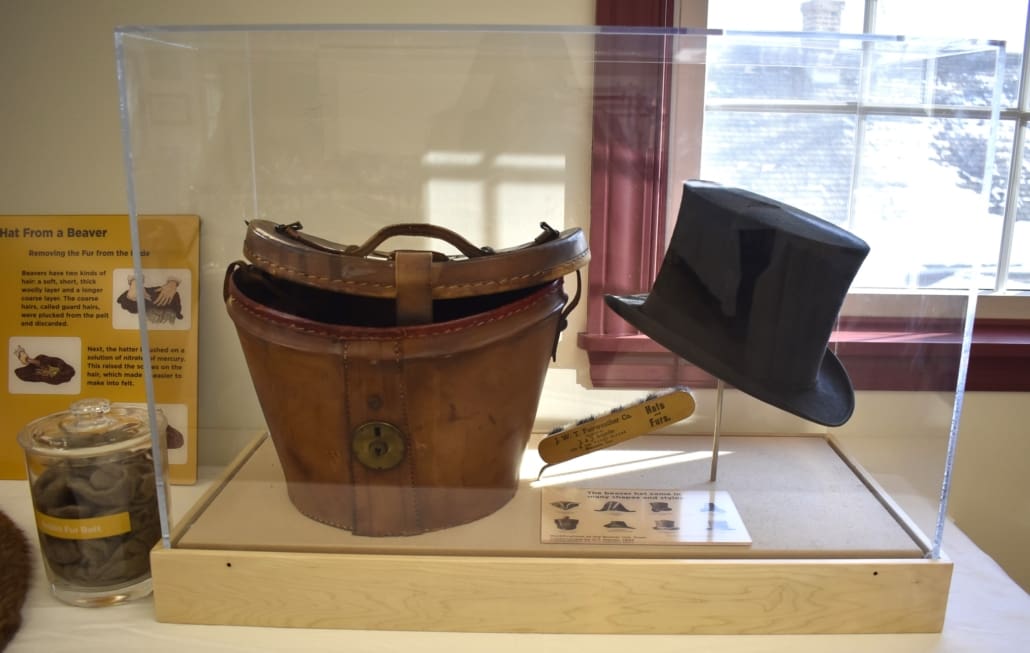
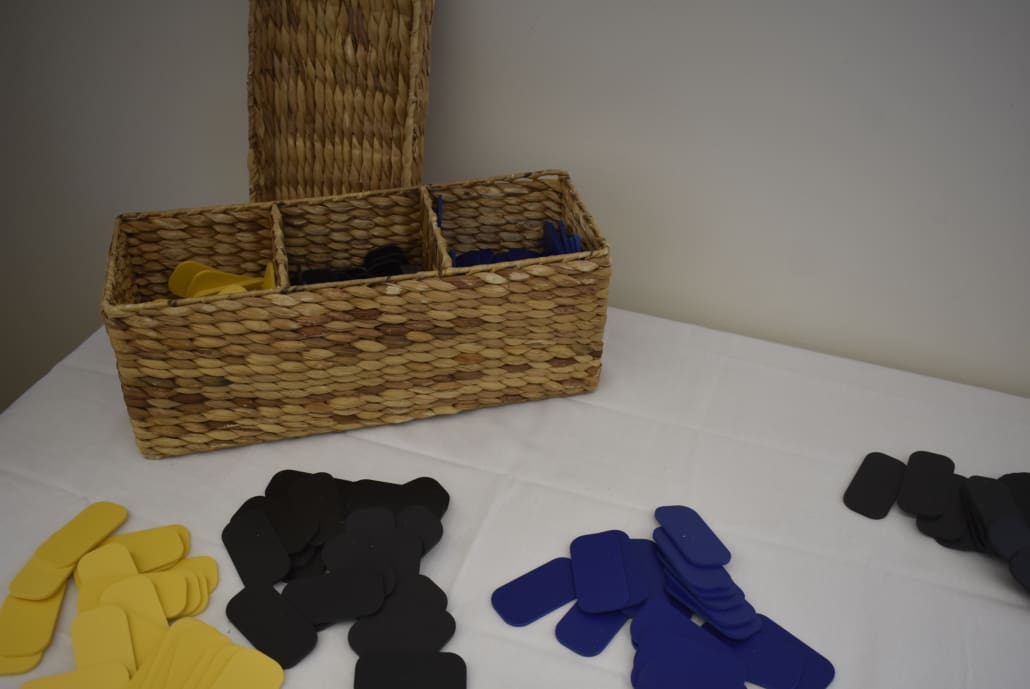
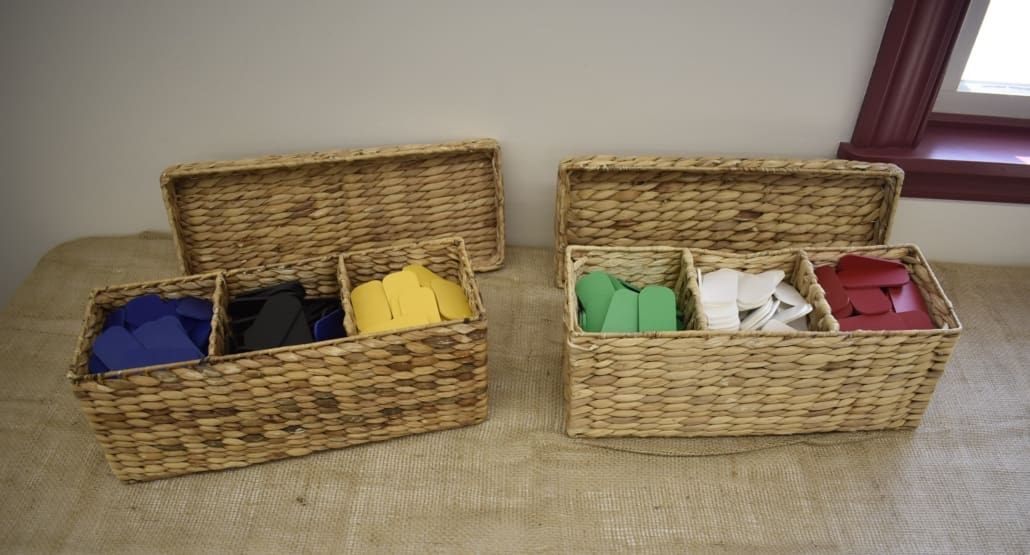
At the Fur Post, see the goods from around the world that were traded for furs and crafts. See if you have the strength to be a Voyageur or skills to be a clerk. Try your hand at Ojibwe beadwork. Learn how furs were transformed into fashionable hats.”
-Minnesota Historical Society
This was a pop up exhibit on loan to Gammelgården Museum of Scandia from the Minnesota Historical Society, January 19th-25th, 2025.
Exhibit Curation Credit: The Minnesota Historical Society Traveling Exhibits Program
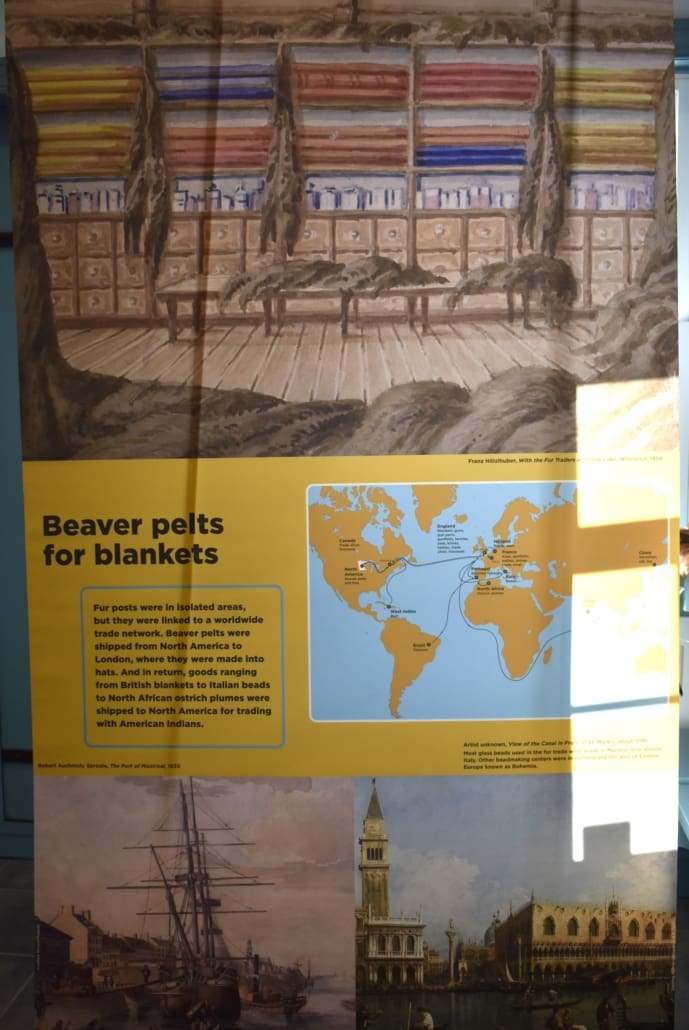
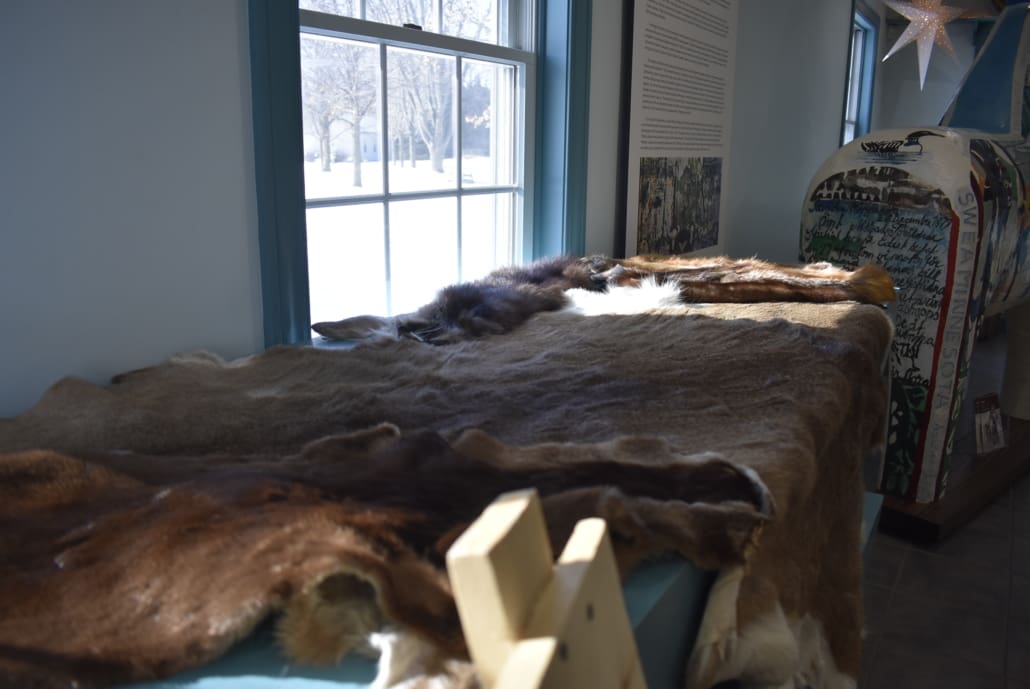
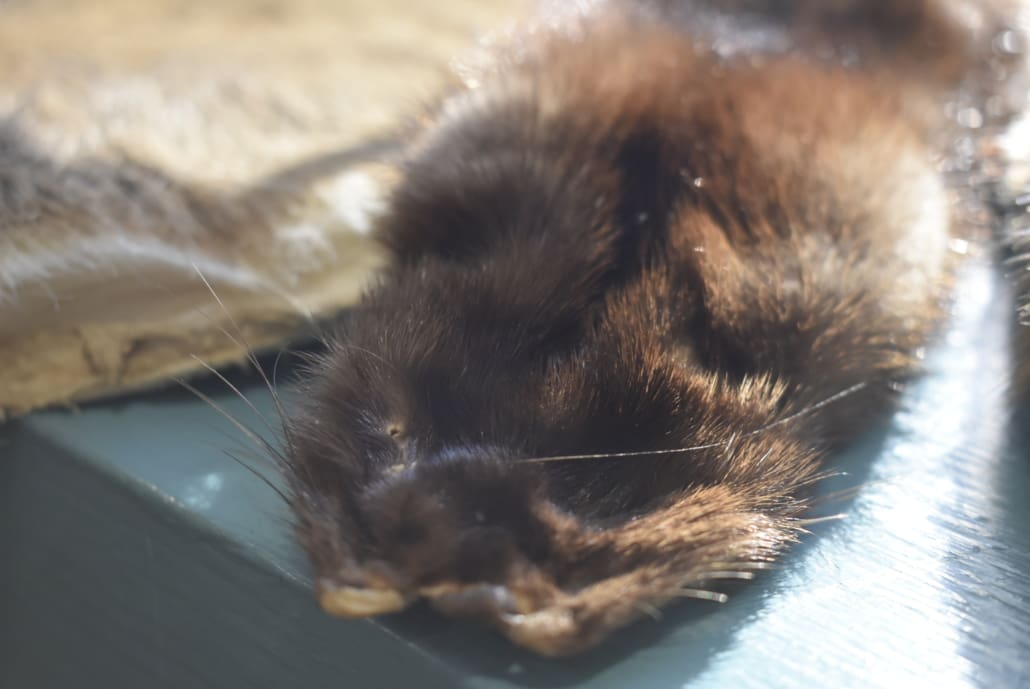
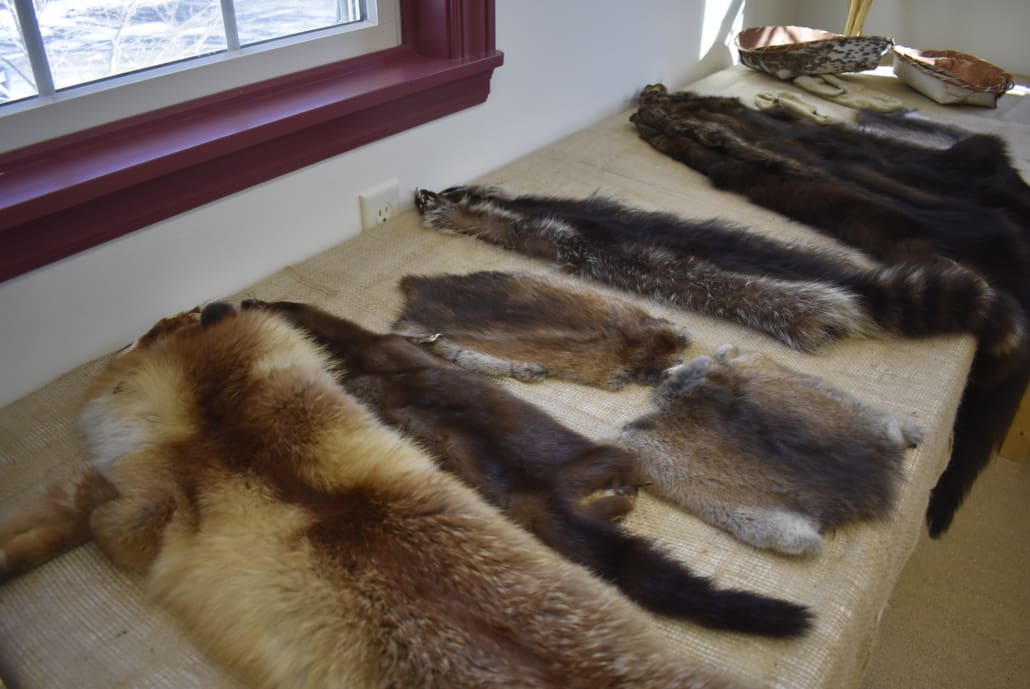
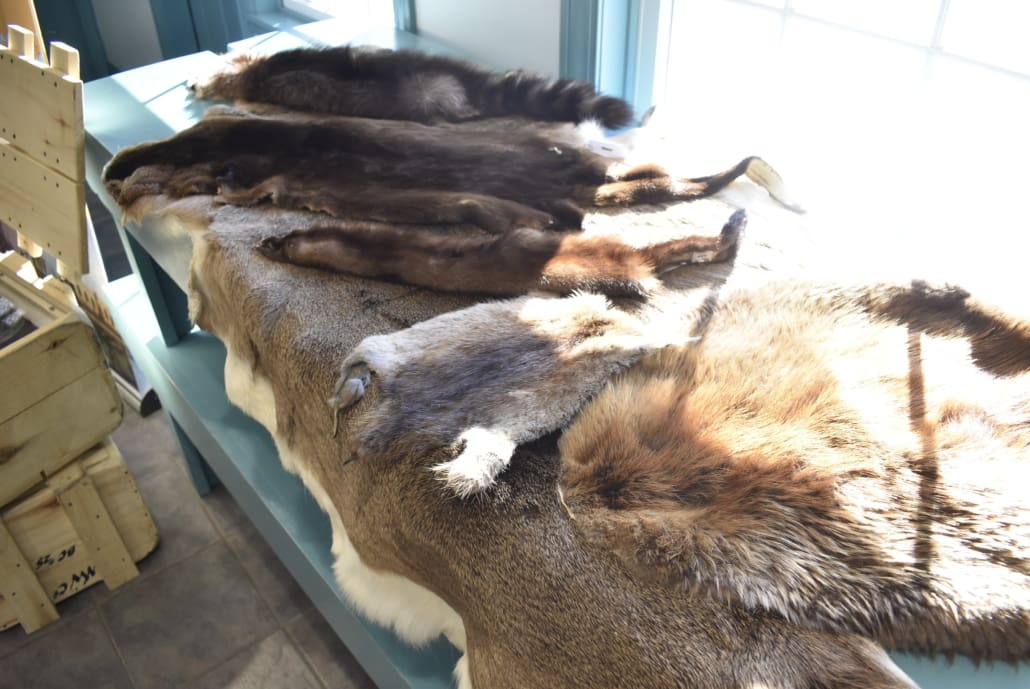
Beaver Pelts For Blankets
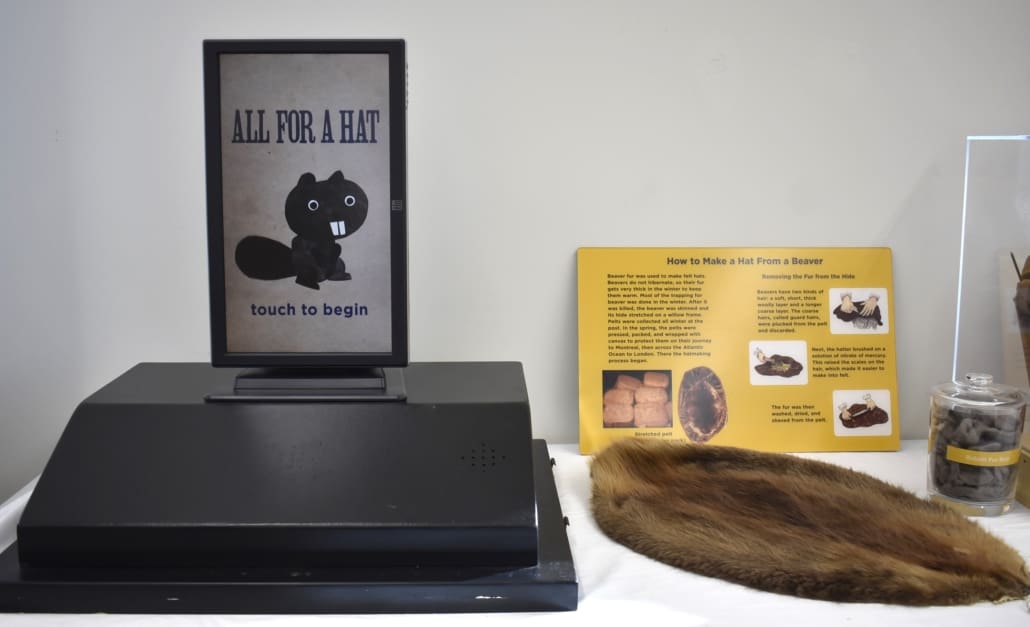
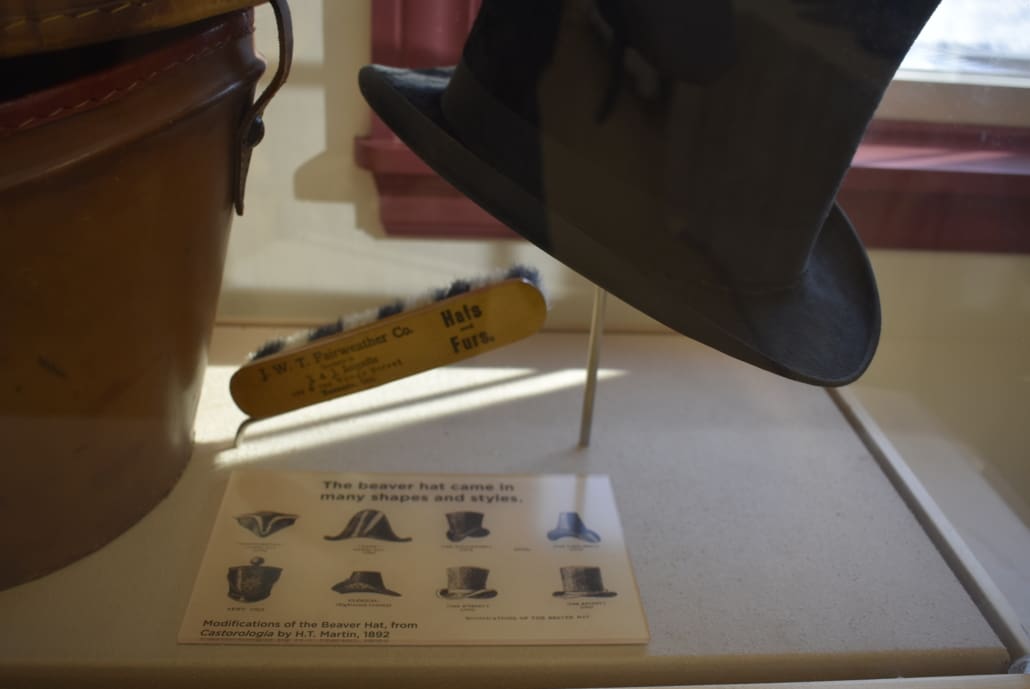
Fur posts were in isolated areas, but they were linked to a worldwide trade network. Beaver pelts were shipped from North America to London, where they were made into hats. And in return, goods ranging from British blankets to Italian beads to North African ostrich plumes were shipped to North America for trading with American Indians.

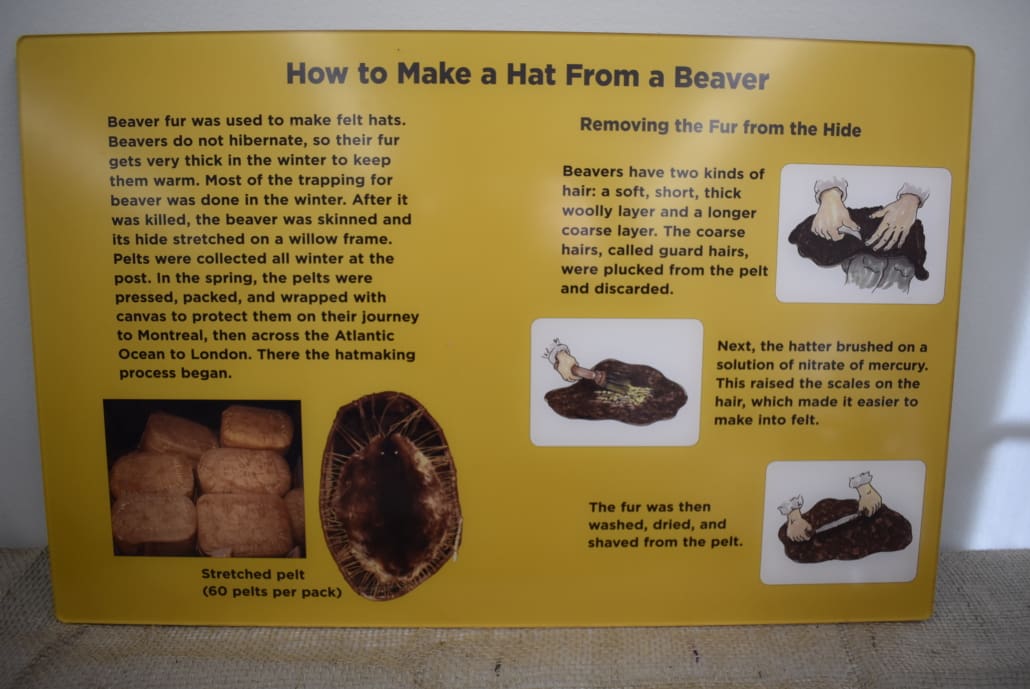
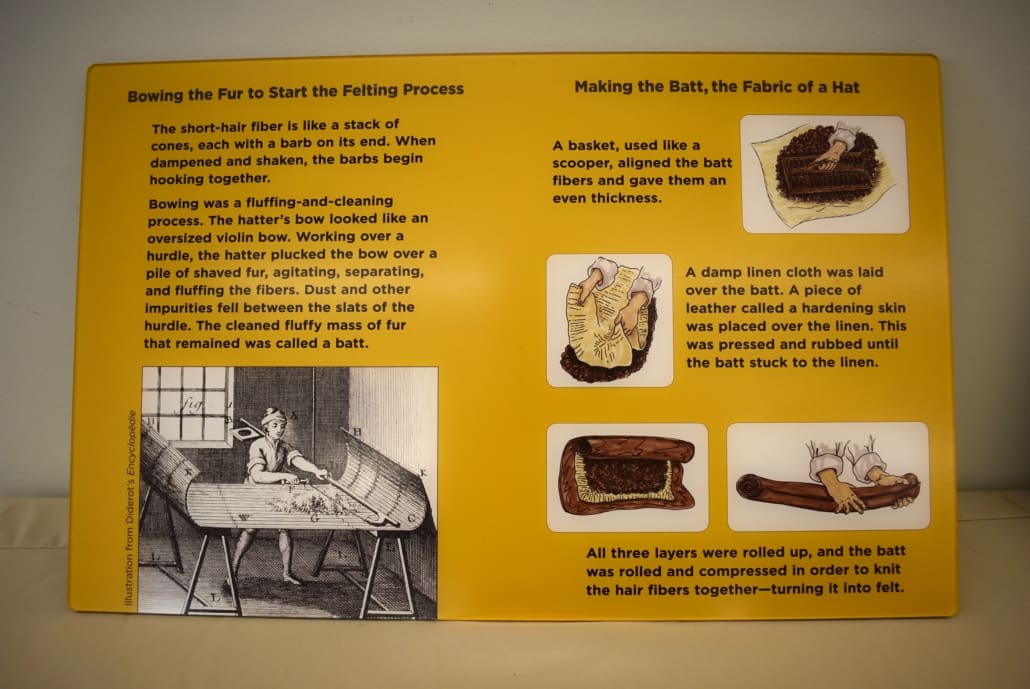
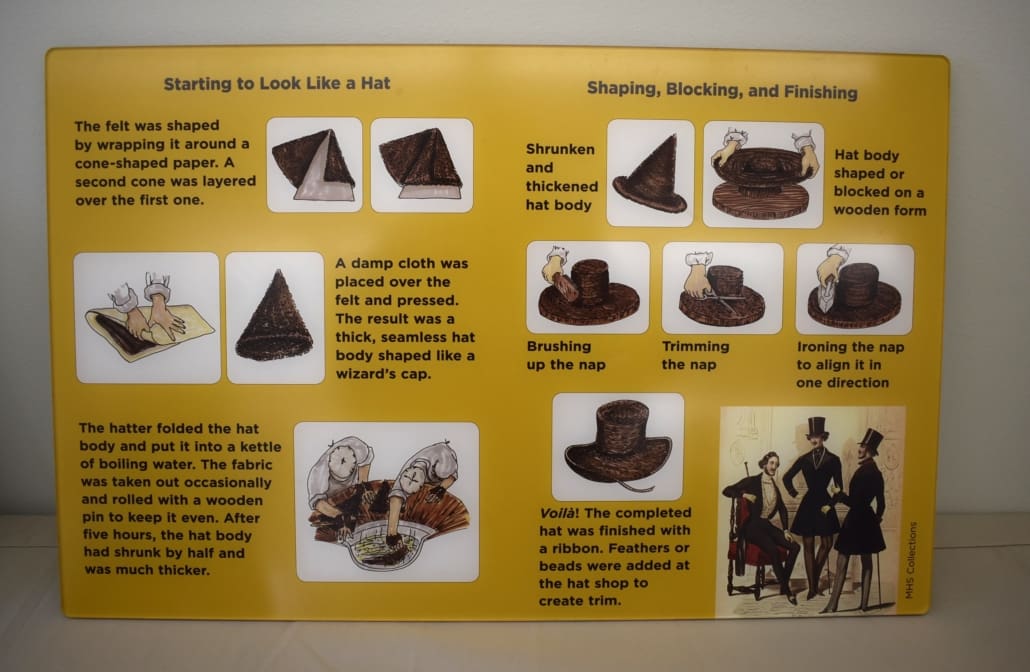
Beaver Pelts For Hats
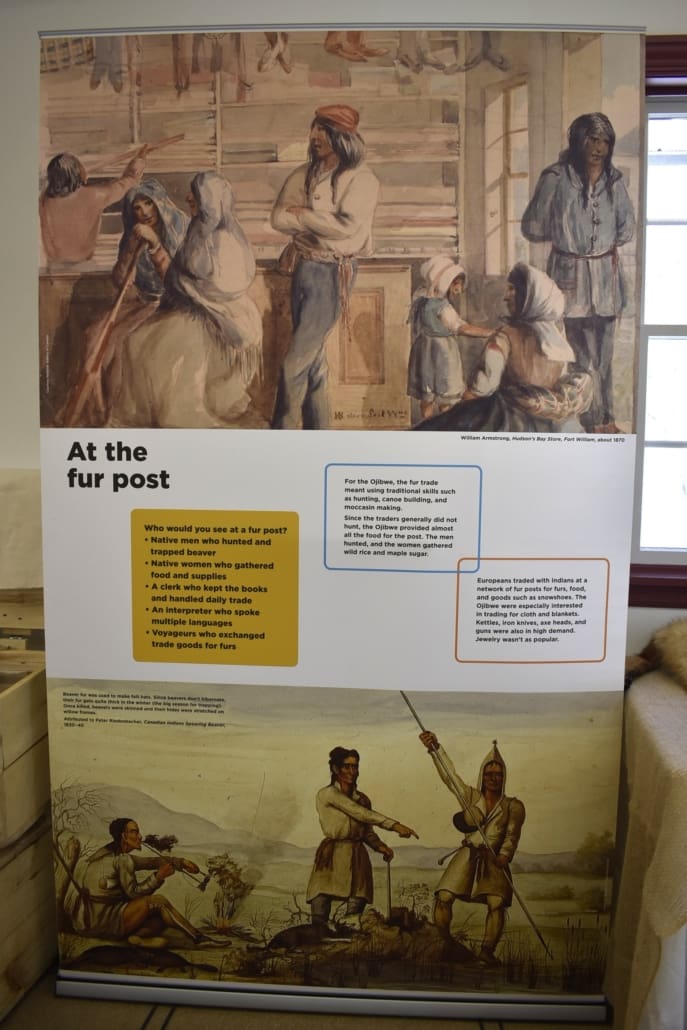
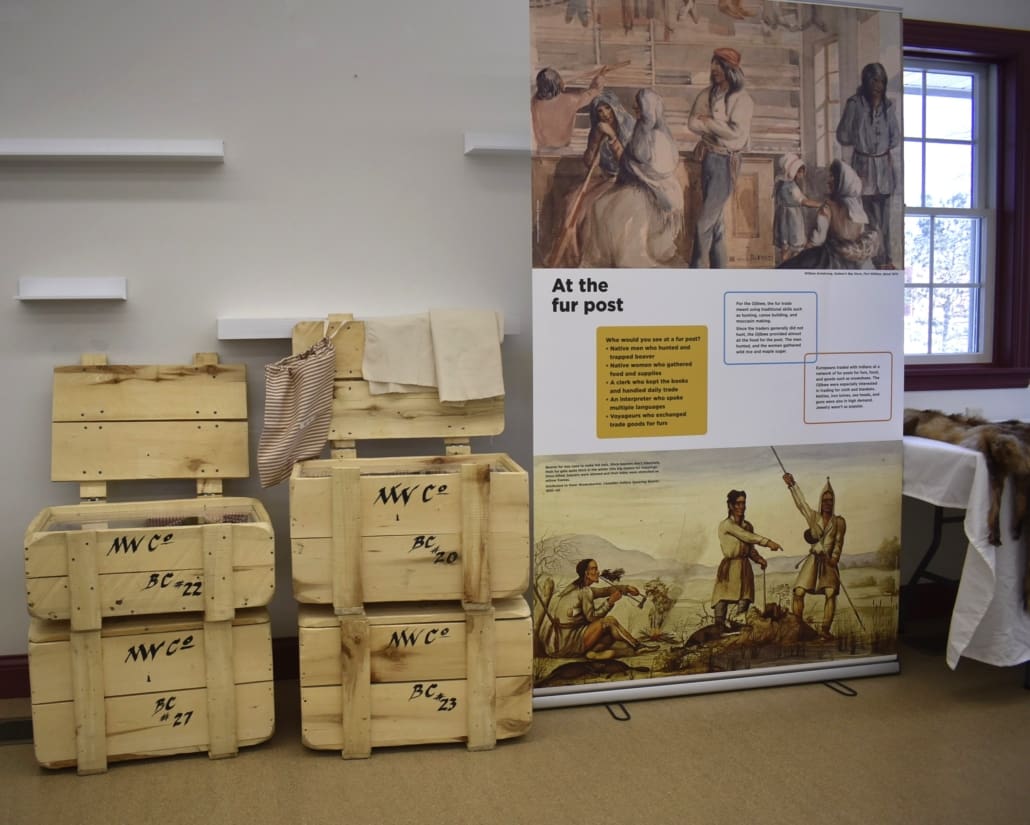
At The Fur Post
Who would you see at a fur post?
- Native men who hunted and trapped beaver
- Native women who gathered food and supplies
- A clerk who kept the books and handled daily trade
- An interpreter who spoke multiple languages
- Voyageurs who exchanged trade goods for furs
For the Ojibwe, the fur trade meant using traditional skills such as hunting, canoe building, and moccasin making. Since the traders generally did not hunt, the Ojibwe provided almost all the food for the post. The men hunted, and the women gathered wild rice and maple sugar.
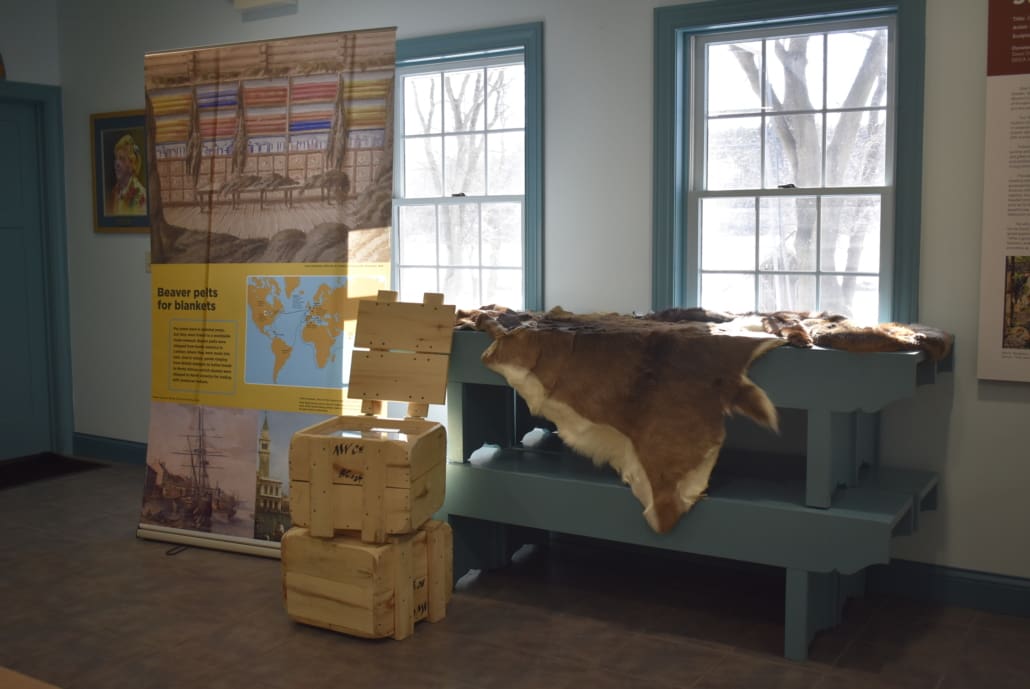
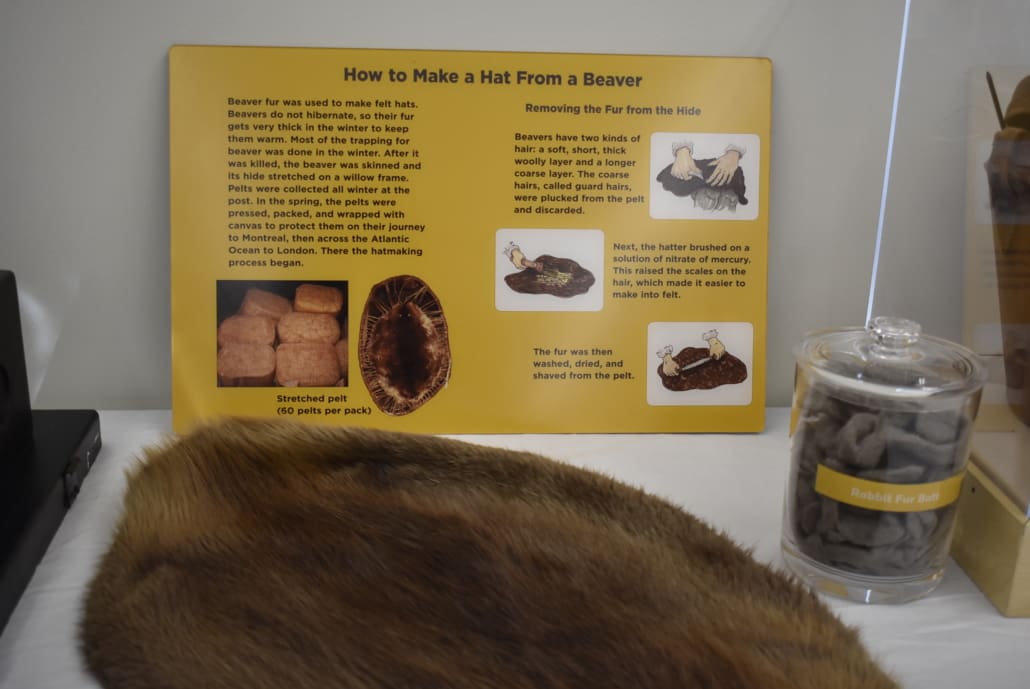
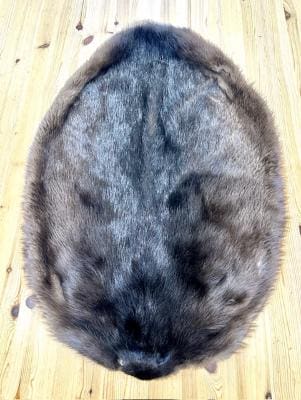
Beaver fur was used to make felt hats. Since beavers don’t hibernate, their fur gets quite thick in the winter (the big season for trapping). Once killed, beavers were skinned, and their hides were stretched on willow frames.
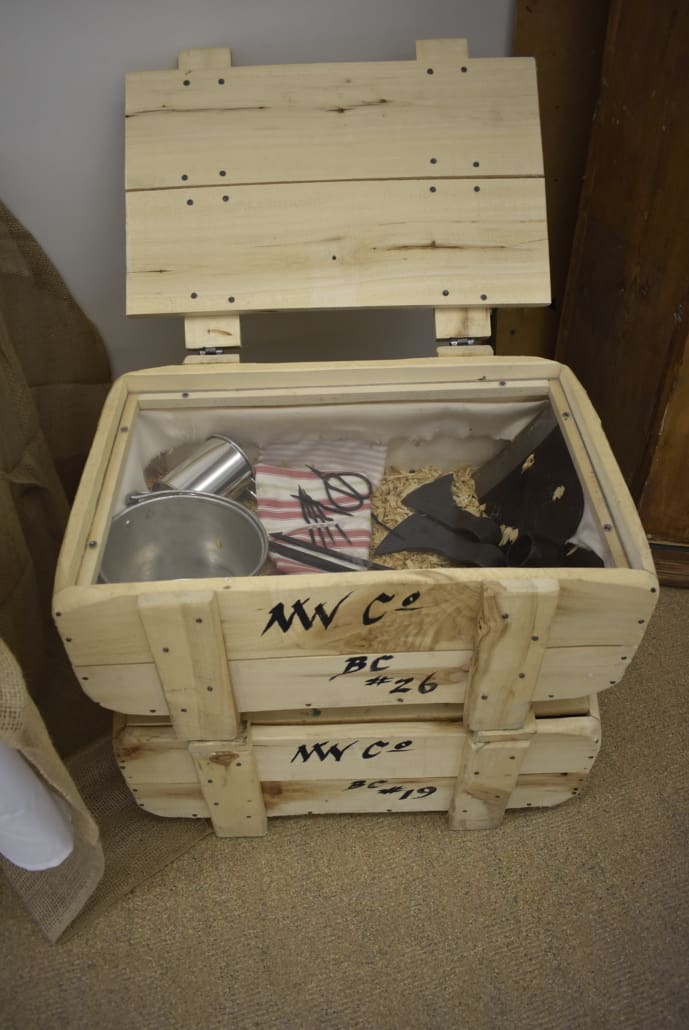
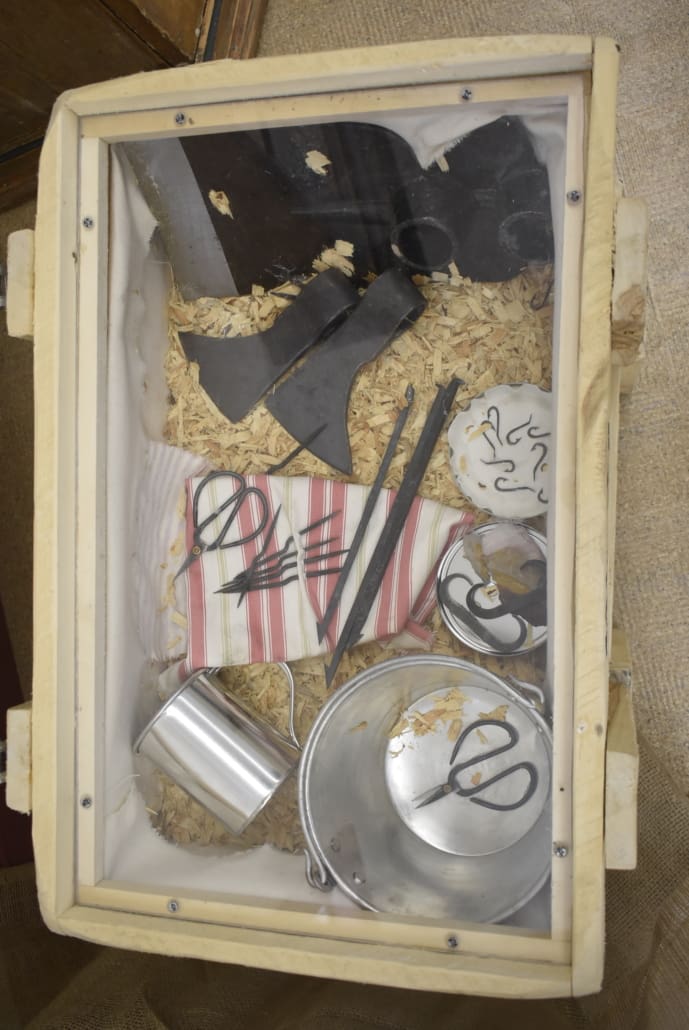
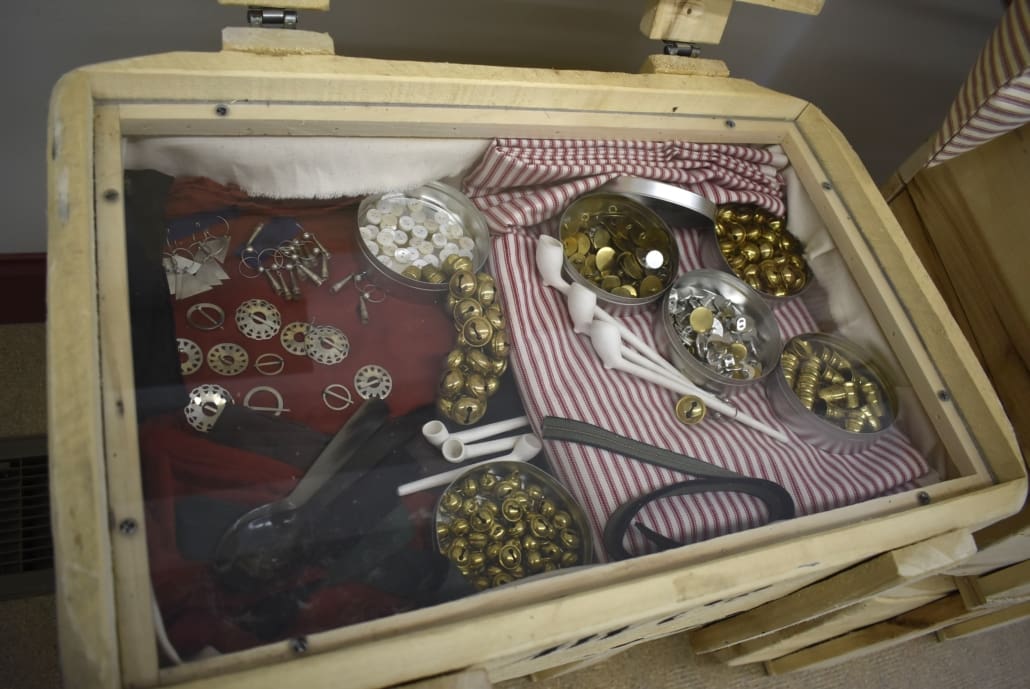
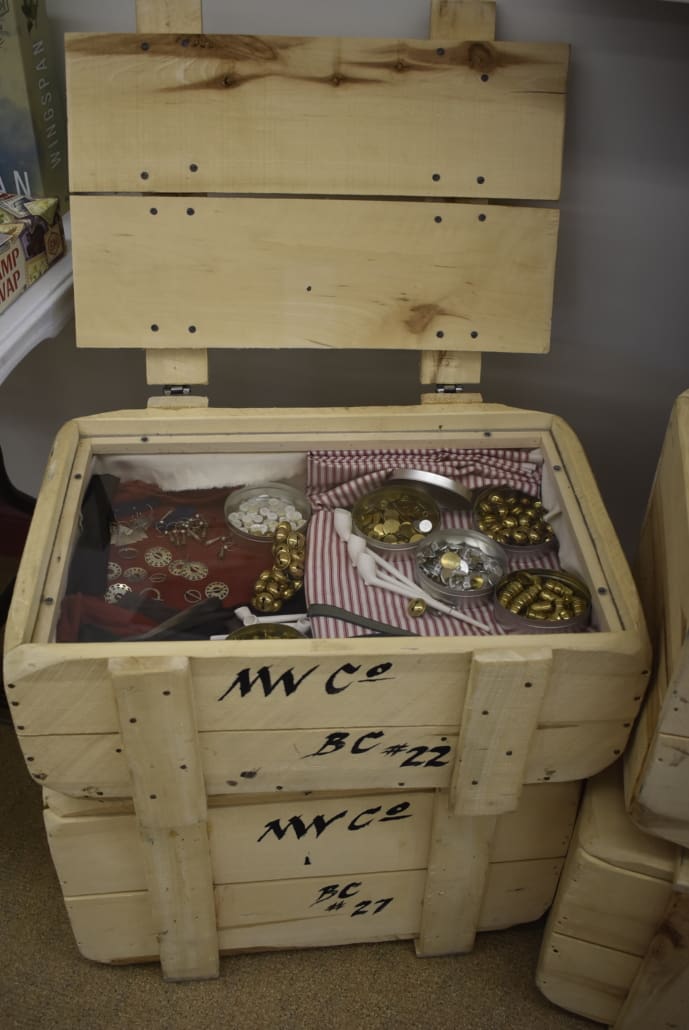
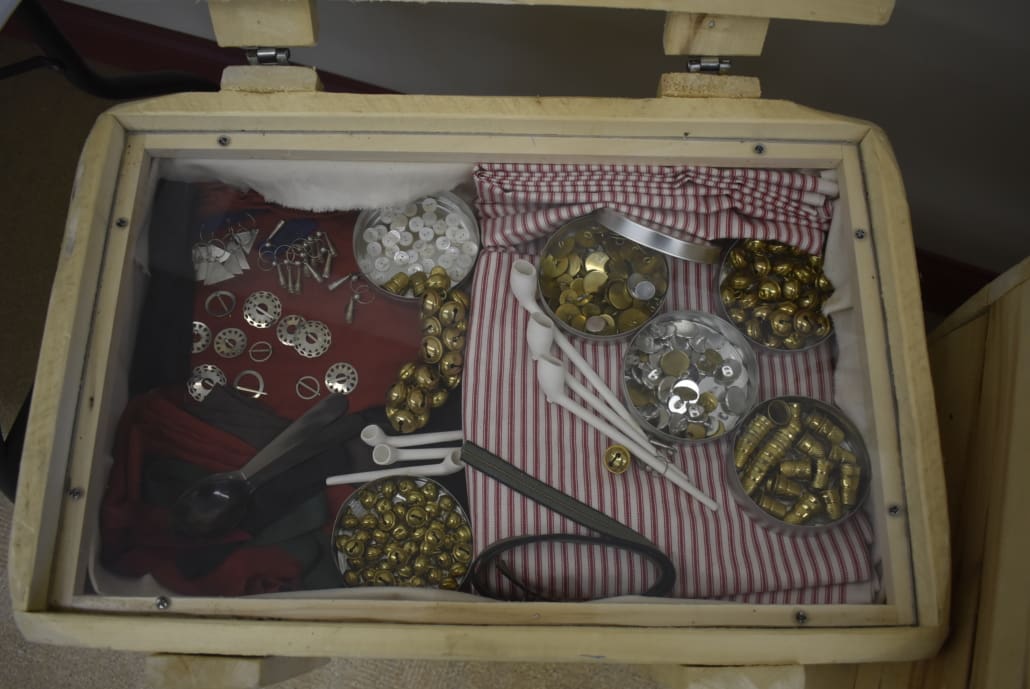
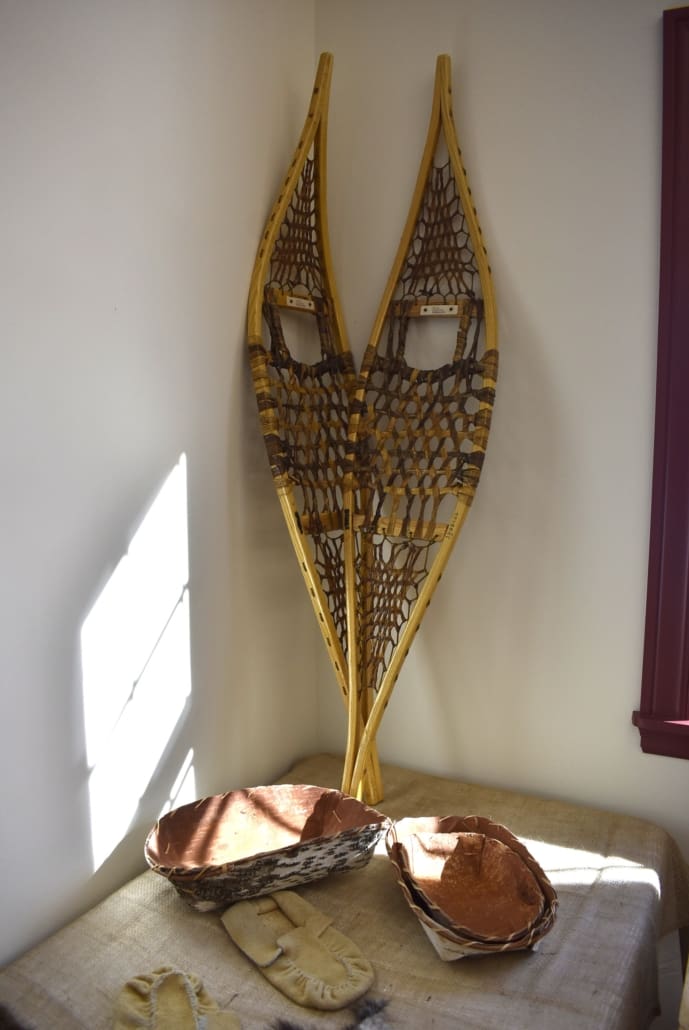
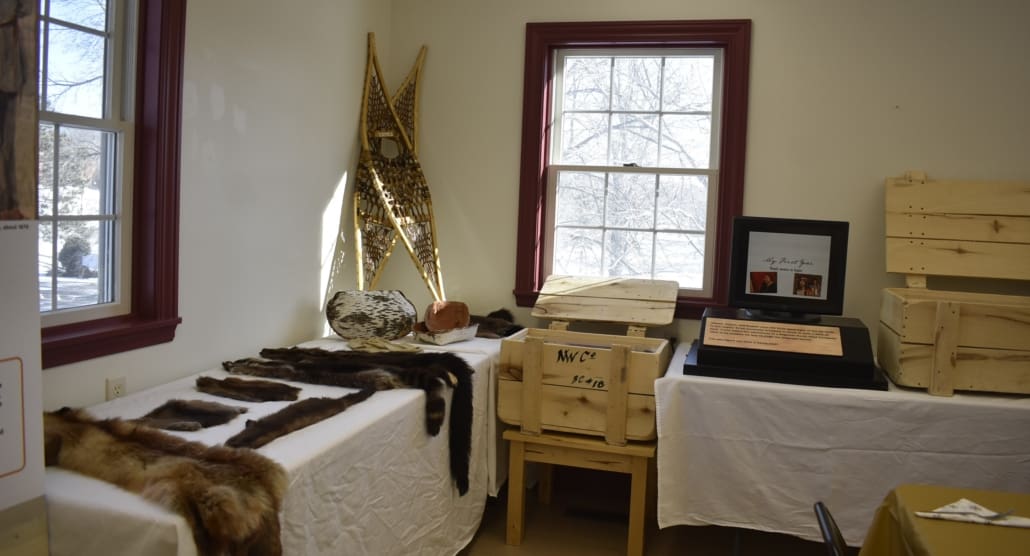
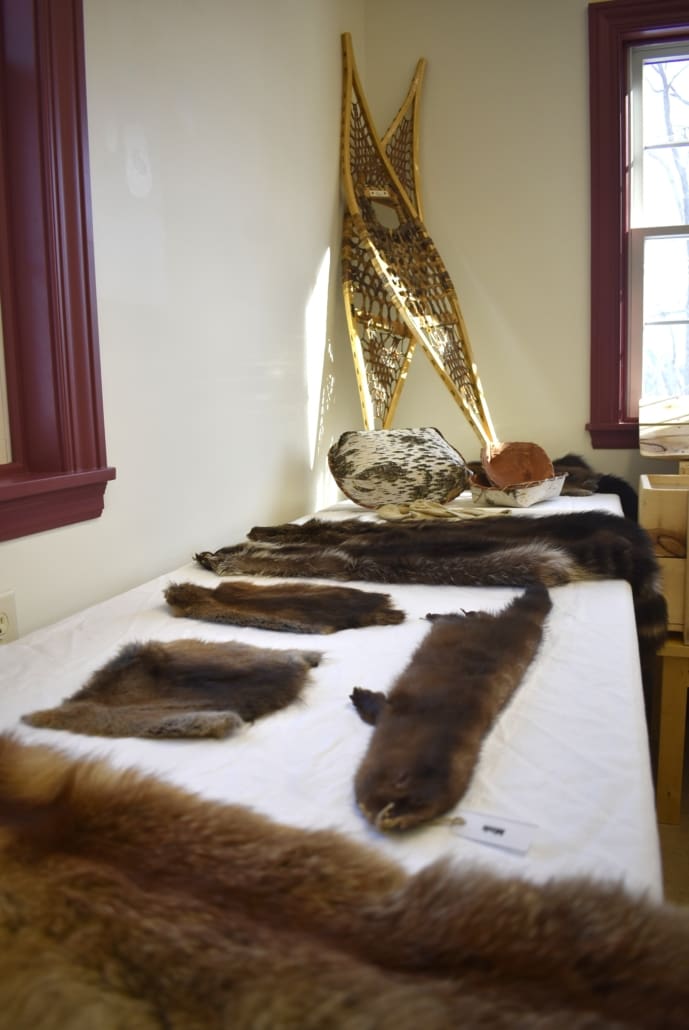
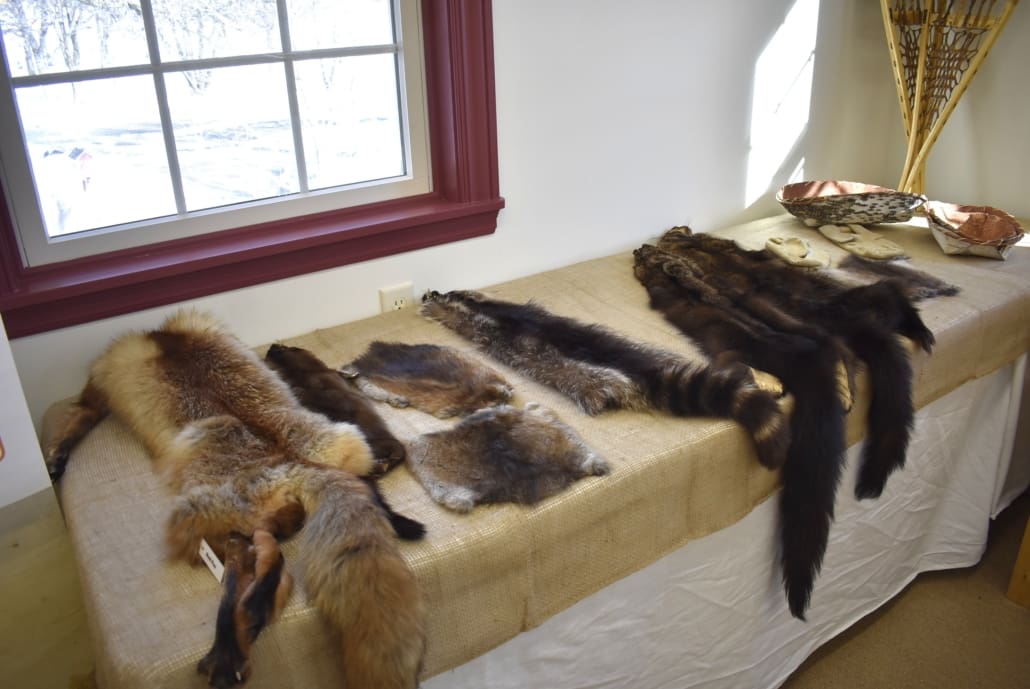
Europeans traded with Indians at a network of fur posts for furs, food, and goods such as snowshoes. The Ojibwe were especially interested in trading for cloth and blankets. Kettles, iron knives, axe heads, and guns were also in high demand. Jewelry wasn’t as popular.
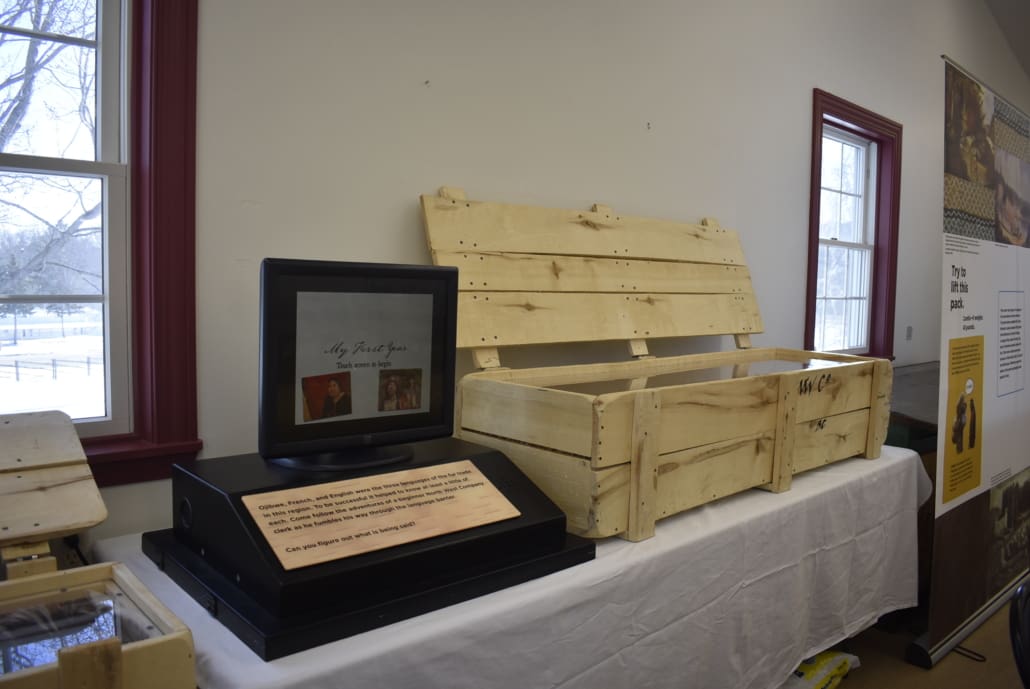
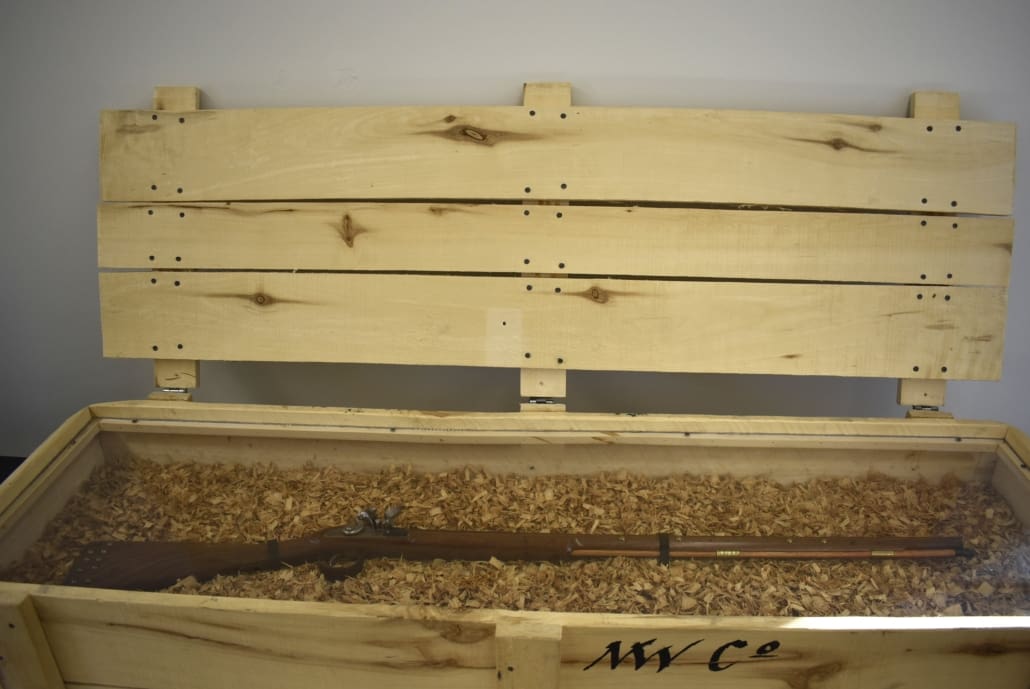
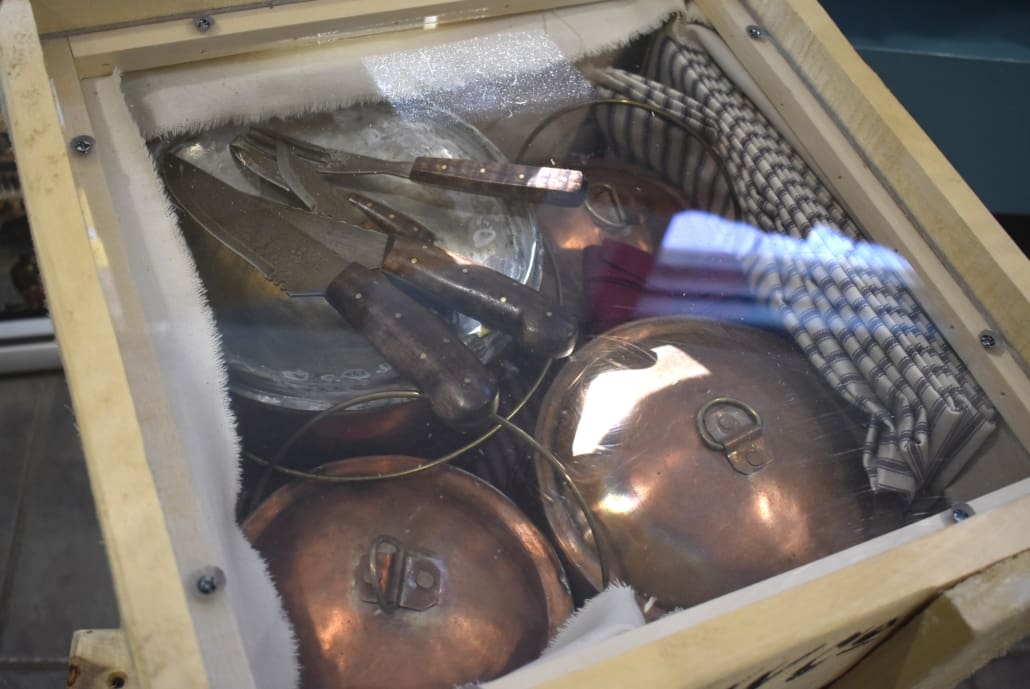
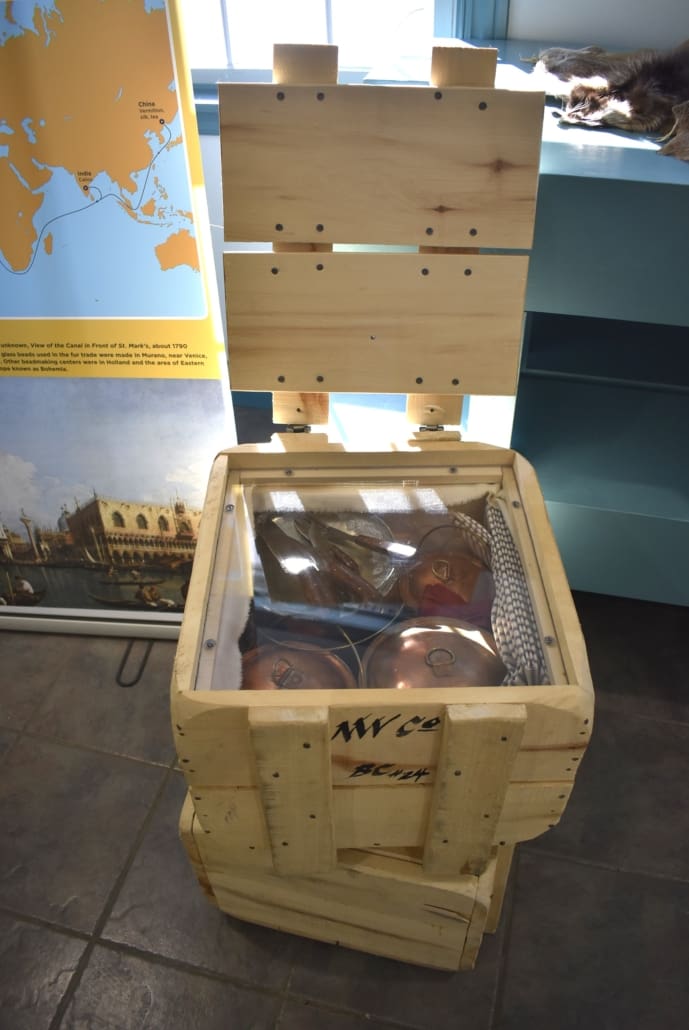
Below, you can view many of the items that would have been available for trade or commonly seen at trade posts across the Midwest.


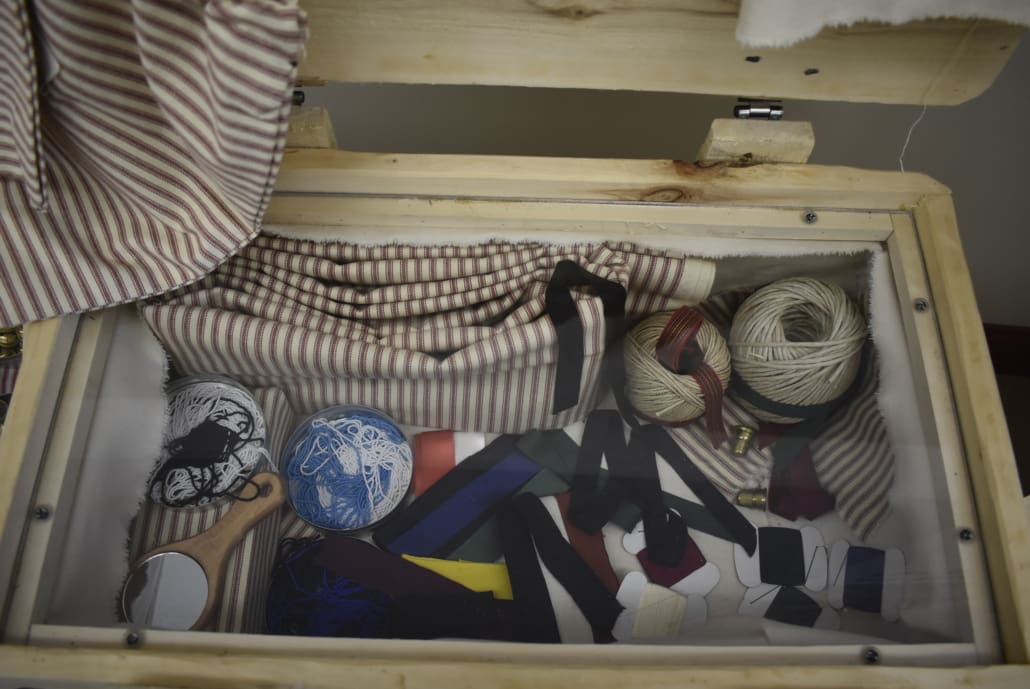
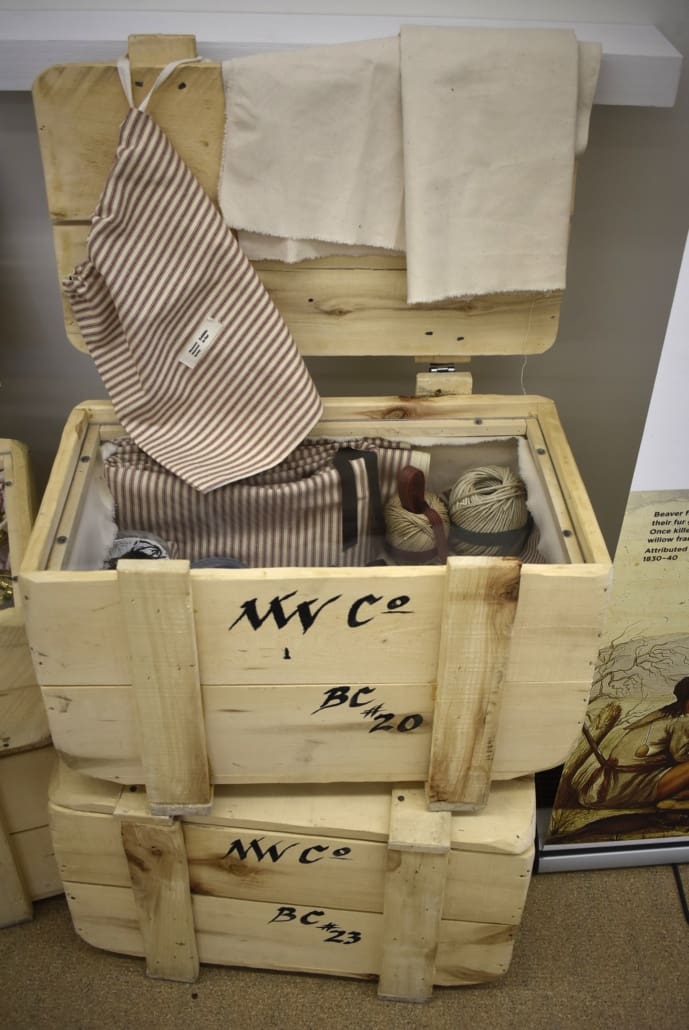
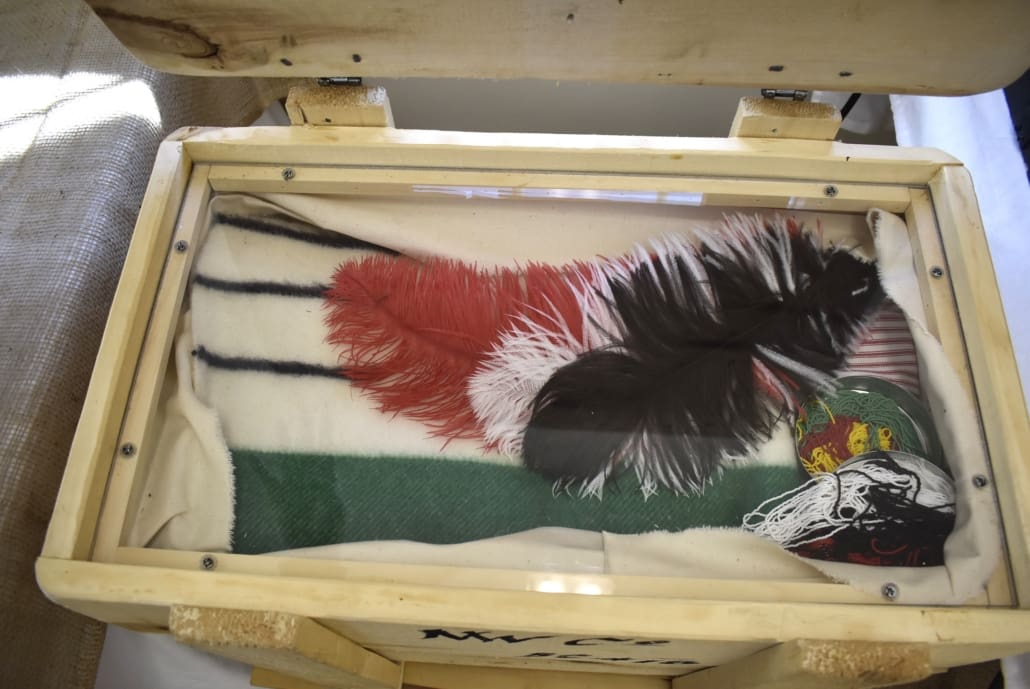
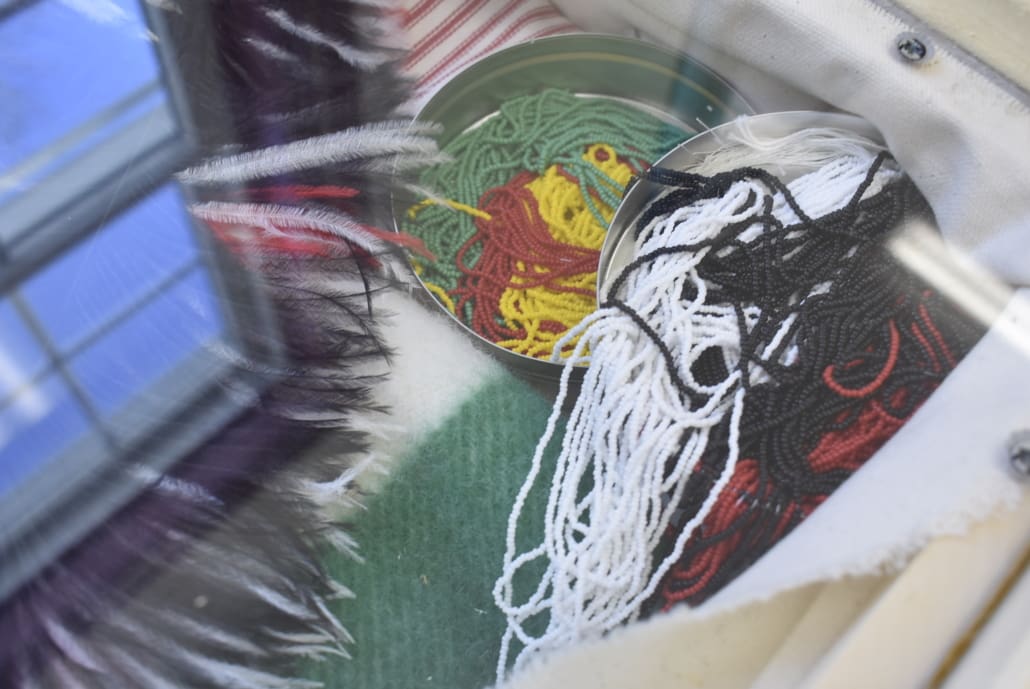

Ojibwe Beadwork
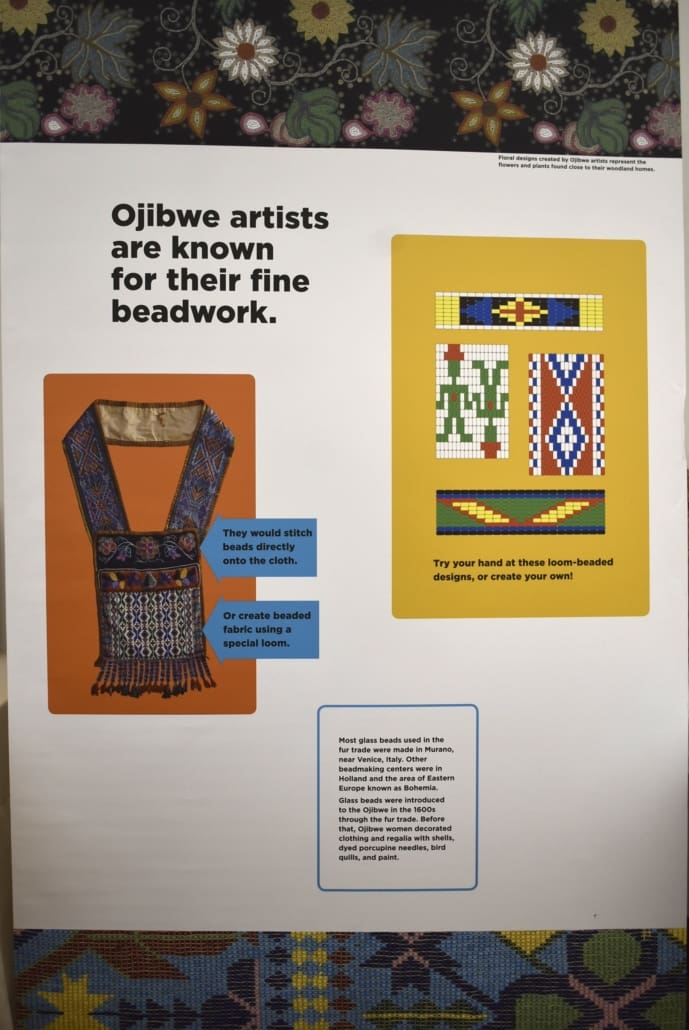
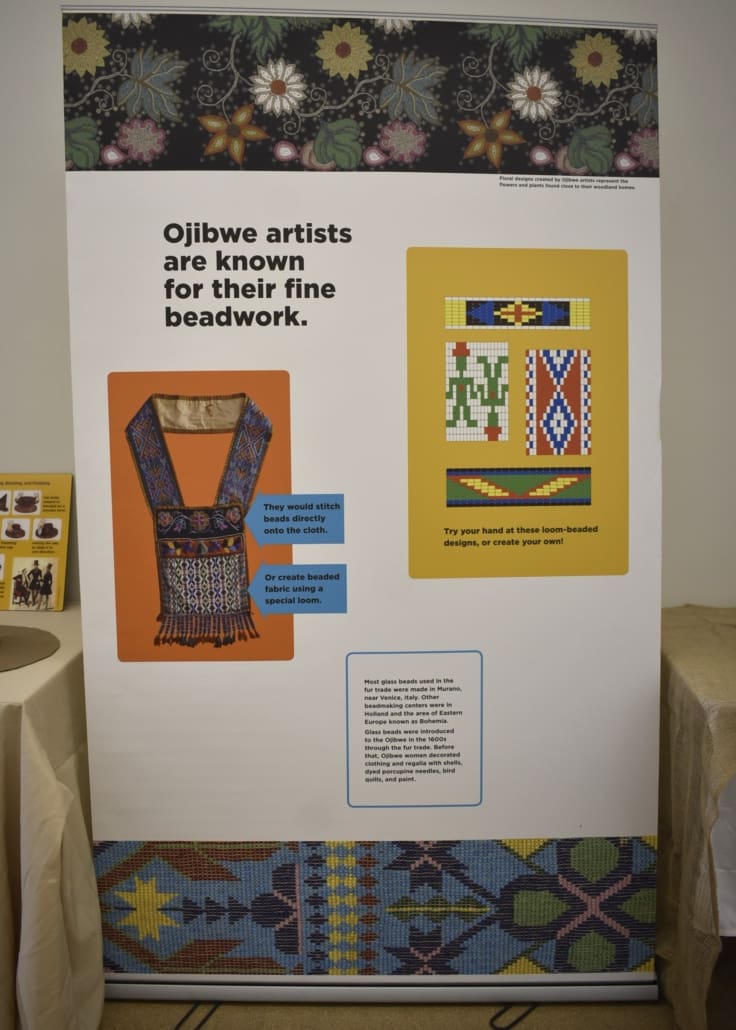
Ojibwe artists were known for their fine beadwork craftsmanship
Floral designs created by Ojibwe artists represent the flowers and plants found close to their woodland homes. They would stitch beads directly onto the cloth, or could create beaded fabric using a special loom. Most glass beads used in the fur trade were made in Murano,
near Venice, Italy. Other beadmaking centers were in Holland and the area of Eastern
Europe known as Bohemia. Glass beads were introduced to the Ojibwe in the 1600s through the fur trade. Before that, Ojibwe women decorated clothing and regalia with shells, dyed porcupine needles, bird quills, and paint. The tradition of beadwork craftsmanship survives today in Ojibwe communities.
Exploring the World of Immigrants
Exploring the World of Immigrants
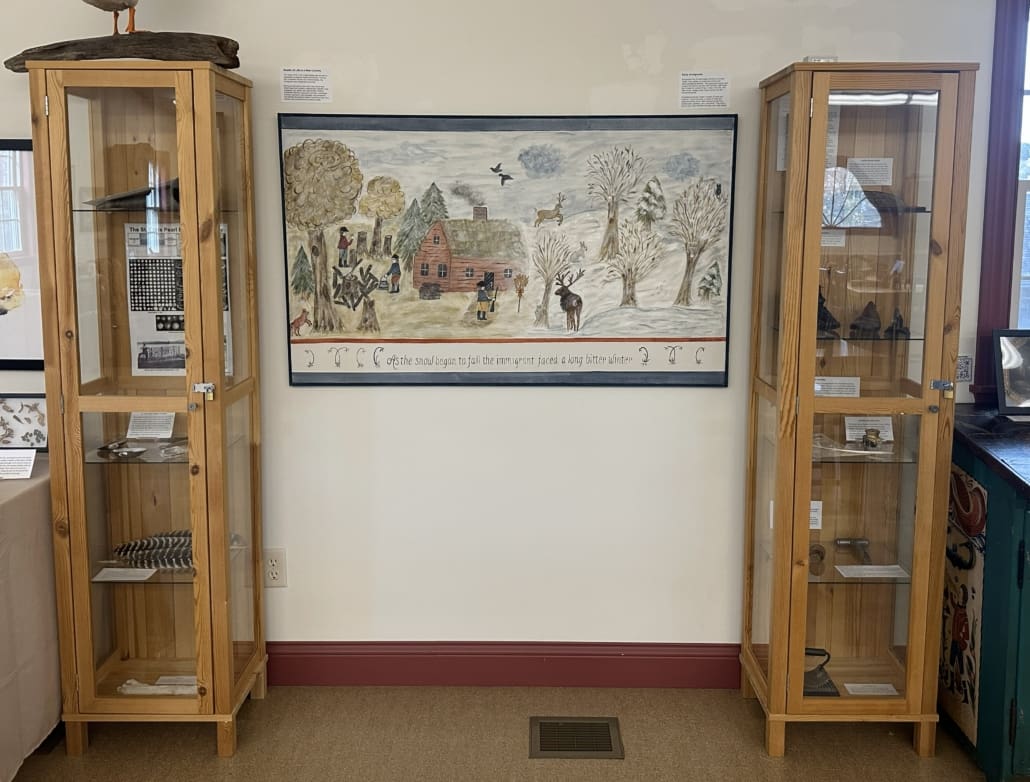
Gammelgården Museum of Scandia’s main room exhibit for the year of 2025, “Exploring the World of Immigrants,” invited visitors to step back in time and learn about the journey and hardships of Swedish Immigrants emmigrating to early America.
Exploring and expanding upon the everyday lives, labor, and traditions of the early immigrant communities that helped shape the Minnesota region. This exhibit covered the journey across oceans, first encounters in the Midwest landscape, and the beginnings of starting a new life from scratch.
Through everyday household objects, tools, and furnishings, this exhibit highlighted both the challenges and resilience of those who braved crossing the ocean to build new lives in America. Carrying and preserving cultural knowledge and heritage across borders.
We would like to thank and acknowledge the generous loans that made this exhibit possible, including furniture, copperware, and other artifacts from the University of Minnesota, as well as items on loan from the Stonehouse Museum and Prairie Restorations. Their contributions allow us to present a rich and tangible portrait of the immigrant experiences using material culture from the past.
This exhibit was on view May 3rd–October 25th, 2025
Why Dream? Why Immigrate?
With a population of 3.5 million people in 1850, Sweden was a very class-structured society. The Church, the laws, the customs, and dress codes all dictated your place in society. Born a peasant, you die one. Born to nobility, you die one. The “middle class” was hardly visible. Add drought, famine, and a shortage of agricultural land, and you have some very compelling reasons to consider leaving your homeland. Mainly, the United States offered hope. Sweden offered none. So began the trickle and then the flood of immigrants to the United States. From 1851-1930, more than 1.25 million Swedes immigrated to the United States.
Reasons for Swedish Emigration in the Mid-1800s
Swedish people left Sweden in the mid-1800s primarily due to a combination of economic hardship, population growth, and social factors. Economic Hardship During the mid-19th century, Sweden faced significant economic challenges. The agricultural sector, which employed a large portion of the population, struggled due to repeated crop failures and poor harvests. This period of economic depression led to widespread poverty among rural communities, particularly in regions like Småland, where many peasants found it increasingly difficult to sustain their livelihoods on small land plots.
Population Growth
Between 1750 and 1850, Sweden’s population doubled, leading to increased pressure on agricultural resources. As the population continued to grow beyond what the land could support, many individuals sought opportunities elsewhere. The notion that America offered vast tracts of fertile land at low prices became increasingly appealing as conditions in Sweden worsened.
Social Factors
Social conservatism and religious repression also played crucial roles in driving immigration. Many Swedes were dissatisfied with the strictures imposed by the Lutheran State Church and sought greater religious freedom. Additionally, there was a growing discontent with the rigid class structures and social hierarchies that characterized Swedish society at the time. The desire for political freedom and better social conditions further motivated individuals to seek a new life in America.
Migration Waves
The mass immigration from Sweden unfolded in distinct waves starting in the 1840s. Reports from early immigrants painted America as a land of opportunity and prosperity, which fueled further migration. By the late 1860s, following severe famines known as “the Great Deprivation,” immigration surged dramatically as people fled dire circumstances back home.
Historical Context of Inheritance in Sweden
In the 1800s, Swedish families practiced a system of inheritance known as primogeniture, which dictated that land and property were passed down to the eldest son. This practice was rooted in several social, economic, and legal factors that shaped family structures and property rights during this period.
Economic Stability and Land Management
Primogeniture was primarily adopted to maintain economic stability within families. By bequeathing land to a single heir, typically the eldest son, families aimed to keep estates intact and avoid fragmentation. This was particularly important in an agrarian society where land was the primary source of wealth and livelihood. Dividing land among multiple heirs could lead to smaller, less viable plots that were insufficient for sustaining a family or generating income.
Social Hierarchy and Nobility
The practice also reflected the social hierarchy prevalent in Sweden at the time. Many noble families followed similar inheritance practices to preserve their status and power. By ensuring that estates remained undivided, these families could maintain their influence within local communities and retain control over resources. The tradition of passing land to the eldest son reinforced patriarchal structures, where male heirs were seen as the rightful successors.
Cultural Norms
Cultural norms also played a significant role in reinforcing this practice. In many societies, including Sweden’s, there was a strong belief in the importance of lineage and continuity through male descendants. Sons were expected to carry on the family name and legacy, further entrenching the idea that they should inherit property over daughters.
What was Happening in Sweden During the Mass Immigration Period?
1845 – The Swedish mass immigration to the United States began.
1846 – The old guild system of masters and journeymen was abolished and freedom of enterprise was declared.
1854 – The first railway lines were constructed.
1856 – An unmarried woman could be declared legally capable by a court at age 25.
1859 – King Oscar I died and son Karl XV inherited.
1860 – It was no longer an offense to renounce Lutheranism.
1861 – Single women were legally capable at age 25, without going to a local court.
1866-68 – Famine years increased immigration.
Thorsell, Elizabeth (2016) “This happened in Sweden in the 1800s,” Swedish American Genealogist: Vol. 36: No. 4, Article 7.
Life in Sweden in the 1800s
All of the dishes, cookware, coffee pots, loom, weaving, furniture, dishes, Dala horse, and clock are from the province of Dalarna in central Sweden, and date to the late-18th and early-19th centuries. They were a gift of Airik and Cleyonne Gustafson from their personal collection. Airik Gustafson was a professor and chairman of the Scandinavian Department at the University of Minnesota from 1944 to 1970.
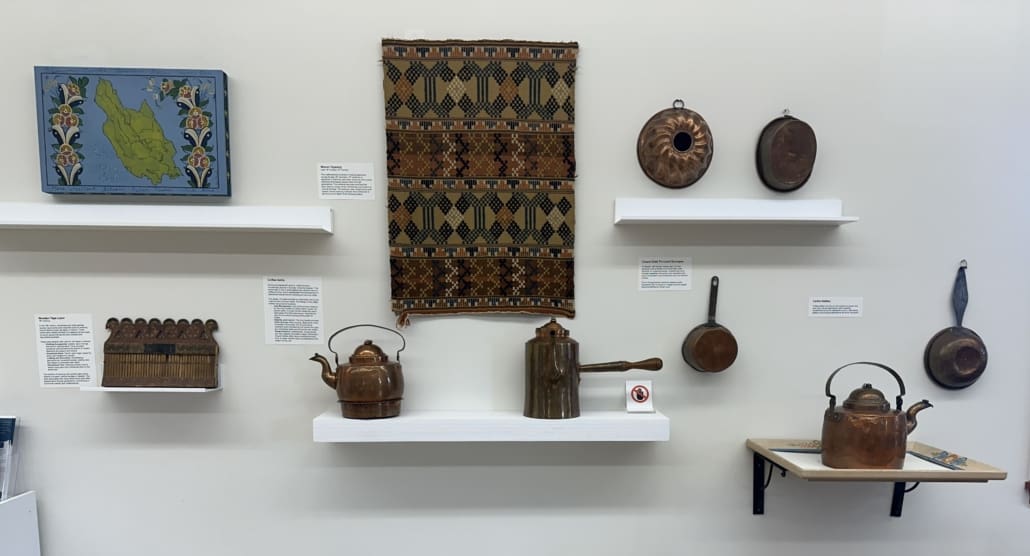
Woven Tapestry
Late-18th to Early-19th Century
The craftsmanship involved in creating tapestries during the late-18th and early-19th centuries is
significant in that they were often woven by hand using traditional techniques passed down through generations. This artisanal approach ensures that each piece is unique while maintaining a connection to cultural heritage. The weavers used upright looms and utilized various weaving methods that contributed to the texture and depth of the finished product.

Coffee Kettles
Coffee kettles not only served practical purposes but also held cultural significance within Swedish households during the eighteenth century, often being passed down through generations as family heirlooms.
During the eighteenth century, coffee became increasingly popular in Europe, including Sweden. This period saw a rise in social gatherings centered around coffee drinking, which necessitated the development of specialized equipment for brewing and serving coffee. The design of kettles evolved to meet these new social customs and practical needs. The design of the coffee kettles had practical functions:
- Heat Management: One of the primary reasons for the long handle is to allow users to pour hot liquids safely. A longer handle keeps the user’s hand away from the heat source, reducing the risk of burns while pouring boiling water or coffee.
- Stability and Control: The long handle provides better leverage when pouring, allowing for more controlled movements. This is particularly important when transferring hot liquids into cups, as it minimizes spills and enhances user safety.
- Design Balance: Aesthetically, a long handle can help balance the kettles weight distribution. Copper kettles often have a substantial body; thus, a longer handle helps counterbalance this weight during use.
Copper-Clad, Tin-Lined Saucepan
A Swedish 18th-century copper-clad, tin-lined saucepan with a handle would have been used primarily for preparing sauces, confectionery work, cooking vegetables and grains, and reheating food due to its excellent heat conductivity and non-reactive surface. The tin lining prevents reactions between acidic ingredients (like tomatoes or vinegar) and the copper, ensuring that flavors remain pure.
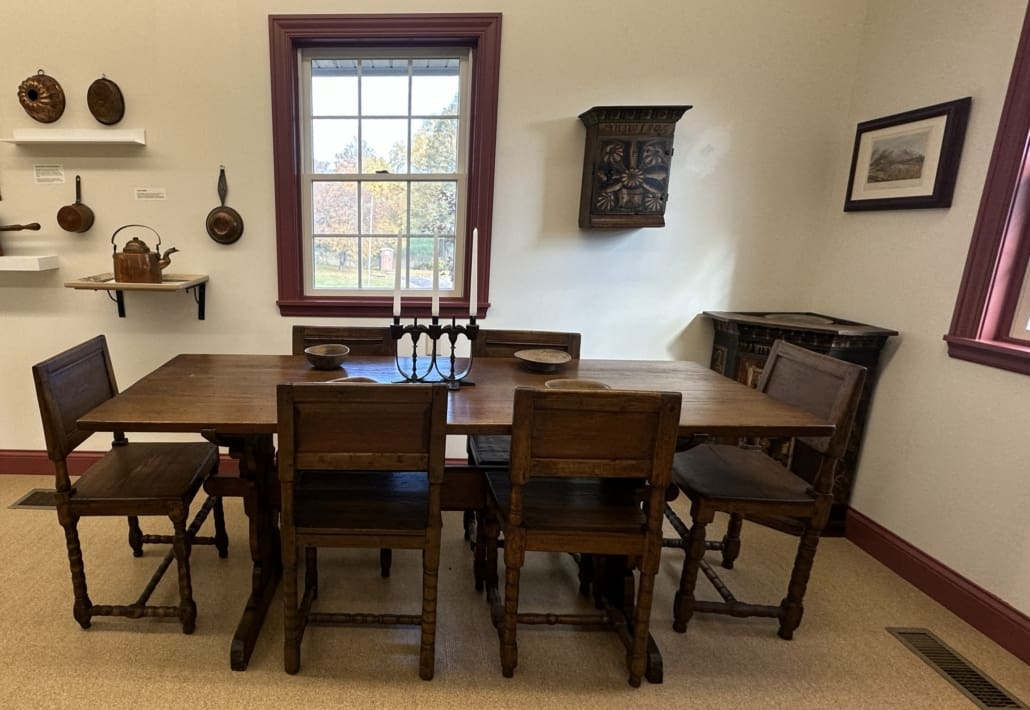
Dining Room
The pine trestle table with six pine dining chairs all were handmade in the 18th century. On the table are hand-carved 18th-century wooden bowls. The hand carved wooden candelabra with three arms is from the late 18 th or early 19th century.
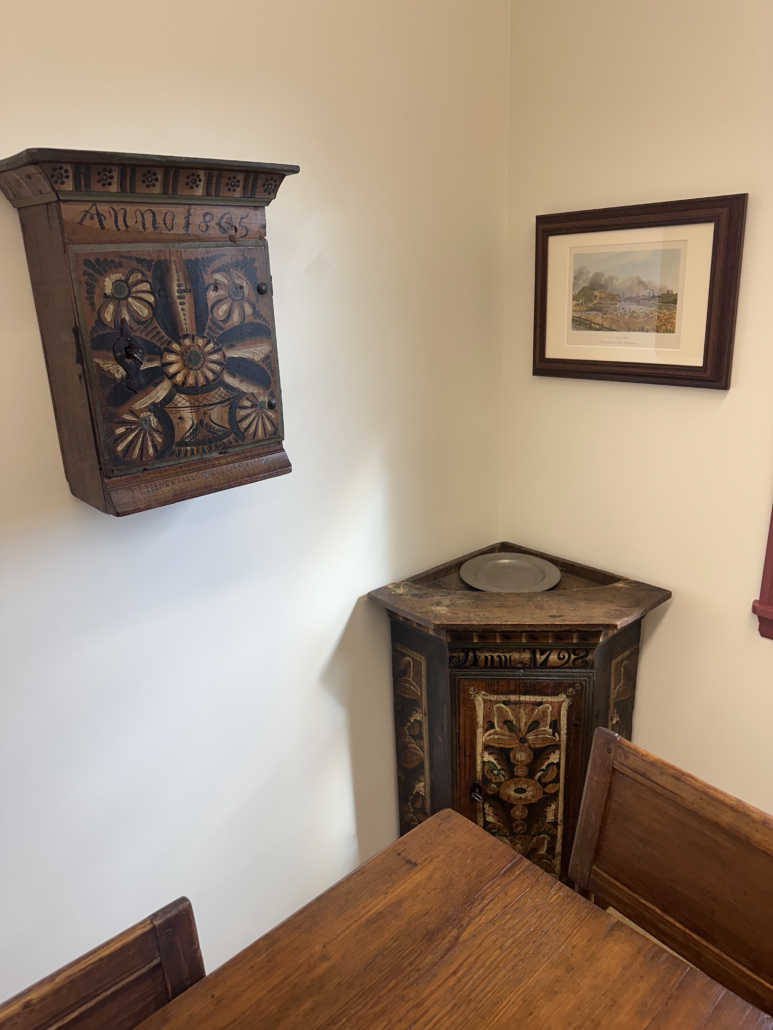
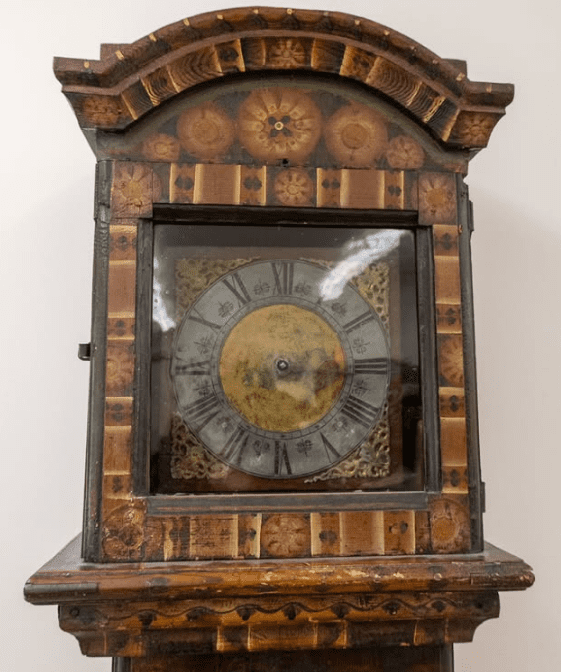
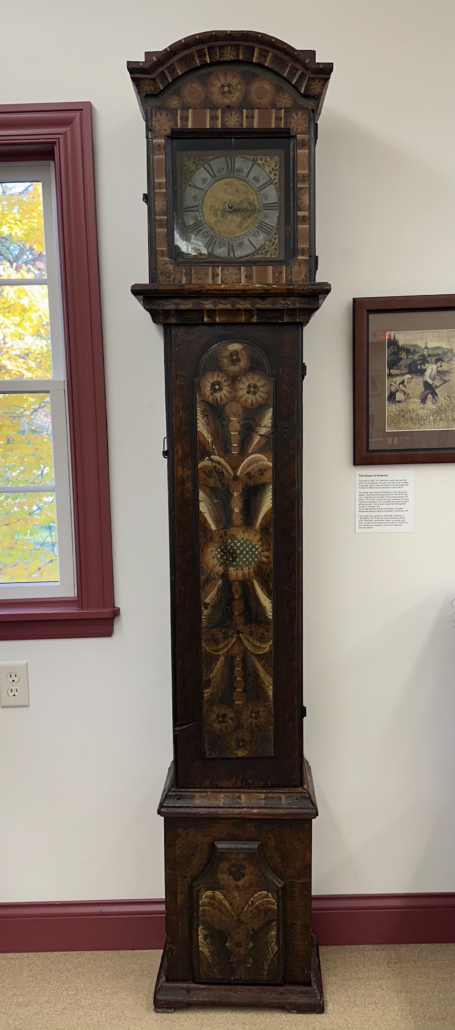
Wall Cupboard, Corner Cabinet, and Grandfather Clock
The small wooden wall cupboard with metal furnishing was handmade and hand-painted, and notes a date of 1805. The painted design matches the grandfather clock, which is from the late 18th century. It is handmade from wood and has metal furnishings; and was hand-painted with regional rosemaling. The wood corner cabinet with metal furnishings, dated 1798, has the same type of hand-painted designs as the other decorative household pieces on display. The inset and wide lip at the top suggest it was once the bottom section of a taller cabinet. There is an 18th-century pewter plate with an engraving of a lion rampant (“ramped” or “rearing up” of a lion on its back leg with front paws outstretched) holding a halberd (two-handed polearm that consists of an axe blade topped with a spike mounted on a long shaft) and sitting in crown.
Furniture and Furnishings from Dalarna, Sweden
University of Minnesota Gustafson Room
On loan from the University of Minnesota
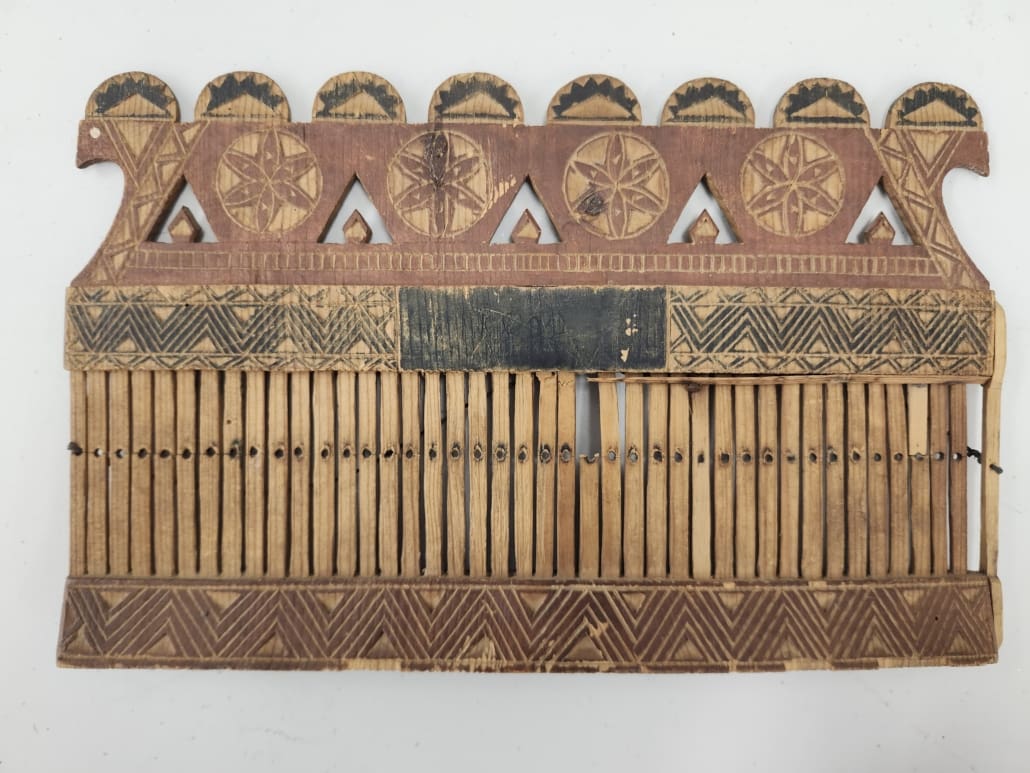
Wooden Tape Loom
18th Century
In the 18th century, handmade and hand-painted wooden tape looms were essential tools for weaving narrow fabrics known as tapes or ribbons. These looms were utilized primarily for creating various types of woven goods that served both practical and decorative purposes.
There were several main uses for the tapes or ribbons:
- Clothing Accessories: Garters, apron strings, and ties for clothing items. They provided
functional closures before the advent of modern fasteners like zippers and buttons. - Household Items: Ties for grain bags, straps for tools, and hangers for utensils.
- Crafting and Decoration: Embellishing garments and household textiles, adding color
and design to otherwise plain items. - Educational Tool: Teaching children how to weave using tape loom introduces them to the textile arts.
The tradition of weaving with wooden tape looms reflects a broader cultural heritage in Sweden. The skills associated with using these looms were often passed down through generations, contributing to community identity and craftsmanship.
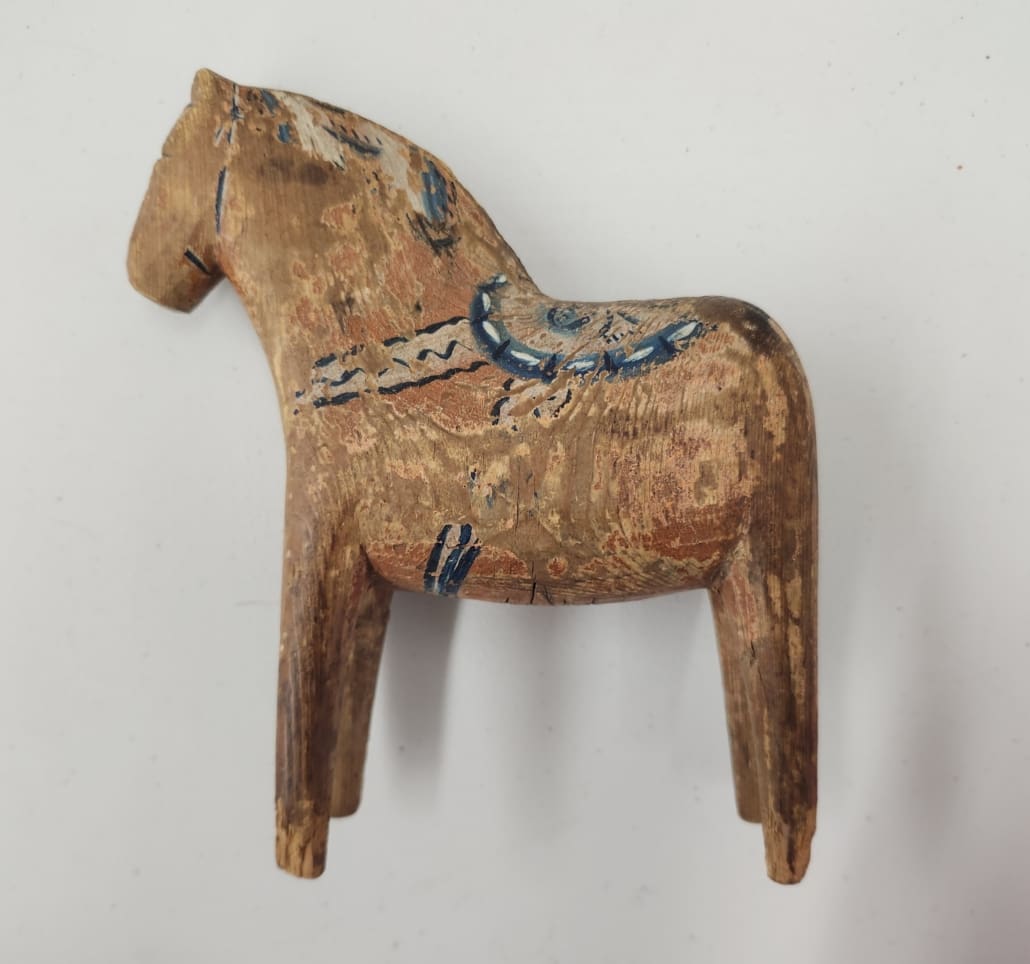
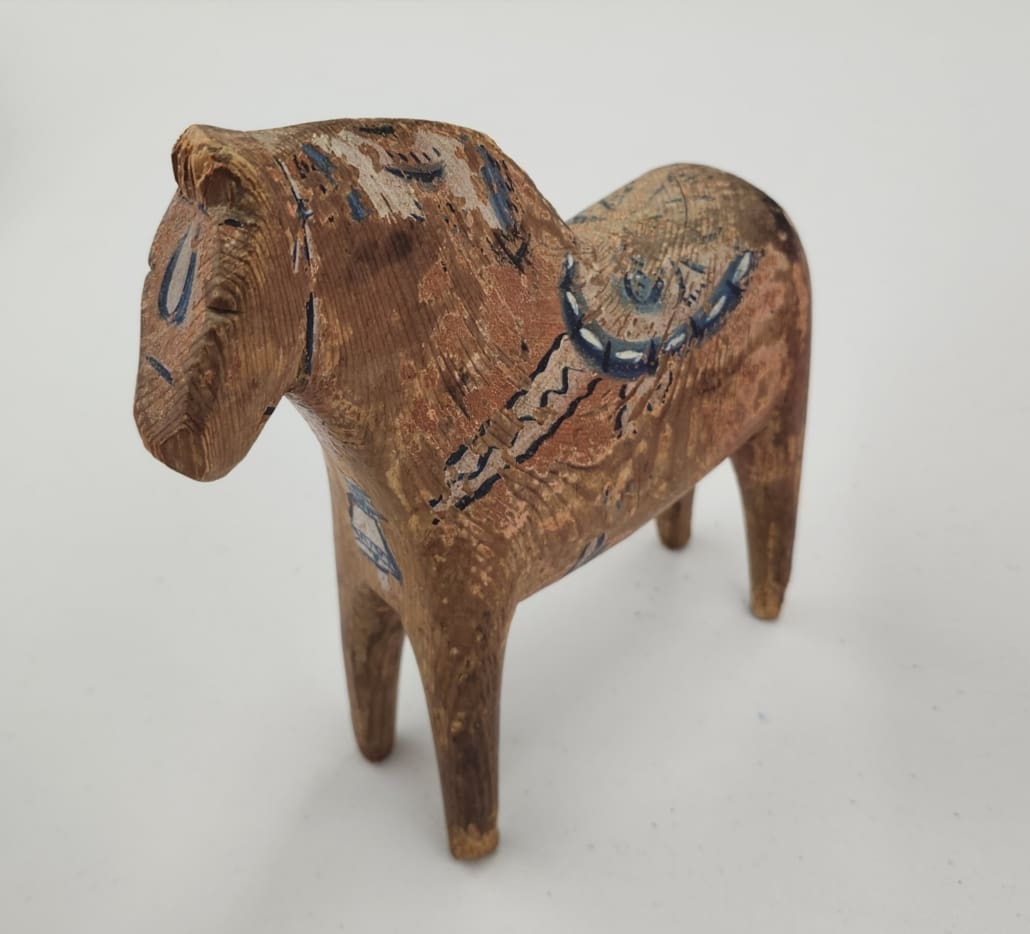
Dala Horse
Late-18th or Early-19th Century
This Dala horse, as was typical of other Dala horses of the time, was carved from a single piece of wood, often sourced from the slow-growing pine forests in the Dalarna region of Sweden. The artisans who created them employed traditional carving techniques that have been passed down through generations. Each horse was uniquely shaped by hand, which means no two horses are exactly alike.
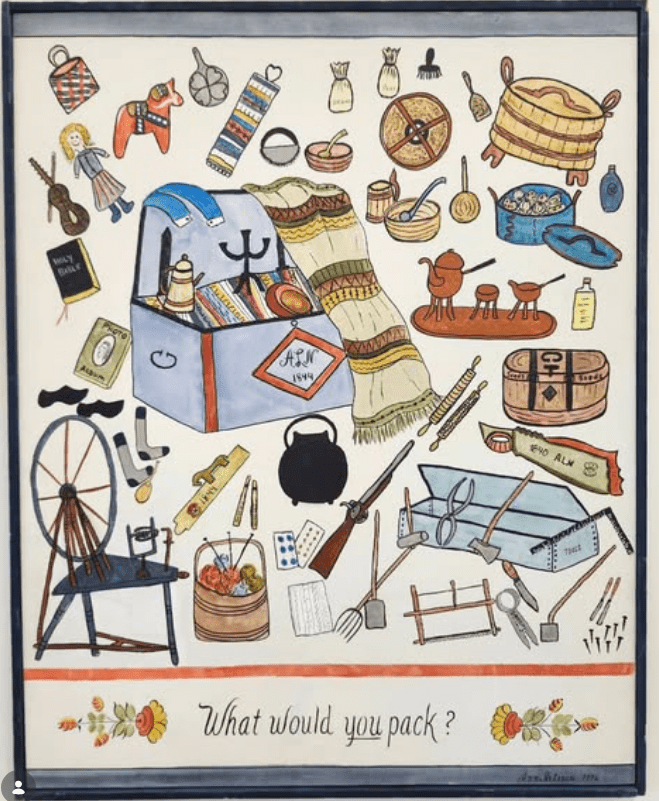
Packing for Immigration from Sweden in the 1850s
When immigrants left Sweden in the 1850s, they faced the daunting task of deciding what to take with them on their journey to a new life, often in America. The limited space available for personal belongings meant that careful consideration was necessary.
Essential Items
Immigrants typically packed only the bare necessities. This included:
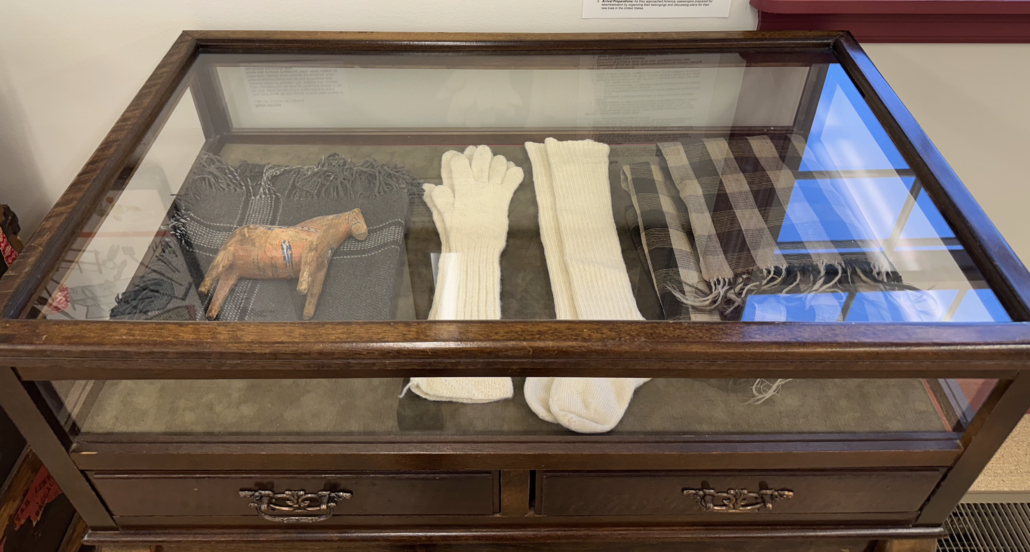
1. Clothing: They brought enough clothing to last through the journey and for initial settlement in their new home. This often consisted of everyday wear and possibly a few special items.
2. Tools for Trade: Skilled workers would pack tools necessary for their trade, as these were essential for finding work upon arrival.
3. Personal Keepsakes: Many took sentimental items such as family Bibles or photographs of loved ones, which held emotional significance.
4. Provisions: Immigrants carried food supplies that could sustain them during the voyage, although space was limited.
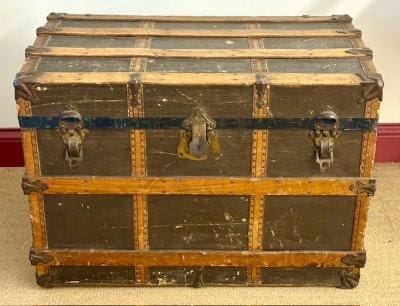
5. Trunks: All these items were typically packed into one trunk, which would be stored in the ship’s cargo area during transit.
Limited Space
The early immigrants had very little storage space near their sleeping areas on ships. Most of their belongings were kept in the cargo hold, making itcrucial to prioritize what was most important for survival and comfort during their journey.
Emotional Farewells
Leaving home forever added an emotional layer to packing. Many immigrants had to say goodbye to family and friends, knowing they might never return. This emotional weight influenced what they chose to bring along—items that reminded them of home and connections to their past.
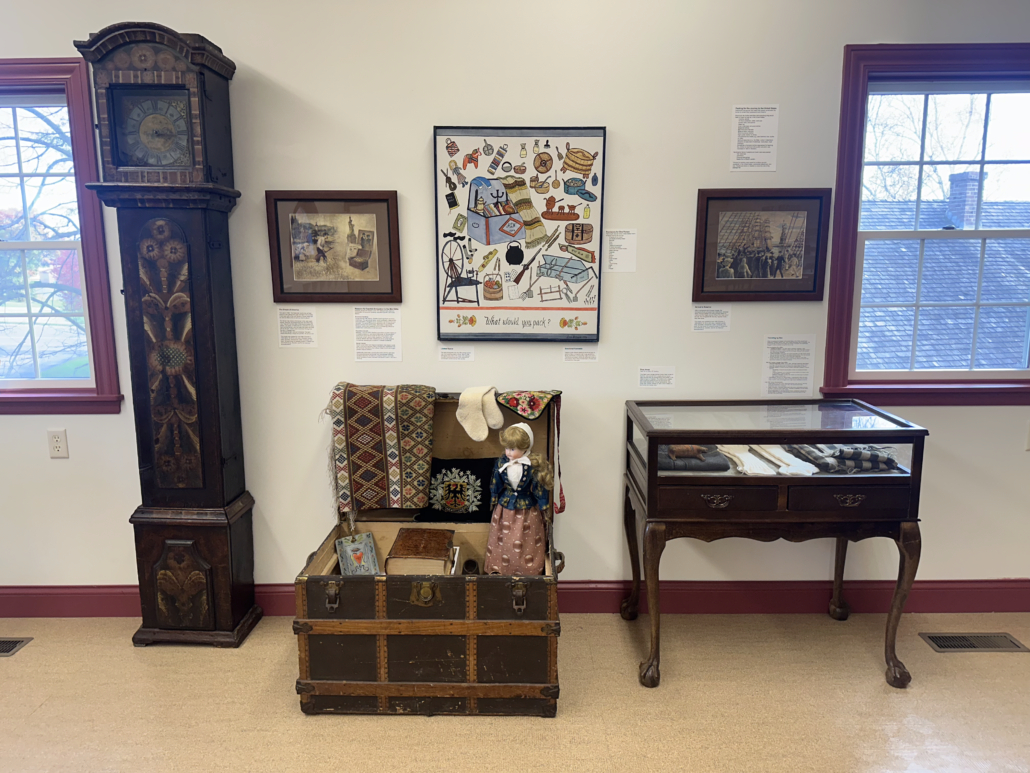

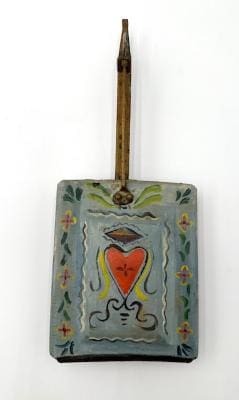
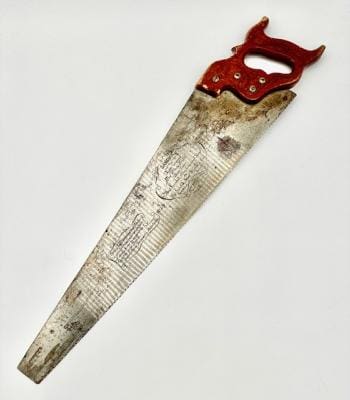
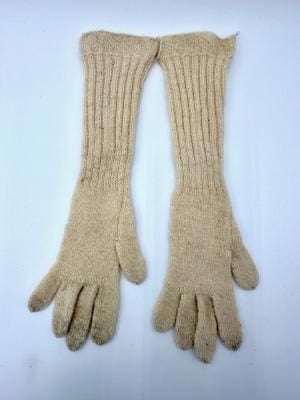
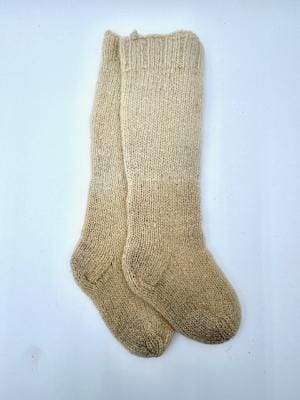
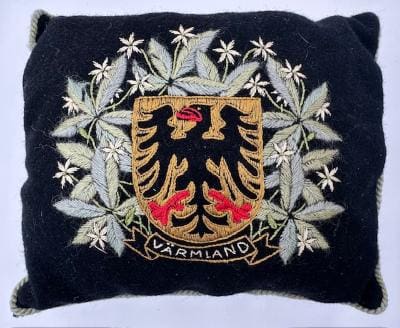
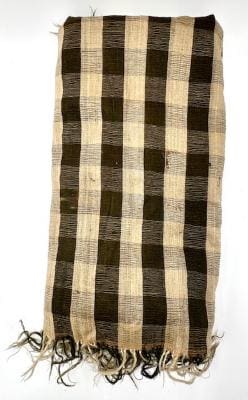
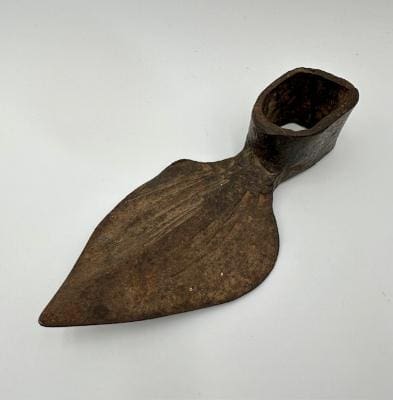
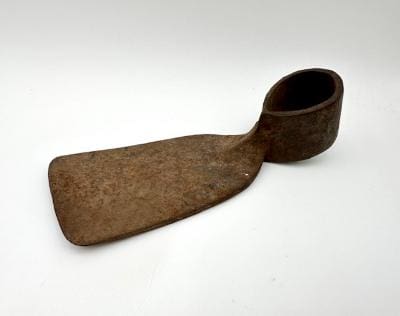
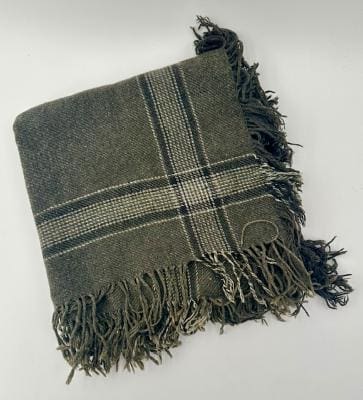
Packing for the Journey to the United States
Packing for the journey first meant that people constructed the trunks to contain their possessions and dreams. Once built, the trunks were filled with everything they would need on board as well as in the United States:
High Priority Items:
– Cooking utensils
– Tin food containers, plates, and cups
– Knives, forks, and spoons
– Water jug
– Linen underwear and good clothes
– Seasonal clothes
– Bed linens and blankets
– Straw or down cushions
– Wool to produce clothes
– High-quality leather for shoes
– Occupational tool heads (e.g., axe, hammer, hoe, scythe, ox yoke)
– Spiritual resources (e.g., the Bible, Luther’s Catechism)
– Almanac (to keep track of plantings, name days, royal birthdays)
– Sometimes a hymnal or primer was packed for teaching the children to read and write (public education was mandated in 1842 in Sweden)
Sentimental items of parents and loved ones were packed:
– Hair weavings
– Handiwork
– Personal belongings
– Seeds from a friend’s garden
Choices for packing were based on multiple use and availability in the United States, sentimental attachment, and size. People sold items in Sweden to cover the cost of the passage fee.
Provisions for One Person
Planning for the trip to the United States meant bringing food for the journey:
8 loaves of rye bread, 20 loaves of barley bread, biscuits, flour, grain, 1 piece of cured pork, ½ dozen sausages, 1 shoulder of smoked mutton, salted herrings, potatoes, peas, cheese, butter, 8 jugs of beer, coffee, tea, 1 jug of honey, sugar, salt, vinegar
Food Rations on Ships for Swedish Immigrants (1850s)
Food provided to Swedish immigrants traveling to North America in the 1850s was often inadequate and of poor quality, especially for those in steerage. Long voyages and limited ship resources made daily meals a source of discomfort and hardship.
Typical Ship-Issued Rations and Quality of Life
- Basic meals: Boiled beef, salted pork, or fish, usually served with potatoes and white bread
- Limited variety: Stews or hash made from leftover meats, often poorly prepared
- Poor quality: Tough, badly preserved meats and unappetizing vegetable mixtures
- Insufficient portions: Rations rarely met nutritional needs, leaving many passengers hungry
- Restricted water access: Drinking water was rationed and shared using communal cups
- Seasickness: Rough conditions often made eating difficult, even when food was available
Common Foods Brought by Passengers
- Preserved meats: Salted or dried mutton and other cured meats chosen for durability
- Flatbread: A lightweight staple commonly brought from home
- Dairy products: Butter and soft whey cheese for fat and protein
- Fermented beverages: Beer and sour milk, used for hydration and nutrition
- Cooking staples: Raw grains for porridge, allowing some personal meal preparation
- Cooking tools: Pots, kettles, dishes, and utensils needed to prepare food onboard
Overall, the reliance on durable, preserved foods reflects the harsh realities of transatlantic travel, which could last from six weeks to three months and required careful planning for survival at sea.
Traveling by Sea
When immigrating from Sweden to the United States in the 1800s, people faced challenging conditions aboard ships, which varied significantly over the decades. The journey typically involved several stages and modes of transport, and passengers engaged in various activities during their time at sea.
Early Immigration (Pre-1860s)
1. Traveling as Ballast
In the early years of Swedish emigration, many immigrants traveled as “ballast” on cargo ships. This meant they were housed in cargo holds alongside goods like iron and timber, leading to very cramped and uncomfortable conditions.
2. Limited Amenities
Passengers had minimal amenities and often endured long journeys lasting anywhere from six weeks to three months. They were typically provided with basic food rations, which were often inadequate.
3. Social Interaction
Despite the harsh conditions, immigrants often socialized during the journey, sharing stories and experiences about their homeland and their hopes for America.
Mid-19th Century Changes (Post-1860s)
1. Improved Passenger Ships
By the 1860s, dedicated passenger ships began to emerge, offering better accommodations than earlier cargo vessels. These ships were designed specifically for transporting people across the Atlantic.
2. Activities Aboard
On these improved vessels, passengers engaged in a variety of activities, including:
Socializing: Gathering on deck to converse and share meals.
Cultural Practices: Singing traditional songs or participating in religious services.
Children’s Activities: Families found ways to entertain children despite limited space.
3. Food Rations
Although food was still basic, it was generally better than what earlier immigrants experienced. Meals included items such as pea gruel and salted meats; however, many passengers still struggled with hunger due to insufficient provisions.
Late 19th-Century Developments
1. Steamships
By the late 1800s, steamships became more common, significantly reducing travel time to approximately 16–24 days. This advancement made transatlantic travel more accessible.
2. Health Concerns
Passengers continued to face health risks due to overcrowding and poor sanitation. Disease outbreaks, including cholera, were not uncommon during long voyages.
3. Arrival Preparations
As ships approached America, passengers prepared for disembarkation by organizing their belongings and discussing plans for their new lives in the United States.
Free Land and the Westward Rush
The Homestead Act of 1862 by the U.S. Congress spurred on immigrants and offered free land to settlers willing to move west. To claim 160 acres, homesteaders were required to live on and farm the land for five years. As social and economic conditions worsened in Sweden during the 1860s and 1870s, the number of immigrants increased and more single, young people left Sweden for opportunities in the United States.
Within three years, this opportunity brought 75,000 people, mostly from Europe, to Minnesota. New settlers plowed the prairie and planted crops, creating thousands of small family farms.
Early homes were often built from prairie sod, using materials readily available on the land. As farming expanded, new machinery—such as steel-blade plows, mowers, reapers, and harvesters—was developed to help meet the demands of prairie agriculture.
Swedes in Scandia
Most immigrants who settled in Scandia, Minnesota, came from the southern counties of Sweden, including Skåne, Småland, Blekinge, Västergötland, and Värmland. These largely agrarian regions were severely affected by drought and famine and were located relatively close to major seaports such as Malmö, Gothenburg, and Stockholm.
Self-sufficient and thrifty, these immigrants packed for the United States according to their daily work and limited economic means. Despite these constraints, they arrived with strong hopes and dreams for a better future.
First Glimpse of Minnesota
When Swedish immigrants arrived in Minnesota during the 1850s, they encountered a land rich in natural resources and shaped by diverse geography. The region was already home to Native American tribes, including the Dakota and Ojibwe, who had established communities and trade networks long before European settlement.
Document Samples
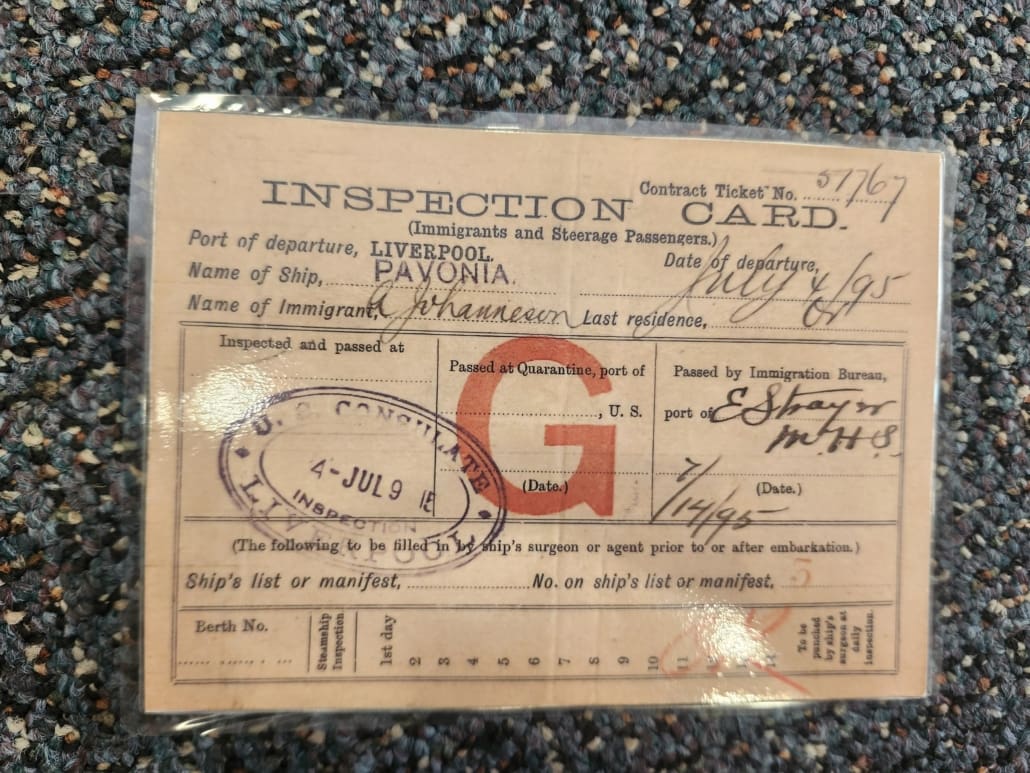
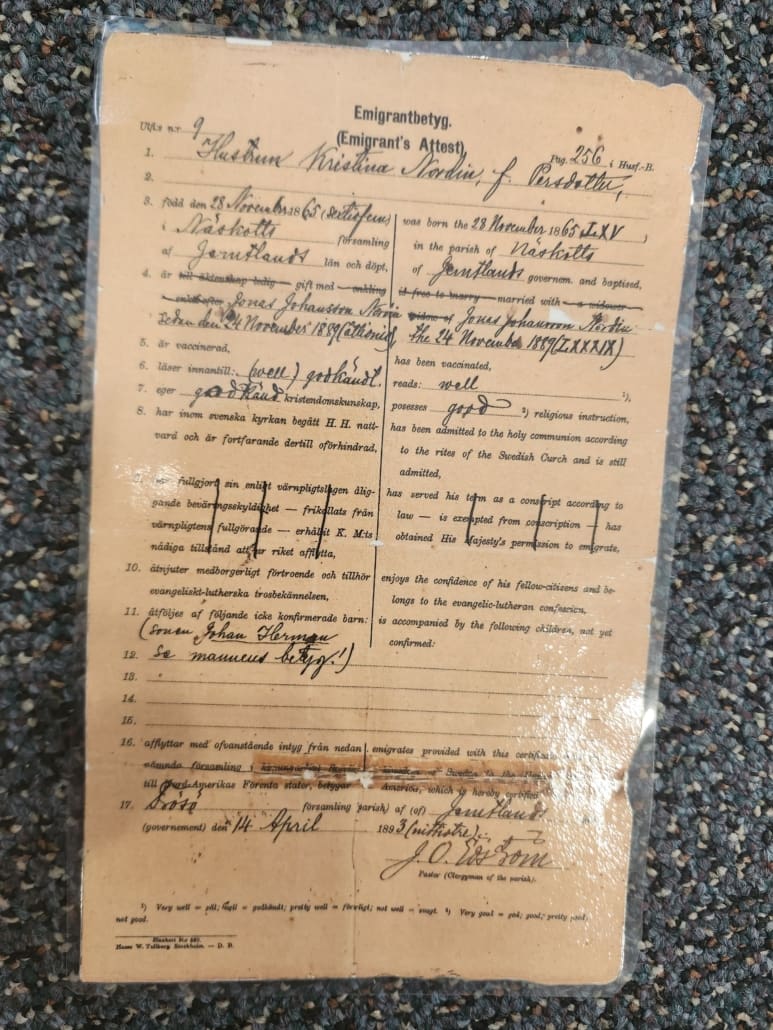
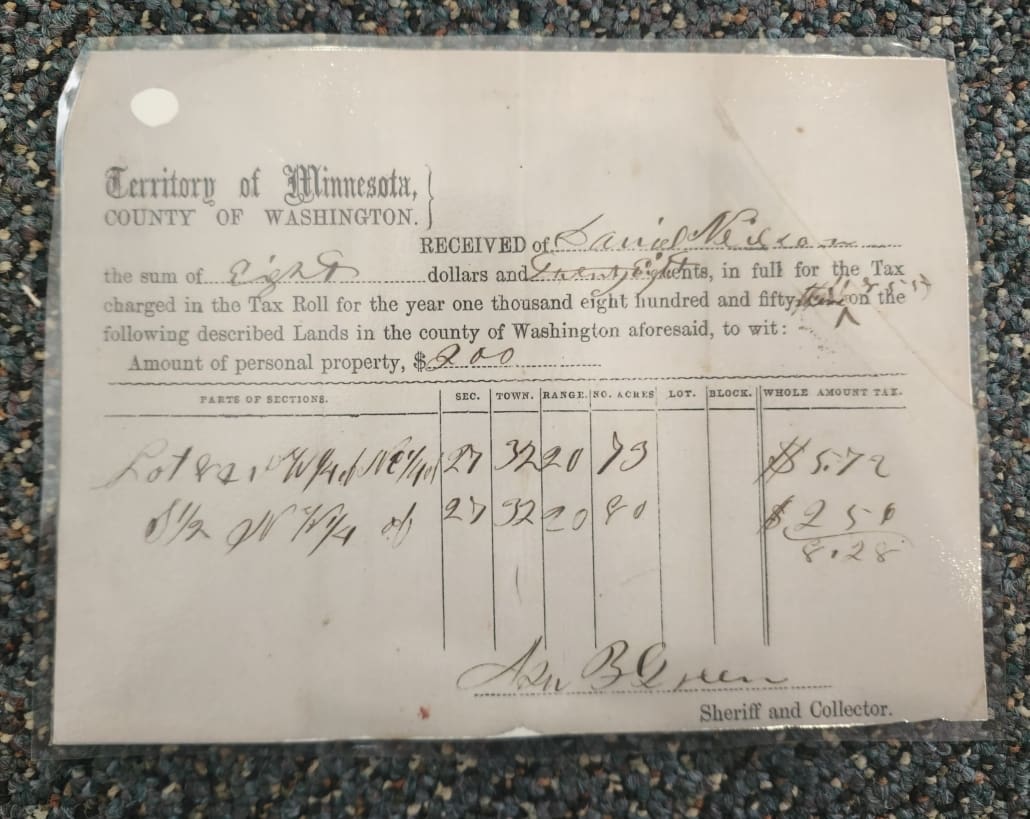
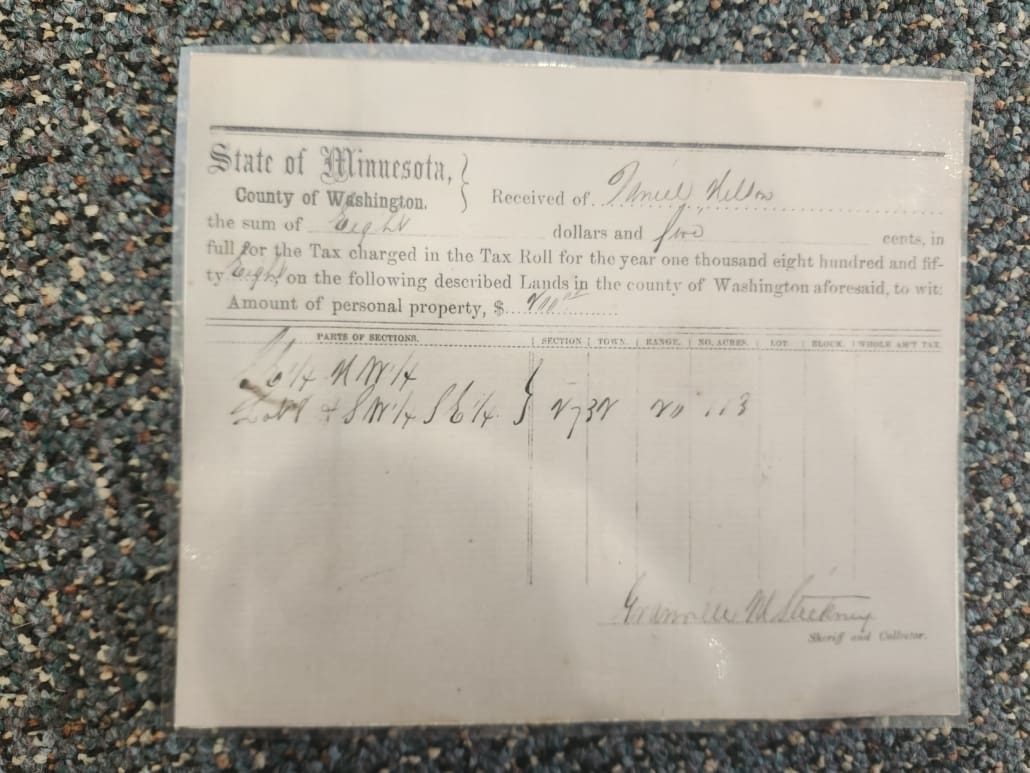
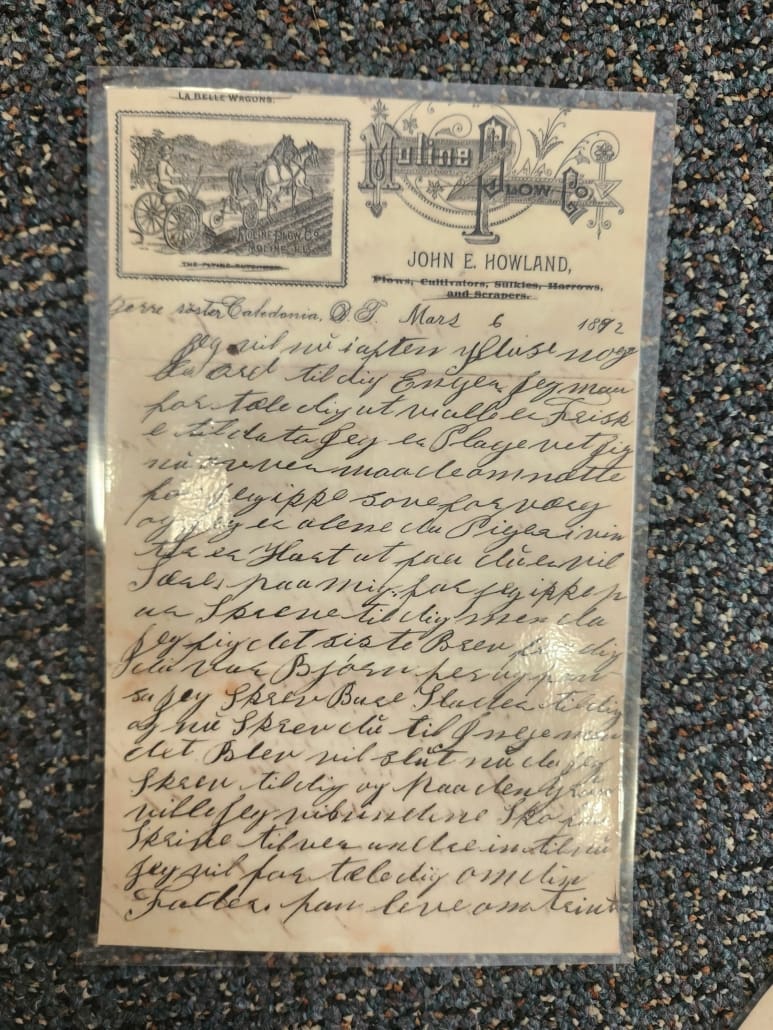
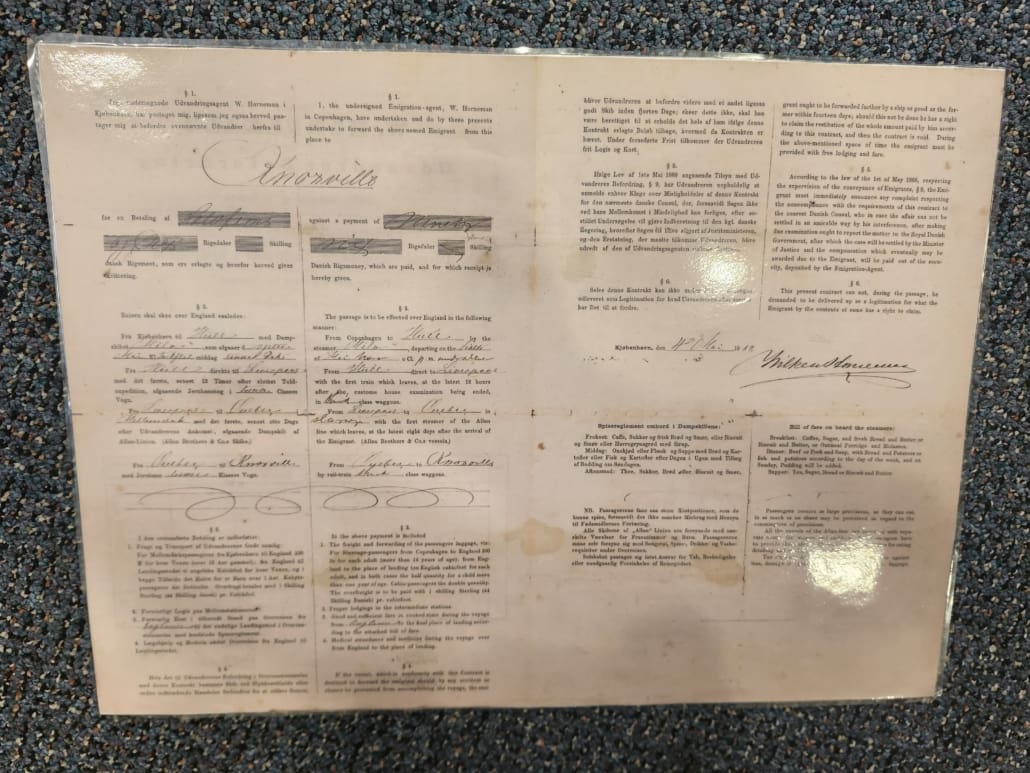
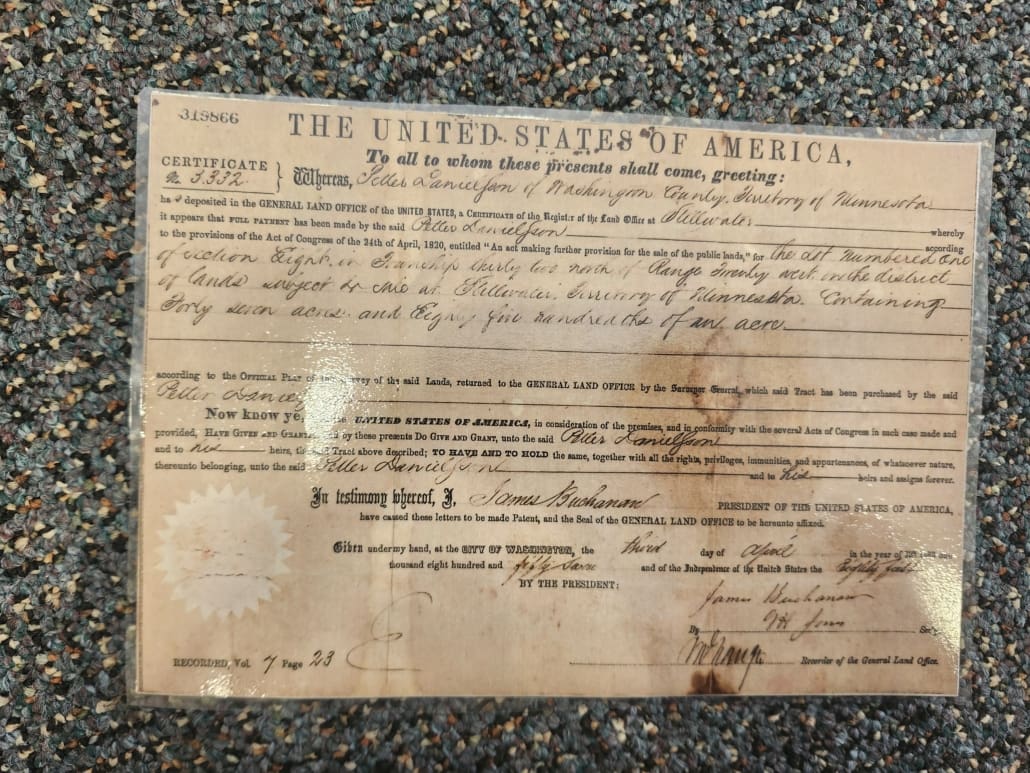
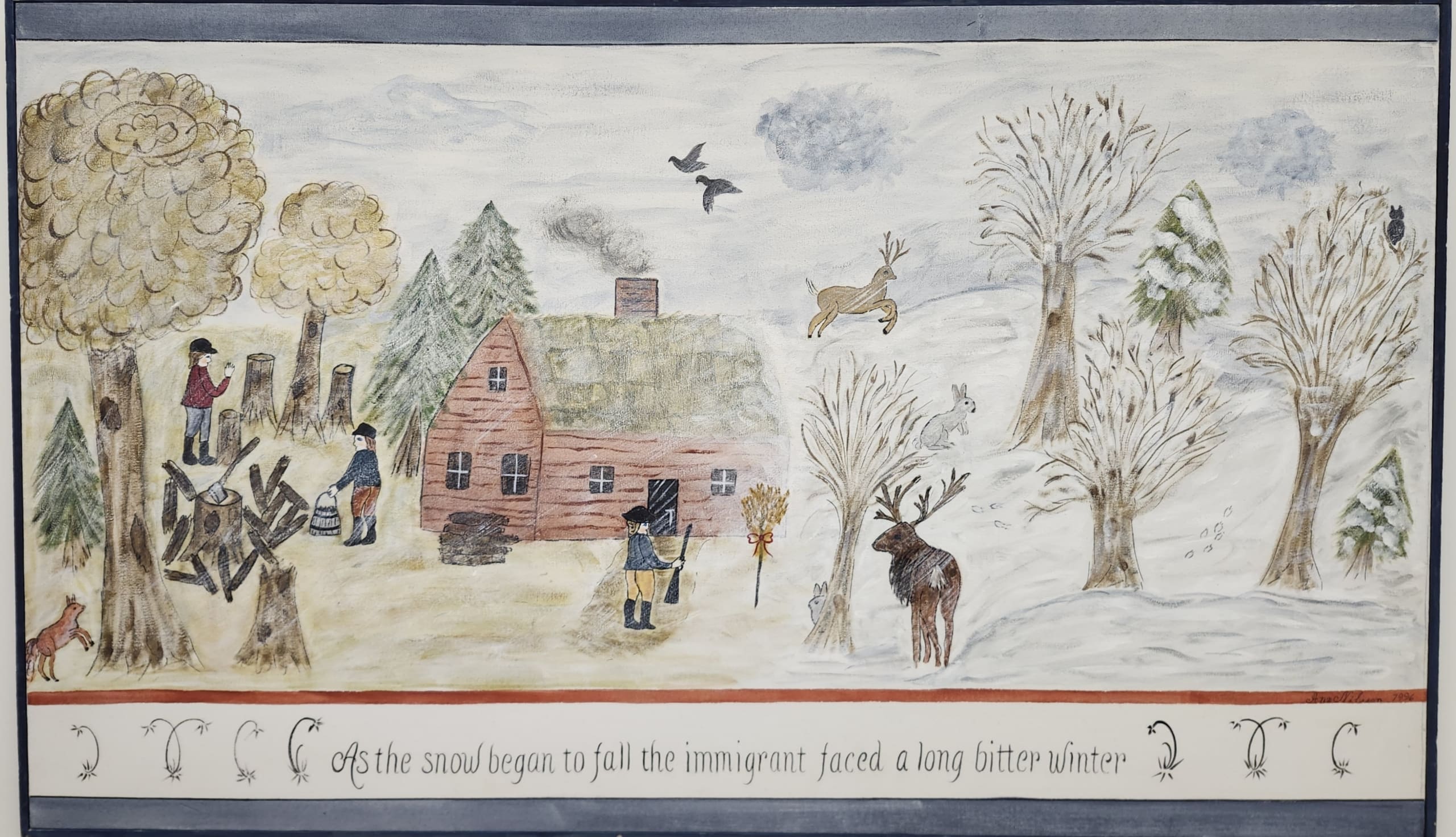
Natural Landscape
Newcomers were greeted by forests, rivers, lakes, and prairies. The Mississippi River was a vital transportation route and heavily influenced settlement patterns, as access to water and trade was essential.
Native American Presence
Settlers observed and interacted with Native American communities who remained integral to the region’s culture and economy. Although the Dakota had ceded land through treaties, they continued to inhabit parts of Minnesota and often engaged in trade with newcomers.
Early Settlements
By the 1850s, towns were beginning to form following treaties that opened land to settlement. Early communities included Marine on St. Croix (1839), St. Paul (1841), Scandia (1850), and Minneapolis (platted in 1854).
Economic Opportunities
The promise of opportunity drew many immigrants. The fur trade remained important, supported by trading posts such as those operated by the American Fur Company, while agriculture expanded as settlers cleared land for farming.
Challenges Faced
Despite opportunity, settlers faced harsh weather, limited infrastructure, and the difficulties of adapting to frontier life.
Early Immigrants
Immigrants from Europe began arriving in the early 1800s and settled on small plots of land as subsistence farmers. They grew just enough food to feed themselves and their farm animals, with little left over to trade for necessary goods.
Life was difficult, marked by limited money, simple tools, crude homes, and few household possessions.
These subsistence farms were diversified, meaning farmers raised a variety of crops and livestock. Common crops included oats, potatoes, corn, and beans. Livestock typically consisted of one or two cows, along with chickens, pigs, and sheep.
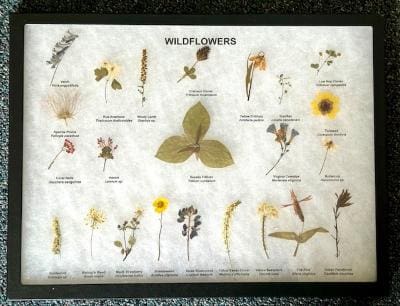
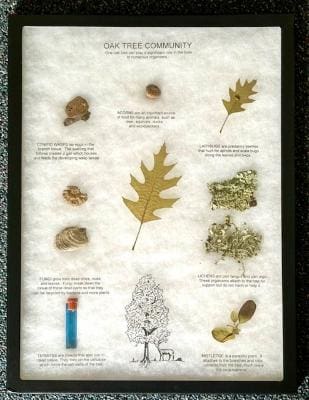
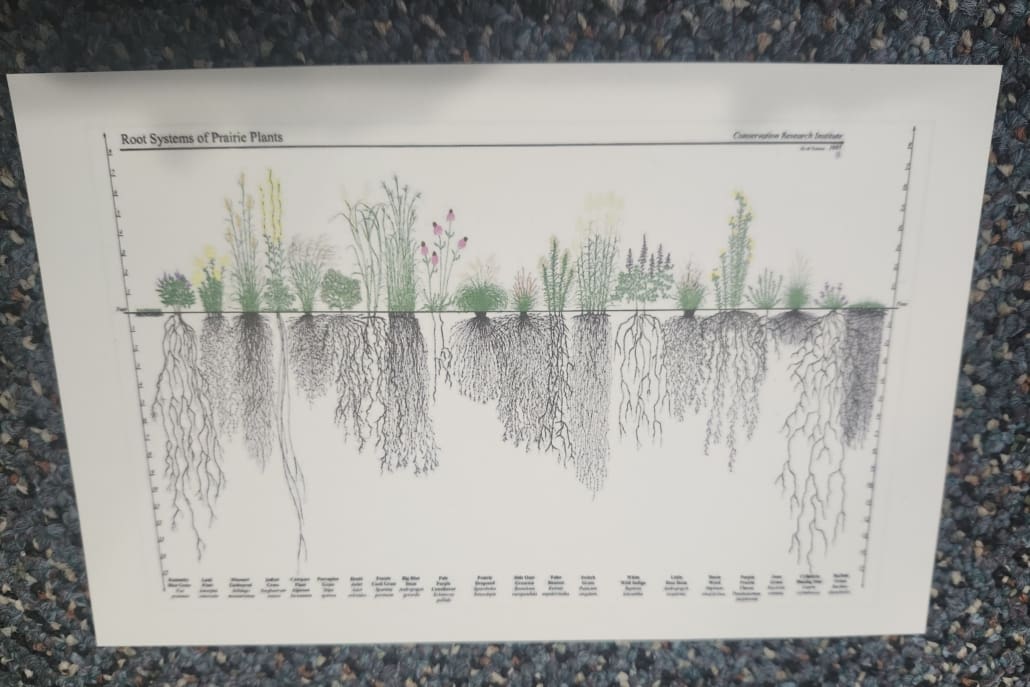
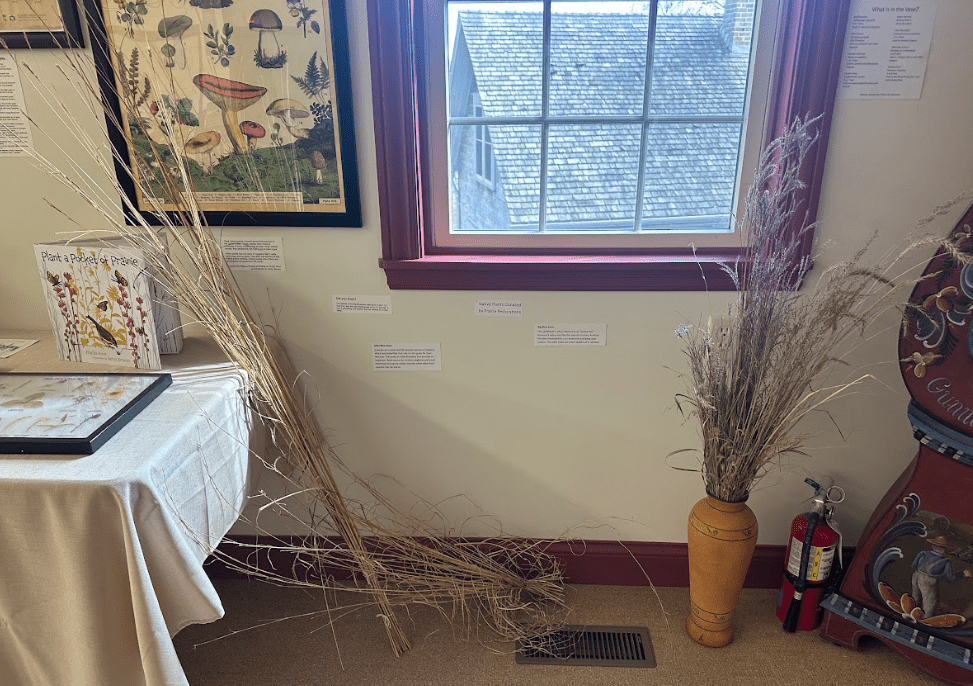
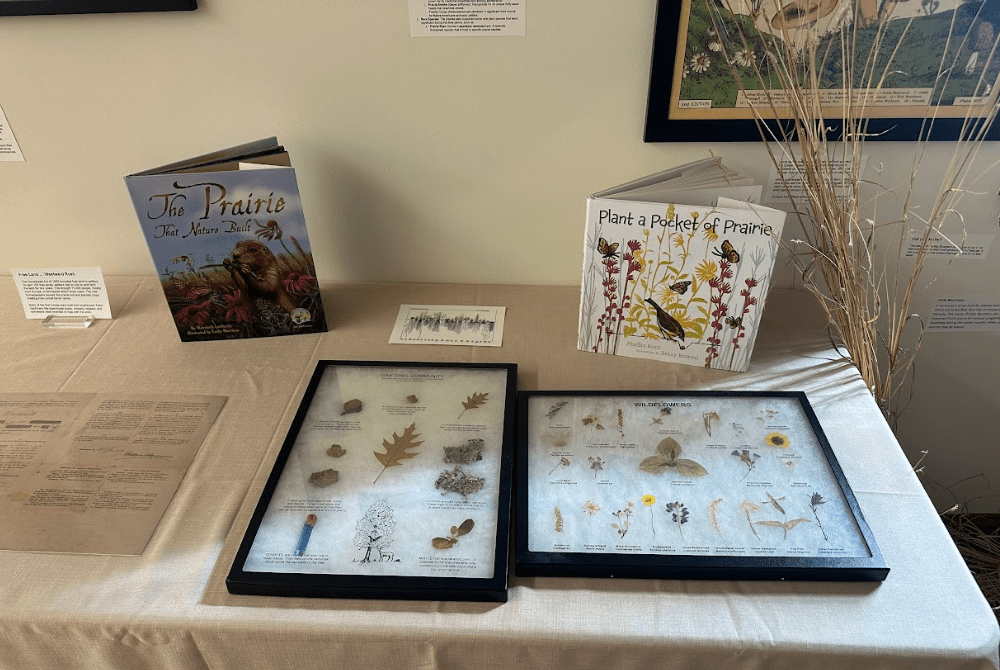
Prairie Plants of Minnesota in the 1800s
In the 1800s, much of Minnesota was covered by tallgrass prairie, a highly diverse ecosystem made up of grasses and flowering plants known as forbs. These prairies supported a wide range of wildlife, from pollinators like bees and butterflies to large grazing animals such as bison.
Dominant Prairie Grasses
Tallgrass prairie ecosystems were defined by a few key grass species:
- Big Bluestem (Andropogon gerardi) – Minnesota’s state grass, capable of growing up to 12 feet tall
- Indian Grass (Sorghastrum nutans) – A tall, hardy grass adapted to various soil types
- Little Bluestem (Schizachyrium scoparium) – A shorter, drought-tolerant grass common in drier areas
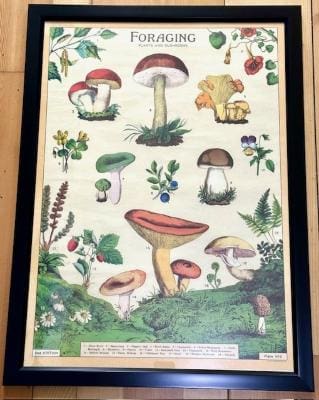
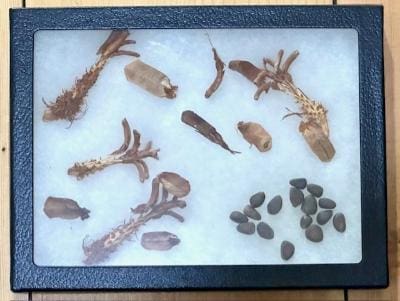
Wildlife in Minnesota in the 1850s
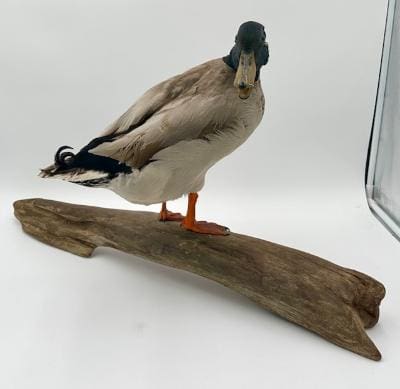
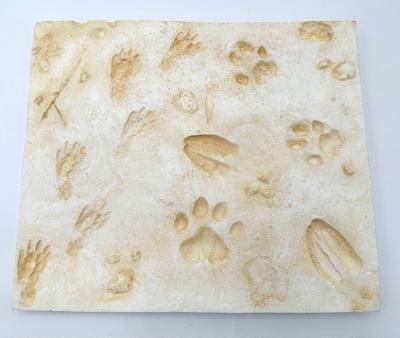
In the 1850s, Minnesota supported a wide variety of wildlife shaped by its forests, prairies, wetlands, and river systems. Both large and small animals were abundant, though many species began to decline later in the century due to hunting and habitat loss.
Large Mammals
- Bison – Once numerous in western Minnesota, with herds numbering in the tens of thousands. Populations declined rapidly due to overhunting; the last wild bison sighting in the state was recorded in 1880 in Norman County.
- Elk – Present across parts of the state but less common than bison; disappeared from Minnesota by the early 1900s, with remnant populations noted in Aitkin and Itasca counties.
- Woodland Caribou – Common in northern Minnesota earlier in the century but became rare by the late 1800s, with occasional sightings into the early 20th century.
- Moose – Found primarily in northern forests and hunted by settlers and logging camps; populations remained more stable than other large mammals.
- White-tailed Deer – Abundant in southern and central Minnesota; heavily hunted by Native Americans and settlers, with populations rebounding after periods of decline.
Smaller Animals and Wildlife Observed by Settlers
Minnesota’s varied ecosystems supported numerous smaller species:
- Rodents: Prairie dogs (grasslands), squirrels, mice, and voles
- Rabbits and Hares: Eastern cottontails in fields and brush; snowshoe hares in forested areas
Birds:
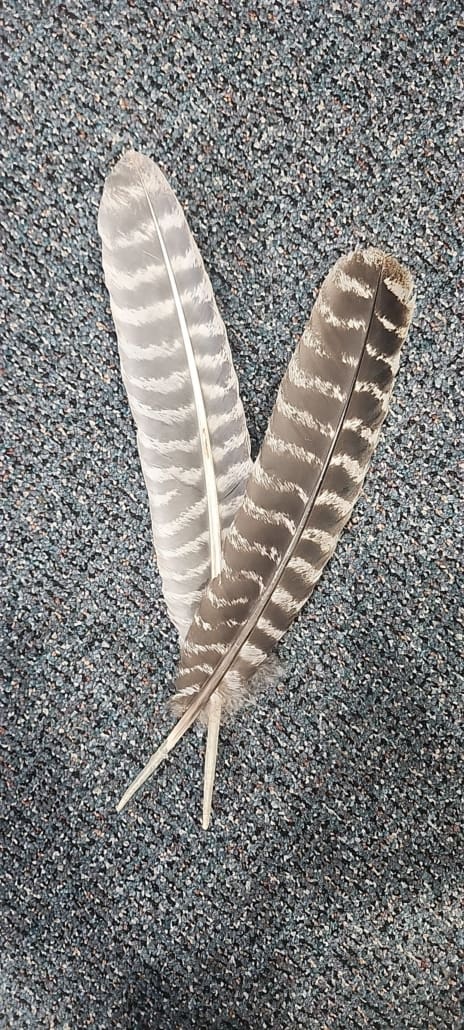
- Sparrows, finches, warblers, waterfowl, and passenger pigeons, which were still common but nearing extinction
Insects:
- Butterflies, bees, beetles, and other essential pollinators were essential to the local environment.
Amphibians and Reptiles:
- Frogs, toads, and garter snakes were common near water sources.
Other Small Mammals:
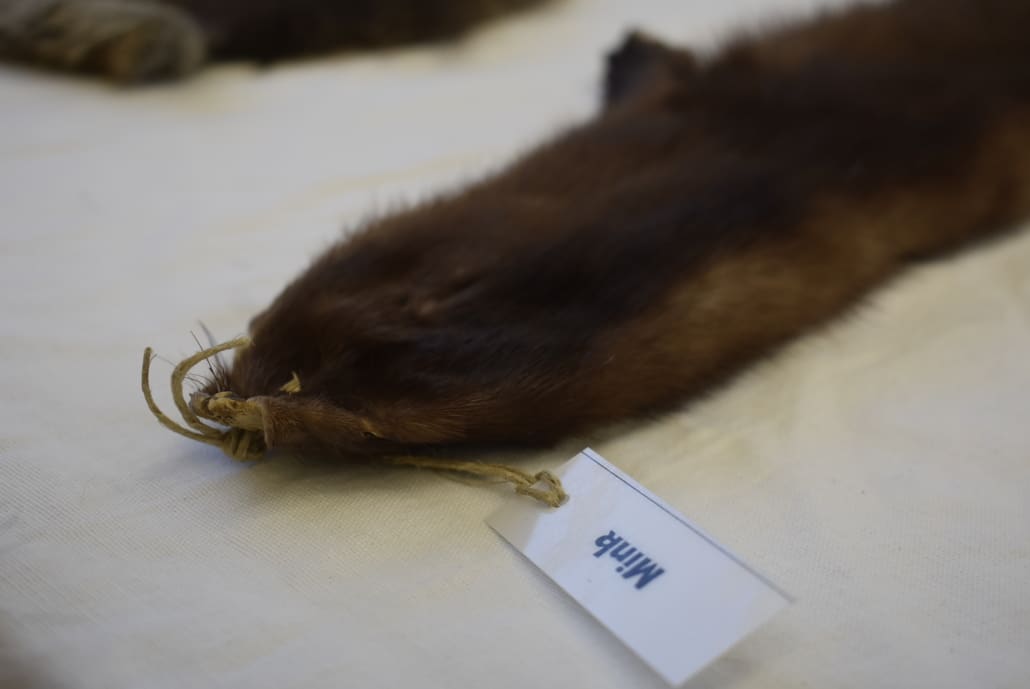
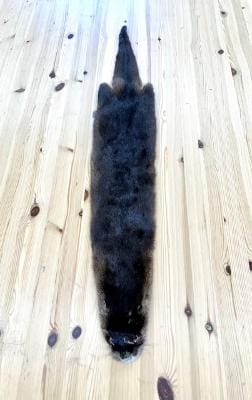
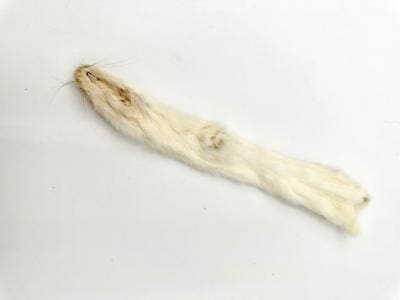
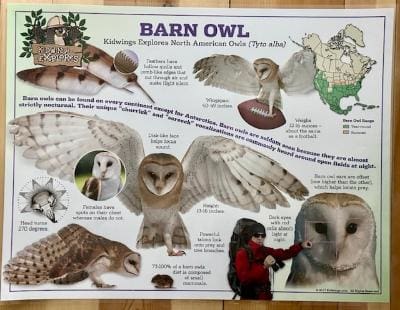
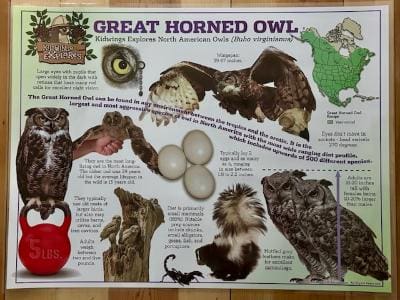
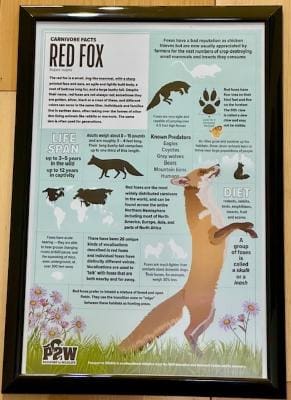
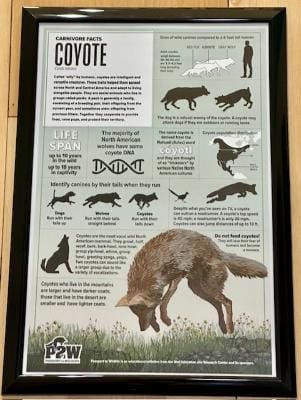
- Such as weasels, skunks, beavers, otters, lynx, and bobcats, many of which were heavily trapped for the fur trade.



Early Swedish Immigrants and Barrel Making
During the 19th century, many Swedish immigrants in the United States established barrel-making businesses as they adapted to new economic opportunities. The craft of coopering was essential to growing agricultural and brewing industries, particularly in the Midwest.
Establishing the Trade
Community and Skills
Swedish immigrants brought traditional coopering skills from their homeland, where the trade was highly respected. Settling in close-knit communities allowed craftsmen to share knowledge and resources, creating supportive environments for new cooperages.
Tools and Techniques
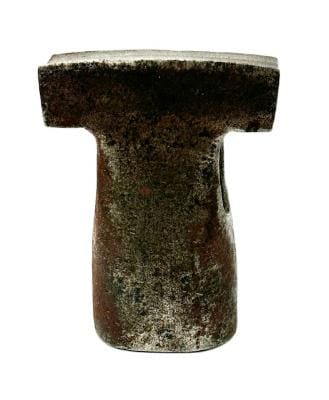
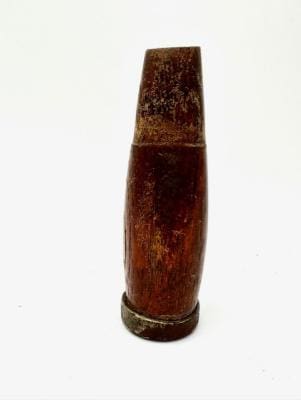
Specialized tools, such as the barrel hoop driver, were essential for securing metal hoops around barrel staves. These tools ensured barrels were watertight and durable, maintaining high standards as demand increased.
Material Sourcing
Regions like Minnesota and Wisconsin offered abundant forests of oak and other hardwoods, ideal for barrel making. Ready access to quality timber enabled immigrants to produce strong, reliable barrels.
Market Demand
As American farms and breweries expanded, the need for barrels grew. Swedish cooperages supplied containers for beer, wine, pickled goods, and other perishables, tailoring their products to local needs.
Cultural Integration
By blending traditional Swedish methods with techniques learned from other immigrant groups and local craftsmen, cooperages improved efficiency while preserving skilled craftsmanship.
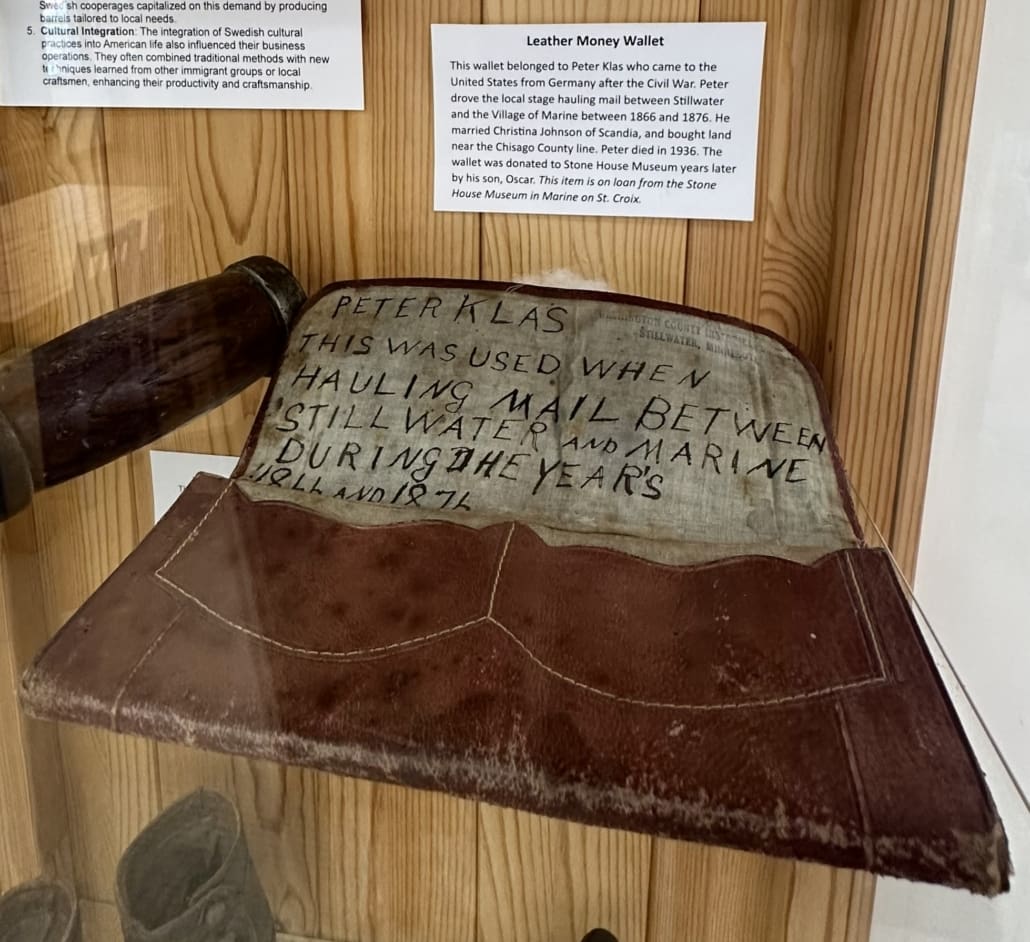
Leather Money Wallet
This wallet belonged to Peter Klas who came to the United States from Germany after the Civil War. Peter drove the local stage hauling mail between Stillwater and the Village of Marine between 1866 and 1876. He married Christina Johnson of Scandia, and bought land near the Chisago County line. Peter died in 1936. The wallet was donated to Stone House Museum years later by his son, Oscar. This item is on loan from the Stone House Museum in Marine on St. Croix.
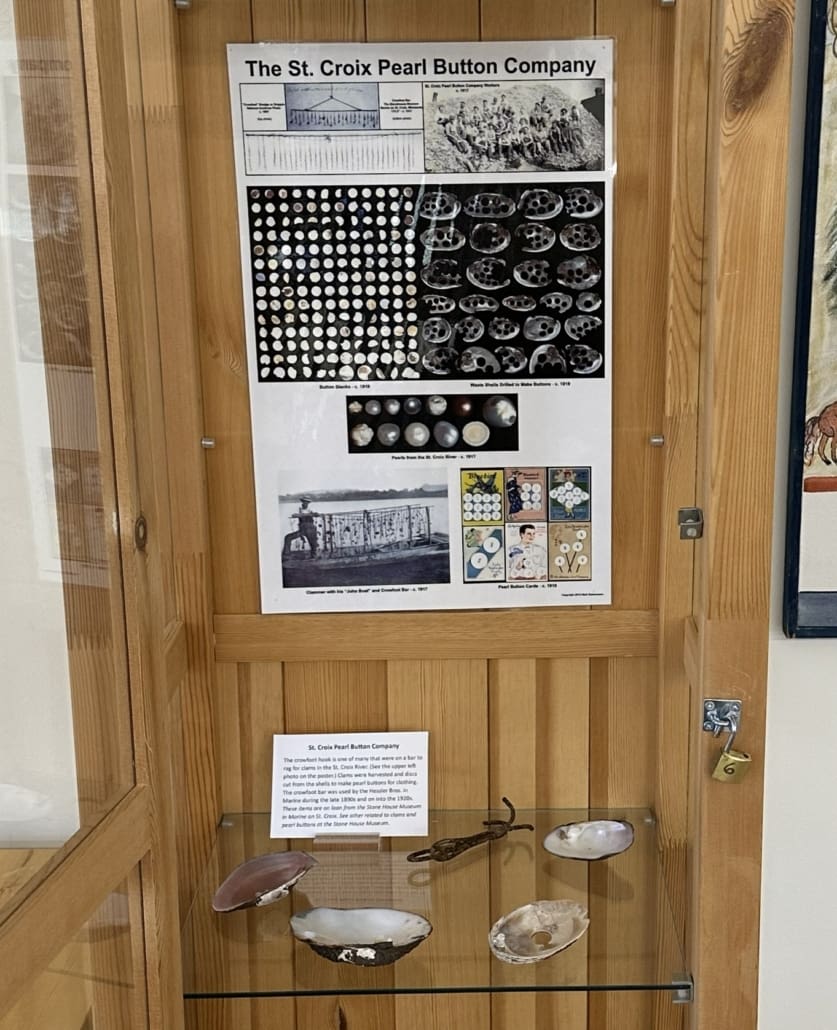
St. Croix Pearl Button Company
The crowfoot hook is one of many that were on a bar to rag for clams in the St. Croix River. (See the upper left photo on the poster.) Clams were harvested and discs cut from the shells to make pearl buttons for clothing.
The crowfoot bar was used by the Hessler Bros. in Marine during the late 1890s and on into the 1920s.
These items are on loan from the Stone House Museum in Marine on St. Croix. See other related to clams and pearl buttons at the Stone House Museum.
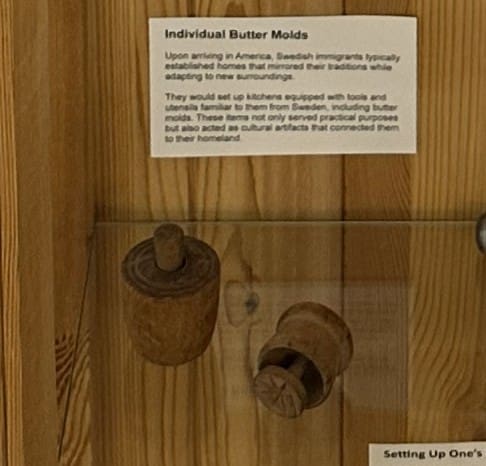
Individual Butter Molds
Upon arriving in America, Swedish immigrants typically established homes that mirrored their traditions while adapting to new surroundings. They would set up kitchens equipped with tools and utensils familiar to them from Sweden, including butter molds. These items not only served practical purposes but also acted as cultural artifacts that connected them to their homeland.
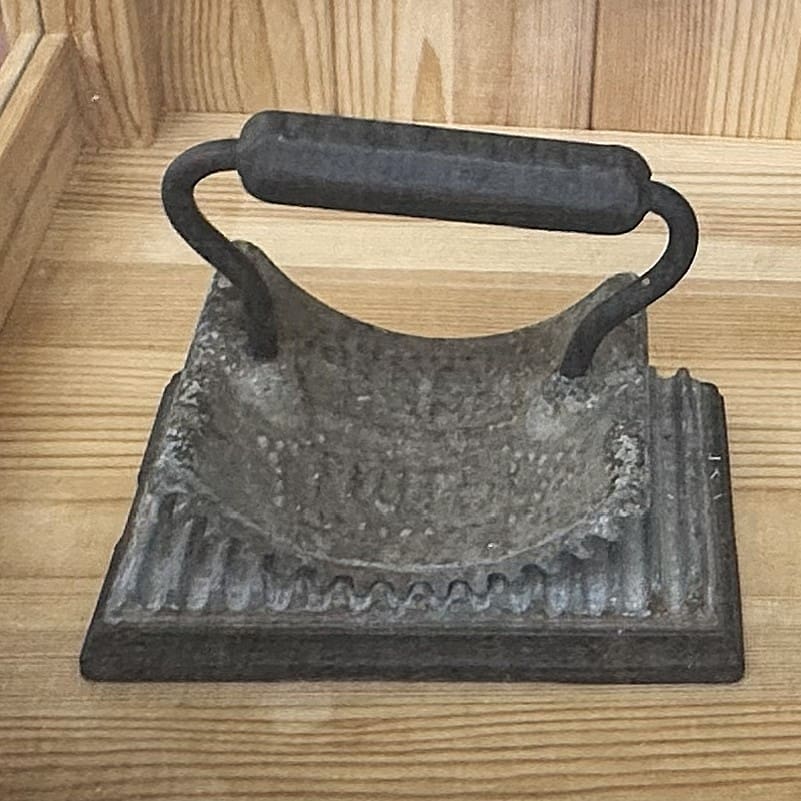
Fluter Hand Iron
he base was heated on top of a cast-iron stove. Then fabric was placed on top of it with the handled piece rolled over it to “flute” or crinkle collars and cuffs to make a fancy edge. Patent date: 1866. This item is on loan from the Stone House Museum in Marine on St. Croix.
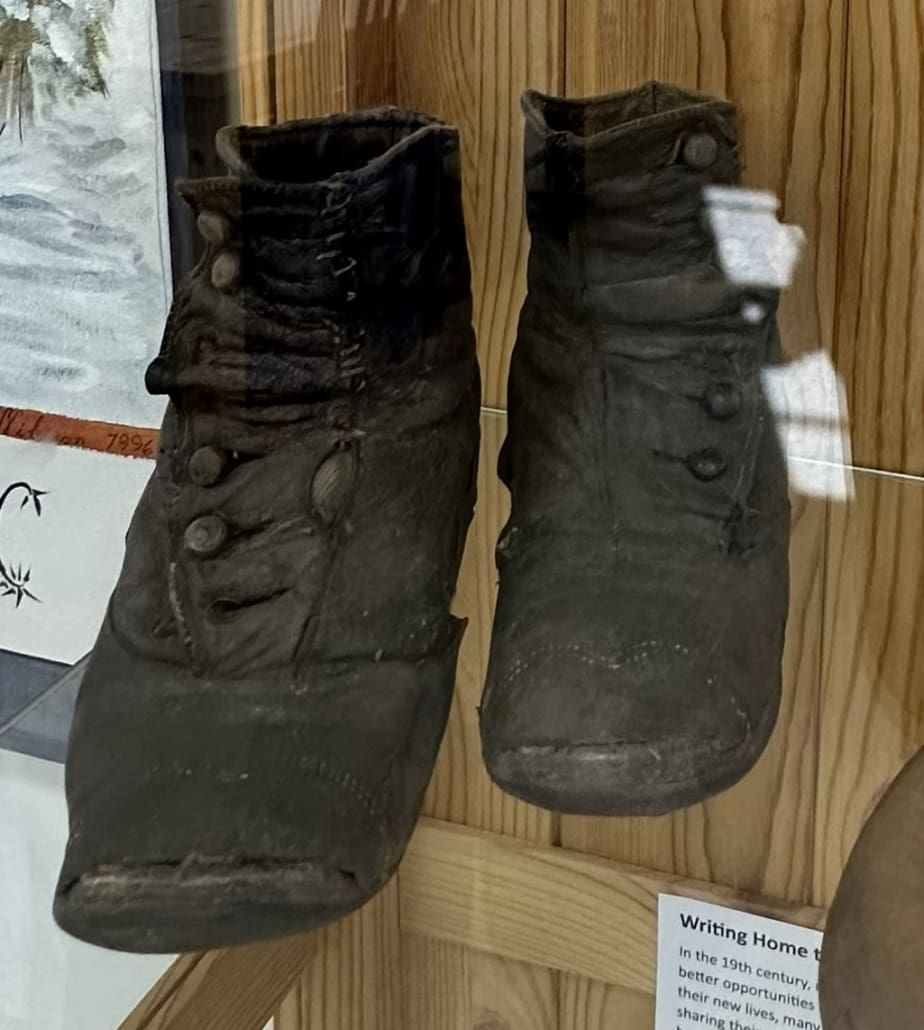
Child’s Leather Shoes
These shoes were donated by the John Sjostrand family, and were likely made by John, who ran a boot and shoe shop in the Village of Marine in the late-1800s. This item is on loan from the Stone House Museum in Marine on St. Croix.
Writing Home to Families
In the 19th century, millions of immigrants left their homelands seeking better opportunities and a bright future in America. As they settled into their new lives, many took the time to write letters home to their families, sharing their experiences and challenges. These letters served as vital links between separated loved ones, providing updates on life in America and encouraging others to join them.
The act of letter writing was not just a personal endeavor; it played a significant role in shaping immigration patterns. News from relatives could influence a whole family’s decisions about whether to emigrate or how to support those already in America. Letters often included practical advice about navigating the immigration process of finding work, making them an invaluable resource for both prospective immigrants and future historians.
Ink Well and Feather Pen
The feather tip was dipped in the bottle of ink for writing, and used by Mr. and Mrs. John Sjostrand and their children. The family lived on a 40-acre farm on the northwest corner of the Village of Marine in the 1800s, and had a bott and shoe shop that also did harness repairs. These items are on loan from the Stone House Museum in Marine on St. Croix.

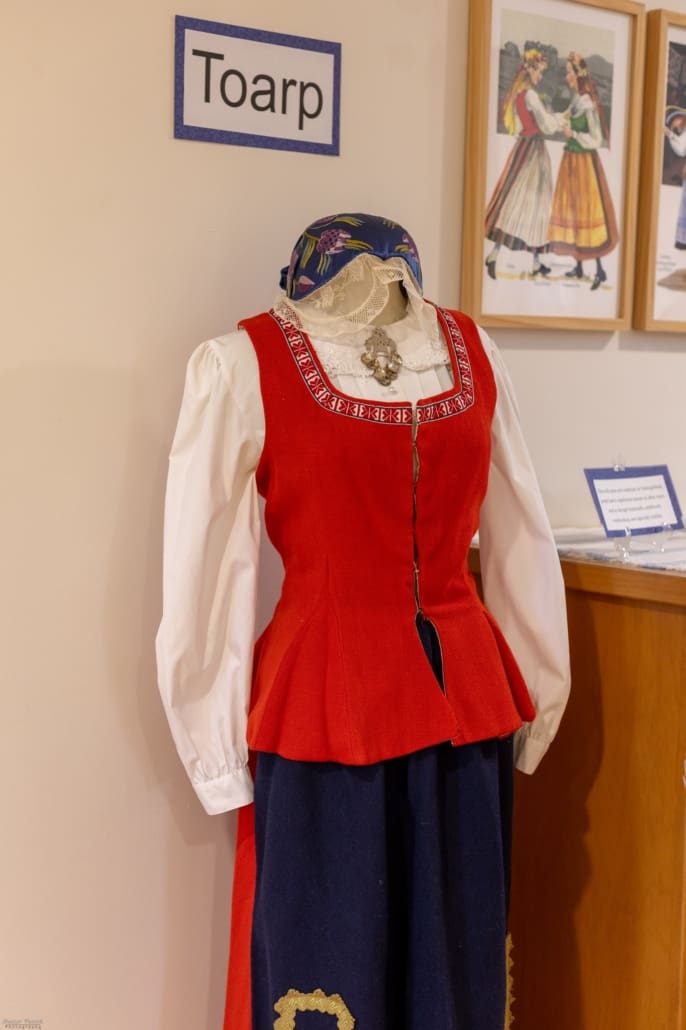
Folk Dräkt – Toarp, Sweden
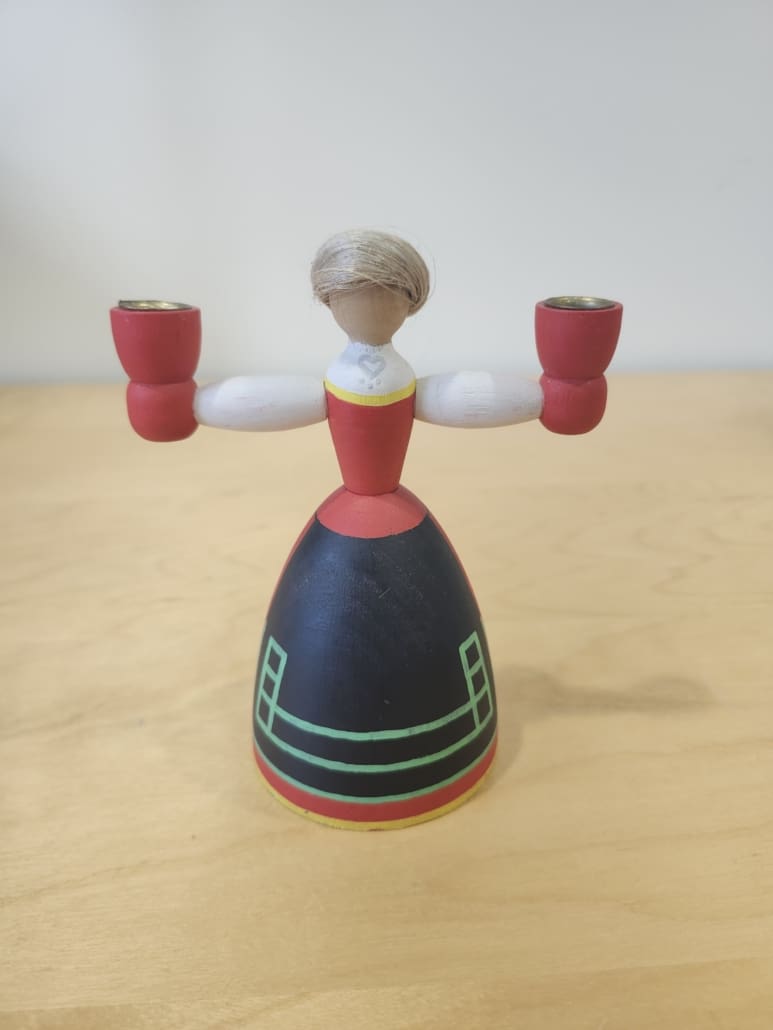
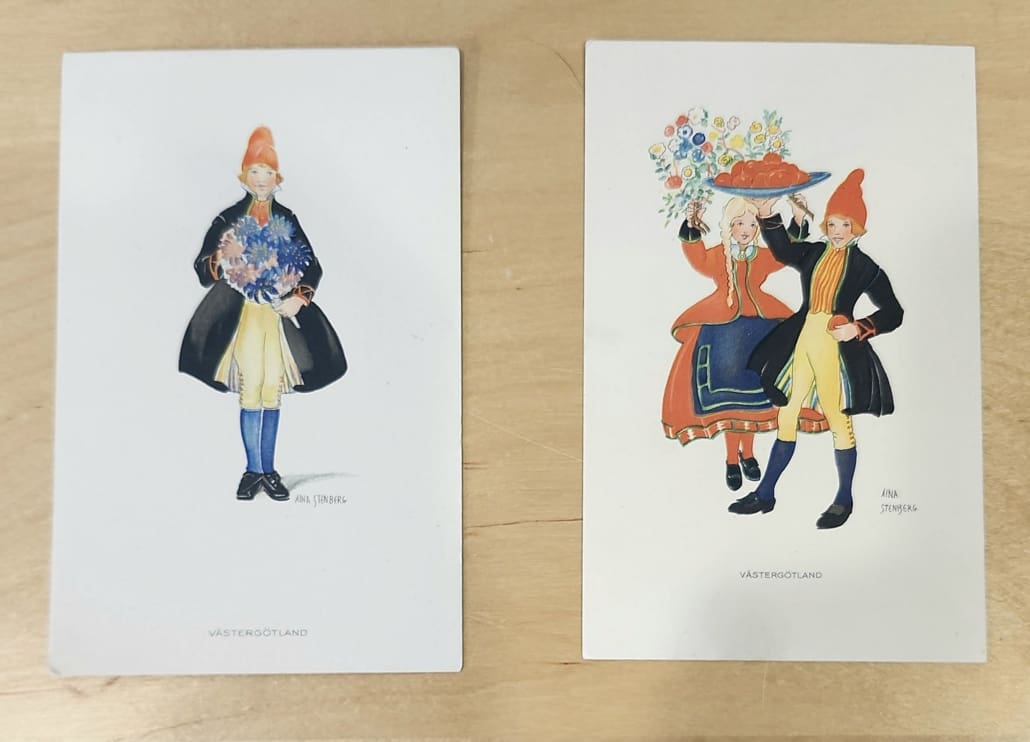
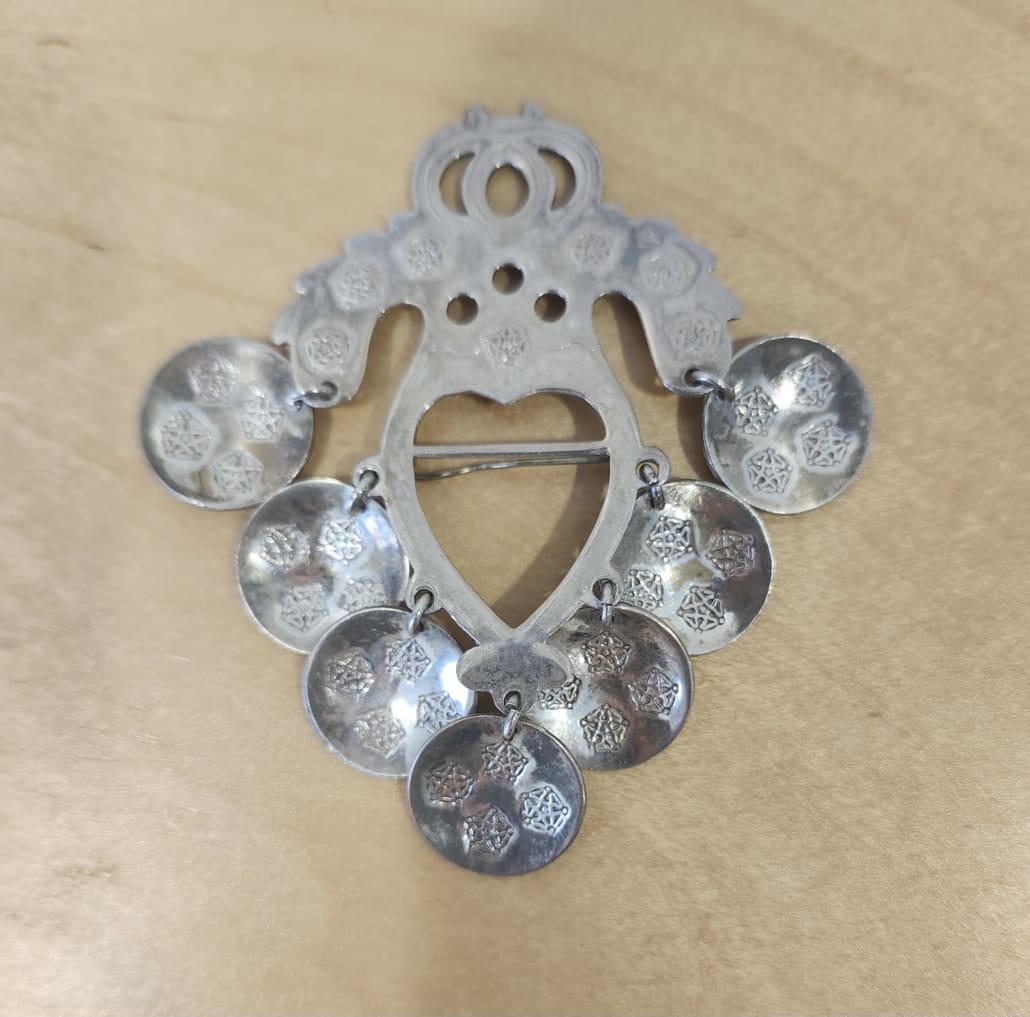
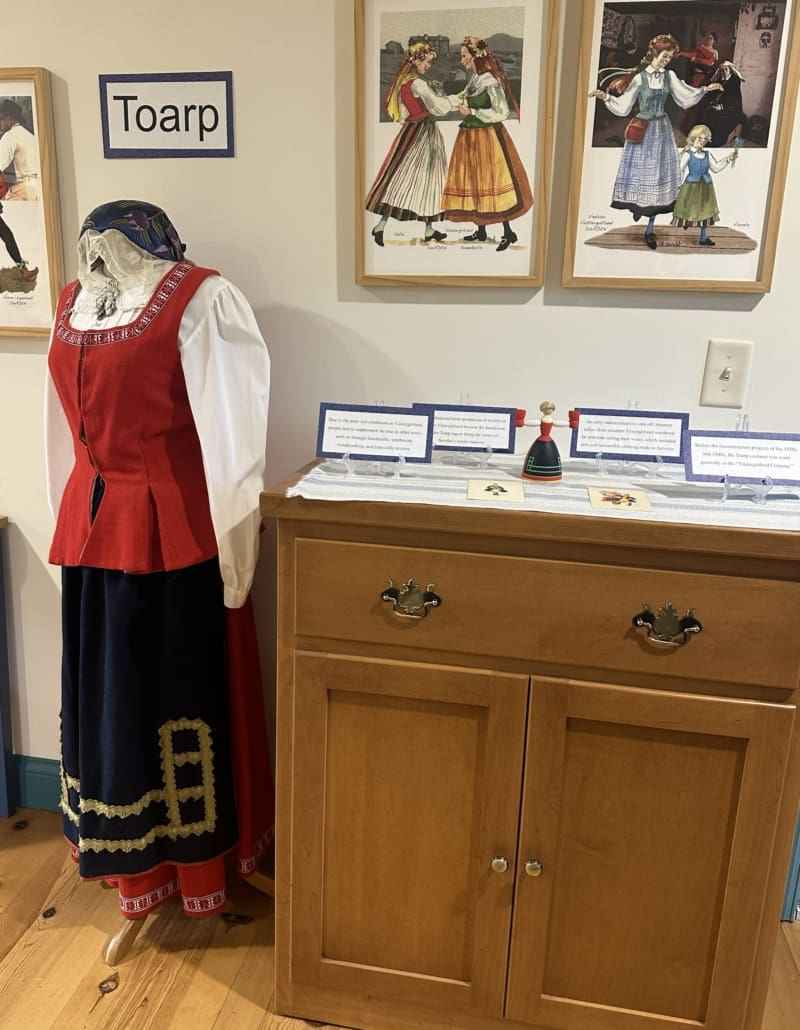
The Toarp region of western Sweden is known for its distinctive and richly detailed folk dress, a vibrant expression of local identity and tradition. Characterized by bold woven stripes, intricate embroidery, and carefully coordinated accessories, Toarp’s traditional clothing reflects both everyday rural life and festive celebration in the 18th and 19th centuries. These garments were more than attire. They signaled community belonging, craftsmanship, and pride in regional heritage that continues to be honored today.
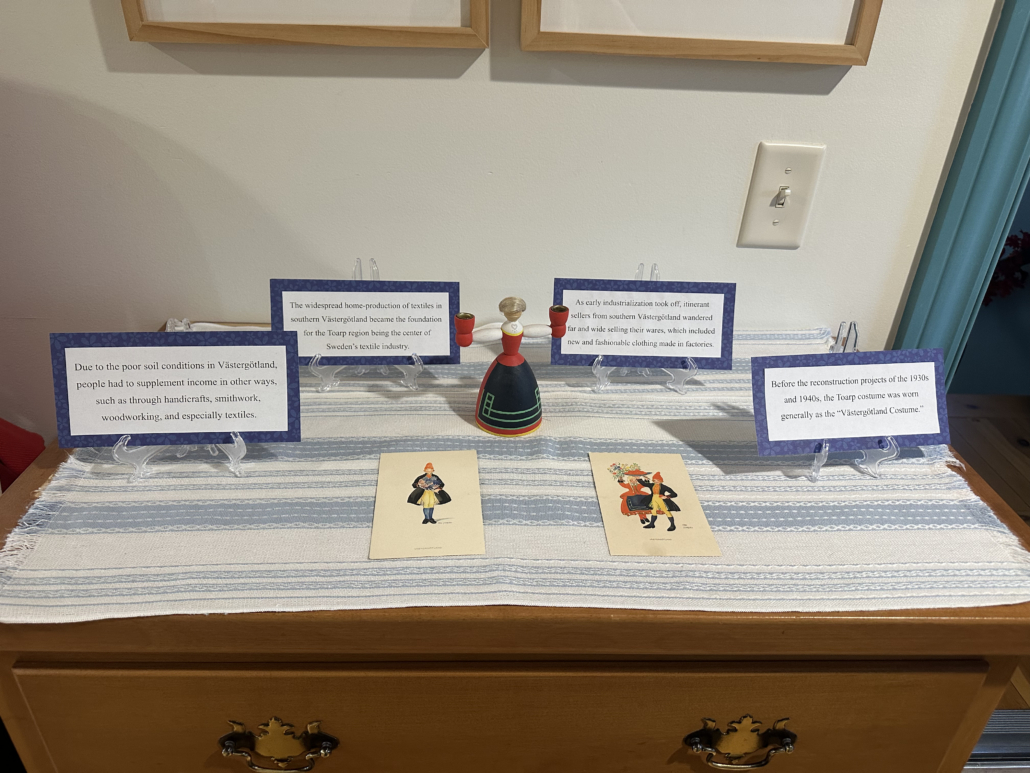
Due to the poor soil conditions in Västergötland, people had to supplement their income in other ways, such as through handicrafts, smitthwork, woodworking, and especially textiles.
The widespread home-production of textiles in the southern Västergötland region became the foundation for the Toarp region being the center of Sweden’s textile industry.
As early industrialization took off, itinerant sellers from southern Västergotland wandered far and wide selling wares, which included new and fashionable clothing made in factories.
Before the reconstruction projects of the 1930s and 1940s, the Toarp costume was worn generally as the “Västergötland Costume.”
Birch: Art & Function
Birch trees, known for their striking white bark and delicate leaves, hold a significant place in Swedish culture, both artistically and functionally.
Historically, birch wood has been utilized for various practical purposes, including furniture making and tool crafting. Its lightweight yet sturdy nature makes it an ideal choice for artisans.
In addition to its functional uses, birch has inspired countless artists throughout Sweden. The unique texture and color of birch wood lend themselves beautifully to decorative arts. From intricately carved wooden items to woven birch bark baskets, the versatility of this material showcases the deep connection between nature and craftsmanship in Swedish culture.
Moreover, birch trees are often celebrated in folklore and art as symbols of renewal and resilience. Their presence in landscapes is not only aesthetically pleasing but also evokes a sense of nostalgia and cultural identity among Swedes. As such, birch continues to be a vital element in both contemporary art practices and traditional crafts across Sweden.
The Significance of Birch to Swedish Immigrants in the 1800s:
Birch trees held profound significance for Swedish immigrants in the 1800s. These trees were a vital part of Sweden’s natural landscape and also served practical and cultural purposes for those who settled in America. The birch tree’s bark was traditionally used to create various items, including containers and roofing, reflecting its versatility and importance in daily life.
As Swedish immigrants arrived in Minnesota and other parts of the Midwest, they brought with them their customs and traditions associated with birch. The tree became a symbol of home and heritage, reminding them of their native land. During celebrations such as Midsummer, birch logs and twigs were used to construct a majstång (maypole), which played a central role in communal festivities.
Additionally, birch sap was harvested in spring, providing a sweet beverage that connected immigrants to their roots. This practice sustained them physically and fostered a sense of community as families gathered to tap the trees together. The cultural significance of birch thus transcended mere utility; it represented resilience, continuity, and the preservation of Swedish identity amidst new beginnings.
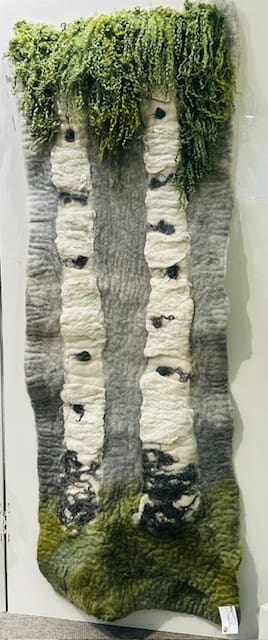
Birch Trees
Christine Tallberg
Jönköping, Sweden
2024
This hand-felted piece, created by Christine Tallberg, hangs over 5 feet long and is made from sheep wool, silk, and linen, and depicts two birch trees.
In the 1800s, birch trees met many of needs of the Swedish immigrants as well as the Ojibwe including food, shelter, and warmth. Gammelgården has artifacts that are made from birch which would illustrate the versatility and uses of birch trees.
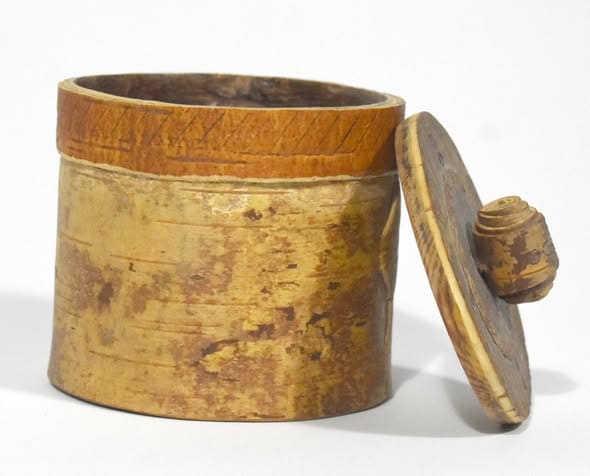
Birch Bark Canister
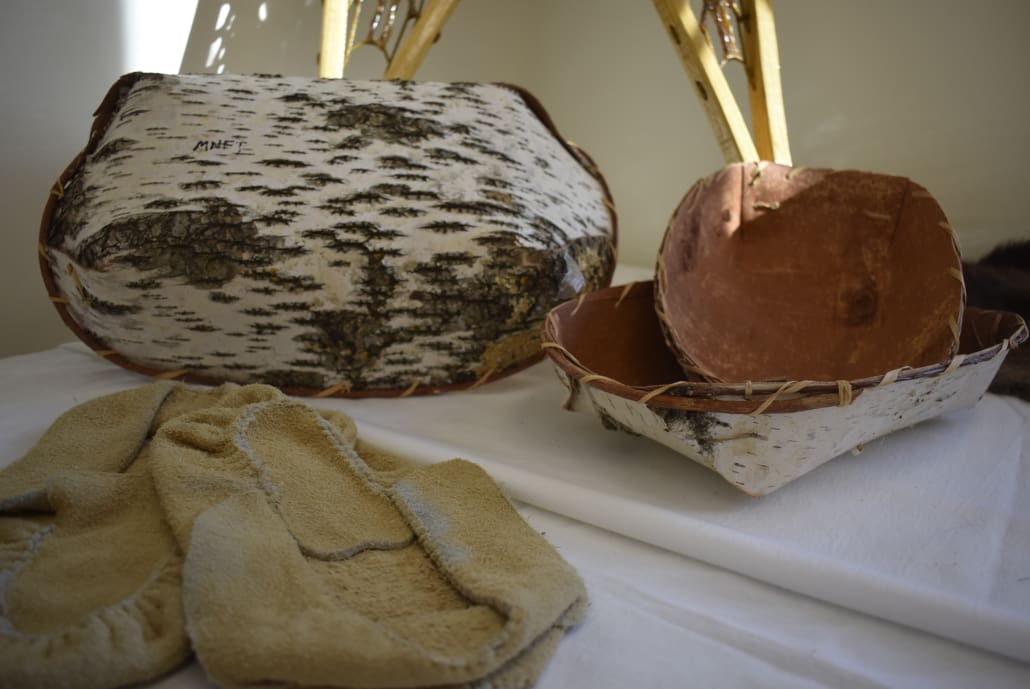
This canister is made from birch bark, with a tight-fitting cover. This style and method of construction dates back to pre-Viking times. These types of containers were used to store food items or silver jewelry, as birch bark prohibits oxidation/rust. Containers in this style have been found dating back all the way to Viking times, with food stored inside them.
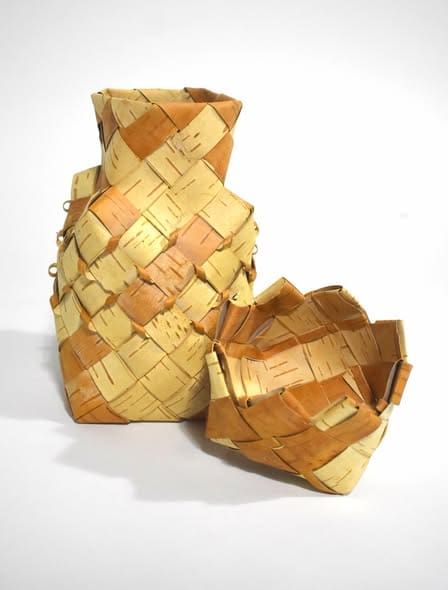
Birch Bark Water Jar and Cup
Although it looks like it wouldn’t hold water, it is a very clever design and concept. When birch bark gets wet, it swells. So, any holes or gaps in the sides disappear when it is filled with water which makes it watertight.
Birch bark weaving is often featured in Scandinavian traditions and handiwork. When new immigrants settled in Minnesota, birch trees were prevalent. Swedish immigrants took full advantage of this valuable resource and wove the bark into many different things, including baskets, decorations, and water bottles.
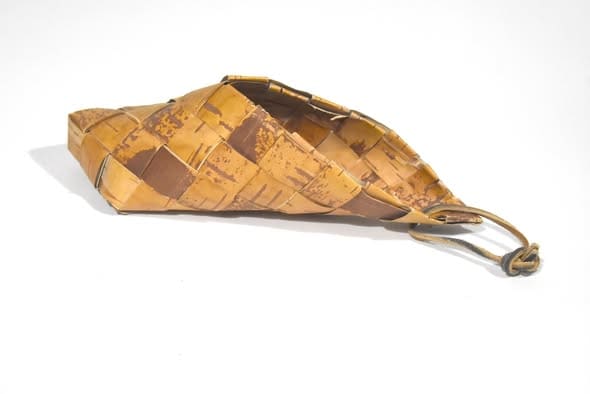
Birch Bark Slipper
This is a handmade bark slipper. As a slipper, they would have been worn outside. Although many people think of birch trees as white, they have an inner layer of bark that is brown.
Because the shoes feel quite hard, they most likely would have been worn with thick socks to make them more comfortable. Another use could have been a container that would have been hung on a peg or nail to hold any number of household items.
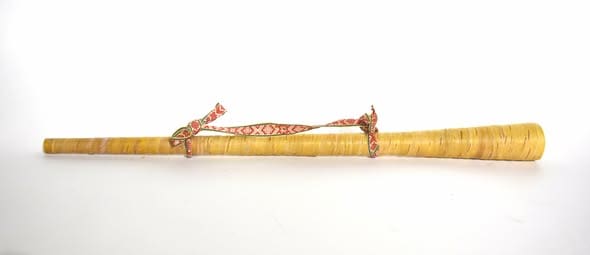
Näverlur Horn
This horn was typically made and used in Scandinavia to lure moose while hunting, to communicate in the mountain areas with others, and to welcome people to celebrations.
Young girls who spent the summer in the mountains with the cows and goats each would have a distinctive “call” used at day’s end to let other young girls know they were okay. The Näverlur was a special emergency universal sound that called for help.
Rune Selén was Sweden’s best-known näverlur manufacturer. He manufactured more than 11,000 näverlurar between 1959 and 2005 when he retired because of a dust allergy. He died on October 28, 2011. The oldest recovered näverlur in Sweden dates back to the 10th century, and resembles earlier bronze trumpets.
Sámi Knife
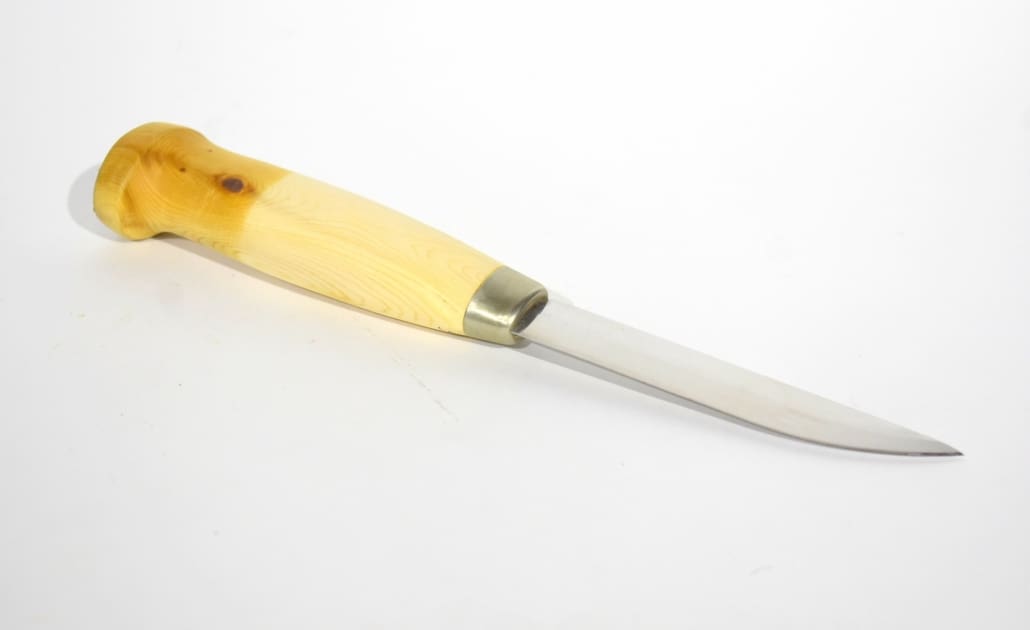
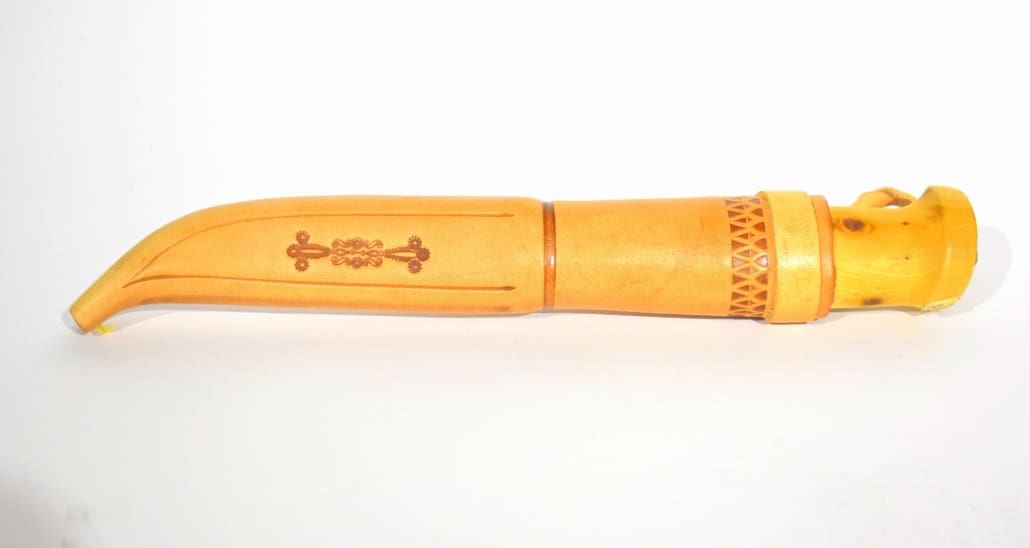
This Sámi knife (Stuorra niibi = “big knife”) with birch handle and a sheath. The reindeer-hide sheath has a tooled design and a belt-hanging loop. The label indicates it was made by “Einar.” The Sámi knife has a long, wide, and strong blade that is designed for light chopping tasks such as de-limbing; brush clearing, cutting small trees for shelter poles; and bone-breaking and butchering tasks. It is sometimes used as a substitute for an ax for chopping and splitting small amounts of firewood from standing dead trees. This is essential, especially when all the dead and fallen wood is buried underneath many layers of snow. Typical Sámi knives have a blade length ranging from roughly 8 inches to 18 inches.
The handle is generally made from birch for better grip when used in snowy conditions. Also, this provides good control over the blade, particularly when handling the knife with gloves or while the hands are numb.
The Sámi people typically use two knives: the smaller called a buiku or unna niibaš (“small knife”); while the larger “Sami knife” is called stuorra niibi (“big knife”). An even larger version known as a väkipuukko (or sax) is similar to a seax (an Old English word for “knife” which is actually a type of small dagger or sword used by the Germanic people of the Early Middle ages, especially the Saxons, whose name derives from the weapon).
The knife and sheath in our collection were handmade in the early 2000s and sold at the Jokkmokk’s market. On the first weekend in February, every year since 1606, Jokkmokk’s market is held. Apart from world-class Sámi art, culture and handicraft, visitors are usually greeted by proper, cold winter weather. Sámi people come from Sweden, Norway, Finland, and Russia to go to this annual gathering.
Birch Bait Box
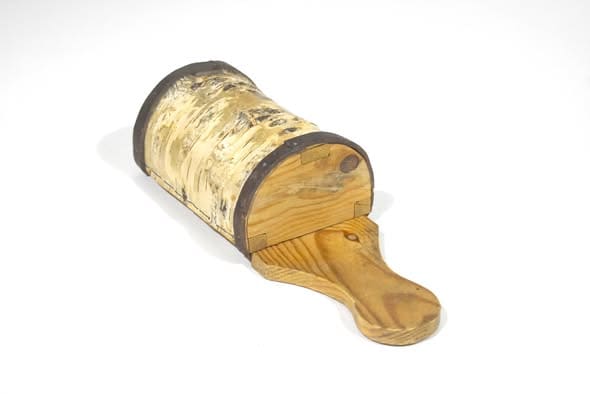
Worms, grasshoppers, and similar would have been put in boxes like this, which were then placed in reeds or weeds so they wouldn’t float away. The water kept the bait cool and alive while a person fished for the family’s meal.
Scandinavian Fish and Fishing
The Scandinavian Fish and Fishing Exhibit’s goal was to highlight the rich history of fishing in Sweden. This exhibit highlighted the hard work and close connection of Swedish citizens to both their communities and to nature, the ways people caught and processed their food, as well as displaying an idea of the types of wildlife and nature one would encounter in this region.
The wood carvings and vintage fishing poles from this collection are from the collection of Jim and Natalie Norman.
Gammelgården Museum thanks the Norman’s for their generosity in loaning these items to the museum to share with the public.
The loan of these items enriches the museum and inspires visitors with the beauty of craftsmanship and the joy of fishing.
Fishing in Sweden
Fishing has been an integral part of Swedish culture and economy for centuries. With over 100,000 lakes and extensive coastlines along the Baltic and North Seas, Sweden offers diverse fishing opportunities.
From traditional methods like dipnet fishing in the Torne River to modern recreational angling, the country is rich in aquatic resources.
Fishing not only helped to sustain local communities but also aided in connecting generations through the act of sharing knowledge and traditions.
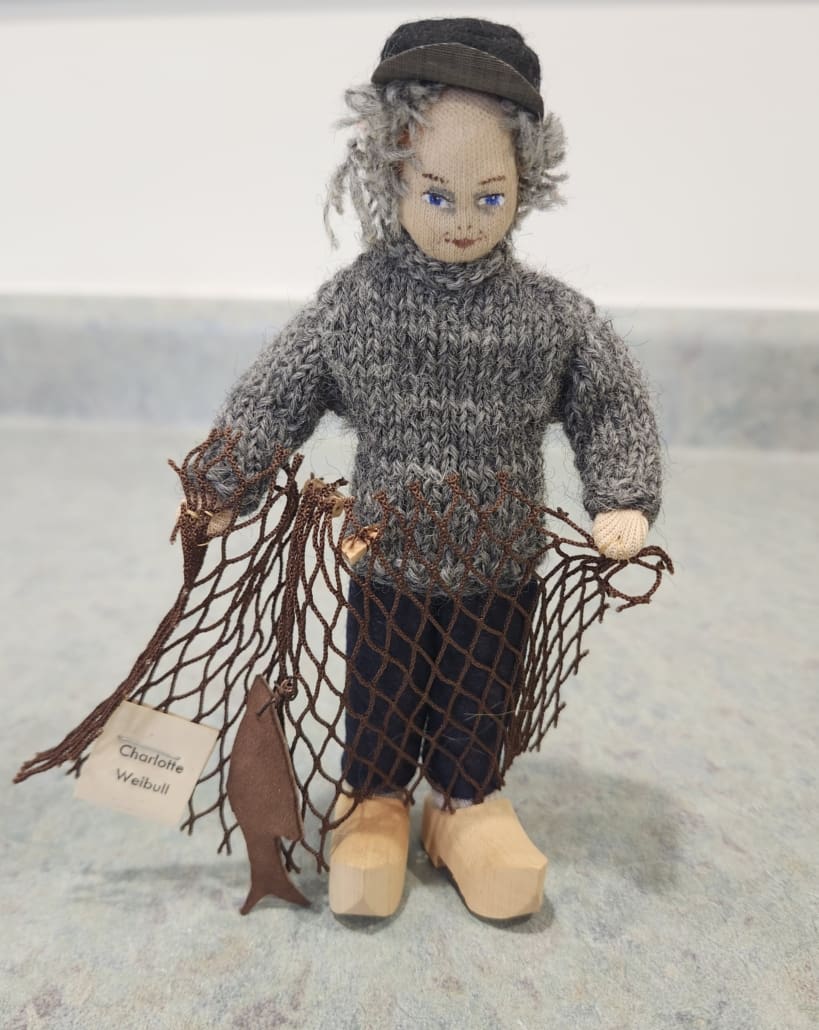
Charlotte Weibull Doll: Fisherman Figure
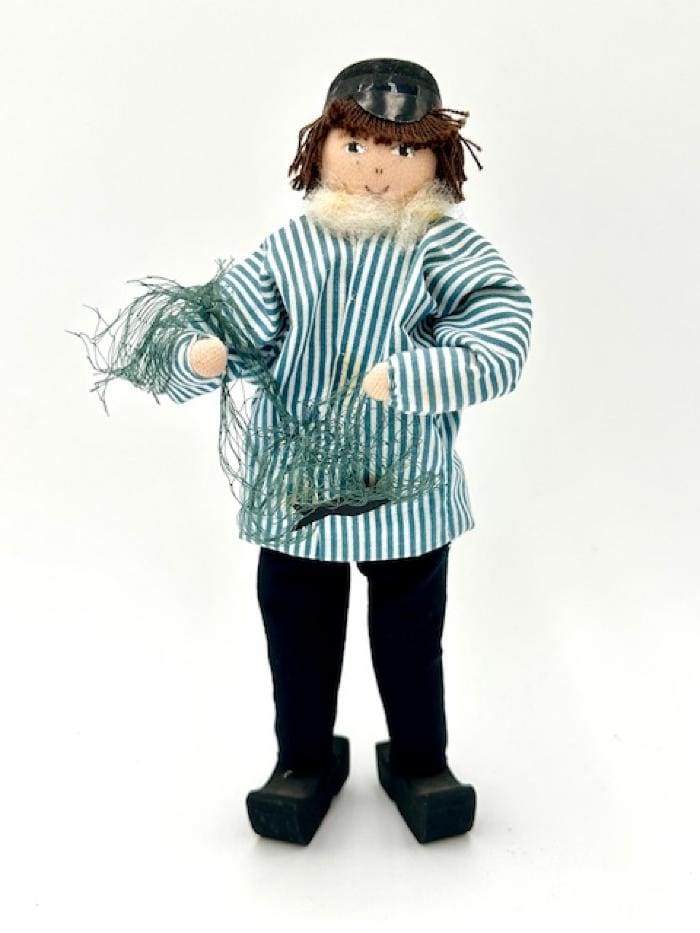
This doll represents a male fisherman, crafted by renowned Swedish artist Charlotte Weibull. The figure is intricately designed with a delightful character face and dressed in traditional fishing attire. He holds a fishing net containing a fish, symbolizing the rich maritime culture of Sweden.
Charlotte Weibull dolls are celebrated for their exquisite detail and craftsmanship, often reflecting the folklore and traditions of Swedish life. This piece showcases artistic skill and the cultural significance of fishing in Sweden’s history.
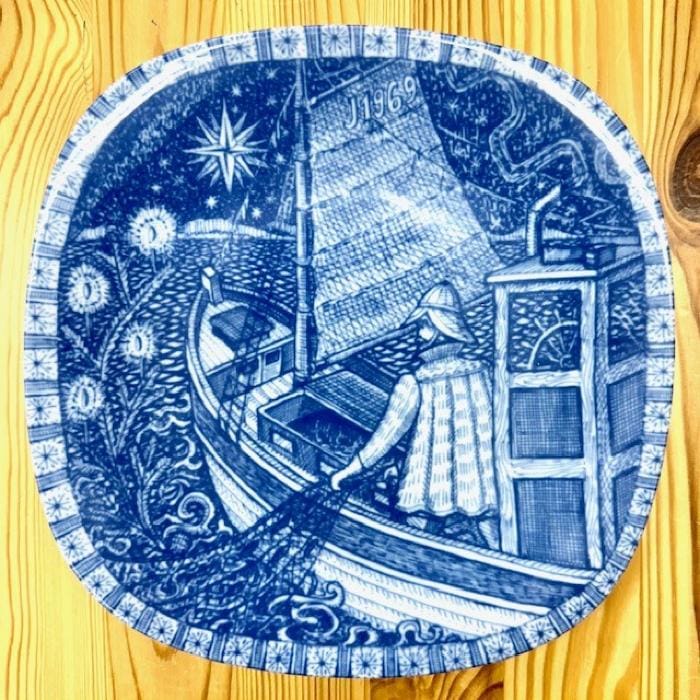
Decorative Plate
Sweden, 1969
This ceramic plate features a design that depicts a fisherman in a boat, skillfully casting his net into the water. This scene not only reflects the rich maritime culture of Sweden but also highlights the importance of fishing to maintain a livelihood.
The underside of the plate had a printed mark identifying the maker as Rorstrand, one of Sweden’s oldest and most prestigious porcelain manufacturers. The three crowns on the mark symbolize Swedish royalty and heritage, further emphasizing the cultural significance of this piece.
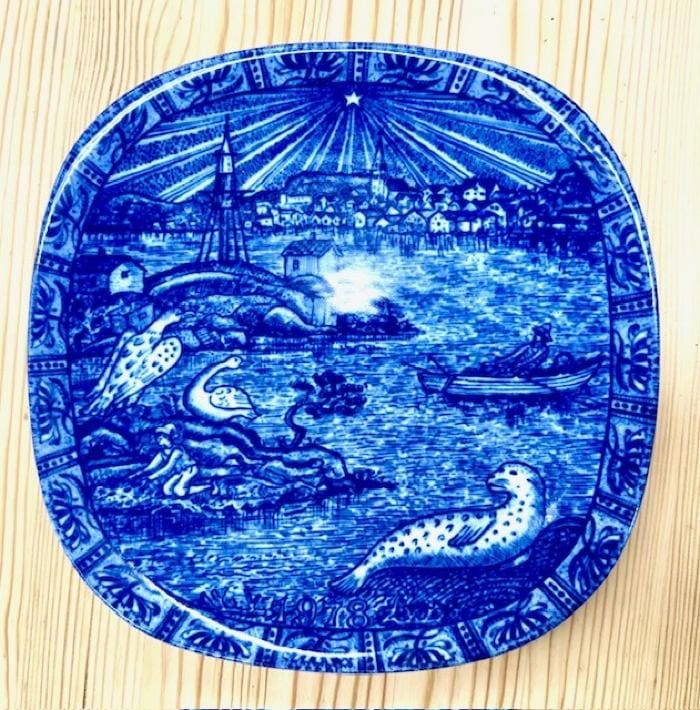
Decorative Plate
Sweden, 1978
This decorative ceramic plate captures the essence of a serene harbor scene. The imagery includes a seal and geese, alongside a man navigating a rowboat. In the background, a city or port is depicted, hinting at bustling activity and life.
The craftsmanship of this piece highlights the cultural significance of decorative ceramics in Scandinavian heritage. Such plates are often cherished for their aesthetic appeal and storytelling capabilities through visual art.
Swedish Father and Son Woodcarvers
Carl Johan Trygg (1887-1954), born in Skagerhult, Örkelljunga Municipality, Skåre County, Sweden, began carving figures as a child. He became renowned for his work and known as a master carver over the span of his life. Before Trygg was able to support himself as a carver, he was a shoemaker and operated a laundromat.
Carl Olof Trygg (1910-1993), son of Carl Johan Trygg, was born in Stora Tuna, Kopparberg County, Dalarna, Sweden, and lived in Canada for several years. Like his father, he became renowned as a master woodcarver, particularly known for his contributions to the Scandinavian flat-plane woodcarving style. He carved gubbar (old men) in wood and later in soapstone.
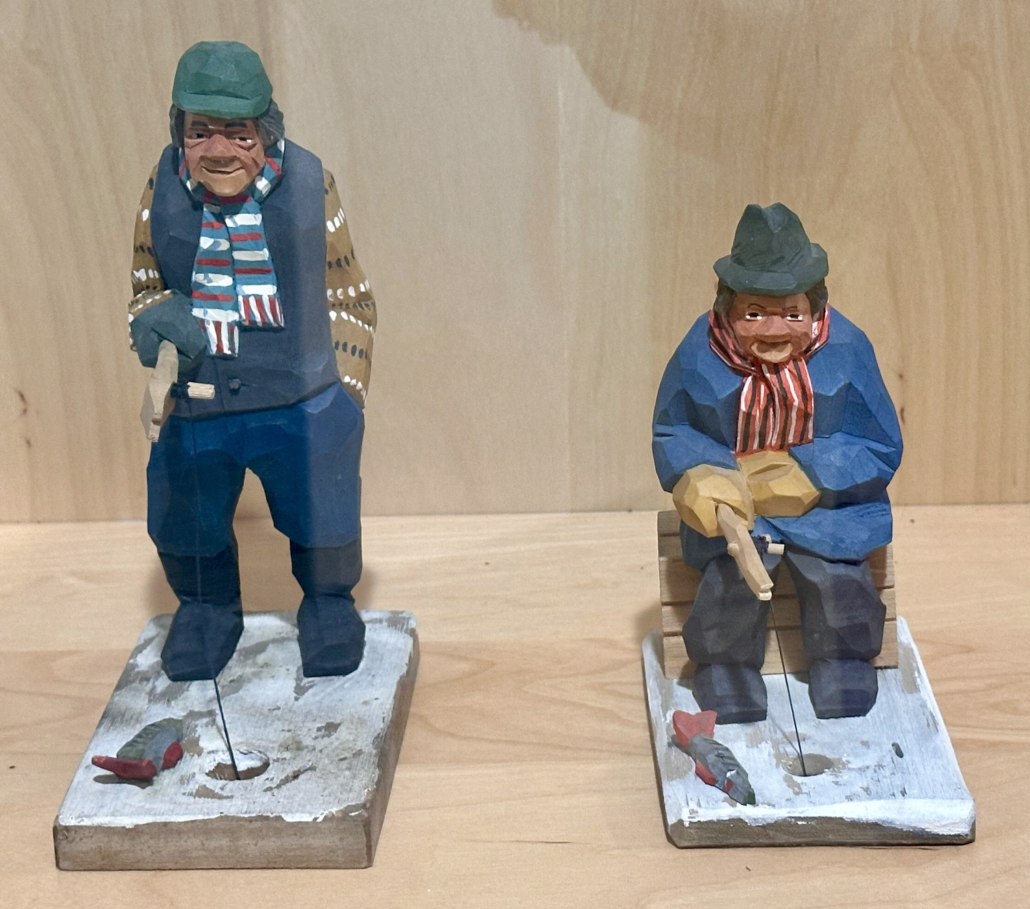
Fisherman Wood Carving
Carl Olof Trygg
- The use of wood as a medium for this carving by Carl Olof Trygg provides a warm, organic feel that enhances the storytelling aspect of his art. This piece, representing a fisherman engaged in his daily activities, serves as both an artistic expression and a cultural narrative, preserving the maritime heritage of Sweden.
- Trygg’s intricate fisherman carving is characterized by its details and expressive forms, showcasing the skillful craftsmanship that defines his legacy.
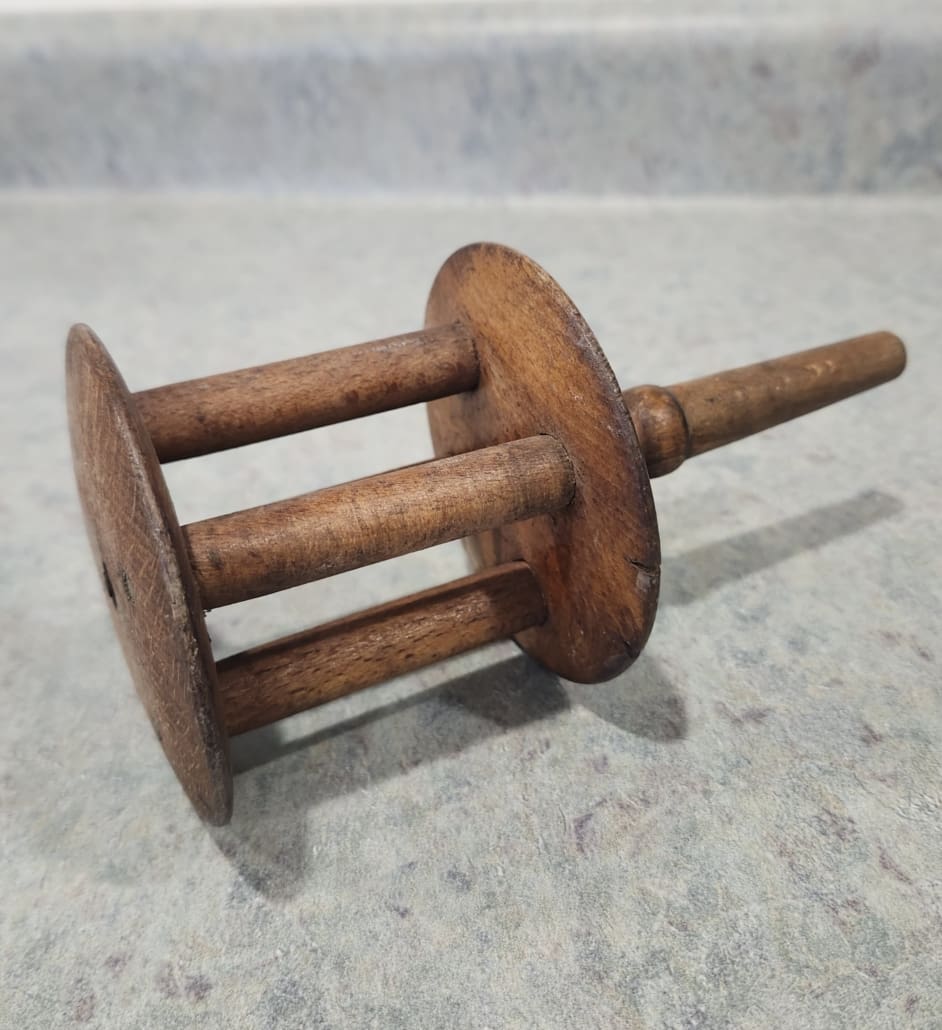
Handmade Wood Reel
This handmade wood reel, crafted in Sweden in the 1800s, exemplifies the rich tradition of Swedish folk art. This handmade piece reflects the primitive style characteristics of its era. The wood used in its construction not only showcases the natural beauty of the material but also highlights the craftsmanship that has been passed down through generations.
Fishing Spear
The fishing spear features a hand-forged metal top and a wooden handle, showcasing traditional craftsmanship.
In the 1800s, multi-pronged fishing spears were utilized in various settings:
Shallow Waters: Fishermen often waded into shallow streams or rivers where they could visually locate fish before striking with their spears.
Night Fishing: In some cultures, such as among Indigenous peoples or coastal communities, torches or lanterns were used at night to attract fish closer to the surface for easier spearing.
Ice Fishing: In colder climates during the winter months, holes were cut into frozen lakes or rivers so that fishermen could spear fish swimming below the ice.
Canoe Fishing: Coastal communities often used these spears while fishing from canoes or small boats in the calm waters.
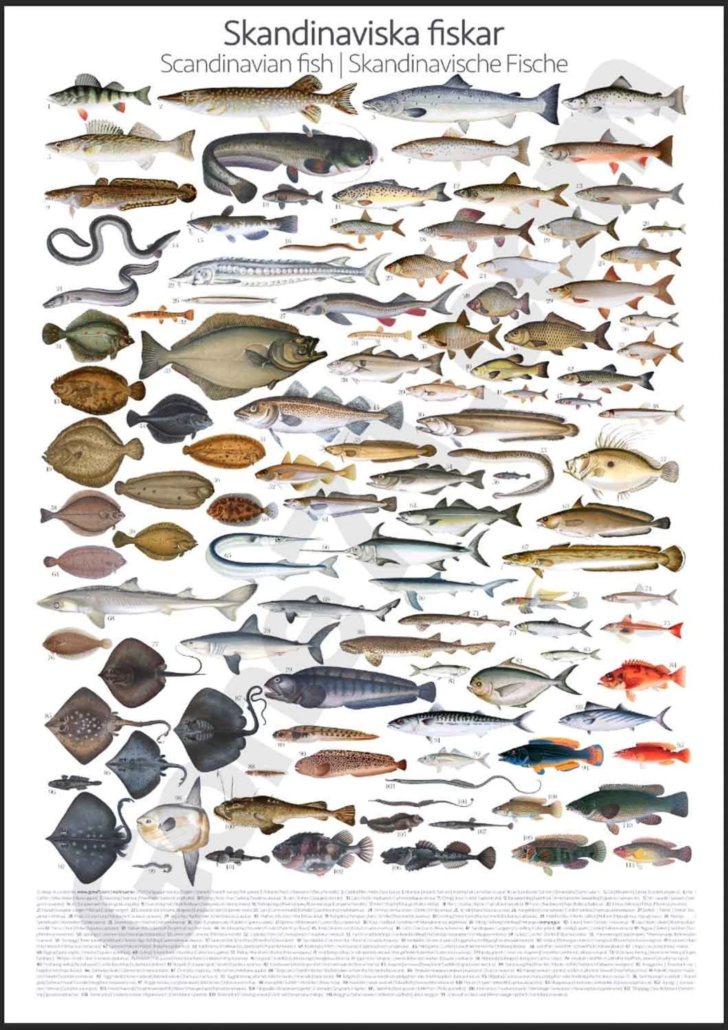
Scandinavian Native Fish
This poster displays a large number of fish common to the Scandinavian region that people from these regions would commonly encounter and catch.
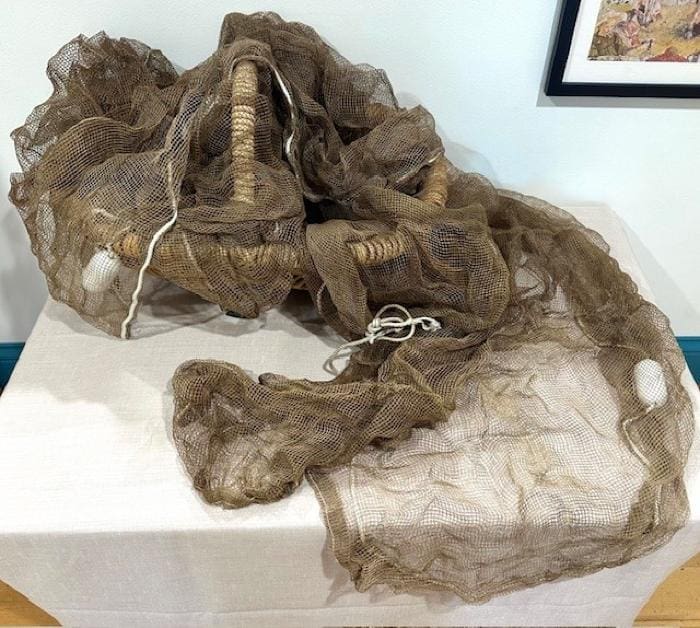
Fishing Net
This fishing net was a traditional tool used in various fishing practices. One length of the net has bobbers, which serve to keep the net afloat and indicate when fish are caught. The opposite side is lined with weights, designed to sink the net into the water, ensuring it captures fish effectively. The use of bobbers and weights illustrates the ingenuity behind fishing techniques that have been refined over centuries.
Birch Bark Fishing Net Weights
These antique fishing net weights, crafted in the 1800s, exemplify traditional Swedish folk art. Each weight, made from stones wrapped in birch bark, ensured the net would remain submerged. The use of natural materials, such as birch bark, reflects the resourcefulness of local artisans who utilized available resources to create practical tools for fishing.
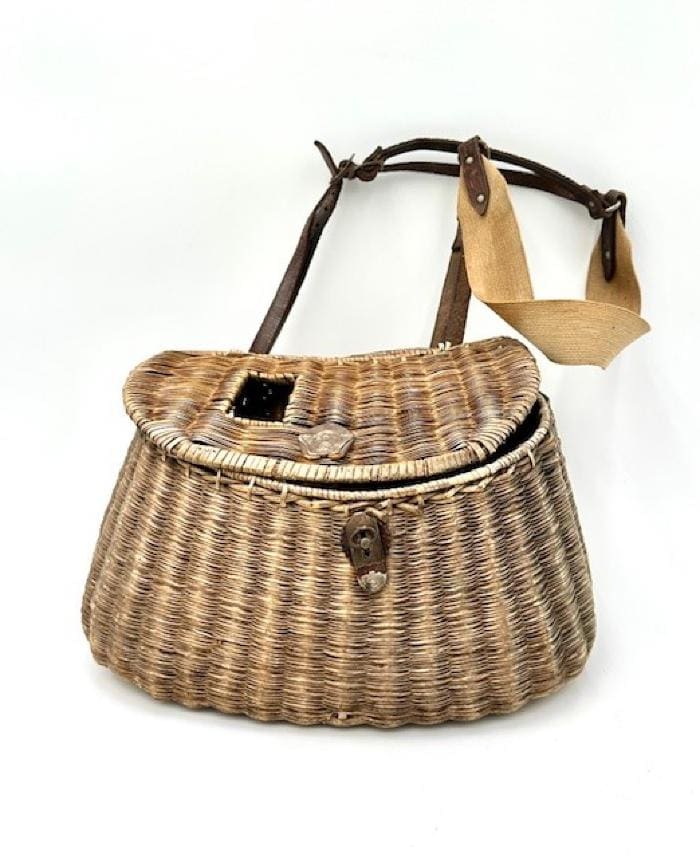
Fishing Creel
This wicker fishing creel, with a lidded top and rectangular opening, was designed for anglers to carry their catch. The adjustable leather and cotton straps provided comfort and versatility, enabling the user to wear it securely while fishing.
Historically, fishing creels have been essential tools for fishermen, facilitating the transport of fish and gear. The design reflects both functionality and craftsmanship, showcasing the skill involved in creating durable yet lightweight containers suitable for outdoor use.
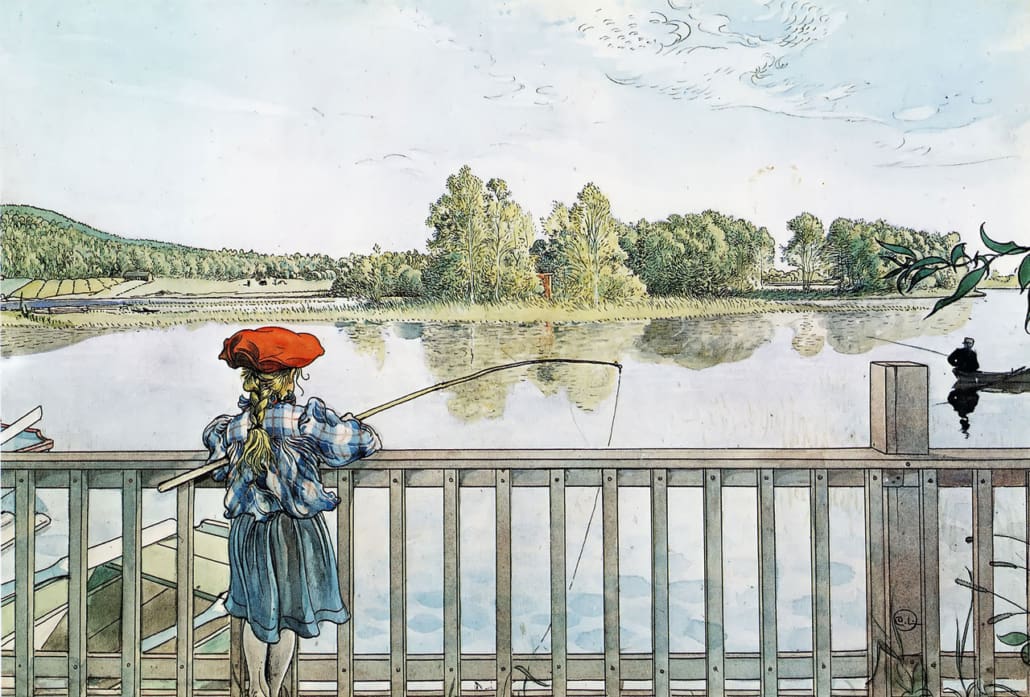
Lisbeth, Fishing
Carl Larsson (1853-1919)
This print captures a serene moment in the life of Lisbeth, the fourth child of the renowned Swedish artist Carl Larsson and his wife Karin Bergöö Larsson.
Born in 1891, Lisbeth was one of eight children in the Larsson family, which became a central theme in Carl’s artwork. Many of his paintings depict family life, with his children often serving as models for his idyllic scenes that capture the essence of Swedish domesticity.
In this print, we see Lisbeth engaged in the simple yet joyful activity of fishing, embodying the innocence and tranquility of childhood.
Larsson’s use of vibrant colors and delicate brushwork brings this scene to life, inviting viewers to appreciate both the subject’s concentration and the natural beauty surrounding her. The painting is a testament to Larsson’s skill in blending realism with an idealized vision of Swedish domestic life.
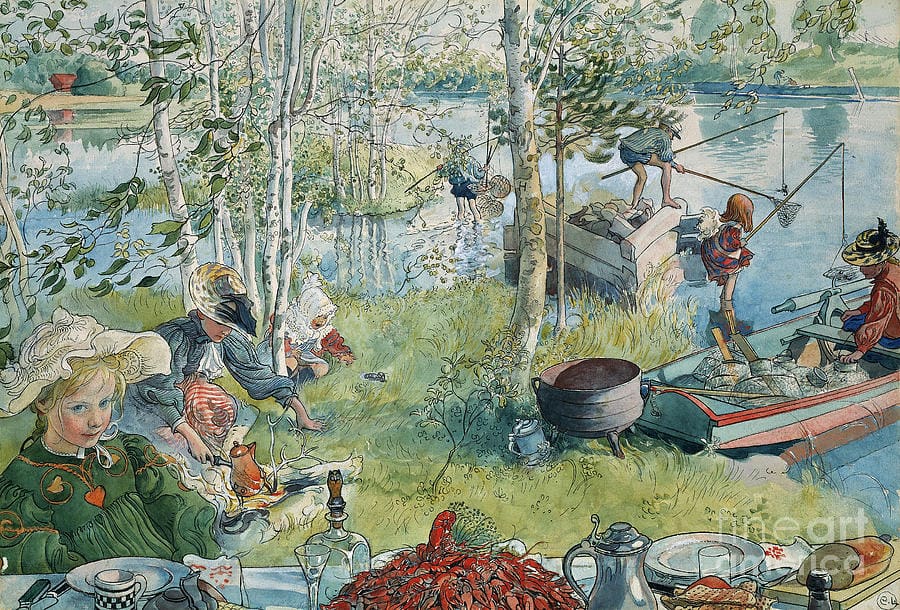
Crayfishing
Carl Larsson (1853-1919)
In this piece, the idyllic setting reflects Larsson’s love for the Swedish countryside, emphasizing the joy of simple pleasures. The composition features children at play, surrounded by lush greenery and water, illustrating the harmony between humans and nature.
This painting not only highlights the cultural significance of crayfishing in Sweden but also serves as a celebration of childhood innocence and familial bonds.
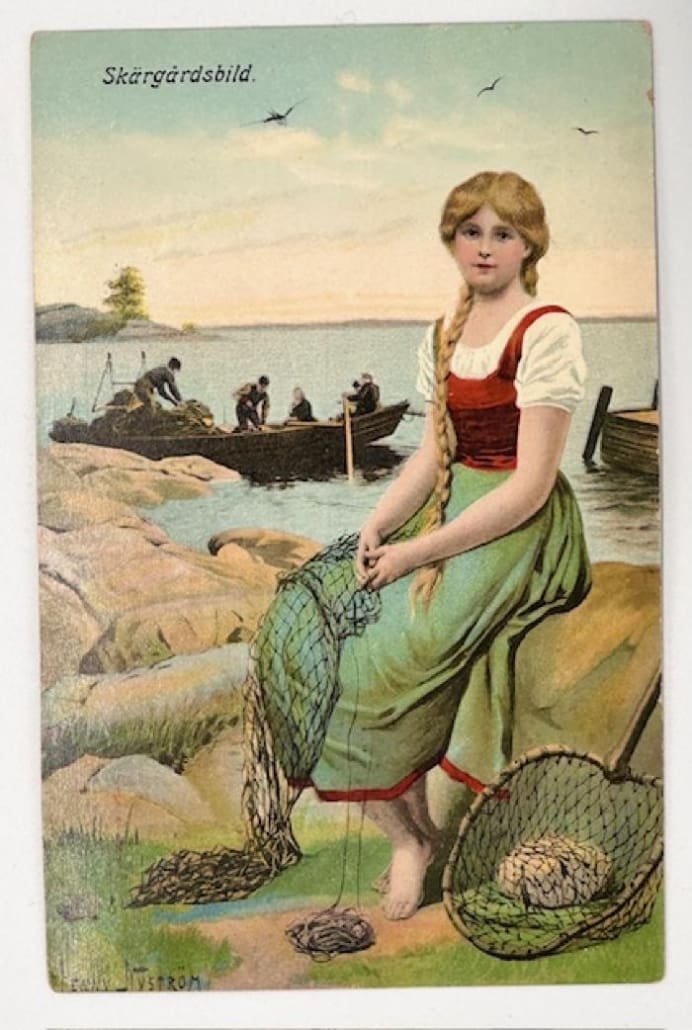
Swedish Women and Their Role in The Processing of Fish
In Sweden, women have played a vital role in the fishing industry, particularly in the processing of fish at the fishing wharves. Traditionally, these women, often referred to as fishwives, were responsible for the gutting, salting, and preparing of fish for sale. Their work was essential not only for sustaining local economies but also for preserving cultural practices associated with fishing.
During the peak fishing seasons, women would gather at the wharves to process catches brought in by fishermen. This labor-intensive work required strength and skill, as women often carried heavy loads of fish and worked long hours under challenging conditions.
The contributions of these women extended beyond mere processing; they were integral to the community’s social fabric. Many fishwives managed family finances and made crucial decisions regarding the sale of fish at local markets. Their resilience and hard work helped shape the fishing culture along the Swedish coasts.
Comparisons of Swedish and Mexican Culture
Cultural Connections
Sweden and Mexico are over 5,600 miles, or 9,500 kilometers, apart from each other. Each has a unique culture, which we celebrate this year at Gammelgården’s annual Spelmansstämman festival. Both countries have lively music, fantastic and vibrant art, fun toys and pastimes, and many delicious foods. Both cultures enrich the fabric of Scandia, Minnesota, and the United States as a whole.
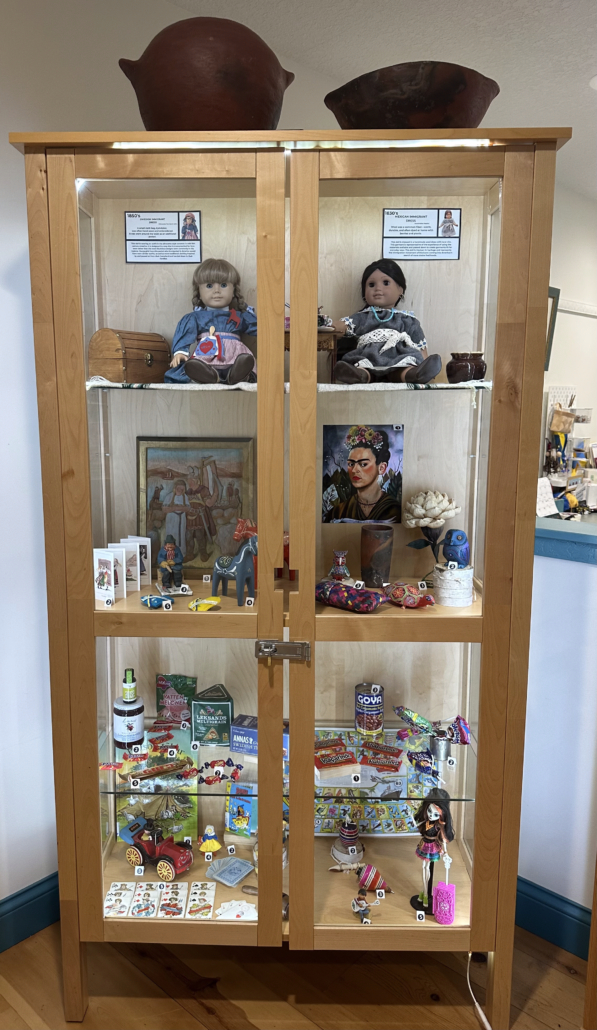
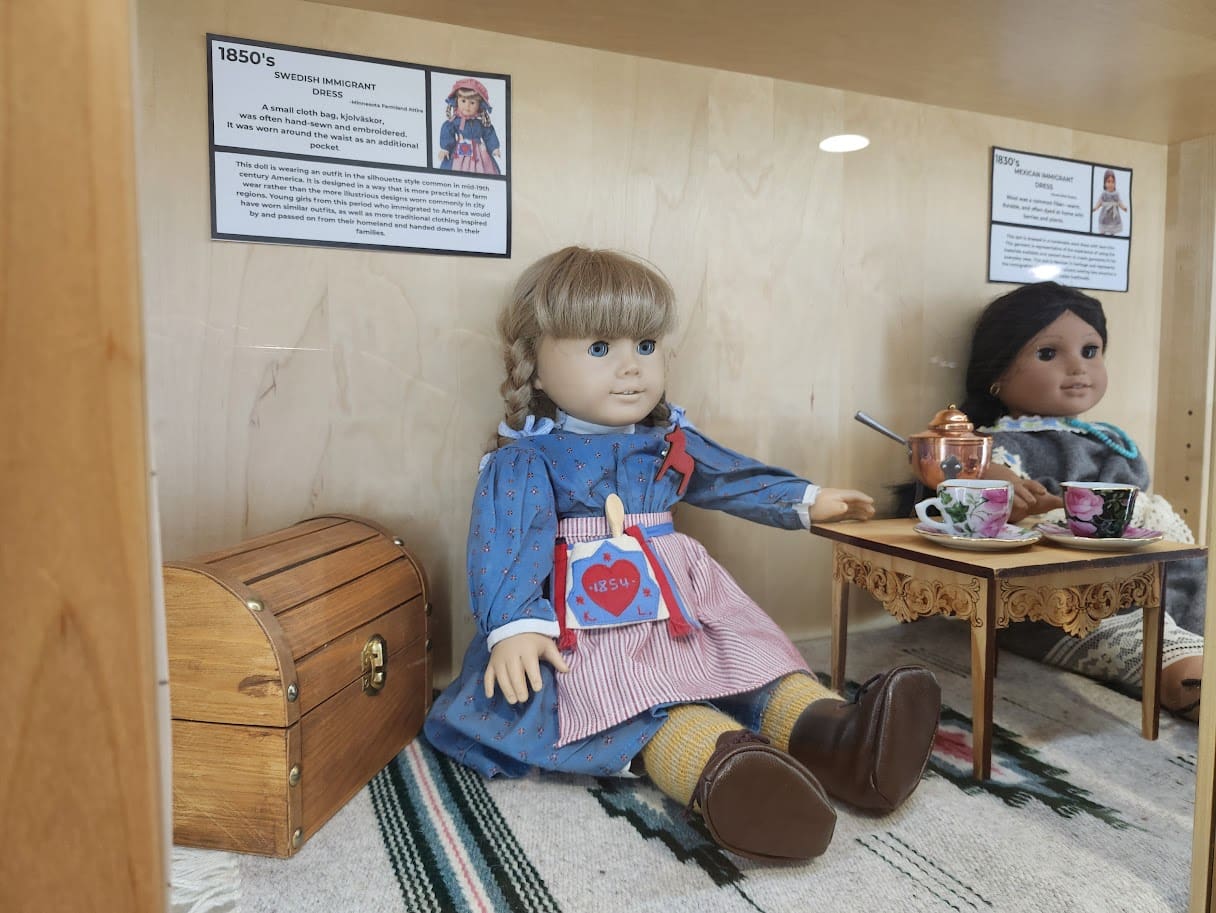
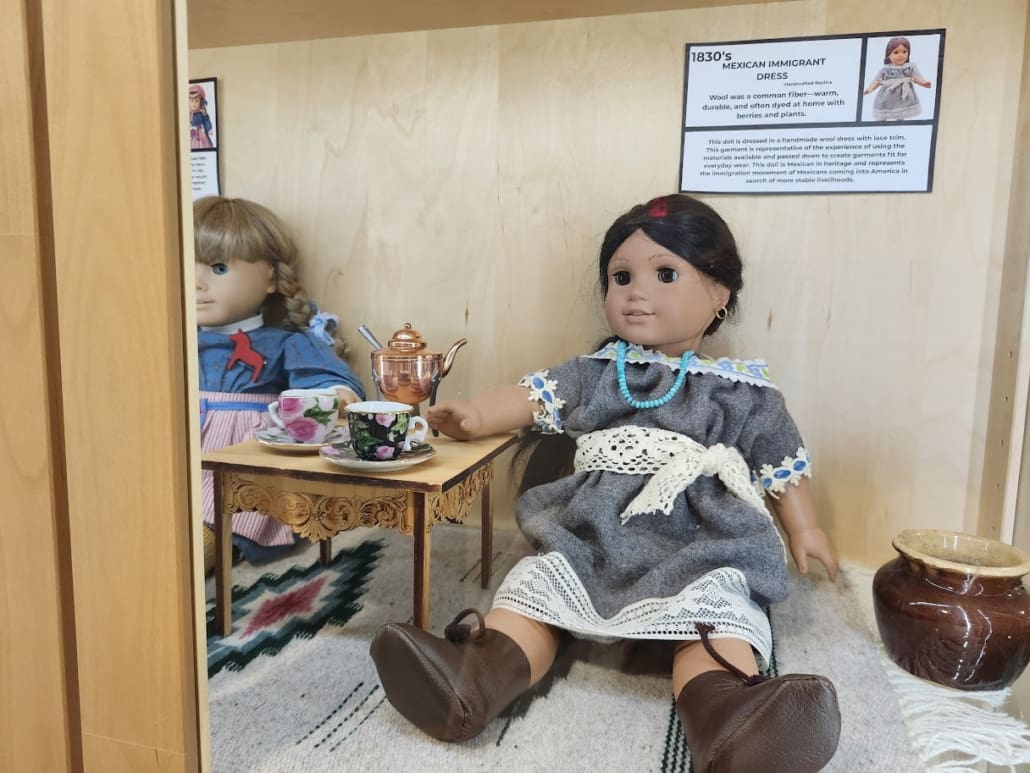
Fika Shared by Swedish and Mexican Dolls
Swedish Immigrant Dress
This doll is wearing an outfit in the silhouette style common in mid 19th century America. It is designed in a way that is more practical for farm wear rather than the more illustrious designs worn commonly in city regions. Young girls from this period who had immigrated to America would have worn similar outfits, as well as more traditional clothing inspired by and passed on from their homeland and handed down in their families.
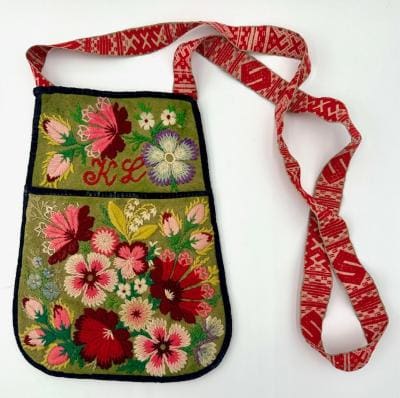
Loose Pocket aka Swedish Kjolväskor
This small cloth bag was often hand-sewn and embroidered. It was worn around the waist as a small stylish additional pocket. This item is inspired by the “Kjolväskor” which is a type of small bag or external pocket that is worn by women, as part of their folk costume in Sweden.
Decorative embroidery was a popular way of customizing clothes in this period. This bag features an important date to the owner, floral detailing, and a set of initials sewn into the lower corners. Inside the pouch is a small wooden hand-carved spoon.
Mexican Representative Doll
This doll is dressed in a handmade wool dress with lace trim. This garment is representative of the experience of having to use the materials available and passed down to create garments fit for everyday wear. This doll is of Mexican heritage and represents the immigration movement of Mexicans coming into America in search of more stable livelihoods.
Display
This display showcases an exaggerated example of a cultural exchange. It depicts the sharing of Swedish fika between our Swedish and Mexican dolls, which represents the mixing of cultures that immigrants would have experienced coming to America.
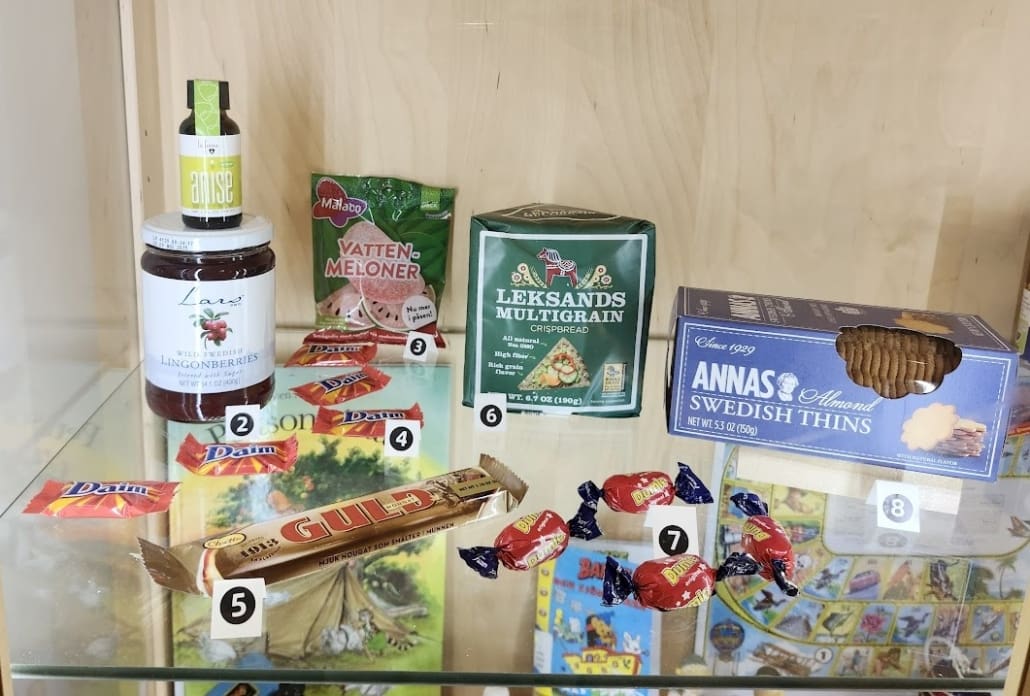
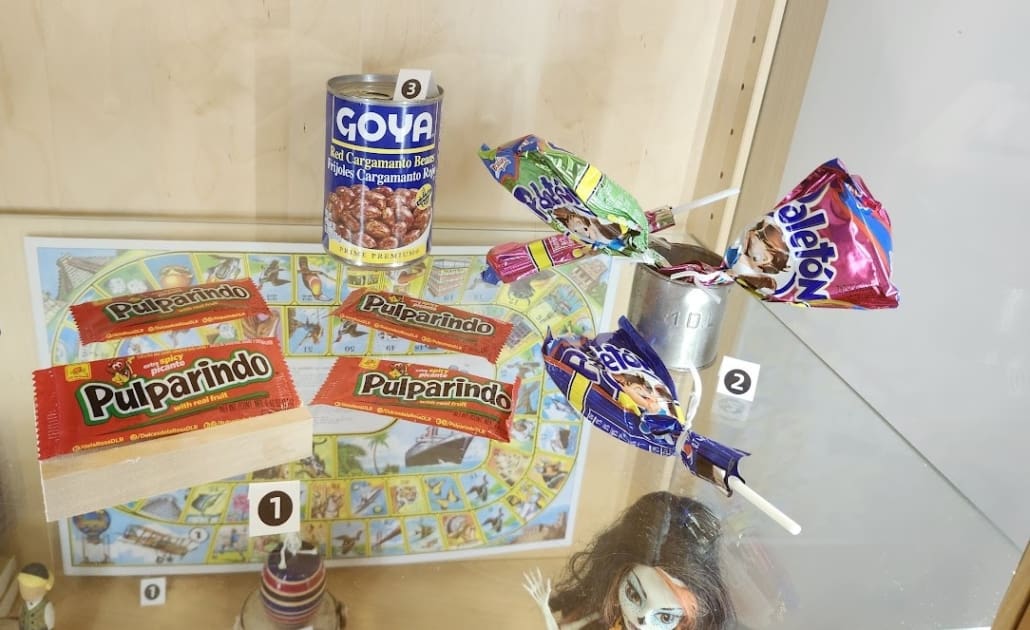
Swedish and Mexican Candy and Snacks
Swedish Snacks
1. Pure Anise Extract
2. Lingonberry Jam
3. Vatten-Meloner (Watermelon Candy)
4. Daim (Chocolate Caramel Candy Bar)
5. Cloetta Guld Nougat Candy Bar
6. Leksands Multigrain Crispbread
7. Dumle Toffee (Chocolate and Caramel)
8. Anna’s Swedish Thins Almond
Mexican Snacks
1. Pulparindo (Tamarind Candy)
2. Paletón (Chocolate Covered Marshmallow Lollipops)
3. Goya Red Cargamanto Beans
4. Fresh Chiles
5. Fresh Produce Produced In Mexico
Swedish and Mexican Books and Toys
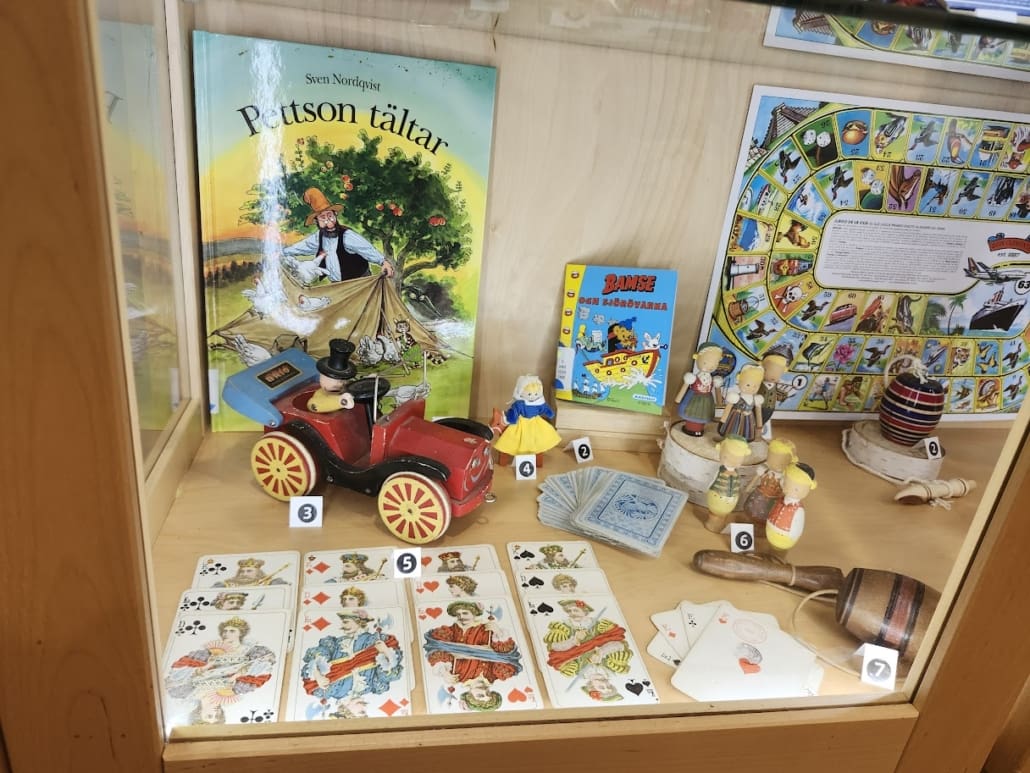
Sweden
1. Petterson Camps Children’s Book
2. Bamse and the Pirates Children’s Book
3. BRIO Wooden Pull Along Toy “Grandpa’s Car”
4. Handmade Orange Dala Horse and Swedish Doll
5. Vintage Swedish Playing Cards
6. Wooden Folkdress Dolls
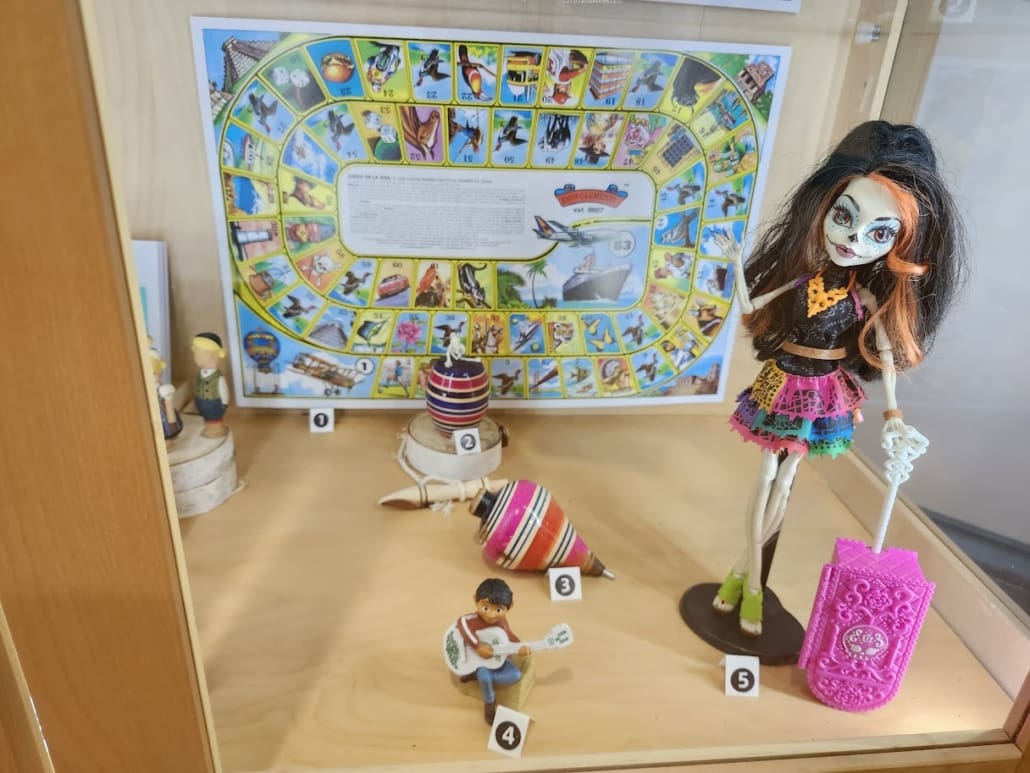
Mexican
1. Serpientes y Escaleras Board Game
2. Mexican Cup-and-Ball “Balero”
3. Mexican Spinning Top “Trombo”
4. Coco Doll
5. Skelita Calaveras, Día de los Muertos Inspired Monster High Doll
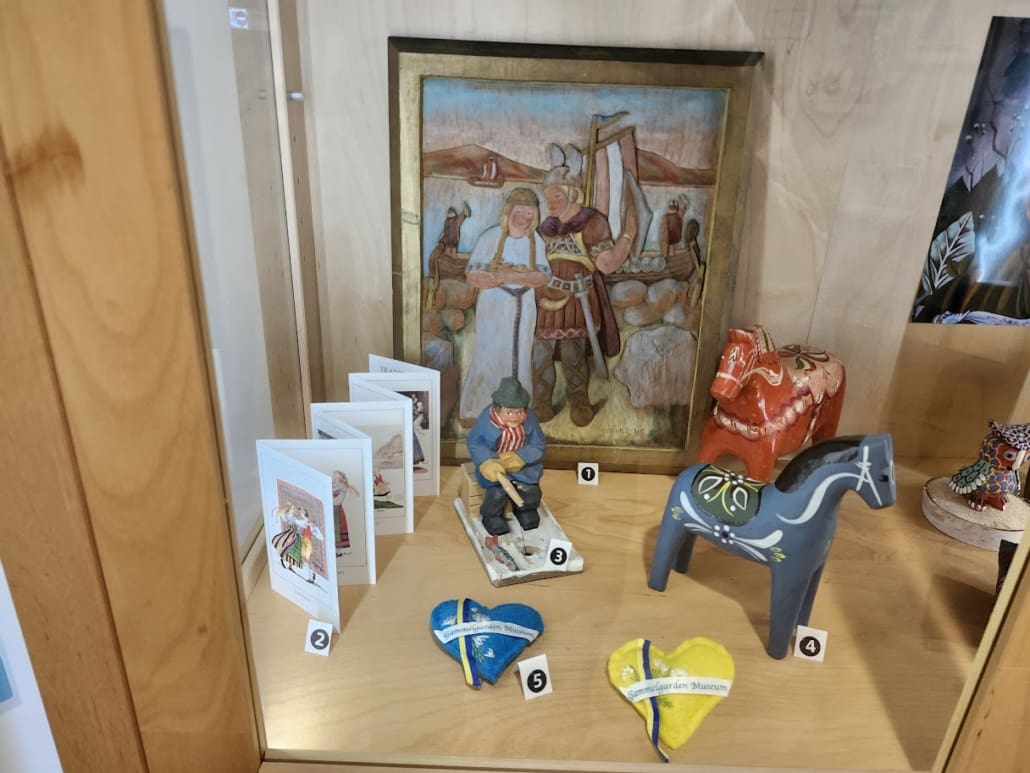
Swedish and Mexican Art
Swedish Art
1. Hand-Carved Wooden Relief, Scene Depicting A Viking and Wife Moments 2. Before Separating to Board A Longship
3. “Folkdräkter” Swedish Folk Dress Painting Collection
4. Wood Carved Fisherman Statue
5. Orange and Blue Traditional Dala Horses
6. Handmade Pottery Kiln Art
7. Handmade and Embroidered Heart Tokens – Gift for Volunteer Workers at Gammelgården Museum
Swedish Woodcarving
Sweden is renowned for its woodworking and woodcarving artisans. The country uses its access to native pines and birch trees to create all types of wooden goods, from furniture, architecture, artwork, and more. The style most often used is well known for its clean and simple lines and shapes for functionality. Subjects of artworks often include people, woodland-inspired scenes and symbols, as well as symbols and designs popular to Scandinavian folklore and culture, such as the carved Tomte in our display. A Tomte is a small Swedish gnome-like spirit or creature who is known to protect farms and villages in exchange for small offerings.
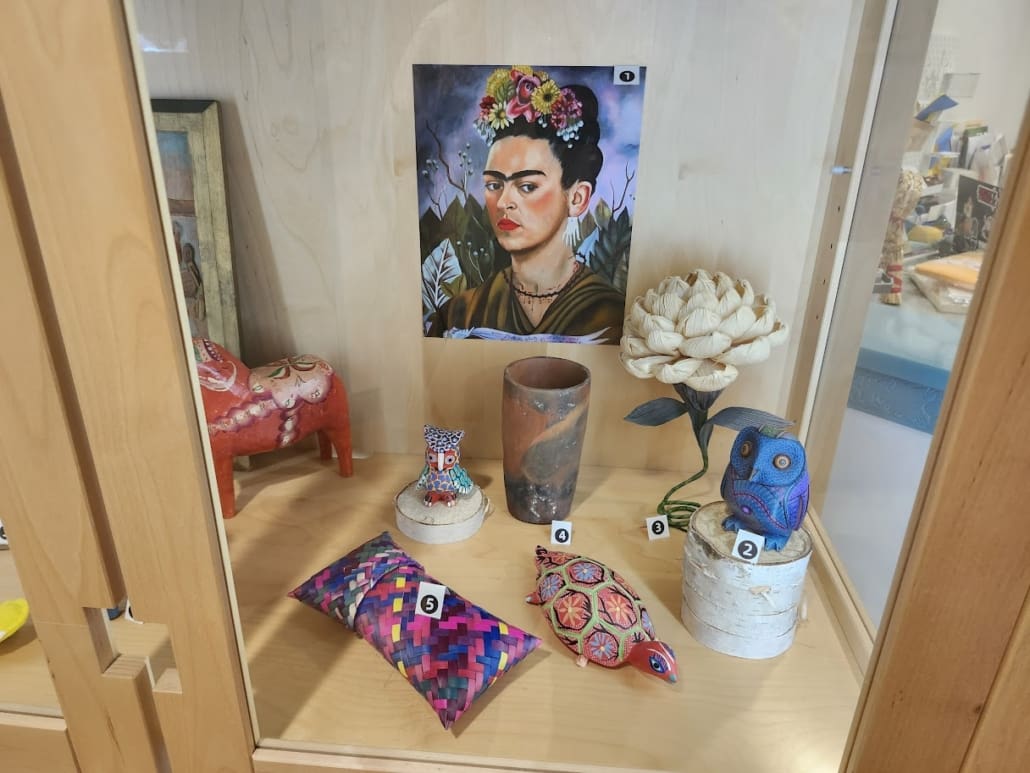
Mexican Art
1. Frida Kahlo Self-Portrait Painting
2. Alebrijes Carved Animals
3. Handmade Cornhusk Flower
4. Earthenware Pottery
5. Handwoven and Dyed Cornhusk Basket
Alebrijes
These colorful animal carvings are known as Alebrijes (ah-leh-bree-hess). These creatures are carved out of wood and painted with Zapotec patterns and intricate designs created from the artist’s own imagination. These colorful, one-of-a-kind carvings are handmade using wood from copal trees, which are grown in the surrounding fields of the Oaxaca region. This tree is considered sacred, and it is sustainably sourced to ensure continued sustainability in the future. Alebrijes are traditionally made in Oaxaca in the towns of San Martín Tilcajete as well as San Antonio Arrazola.
Earthenware Pottery by Sierra de la Laguna, Baja, Mexico
The earthenware pots displayed here were made by Rafaela Aviles Mendoza, who learned to make pottery in the Olemic style from her mother, who learned from her mother, and so on for generations. Rafaela quarries her “barre de alfarero’ (potter’s clay) from a deposit on the side of a hill. She soaks the clay in water to soften it. She then forms a small ball of clay and presses it into a round slab or pinches it into a bowl-shaped base. After rolling out several finger-width coils, she places them of top of each other around the edge of the base to build the sides of a pot, scoring and moistening the top to ensure each coil adheres properly. Then, she blends coil layers tighter with her thumbs and smooth stones to add strength and a smooth finish. Finally, the pot is dried in the sun and fired in an open pit or wood-fired brick oven. The earthenware pots on display are examples of the wide variety of wares Rafaela makes and trades within her small community.
Special thank you to Dave Chittenden and Jane Vocta for the loan of the Pottery and the Alebrijes from their personal collections for display in this exhibit.
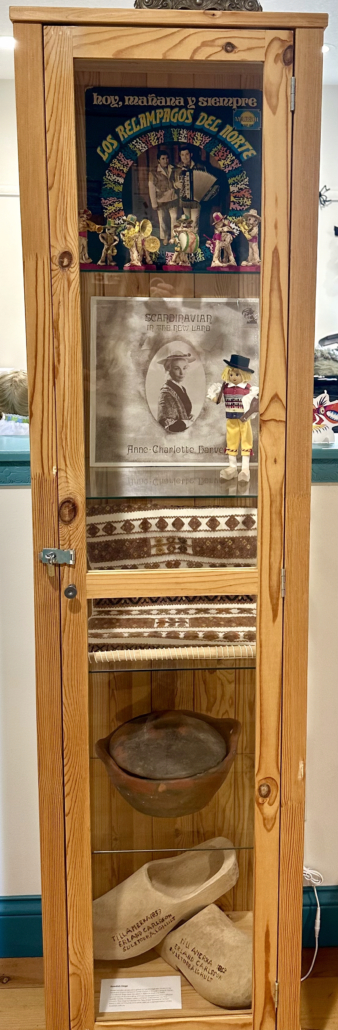
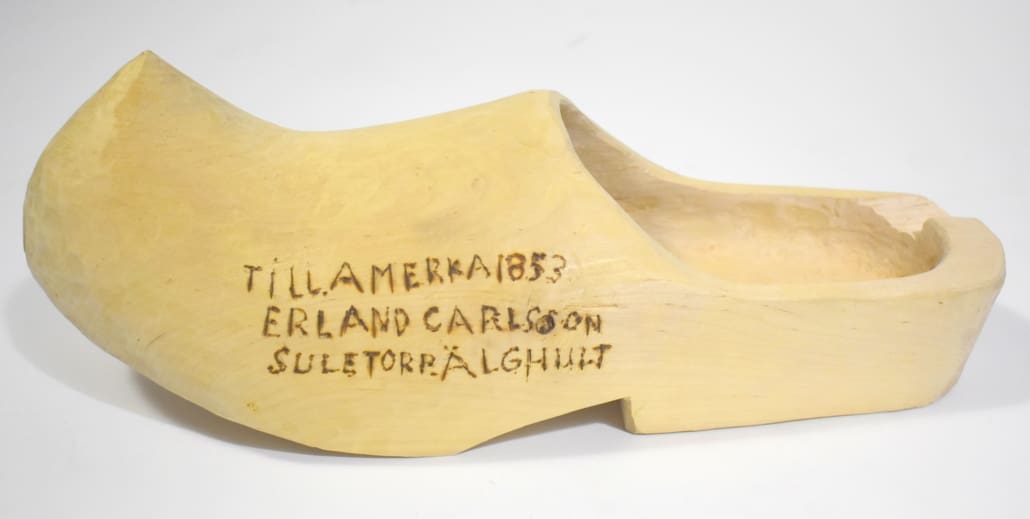
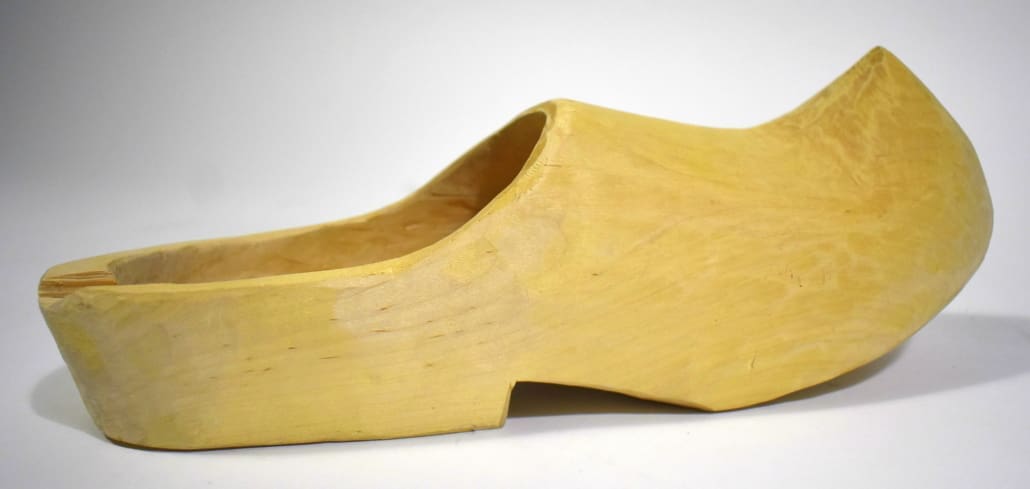
Swedish Clogs
These wooden shoes were gifted to Gammelgården Museum by Reverend Erland Carlson’s Swedish home church, Ahlgult Parish, from Småland Sweden. They were donated in 2004 on the 150th anniversary of the organization of the 3 congregations: First Lutheran Swede Hollow, Chisago Lakes Lutheran, and Marine Country Church. They were presented by the choir from his hometown congregation. They attest to the “big shoes” that he filled in the community and are representative of Swedish culture.
1975: Celebrating 50 Years of Minnesota History
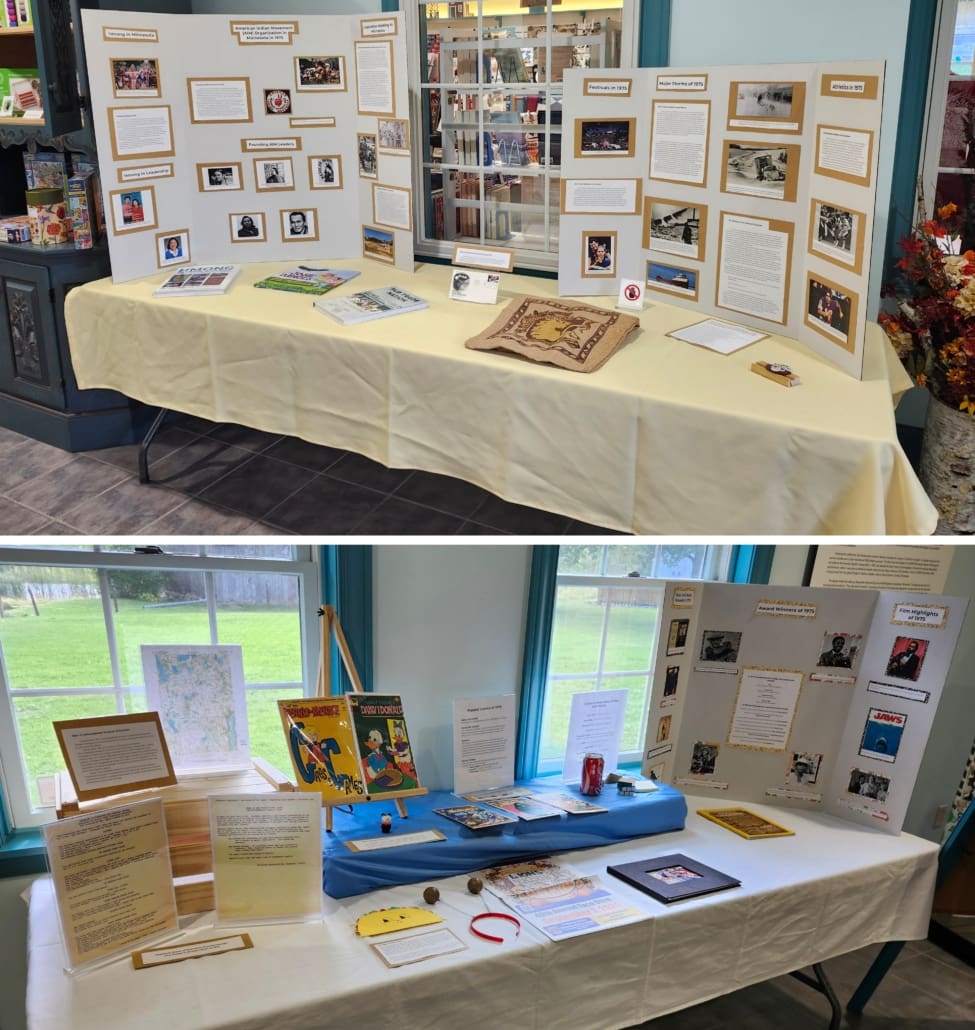
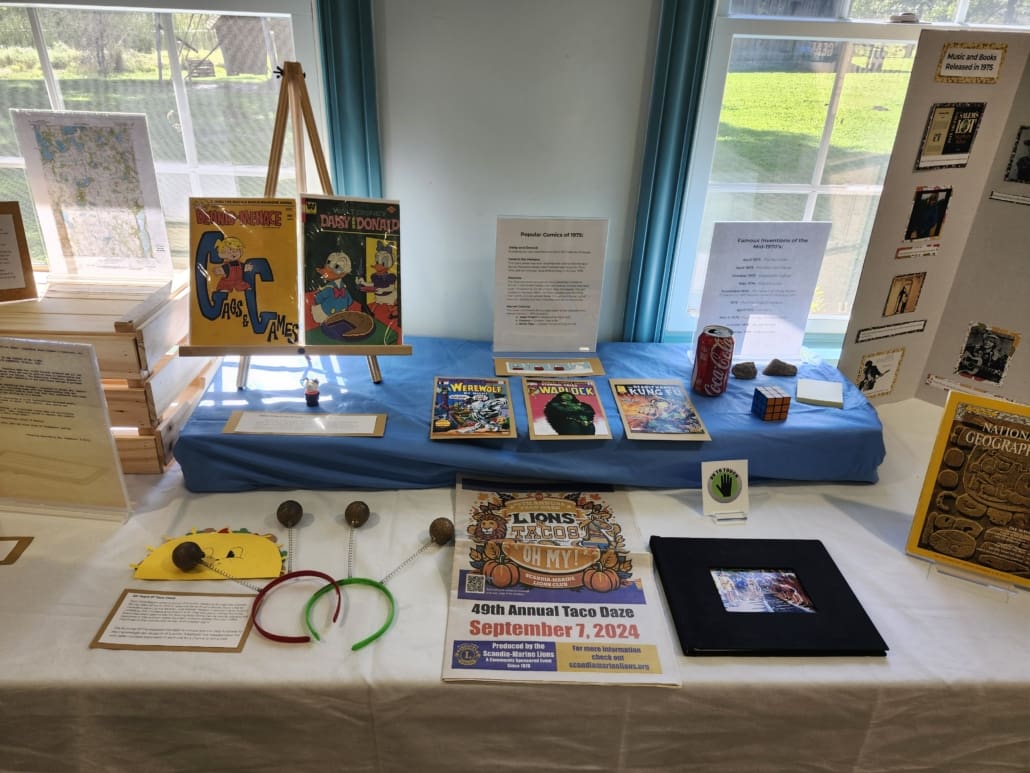
This exhibit was held as a specialty pop-up display designed by museum staff members Hunter Panoch and Grace Taylor to display in the downstairs Welcome House lobby during Scandia Taco Daze for the 50th anniversary of Taco Daze. Items were sourced from local antique shops, museum collections, and staff members’ families. The focus of this exhibit was to highlight both Scandia and local Minnesota history from the period of the mid-1970s. Themes included Hmong Immigration to Minnesota, the American Indian Movement, the Queer Rights Movement, all things pop culture, Minnesota local events, and more.
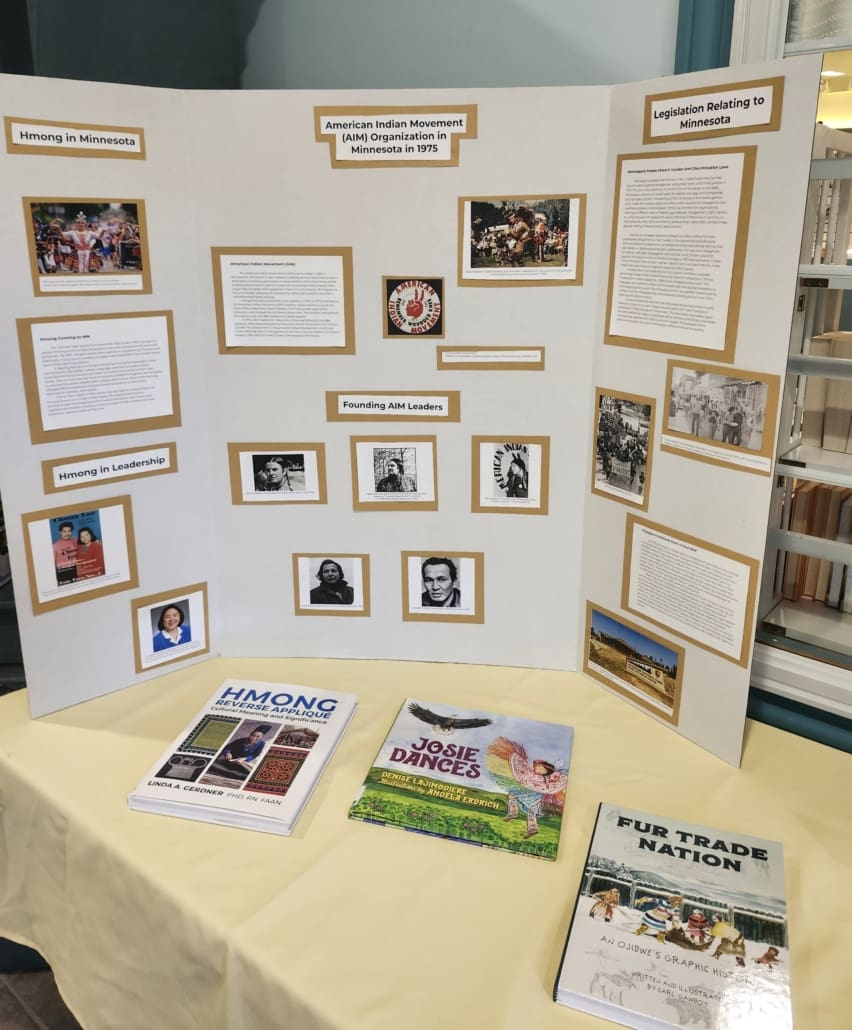
Hmong Coming to MN
The Vietnam War lasted from November 1955 to April 1975. During this period, Hmong communities throughout Asia were displaced and terrorized by the war. By 1975, refugee camps were opened in neighboring Thailand, and eventually, many asylum-seeking refugees were resettled in the United States due to their wartime alliance.
In leaving Asia and coming to America, Hmong families had to leave behind family, familiarity, culture, language, and their ancestral home. Coming to America would force them to conform to survive in their new home. They quickly learned most Americans viewed immigrants and refugees as one and the same, despite their unique distinctions. Due to this, Hmong refugees felt the pressures of government programs, re-education, assimilation, poverty, and racism.
The St. Paul region of Minnesota has the highest concentration of Hmong Americans in the United States. Minnesota itself has the second-largest Hmong population overall. Minnesota was chosen as a resettlement location because of the promise of high employment and expansion opportunities at the time.
American Indian Movement (AIM)
The American Indian Movement or AIM was founded in 1968 in Minneapolis, Minnesota. It was created to address serious issues facing Native Americans in America, particularly in urban centers. AIM’s initial focus aimed to tackle discrimination, police harassment, and protect Native people from unjust discrimination and harassment. Over time, the mission of AIM grew to focus on broader advocacy for sovereignty rights, social justice, education, and addressing Native poverty.
AIM gained national attention and notoriety in 1973. In 1973, members of the American Indian Movement (AIM) and the Oglala Lakota occupied the town of Wounded Knee, South Dakota, in a 71-day protest against the corruption and mistreatment of Native Americans. This location was symbolic, as it was the site of a 1890 massacre of Lakota people.
In 1975, AIM created the Federation of Survival Schools to provide advocacy and networking skills to 16 survival schools throughout the US and Canada. The Department of Housing and Urban Development (HUD) also chose AIM to be the primary sponsor of the first American Indian-run housing project, Little Earth of United Tribes in Minneapolis, Minnesota.
Minneapolis Passes Historic Gender Anti-Discrimination Laws
Minneapolis passed the first law in the United States that banned discrimination against transgender and gender non-conforming people in 1975. The law is the oldest law of its kind still on the books. In the 1960s, Minneapolis became a central place for lesbian, and gay, and transgender activist organizations. The opening of the University of Minnesota gender clinic made Minnesota a safer and more visible location for transgender and nonbinary people in the Midwest. While it is common for organizations relating to different parts of lesbian, gay, bisexual, transgender (LGBT) identity to unite, this was not always the case at the time. Differences in opinions on who deserves what rights and how to achieve these rights often divide these groups, making intersectionality less common.
Having an increased presence allowed activists to lobby for more candidates sympathetic to their causes in the upcoming local elections. While activists put pressure on candidates by lobbying at places like City Hall, Jack Baker, an attorney and activist, collaborated with gay and transgender activists to craft legal language for policies that could protect gays and lesbians from discrimination. Political changes in 1973 swung heavily in favor of the Minnesota Democratic-Farmer-Laborer Party, and gave the city a new mayor who was more sympathetic towards LGBTQ issues.
In response to the lobbying, five city council members proposed amending Chapter 945 of the Minneapolis Code of Ordinances in 1974 to make discrimination based on, “affectional of sexual preferences.” The language was crafted by Baker and his team, and was quickly presented to, and passed by the council the following month. Transgender people quickly realized that the language they had supported adding did not cover their right against discrimination.
Led by transgender women, the language was quickly edited to add, “having or projecting a self-image not associated with [their] biological maleness or [their] biological femaleness.” The ordinance was passed again two days before the mayor would leave office and be replaced by a candidate who was less aligned with LGBTQ activists’ causes. The passage of this ordinance played a key role in Minnesota’s efforts to strive for equality.
Voyageurs National Park Is Founded
In 1975 the National Parks Service established their first, and currently only National Park in Minnesota. Voyagers National Park is home to over 218,000 acres of lakes, forest, and streams in Northern Minnesota, near the Canadian border. The park is named after the French Explorers and Fur Traders, who were the first Europeans to frequently travel the area. In this region they met the Cree, Monsoni, and Assinibonie tribes who called this region home. The land was eventually primarily inhabited by the Ojibwe who were essential in the success of the Fur Trade due to their knowledge of canoe construction, the land, animals, and plants.
Planning a trip to Voyageurs National Park? First thing to note is that unlike many National Parks the primary entryway is by water, not by car, so plan accordingly! While you are at Voyageurs, you will have the treat of experiencing a Dark Sky approved park. DarkSky is a third-party organization that highlights locations that are Dark Sky Sanctuaries, meaning they have little to no light pollution. Combining dark night skies and Minnesota’s proximity to the North Pole, makes Voyagers a great place to view an Aurora Borealis, better known as the Northern Lights. While the conditions are ideal make sure to do research and check the Aurora forecast to see if the lights are active!
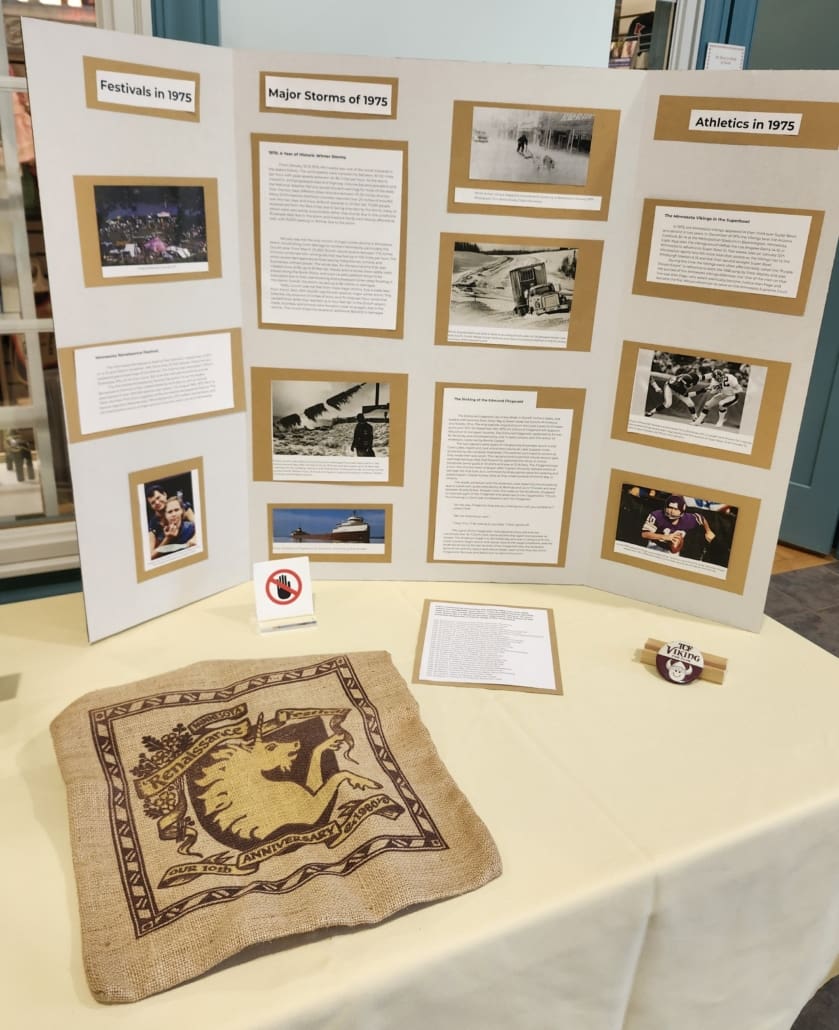
The Sinking of the Edmund Fitzgerald
The Edmund Fitzgerald, like many ships in Duluth harbors today, was loaded with taconite from Silver Bay to lower areas like Duluth, Minnesota and Toledo, Ohio. The ship was the largest ship on the Great Lakes for thirteen years until 1971. On November 9th, 1975 the Edmund Fitzgerald left Superior, Wisconsin to transport taconite. The Edmund Fitzgerald, captained by Ernest M. McSorley, was accompanied by and in radio contact with the Arthur M. Anderson, captained by Bernie Cooper.
The two captains were aware of the growing November storm in the Great Lakes region and took a Northern course on Lake Superior to be protected by the Canadian highlands. The weather continued to worsen as they made their way south. The captains continued their course despite gale warnings because they had frequently operated their ships at similar conditions (wind gusts at 50 knots and seas at 12-16 feet). The Fitzgerald took a turn into shallow water and soon after Captain McSorley radioed details of damage the ship took, but confirmed the ships pumps were still working and asked Captain Cooper to stay close as they made towards Whitefish Bay in Ontario.
The waves worsened, with the Anderson crew reporting the ship jolting due to waves with gusts consistently at 58 knots and up to 70 knots and seas between 18 and 25 feet. Morgan Clark, first mate on the Anderson, struggled to maintain sight of the Fitzgerald and spoke last to the Fitzgerald at 7:10 pm. The following is Clark’s last conversation with the Fitzgerald.
“By the way, Fitzgerald, how are you making out with your problems?” asked Clark.
“We are holding our own.”
“Okay, fine, I’ll be talking to you later.” Clark signed off.
The signal of the Fitzgeralds’ radio became obscured and was continually lost. At 7:22pm Clark contacted the ship again and received no answer. The Anderson made it to Whitefish Bay and was in contact with the Coast Guard to begin search and rescue. Due to the rough conditions, and the Anderson knowing the last location of the Fitzgerald best, the Anderson became the primary search and rescue vessel. Upon arrival, they found the Fitzgerald’s life boats and debris, but no signs of survivors.
Below is a list of the twenty-nine men who lost their lives when the Fitzgerald went down. They are listed below by their age, name, hometown, and position aboard. Give a listen to Gordon Lightfoot’s iconic song The Wreck of the Edmund Fitzgerald, a tribute song to the shipwreck.
Age: 37 Michael E. Armhost of Iron River, Wisconsin: Third Mate
Age: 56 Frederick J. Beetcher of Superior, Wisconsin: Porter
Age: 23 Thomas D. Bentsen of St. Joseph, Michigan: Oiler
Age: 47 Edward F. Bindon of Fairport Harbor, Ohio: First Assistant Engineer
Age: 40 Thomas D. Borgeson of Duluth, Minnesota: Maintenance Man
Age: 41 Oliver J. “Buck” Champeau of Sturgeon Bay, Wisconsin: Third Assistant Engineer
Age: 55 Nolan F. Church of Silver Bay, Minnesota: Porter
Age: 53 Ransom E. Cundy of Superior, Wisconsin: Watchman
Age: 50 Thomas E. Edwards of Oregon, Ohio: Second Assistant Engineer
Age: 40 Russel G. Haskell of Millbury, Ohio: Second Assistant Engineer
Age: 60 George J. Holl of Cabot, Pennsylvania: Chief Engineer
Age: 22 Bruce L. Hudson of North Olmsted, Ohio: Deck Hand
Age: 43 Allen G. Kalmon of Washburn, Wisconsin: Second Cook
Age: 30 Gordon F. MacLellan of Clearwater, Florida: Wiper
Age: 59 Joseph W. Mazes of Ashland, Wisconsin: Special Maintenance Man
Age: 62 John H. McCarthy of Bay Village, Ohio: First Mate
Age: 63 Ernest M. McSorley of Toledo, Ohio: Captain
Age: 50 Eugene W. O’Brien of Toledo, Ohio: Wheelsman
Age: 20 Karl A. Peckol of Ashtabula, Ohio: Watchman
Age: 59 John J. Poviach of Bradenton, Florida: Wheelsman
Age: 44 James A. Pratt of Lakewood, Ohio: Second Mate
Age: 62 Robert C Rafferty of Toledo, Ohio: Steward/Cook
Age: 22 Paul M. Rippa of Ashtabula, Ohio: Deck Hand
Age: 62 John D. Simmons of Ashland, Wisconsin: Wheelsman
Age: 59 William J. Spengler of Toledo, Ohio: Watchman
Age: 21 Mark A. Thomas of Richmond Heights, Ohio: Deck Hand
Age: 58 Ralph G. Walton of Fermont, Ohio: Oiler
Age: 22 David E. Weiss of Agoura, California: Cadet
Age: 52 Blaine H. Wilhelm of Moquah, Wisconsin: Oiler
The Minnesota Vikings in the Superbowl
In 1975, the Minnesota Vikings appeared in their third ever Super Bowl, and second in two years. In December of 1974 the Vikings beat the Arizona Cardinals 30-14 at the Metropolitan Stadium in Bloomington, Minnesota. Eight days later the Vikings would defeat the Los Angeles Rams 14-10 in Minnesota to advance to Super Bowl IX. Two weeks later on January 12th Minnesotan sports fans felt more blue than purple as the Vikings lost to the Pittsburgh Steelers 6-16 and lost their second straight Super Bowl.
During this time the Vikings were often affectionately called the “Purple People Eaters” in reference to both the 1958 song by Sheb Wooley and also the success of the Minnesota Vikings defensive line. One of the men on that line was Alan Page, who would eventually become Justice Alan Page and become the first African-American to serve on the Minnesota Supreme Court.
Minnesota Renaissance Festival:
The Minnesota Renaissance Festival first opened in September of 1971 on a 22 acre field in Jonathan, MN. More than 25,000 people visited the two weekend grand openings of the festival. The Festival was relocated in 1974 to Shakopee, MN, on its now iconic 150-acre site with permanent structures.
The Minnesota Renaissance Festival has grown to be the largest Renaissance Festival in the United States by attendance with an annual attendance of over 300,000 patrons per season. On August 19th, 1975, Penn & Teller did their first show together at the Minnesota Renaissance Festival. The festival regularly features over 700 entertainers, 275 crafters and artisans, and 120 food booths and is a major source of tourism and culture to Minnesota.
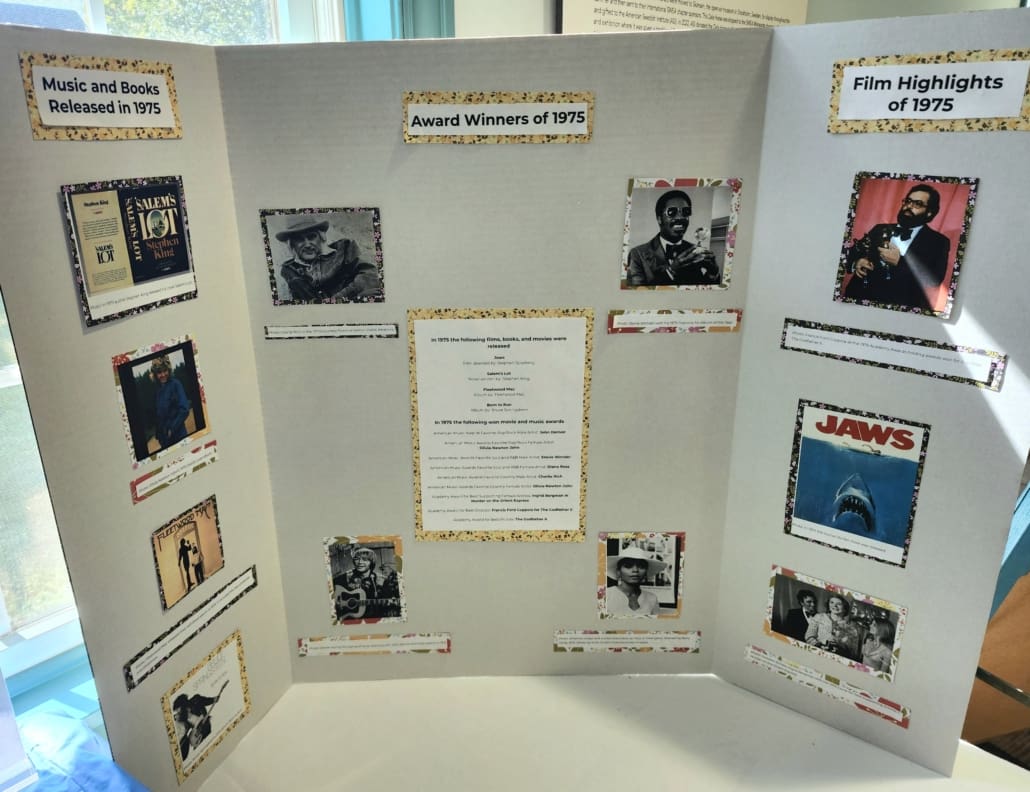
Pop Culture
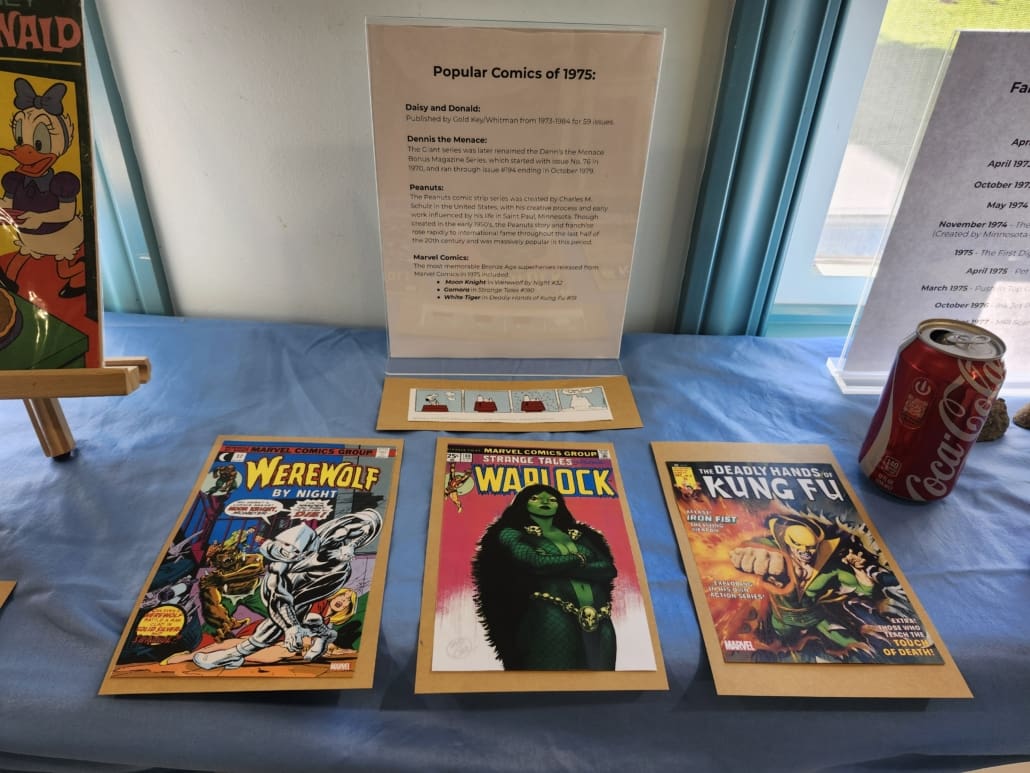
Popular Comics of 1975:
Daisy and Donald:
Published by Gold Key/Whitman from 1973-1984 for 59 issues.
Dennis the Menace:
The Giant series was later renamed the Dennis the Menace Bonus Magazine Series, which started with issue No. 76 in 1970, and ran through issue #194 ending in October 1979.
Peanuts:
The Peanuts comic strip series was created by Charles M. Schulz in the United States, with his creative process and early work influenced by his life in Saint Paul, Minnesota. Though created in the early 1950’s, the Peanuts story and franchise rose rapidly to international fame throughout the last half of the 20th century and was massively popular in this period.
Marvel Comics:
The most memorable Bronze Age superheroes released from Marvel Comics in 1975 included;
Moon Knight in Werewolf by Night #32
Gamora in Strange Tales #180
White Tiger in Deadly Hands of Kung Fu #19
In 1975 the following films, books, and movies were released:
Jaws – Film directed by: Stephen Spielberg
Salem’s Lot – Novel written by: Stephen King
Fleetwood Mac –Album by: Fleetwood Mac
Born to Run – Album by: Bruce Springsteen
1975 Award Winning Movies and Music:
American Music Awards Favorite Pop/Rock Male Artist: John Denver
American Music Awards Favorite Pop/Rock Female Artist: Olivia-Newton-John
American Music Awards Favorite Soul and R&B Male Artist: Stevie Wonder
American Music Awards Favorite Soul and R&B Female Artist: Diana Ross
American Music Awards Favorite Country Male Artist: Charlie Rich
American Music Awards Favorite Country Female Artist: Olivia-Newton-John
Academy Award for Best Supporting Female Actress: Ingrid Bergman in Murder on the Orient Express
Academy Award for Best Director: Francis Ford Coppola for The Godfather II
Academy Award for Best Picture: The Godfather II
Toys and Objects
Fisher-Price (Little People):
The Fisher-Price company was popular all throughout the second half of the 20th century. The 50’s-70’s were the company’s golden age in both their branding and notoriety. The Fisher-Price Little People toy line became a highlight of their brand and a household name, becoming one of the most popular children’s toys of the decade.
Famous Inventions of the Mid-1970’s:
April 1973 – The Bar Code
April 1973 – The First Cell Phone
October 1973 – Disposable Lighter
May 1974 – Rubik’s Cube
November 1974 – The Idea for Sticky Notes (Created by Minnesota-owned company 3M)
1975 – The First Digital Camera
April 1975 – Pet Rock
March 1975 – Push In Top On Soda Cans
October 1976 – Ink Jet Printer
December 1977 – MRI Scanner

Local History
50 Years of Taco Daze in Scandia Minnesota
Taco Daze began when a group of Scandia residents formed the Scandia Tennis Association in 1975 to raise money to build a tennis court. Charter members were Donna Meister, Jule Meister Nelson, Gretchen Clark, Sharon Lindberg, Jim Lindberg and Sharon Kult. Over the years, money from the event has been used to pay for fencing around the tennis courts, playground equipment, the outdoor water fountain, outdoor toilets, the new coffee machines in the community center, and outdoor signs.
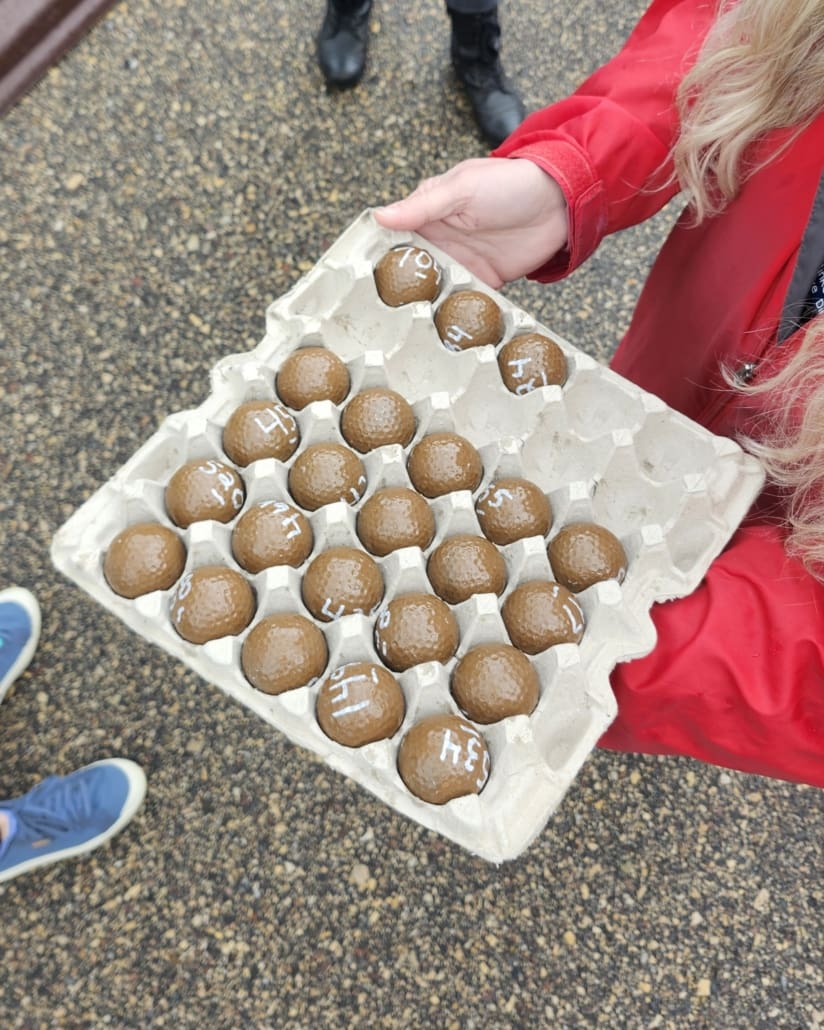
The Running Of The Meatballs has been an annual event to help fundraise for the Gammelgården Museum of Scandia. “Meatballs” are released down hill with raffle numbers associated on each one for a chance to win prizes!
Start of Gammelgården Museum of Scandia:
Established in 1972, Gammelgården Museum of Scandia honored the Swedish immigrants who founded the community and preserved their stories of coming to Minnesota.
One of eight open-air museums throughout Minnesota, Gammelgården Museum is the only one of this type in Washington County. Focusing on history, art, culture, and agriculture, Gammelgården is the singular open-air museum devoted to preserving, presenting, and promoting Swedish immigrant heritage in the United States. Housed in six buildings on the historic Gammelgården grounds, we invite visitors to step back in time, experience the stories of Swedish immigrants, and relate them to their own family immigration stories.
Today, Gammelgården Museum is committed to becoming more inclusive and diverse in its preservation and teachings. We are committed to inclusive preservation, spotlighting diverse immigration histories and sharing Minnesota’s multicultural heritage.
Beyond the Yule Goat: Exploring Goat Folklore & Mythology Across Cultures
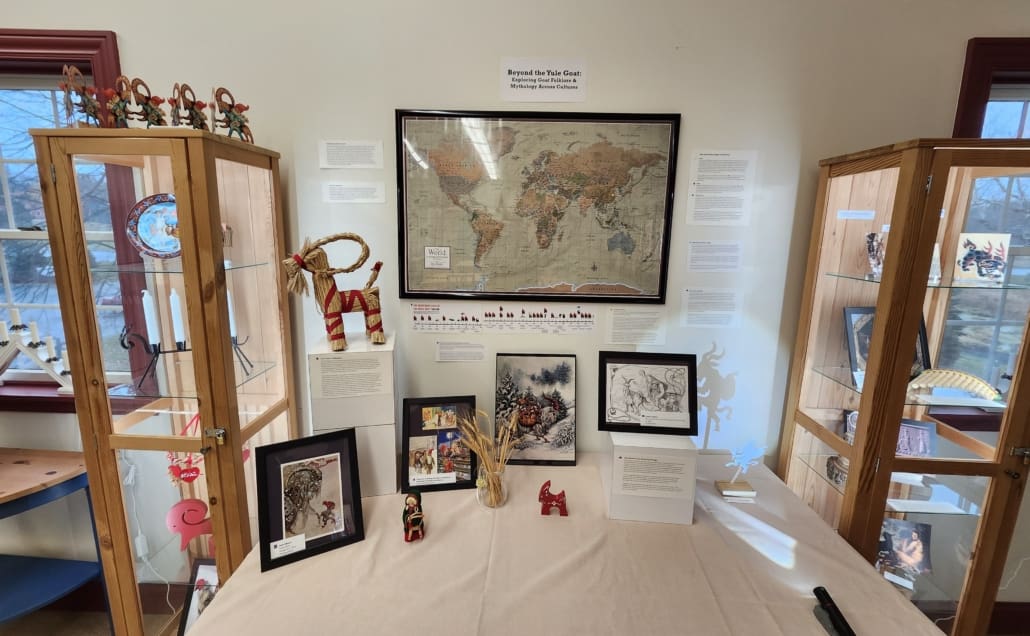
Yule Goat / Julbocken
The Yule Goat is one of Scandinavia’s most enduring holiday symbols, with roots stretching back to pre-Christian Europe. Scholars often consider its origins to be linked to Norse mythology, where the god Thor’s chariot was pulled by two goats. Additionally, there was folklore surrounding the last sheaf of grain from the harvest, which was believed to hold magical properties and saved for Yule traditions and winter celebrations. These origins link the Yule Goat both to abundance and protection, as well as to the cycles of the harvest.
The Yule Goat tradition is thought to have begun around the beginning of the Early Modern Era. Nordic tales tell of people who would dress in goat skins and roam the cities singing, performing, and pulling pranks, a tradition that persists to this day in some parts. Christianity transformed the role and symbolism of this legend over time, adapting it to reflect a more positive light. In some regions, the goat itself was thought to be an invisible, benevolent spirit responsible for overseeing Yule preparations. He later became closely associated with gift-giving and good fortune, closer to the 19th century. Different varieties of the tales exist and changed over time from the goat delivering presents himself, being ridden by a tomte or St Nickalas/Yuletomte type character, or eventually being entirely replaced by the juletomte (Father Christmas/Santa Claus) or the julenisse during the second half of the 19th century and into the early 20th century.
Today, the Yule Goat is most often seen as a straw figure bound with red ribbon, placed beneath or hung from Christmas trees across the Nordic countries.

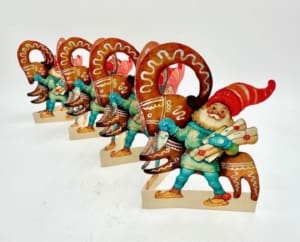
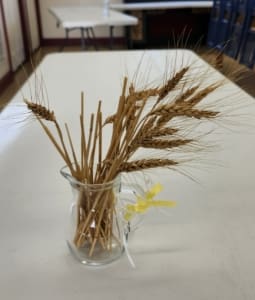


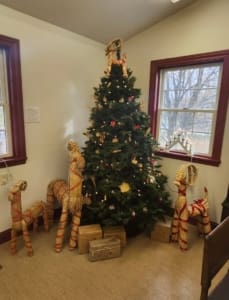
Featured Artwork: Featuring the Yule Tomte and the Yule Goat
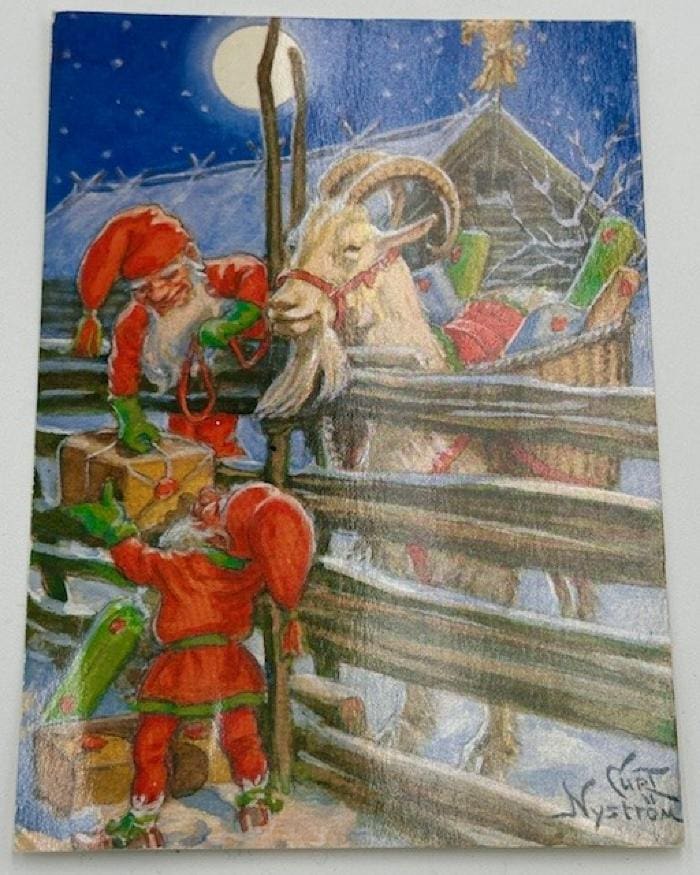
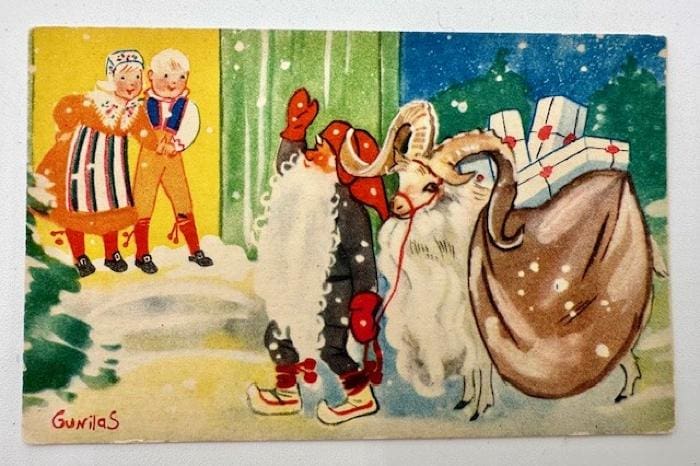
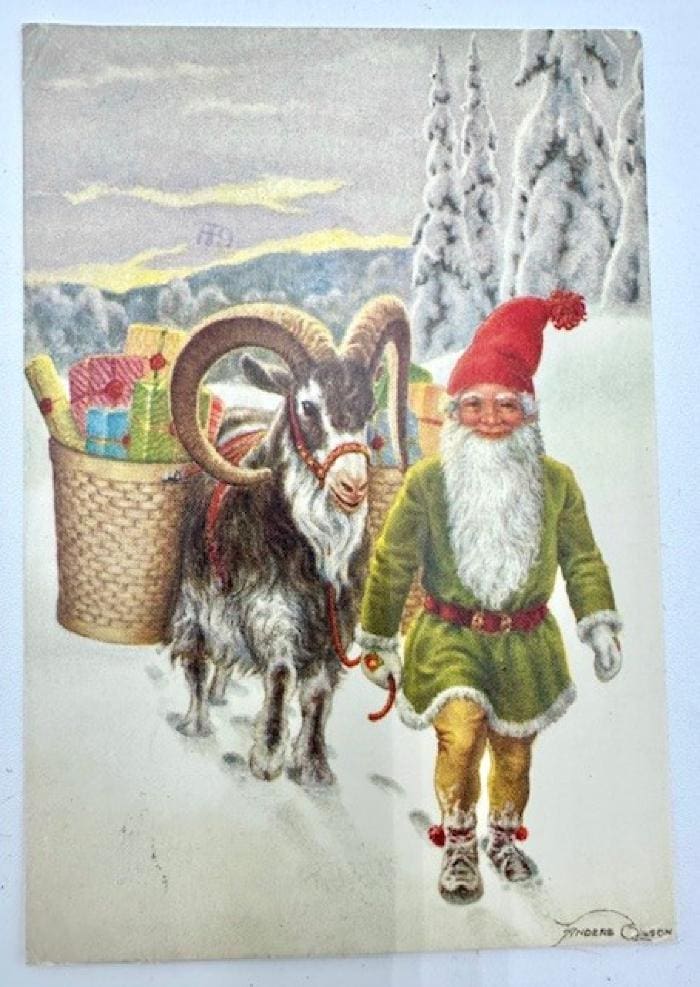
Postcards From Our Collection
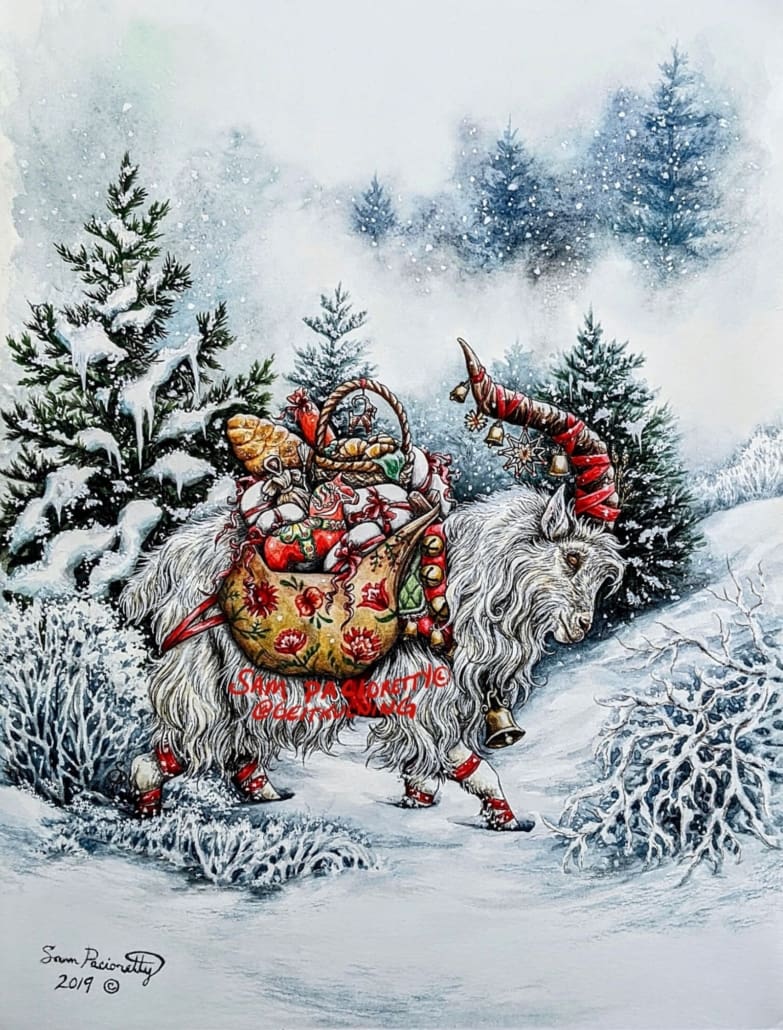


Prints From Our Collection
The Gävle Goat
Today, the most notorious, or perhaps infamous, example of the Yule Goat in modern culture is the Gävle Goat, first built in 1966. The Gävle Goat stands several stories tall and has become infamous for its repeated acts of vandalism and arson. To prevent this, the massive straw goat is now closely guarded and live-streamed. However, these protective actions have resulted in even more creative attempts to burn it down.

The Unfortunate Fates of the Gavle Goat: A Timeline
by Atlas Obscura
Scandinavia and Norse Mythology:
Goats held an important place in Norse mythology, embodying strength, endurance, and abundance. Two of the most famous are Thor’s goats, Tanngrisnir (“Teeth-Gnasher”) and Tanngnjóstr (“Teeth-Grinder”), who pulled the thunder god’s chariot across the sky. These magical goats could be slaughtered to provide meat, and brought back to life the next day by Thor’s hammer, Mjölnir, so long as their bones remained unbroken. They represented both sacrifice and renewal, serving as a dependable source of sustenance for the gods.
Another legendary goat was Heiðrún, who stood atop Valhalla, the hall of fallen warriors. She was notable as fed on the leaves of the sacred tree Læraðr, and produced not milk, but an endless supply of mead. This mead nourished the Einherjar, the warriors who had died heroically in battle for Odin.
Together, these goats symbolized fertility, resilience, and divine provision. They reflected the deep reliance of the Norse people on their goat herds in their daily lives. To them, the goat was more than livestock, but also a sacred link between humans, nature, and the gods.
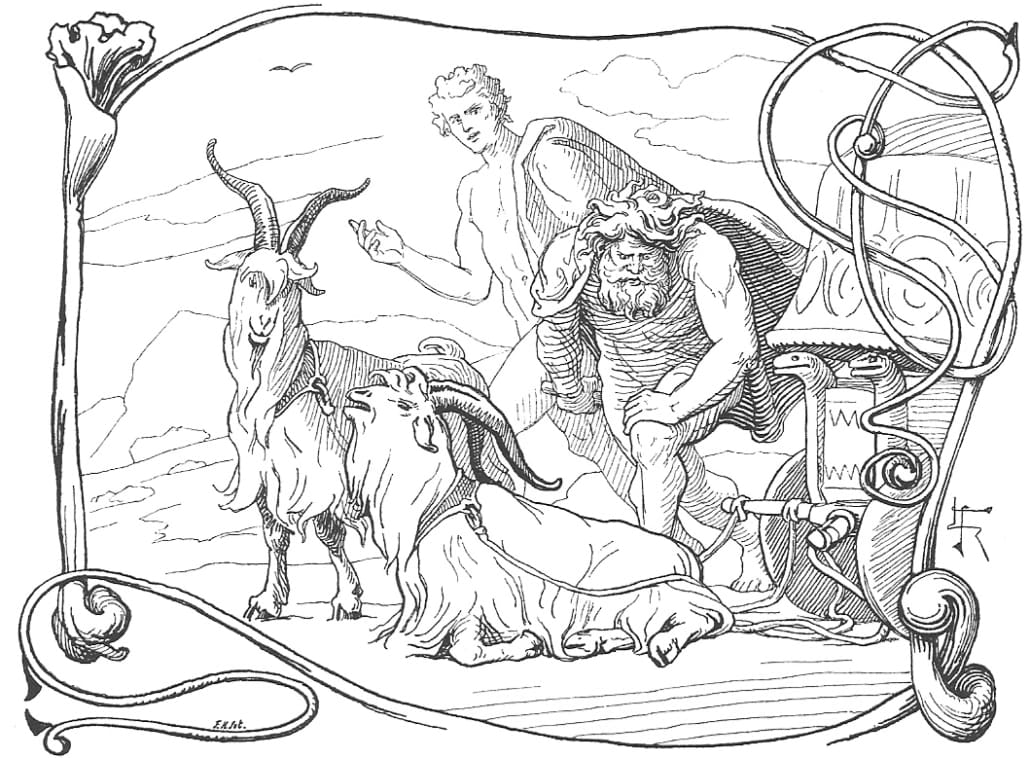
Germanic Europe:
In the Alpine regions of Germanic Europe, Krampus emerged as one of the most enduring goat-like figures of folklore. Often described as a half-human, half-goat demon, Krampus served as the dark counterpart to St. Nicholas. While St. Nicholas rewarded well-behaved children with gifts, Krampus punished the disobedient, beating them with birch rods, carrying them away in baskets, or devouring them.
The roots of Krampus likely reach back to pre-Christian Alpine traditions, where the goat symbolized fertility, protection, and abundance. With Christianity’s rapid spread around Europe, these associations were redefined as sinister, reinforcing morality by turning the goat into a demonic figure. Written references to Krampus first appeared in the late Middle Ages, and by the 17th century Krampus was firmly established as a Christmas figure, embodying punishment and fear to counterbalance St. Nicholas as a symbol of joy and generosity.
Alpine folklore also featured the Perchten, wild spirits of midwinter processions named after the goddess Perchta, linked with fate and the year’s turning. Depicted with horns, animal masks, and shaggy costumes, they appeared as Schönperchten (“beautiful Perchten”) or Schiachperchten (“ugly Perchten”). These two distinctions represented both the dark and beautiful sides of the winter season. Like Krampus, they reflect how pre-Christian rites merged with Christian traditions, preserving horned, goat-like figures at the heart of winter ritual and community identity.
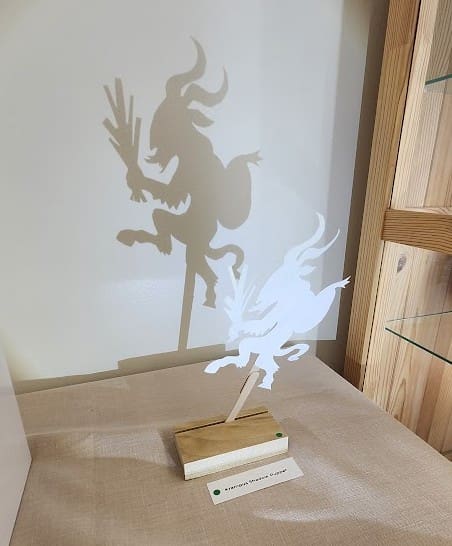
Krampus Shadow Puppet
Made by Exhibit Curator: Hunter Panoch
ANE (Ancient Near East):
The Ancient Near East—including Mesopotamia, Anatolia, Iran, and Egypt—holds some of the earliest evidence of human relationships with goats. Archaeological records show goats were among the first domesticated animals, kept for milk, meat, hides, and even as ritual offerings as early as 11,000 years ago during the Neolithic era. Their adaptability, high fertility, and herd behavior made them invaluable to early communities across diverse landscapes.
In Mesopotamia, goats held deep symbolic meaning. The Sumerians, the world’s first literate civilization, associated them with the god Ea (or Enki), ruler of wisdom, fresh water, fertility, and creation. Enki often used magic and cunning to aid humanity and played a central roles in myths such as the creation of mankind and the Babylonian flood story.
Enki was depicted as a bearded man with a flowing water cape and a cap accented with horns. Notably, he is most commonly associated with the goat fish, seagoat, or, more commonly known today, the Capricorn. The Capricorn had the body of a goat and hindquarters of a water serpent, and scholars believed it comes from a blend of early Babylonian and Greek mythos and folklore. As one of the first identifiable constellations in the night sky, Capricorn stands among the world’s oldest mythological creatures.
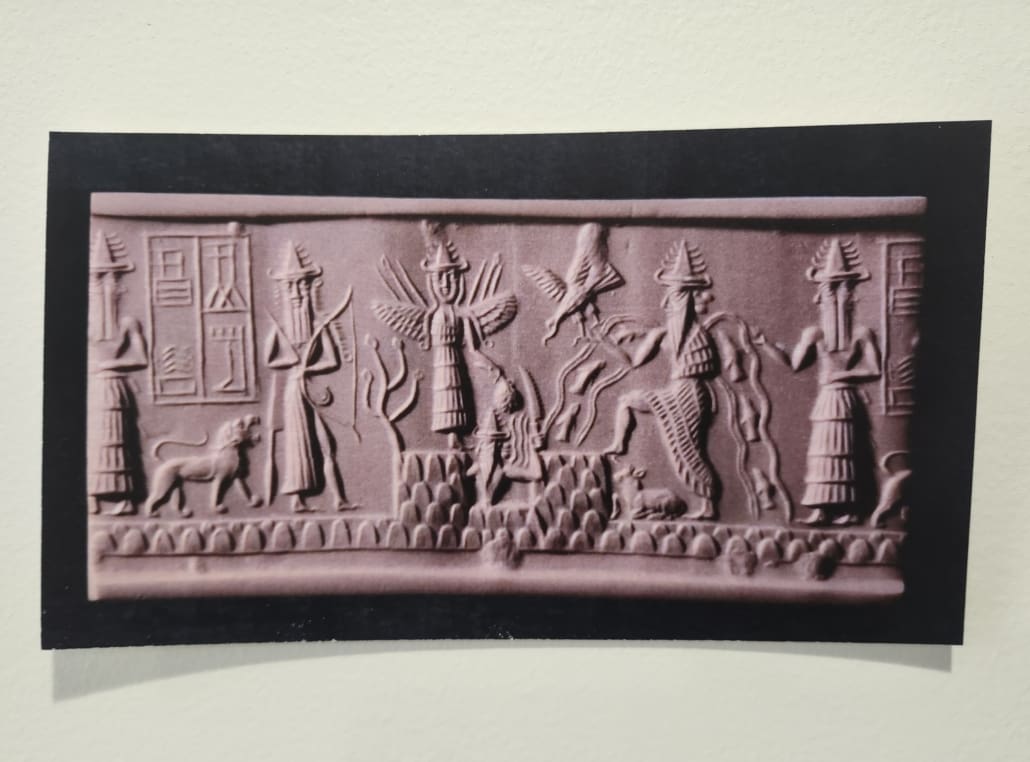
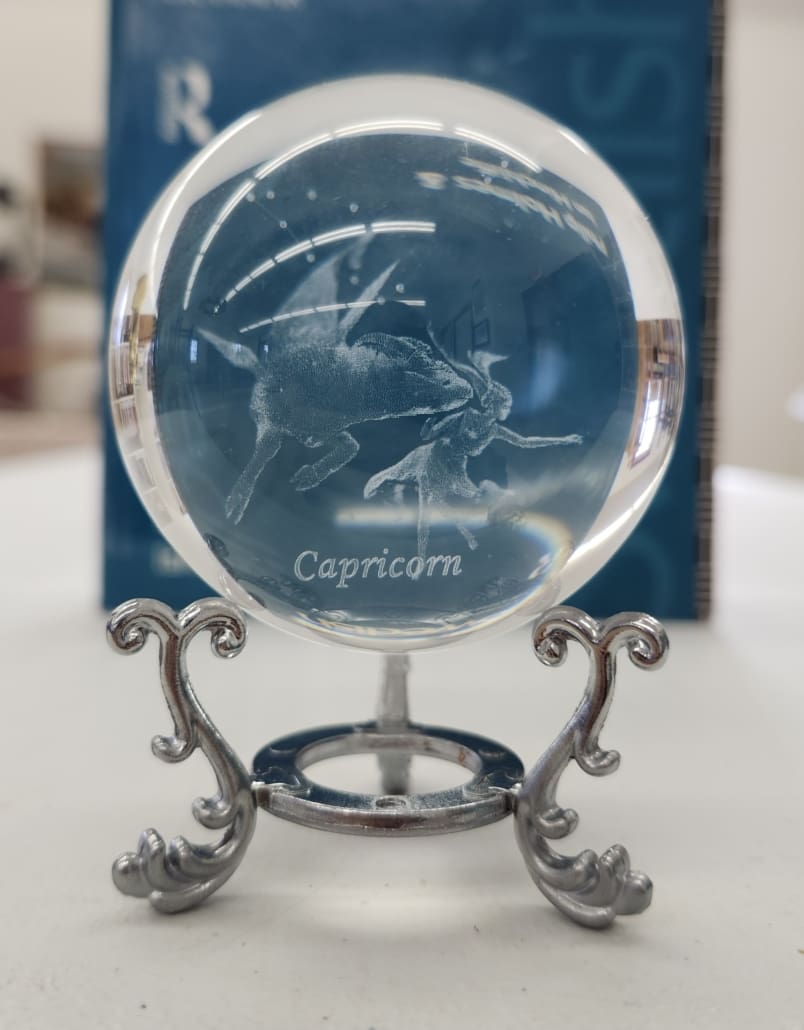
Ancient Greece:
Goats feature prominently throughout Greek mythology, often symbolizing wildness, fertility, and strength. They are most famously associated with Pan, the god of shepherds, flocks, and the wild.
Another notable goat-related myth is the Chimera, a monstrous offspring of Typhon and Echidna. This fire-breathing hybrid combined a lion’s body, a goat’s head on its back, and a serpent’s tail. Homer describes the Chimera in the Iliad: “she was of divine stock, not of men; in the fore part a lion, in the hind a serpent, and in the midst a goat, breathing forth in terrible wise the might of blazing fire.” Hesiod and Apollodorus gave similar accounts, describing the creature as three-headed: a lion in front, a fire-breathing goat in the middle, and a serpent at the rear. The combination of these animals likely symbolized strength, cunning, stubbornness, and the deadly powers feared by people of the time.
Goats also appear in nurturing and protective roles. Amalthea, the goat-nymph, cared for the infant Zeus on Crete after his mother Rhea hid him from Cronus. Some traditions depict her as half-goat, half-nymph, connecting her symbolically to Pan and the satyrs. In this role, Amalthea provided sustenance and protection to the future king of the gods. As a reward, she was immortalized in the heavens as the constellation Capricorn, linking Greek mythology to the earlier Mesopotamian sea-goat traditions and showing continuity in goat symbolism across cultures.
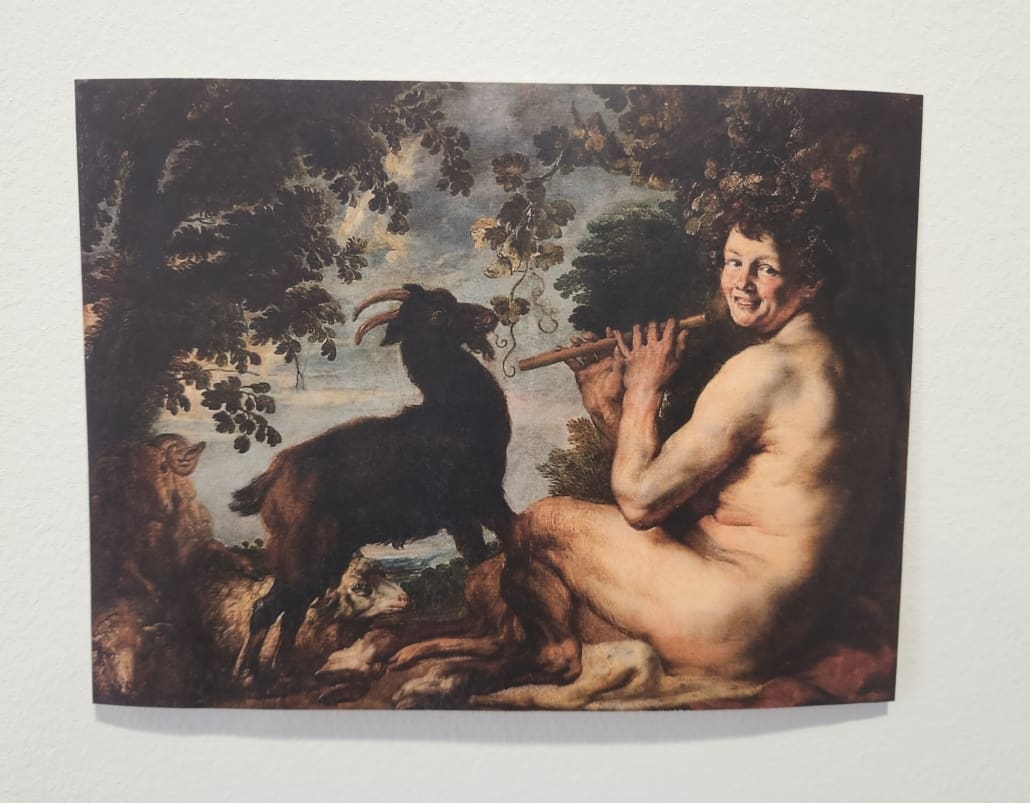
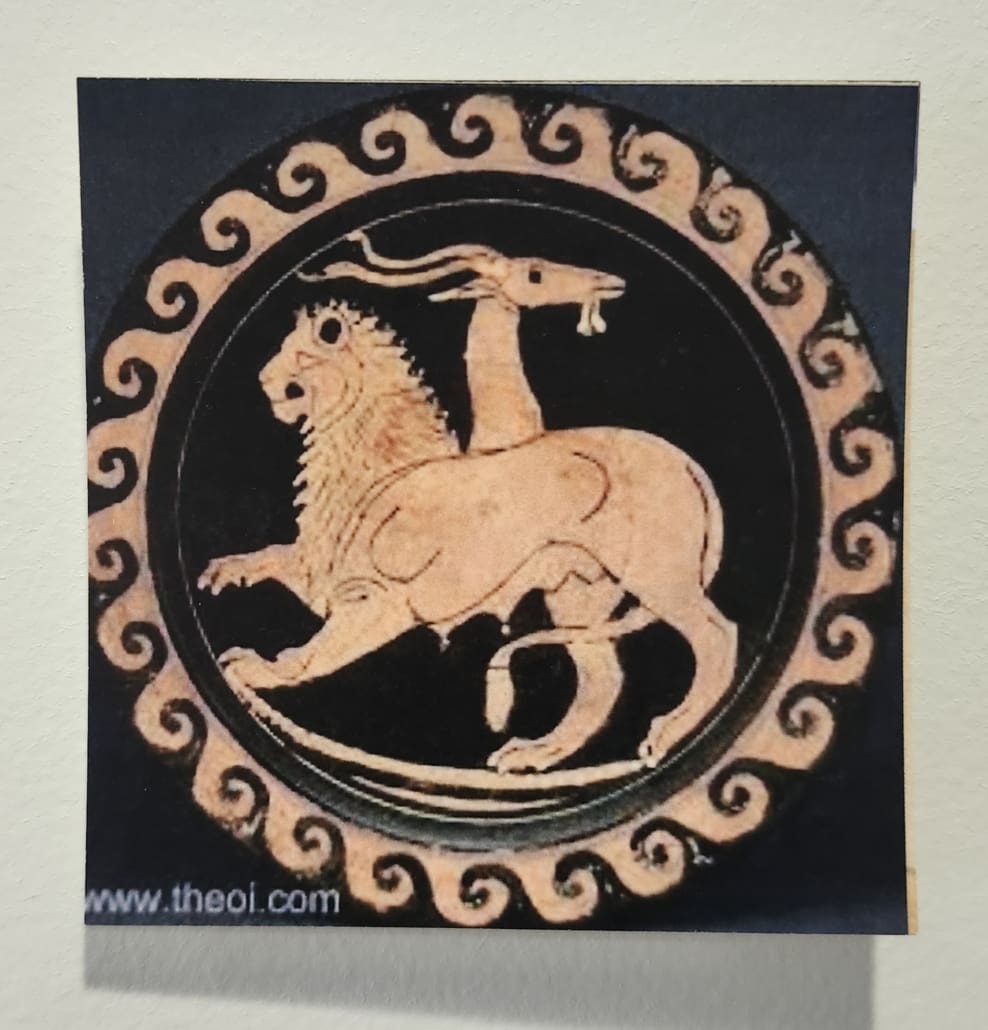
Modern Pan Flute:
In Greek mythology, Syrinx was a forest nymph. In her attempt to escape the affection of god Pan, she was transformed into a water-reed. Then, Pan cut several reeds, placed them in parallel one next to the other, and bound them together to make the first instrument of its kind, which came to be known as the Pan Flute. Ancient Greeks called this instrument Syrinx, in honor of the Muse, and Pandean, or Pan-pipes, after Pan.
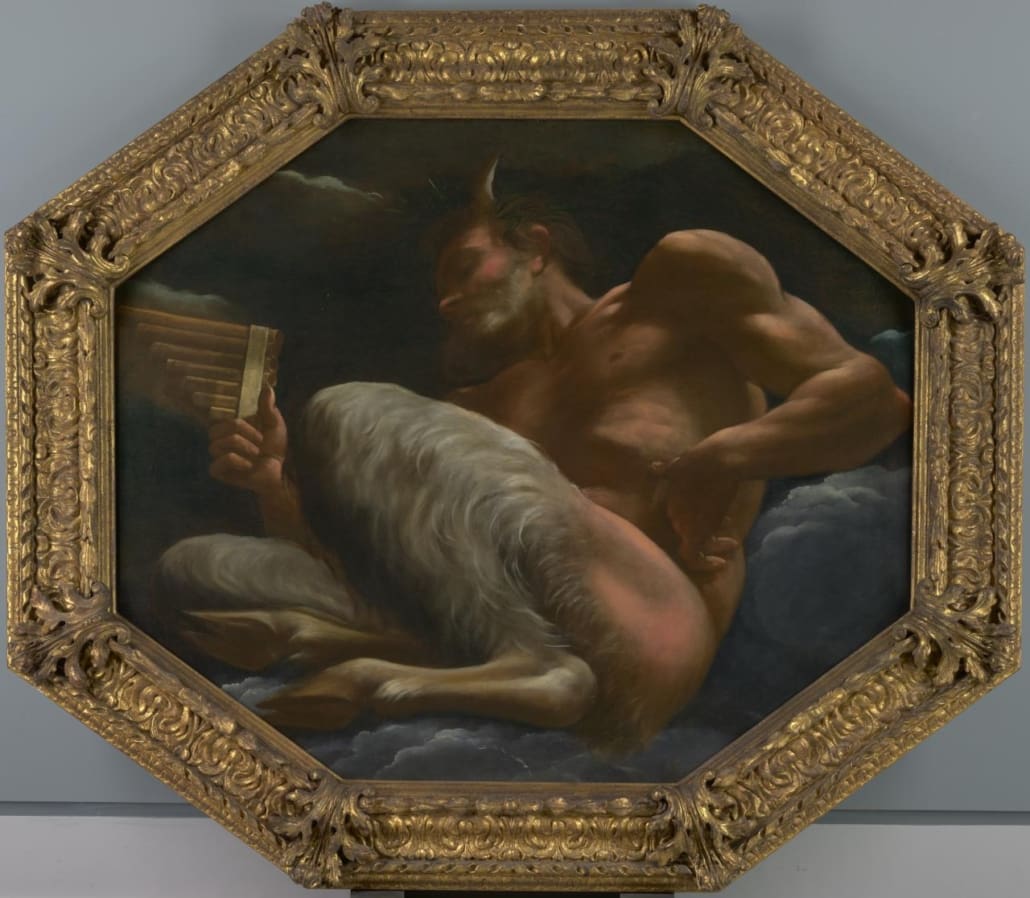
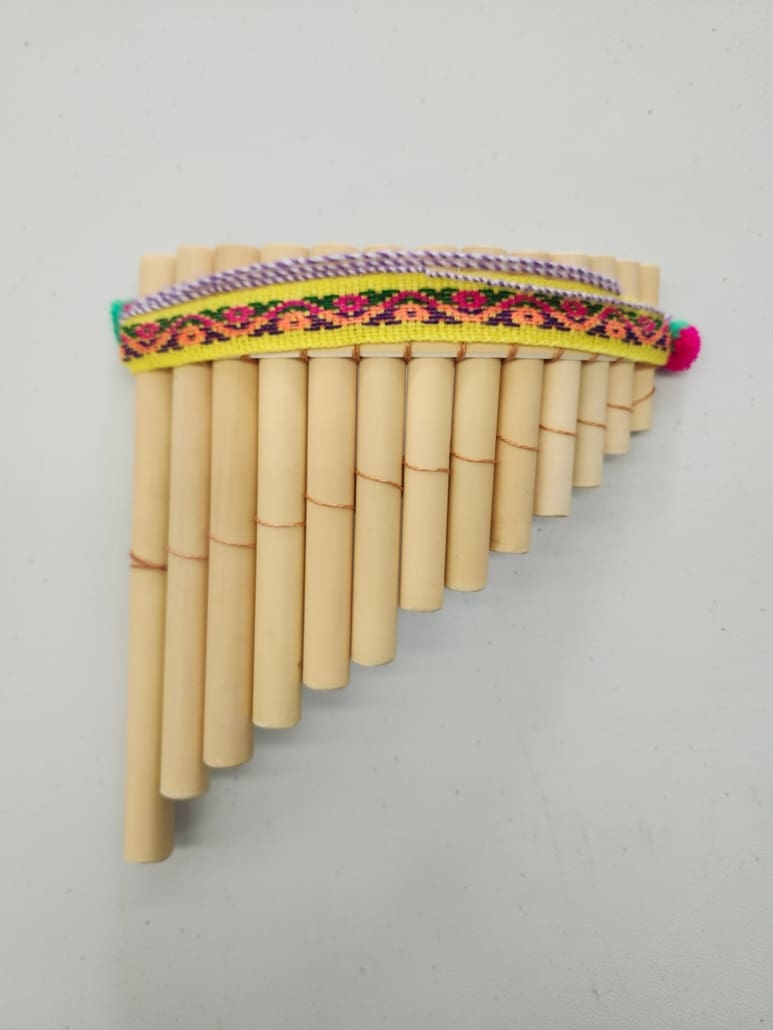
East Asia: (China, Japan, and Korea)
China:
In Chinese mythology, the goat is one of the twelve animals of the Chinese zodiac, an important system for marking years and understanding personality traits. According to the myth of the Great Race, the Jade Emperor organized a legendary competition to determine which animals would be included in the zodiac. The order in which the animals finished determined their positions in the calendar, and each animal was later associated with specific characteristics that influence people born in its year. The goat is often seen as gentle, compassionate, and wise, reflecting the qualities attributed to those born under its sign.
China is also home to the legendary creature xiezhi (獬豸), a single-horned sheep or goat believed to divine guilt or innocence. Like the zodiac goat, the xiezhi emphasizes moral qualities, linking the animal to justice and societal order in myth and folklore.
Japan:
Japanese folklore preserves a similar concept in the form of the kaichi (獬豸), also called shin’yō (神羊; “divine sheep”). This creature is typically described as lion-like with a single horn atop its head, capable of discerning guilt or innocence. The kaichi embodies justice and moral judgment, and its presence in stories and artwork symbolizes fairness and the upholding of law.
South Korea:
In Korean tradition, the haetae (해태) is a legendary creature associated with protection and justice, sometimes depicted with goat-like features. The haetae has a muscular, leonine body covered in sharp scales, a bell around its neck, and a horn on its forehead. During the Joseon dynasty, it was believed to guard against fires, and sculptures of haetae were incorporated into architecture for this protective purpose, such as the famous figure outside Gyeongbok Palace. Today, the haetae remains a cultural symbol of safety and justice; Seoul even adopted a cartoon version named Haechi as the city’s mascot.
While these three creatures, the Chinese xiezhi, Japanese kaichi, and Korean haetae, share a common symbolic role in justice and moral discernment, each is distinguished by unique cultural features. The xiezhi emphasizes legal judgment, the kaichi incorporates lion-like aspects and divine authority, and the haetae blends protective and fire-warding qualities with goat-like traits. Each reflects the distinct priorities and aesthetics of its respective society.
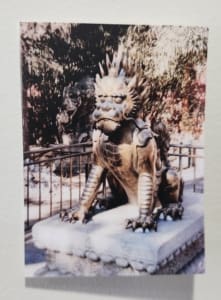
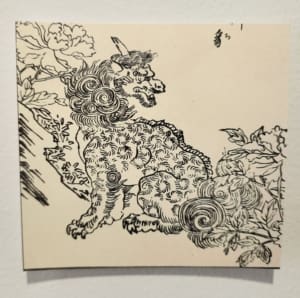
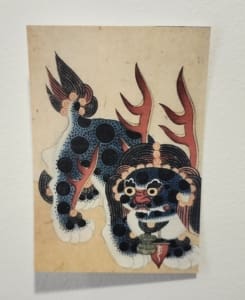
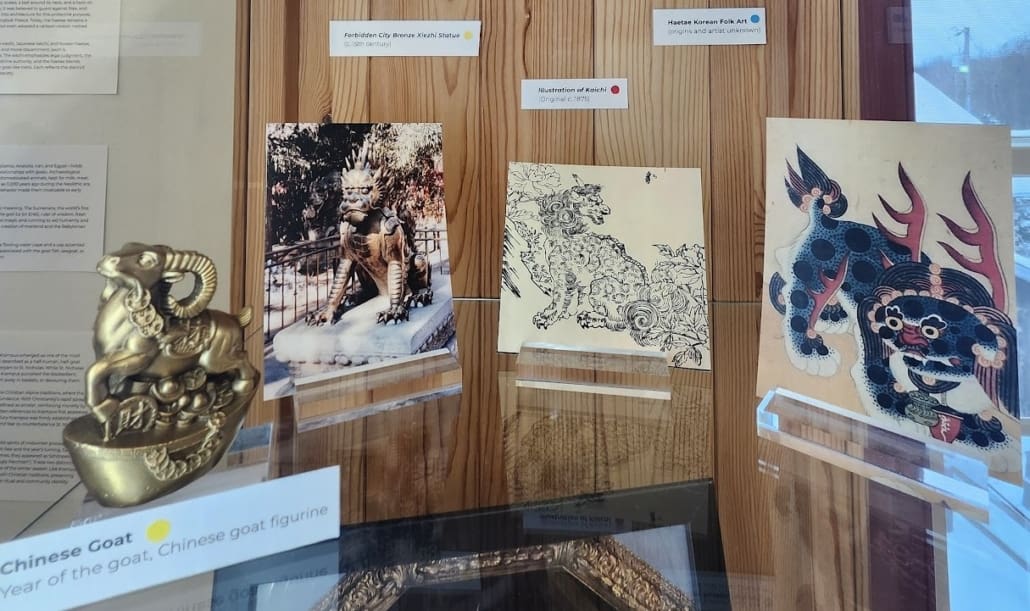
Ancient Judaism:
The idea of the “scapegoat” originates in ancient Judaism, found in Leviticus 16. On Yom Kippur, two goats were chosen: one sacrificed to God, the other driven into the wilderness “for Azazel,” carrying away the community’s sins. This ritual symbolized both divine forgiveness and the removal of guilt. The King James Bible of 1611 translated the second goat as the “scapegoat,” giving English a lasting term for unfair blame. Already tied in folklore to both sustenance and wildness, the scapegoat grew into a wider metaphor for exile and sacrifice, later reinforced in Europe by linking goats with witchcraft and the devil.
Christianity and the Goat:
During the Christianization of Europe, Pagan practices were suppressed. Deities such as Pan, the horned, goat-legged satyr from Greek mythology, were difficult to target because they were worshiped in nature rather than temples, making them harder to erase through the destruction of idols or shrines. Instead, the Christian Church targeted the symbolism and rituals tied to them. Scholars suspect the targeting of goats was also influenced by their appearance in Matthew 25:31–46, where Jesus compares the righteous “sheep” with the unrighteous “goats,” who are cast away from salvation. This parable, alongside Christianity’s heavy use of sheep and shepherd imagery, helped the church establish goats as new symbols of sin and separation from God. It reinforced the idea of goats representing sin and reshaped once-positive associations, such as fertility, wisdom, and vitality and turned them into markers of lust, corruption, and the devil.
Goat Bells:
Bells have been used to locate animals, ward off predators, and track individual animals within a herd for centuries. Their sounds helped herders monitor the flock’s well-being, especially in the presence of difficult conditions such as fog, dense forests, or even predators. Because of their inherent use to warn of danger, multiple regions around the world have developed uses for them in folk magic practices as an item to help ward off evil spirits and protect the home. Goat bells specifically can also signal fertility and abundance because of their connection to the goat.
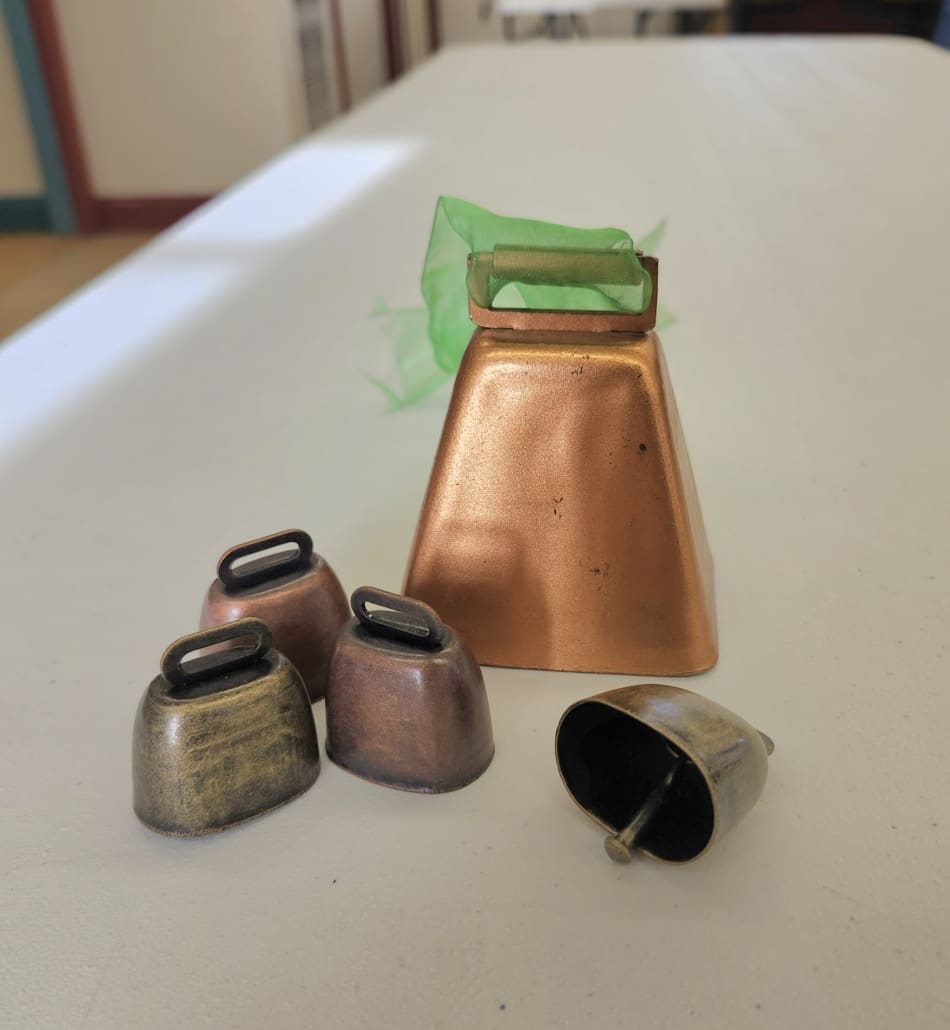
Exhibit Research, Curation, and Documentation:
This exhibit was researched and put together by Gammelgården Museum staff member Hunter Panoch.
Holiday Exhibit
Our 2025 Holiday Exhibit showcases a variety of tableaus that highlight different Swedish holiday customs. From Saint Lucia, the mischievous tomtes, Charlotte Weeble doll displays, exploring the multicultural connections of the julbocken, and more. Journey through the holiday season with our exhibit and learn about many of the unique customs inherited from Sweden.
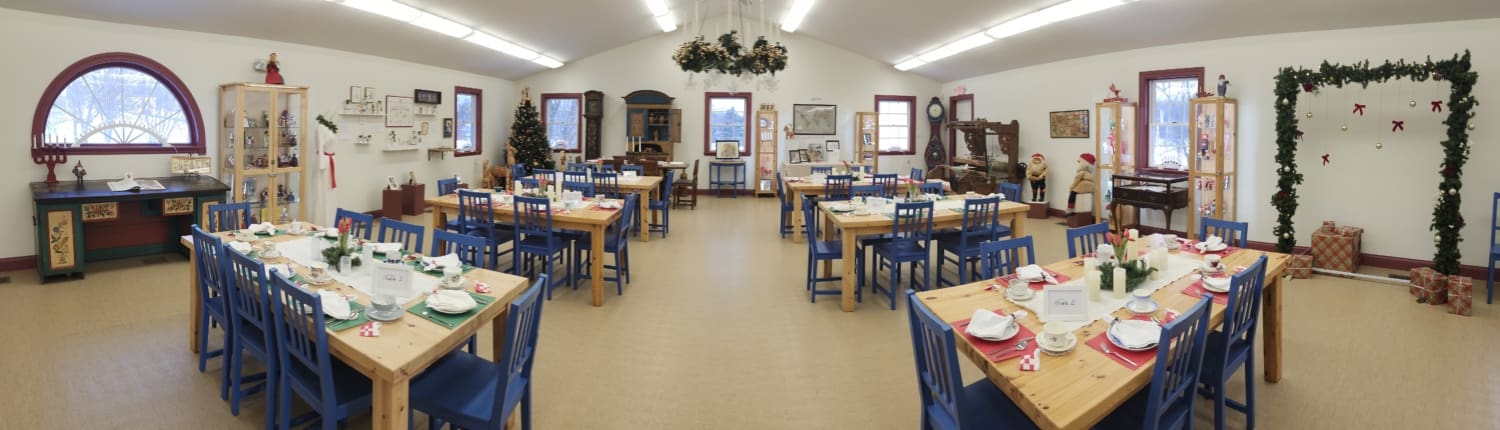
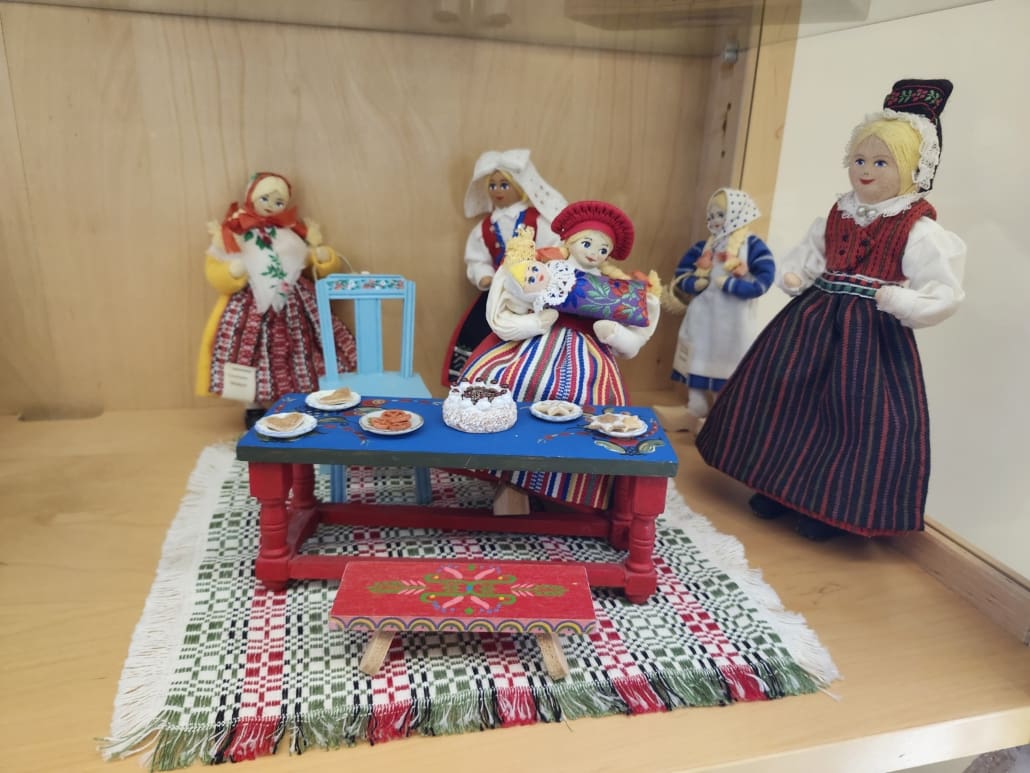
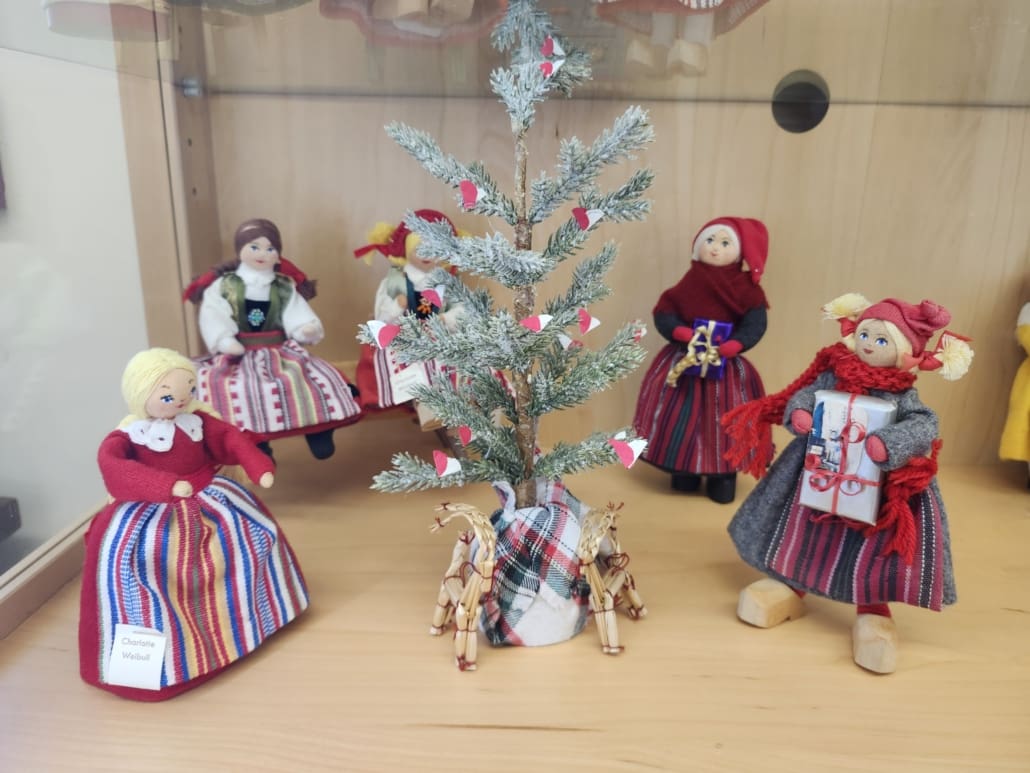
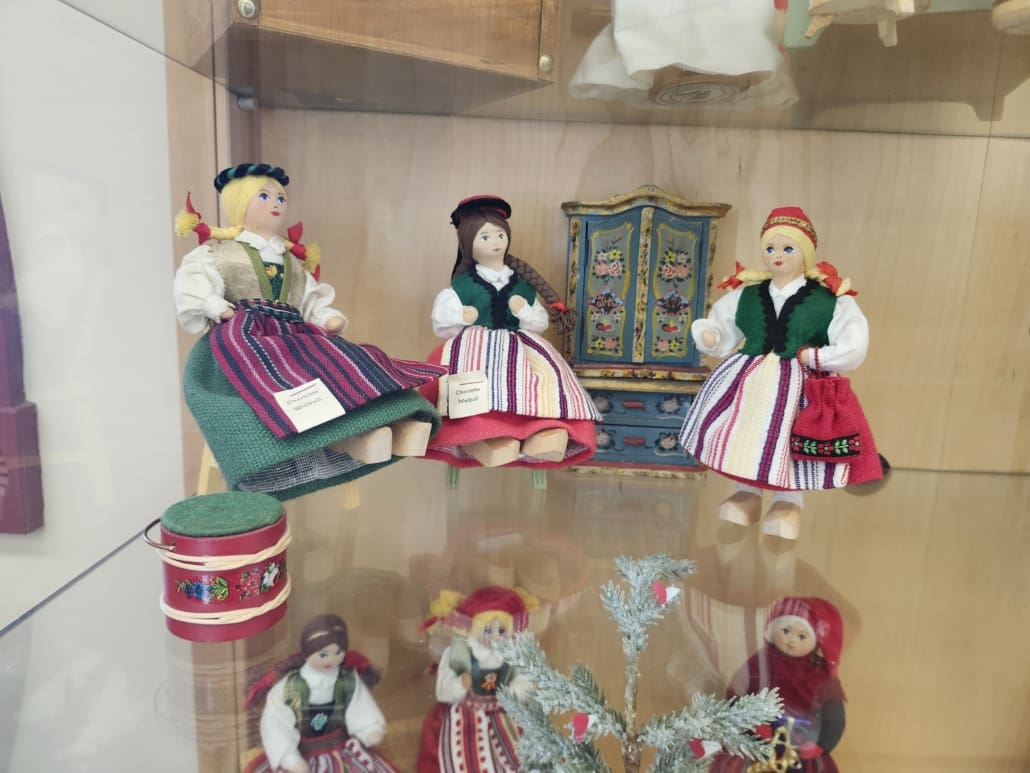
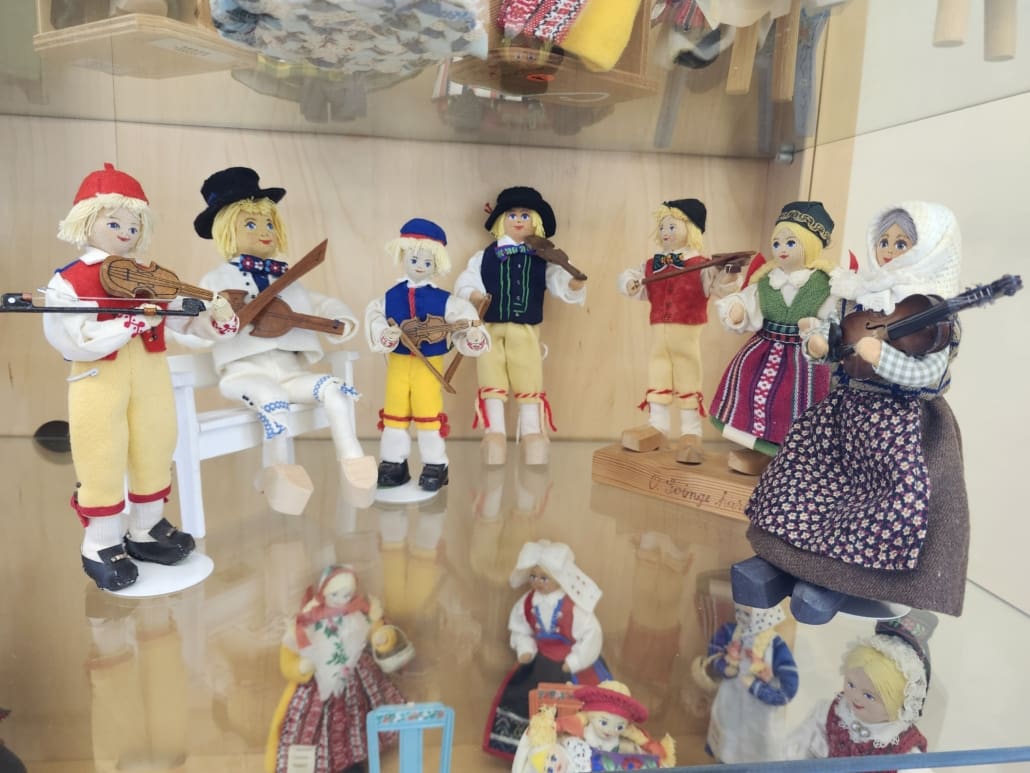
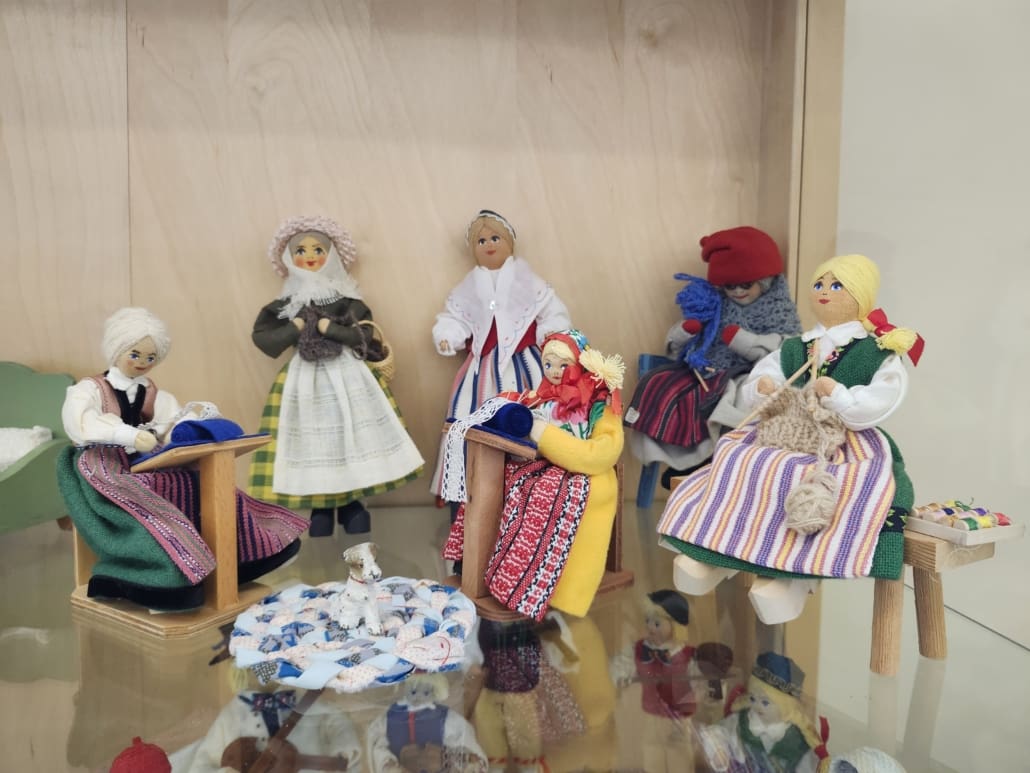

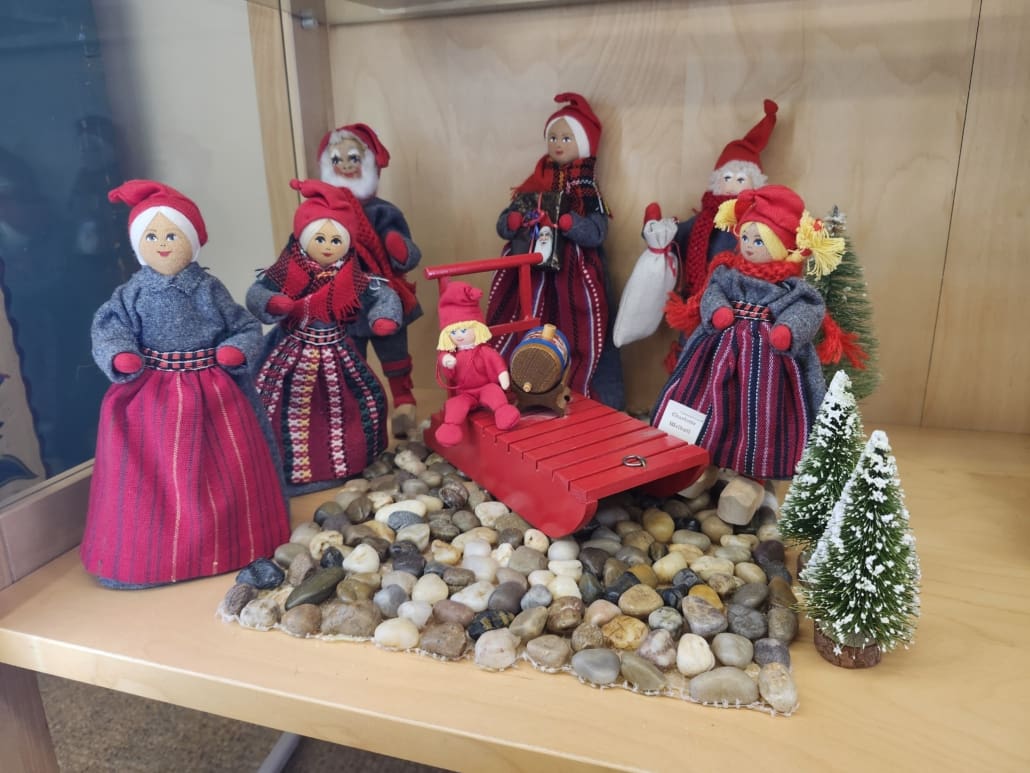
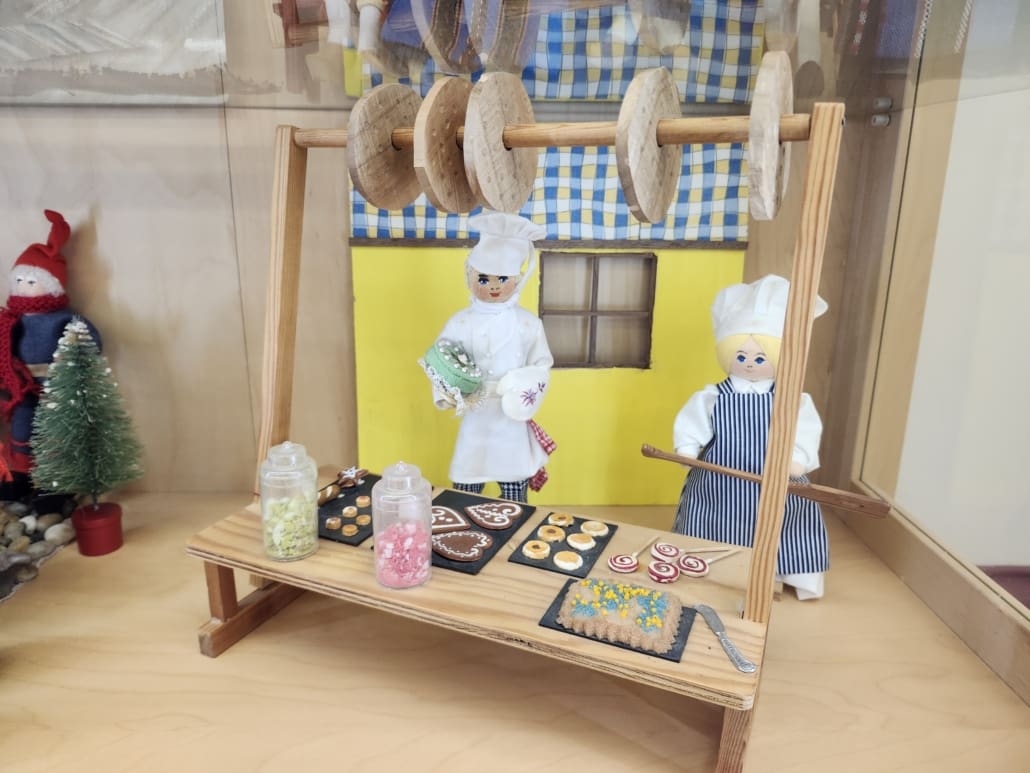
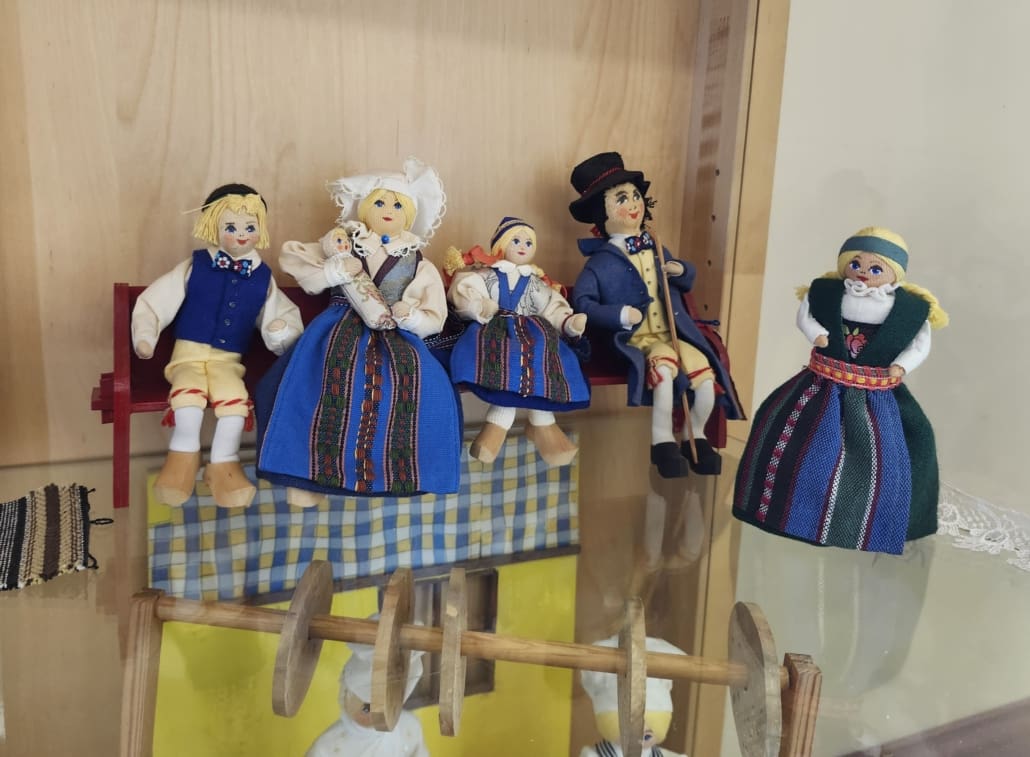

Charlotte Weibull Doll Display Tableaus
This display features numerous of our Charlotte Weibull dolls from our collection on display performing multiple different holiday themed activies and festivities. Charlotte Weibull is a world-renowned doll maker from Sweden, whose wooden dolls are famous for representing different regional folk fashion in their clothing designs.
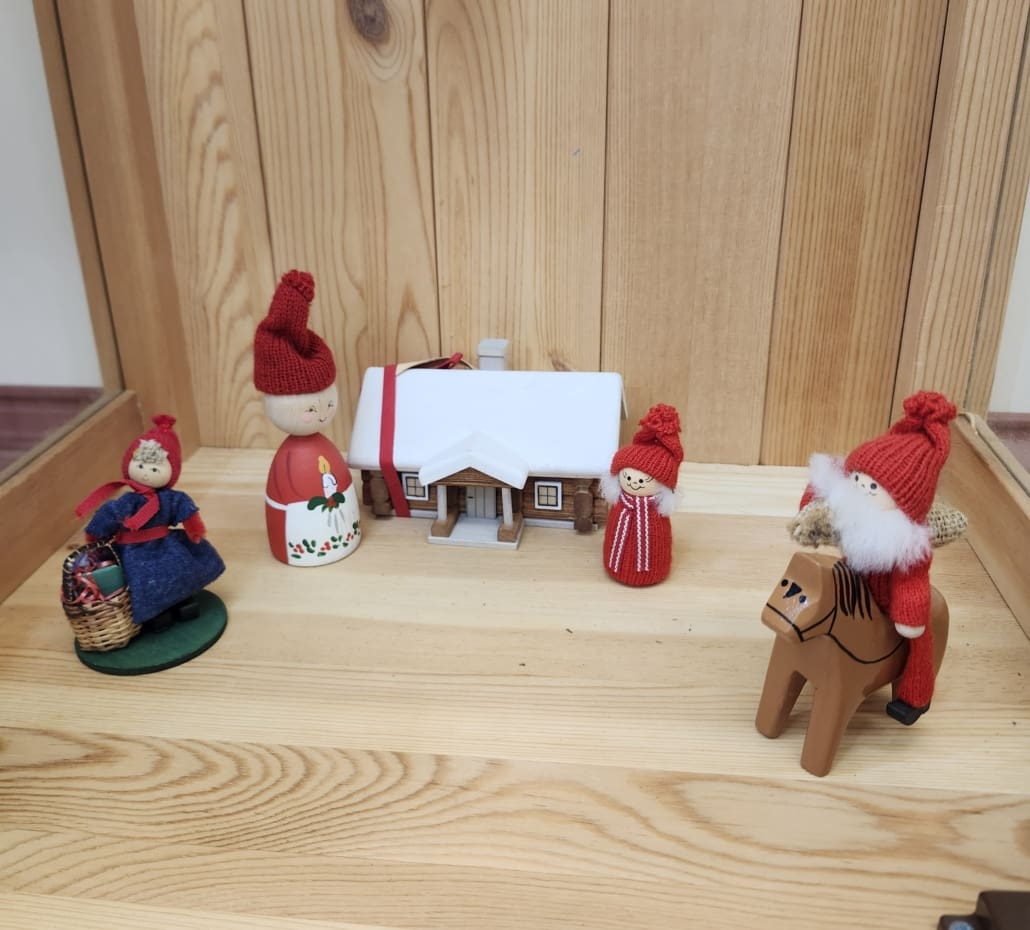
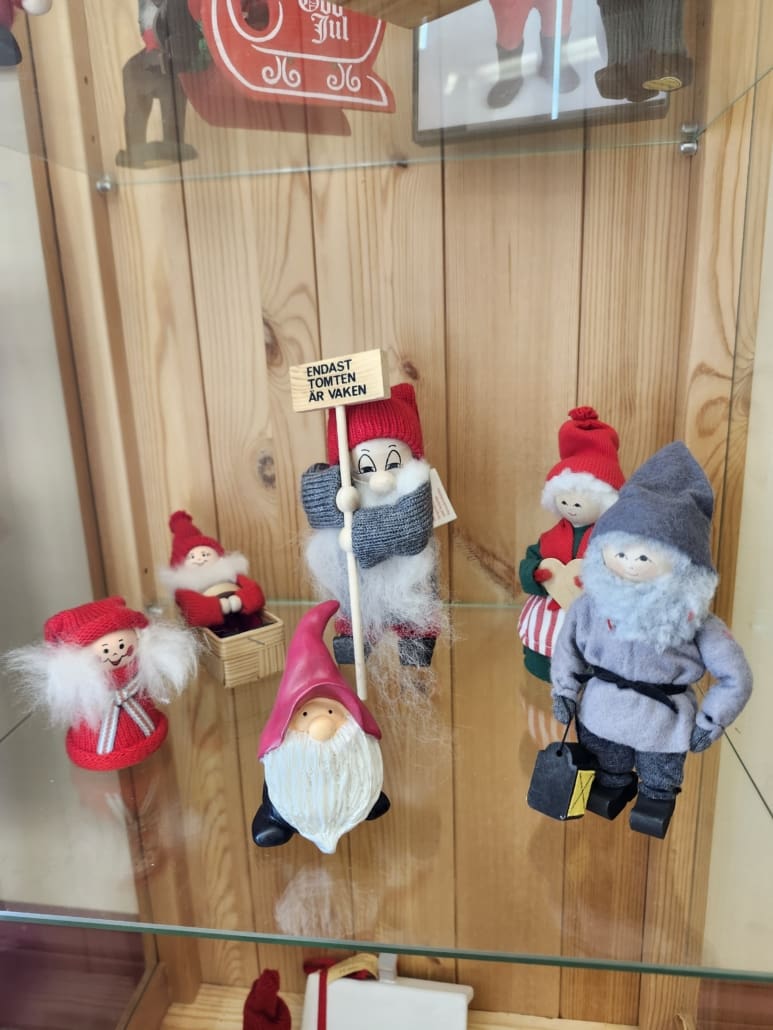
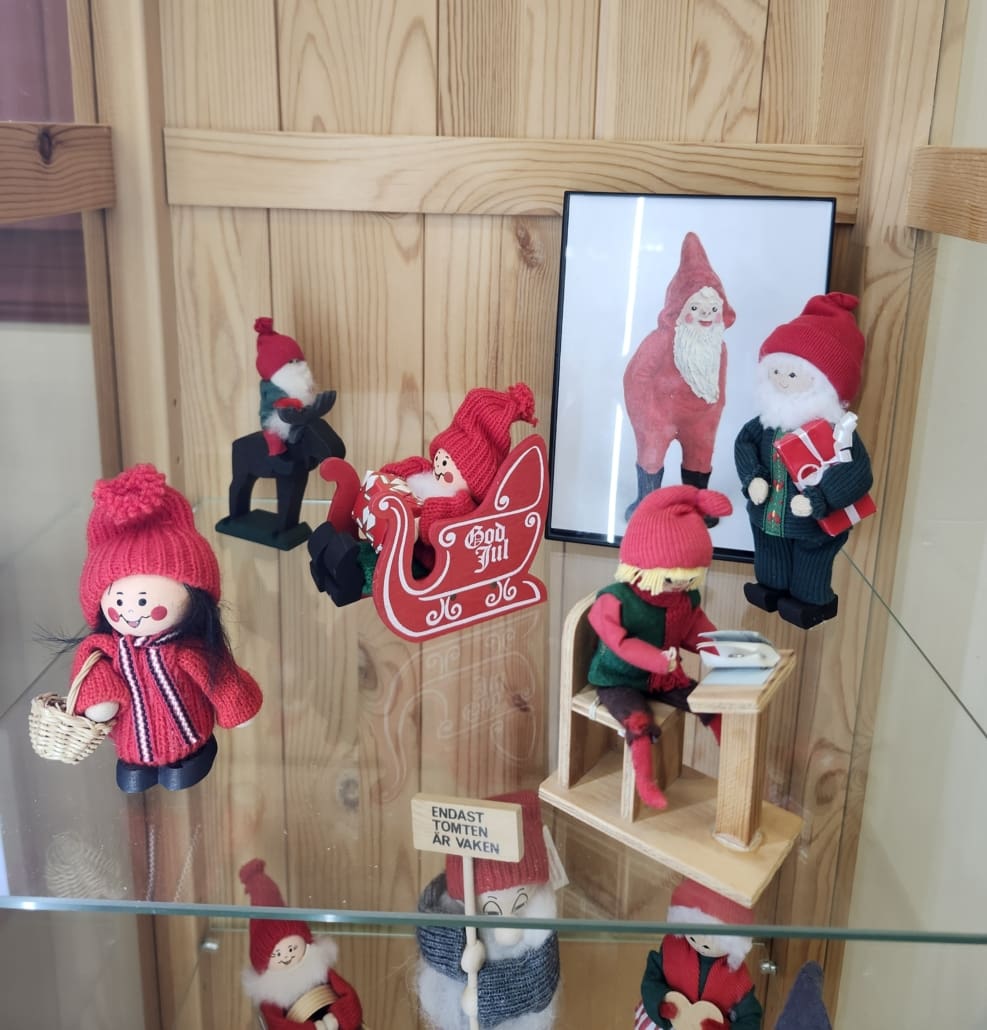
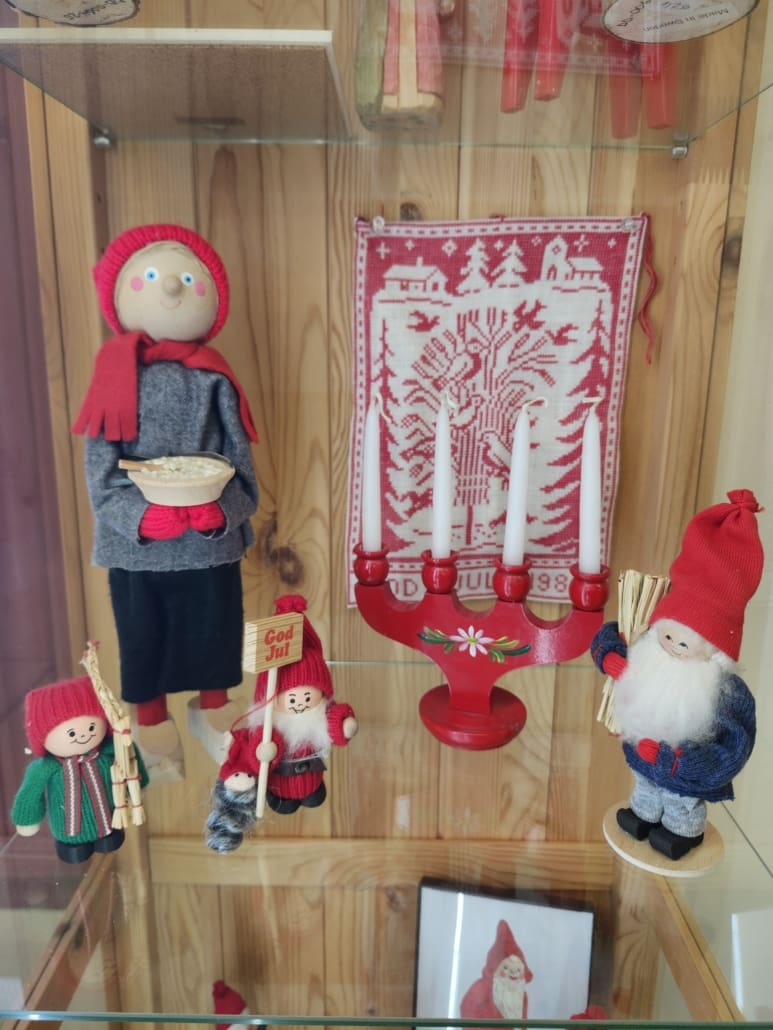
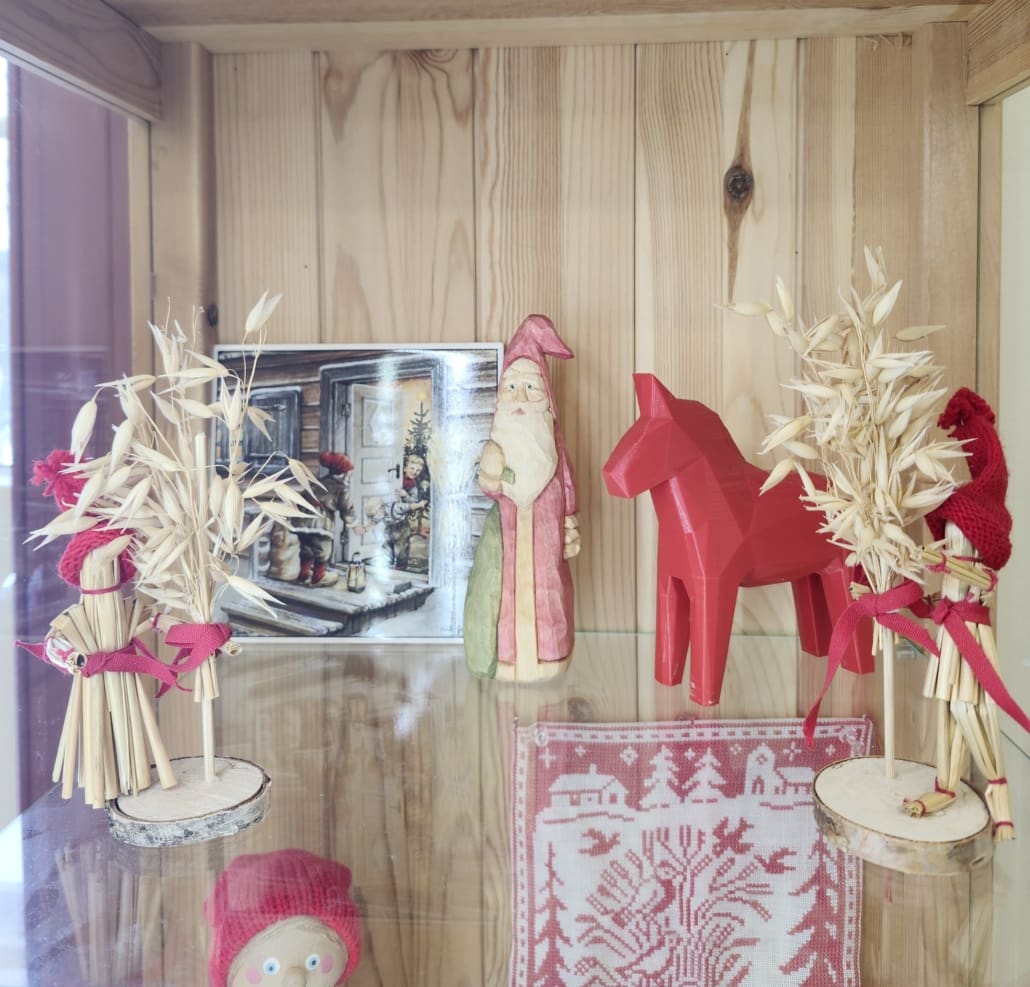
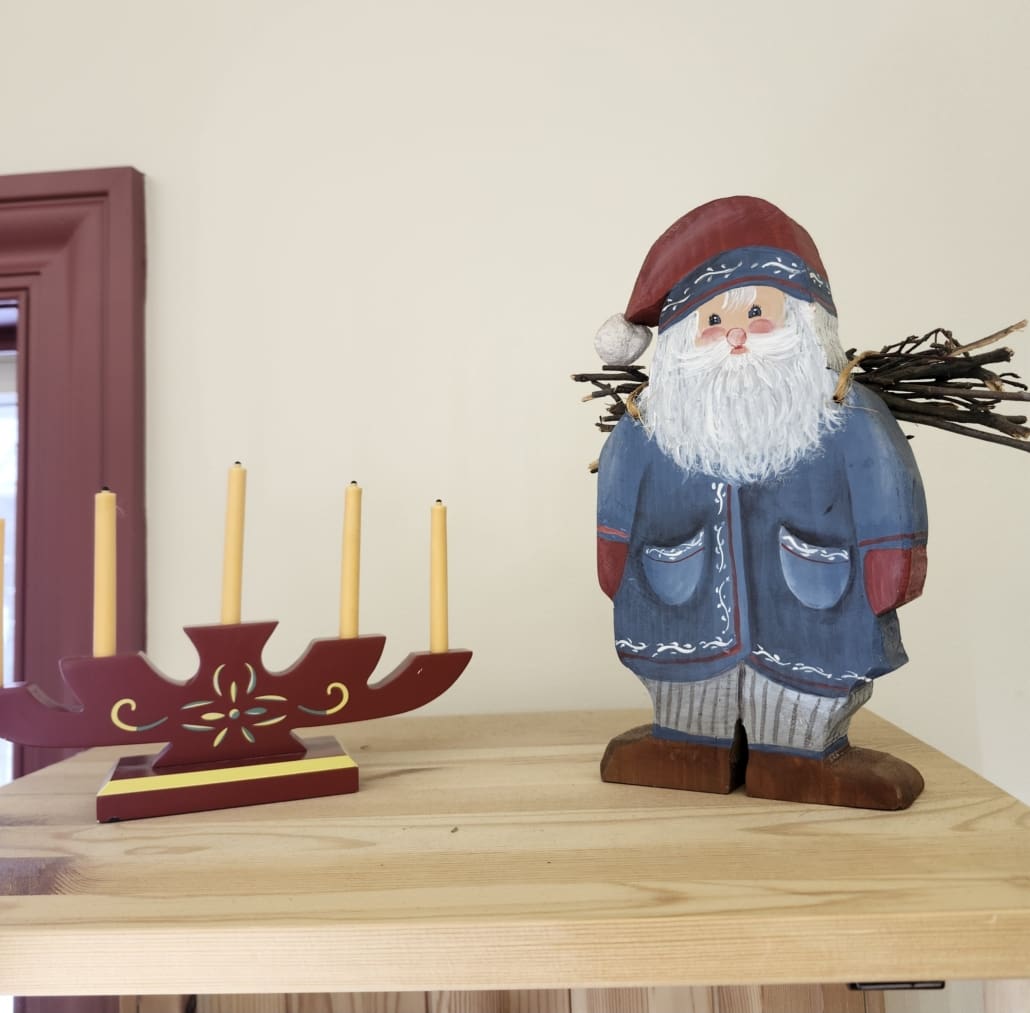
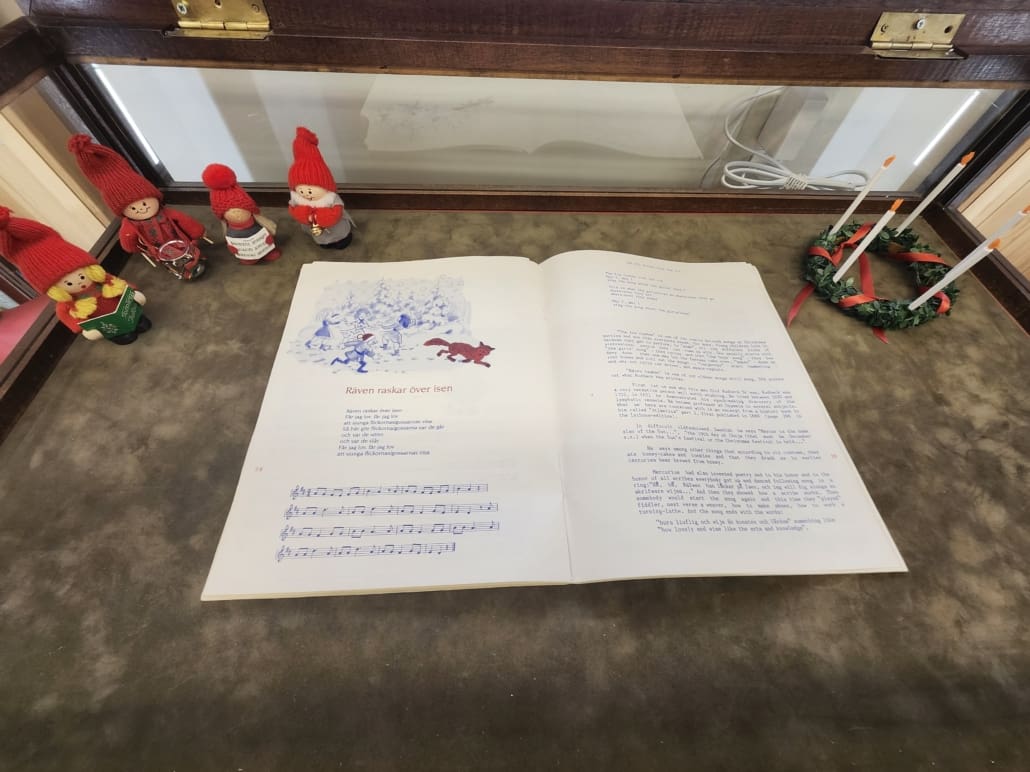
Collection of Jul Figurine Displays
This cabinet displayed multiple levels of small displays of jul scenes using various figurines from our collection.
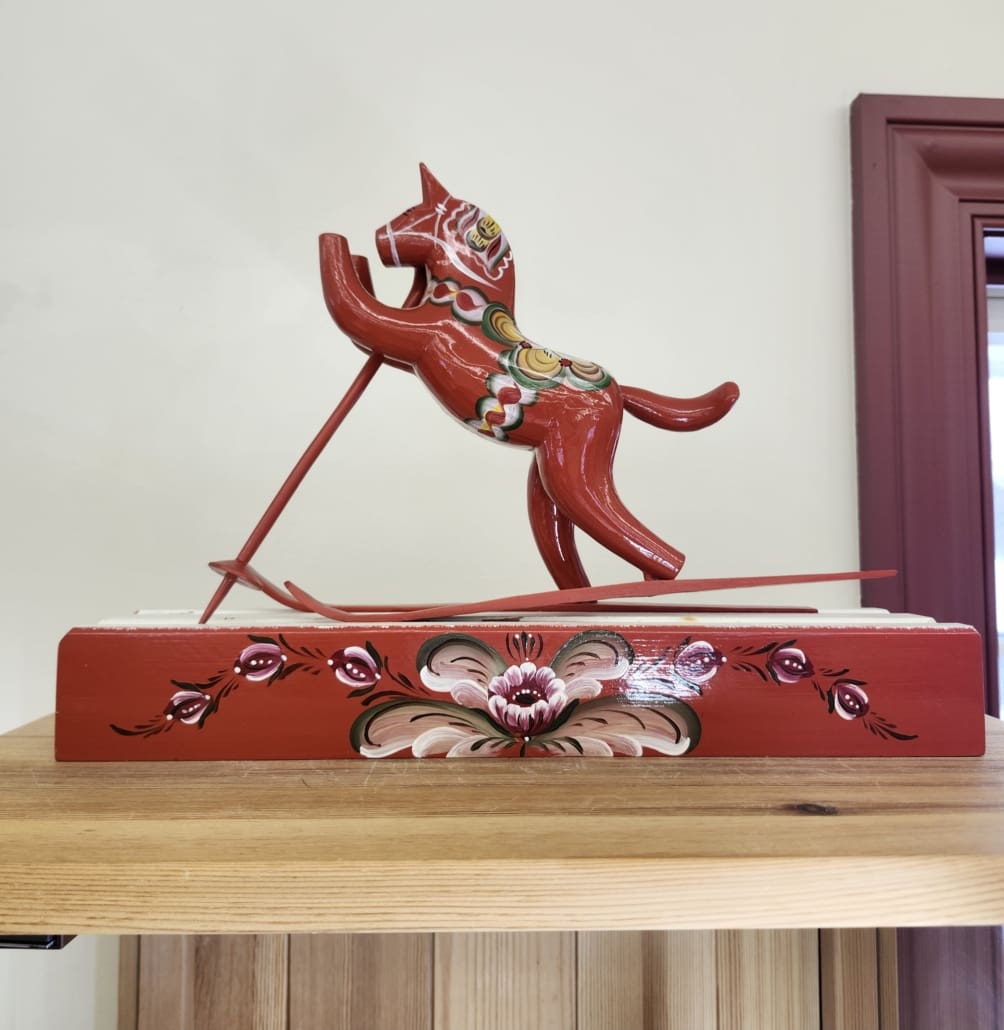
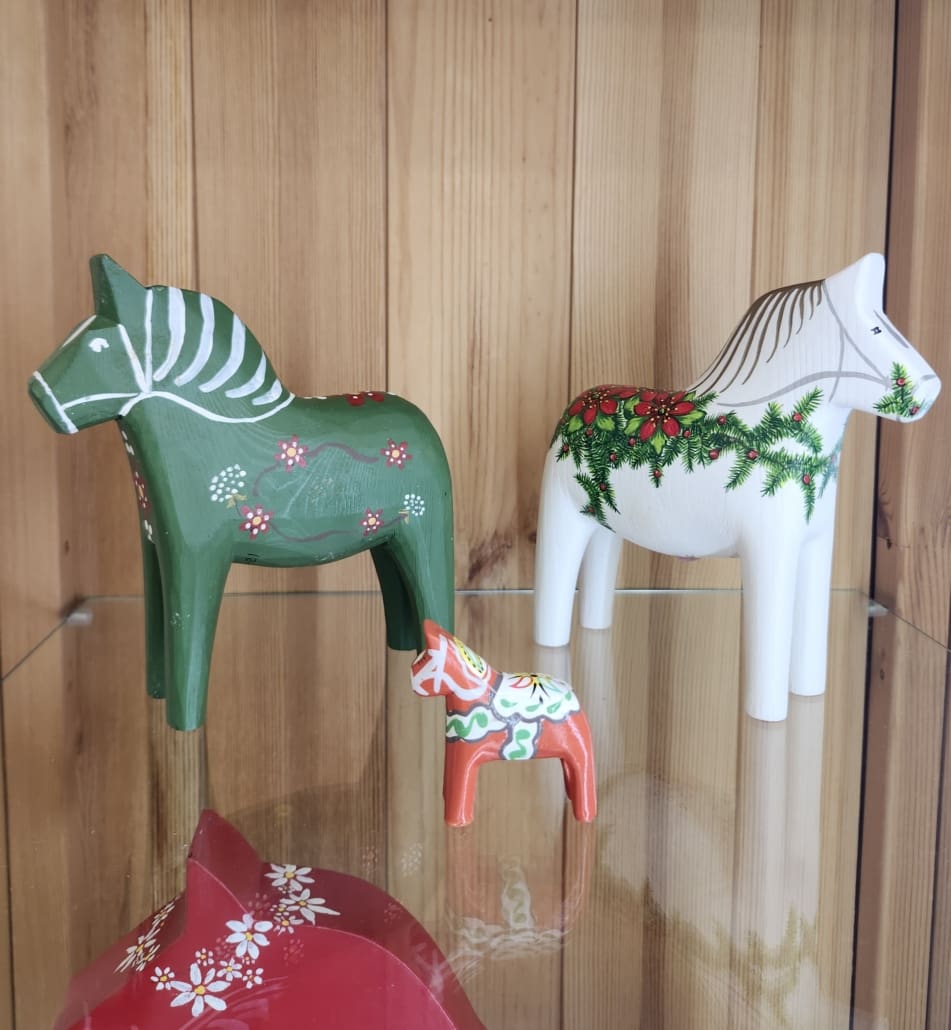
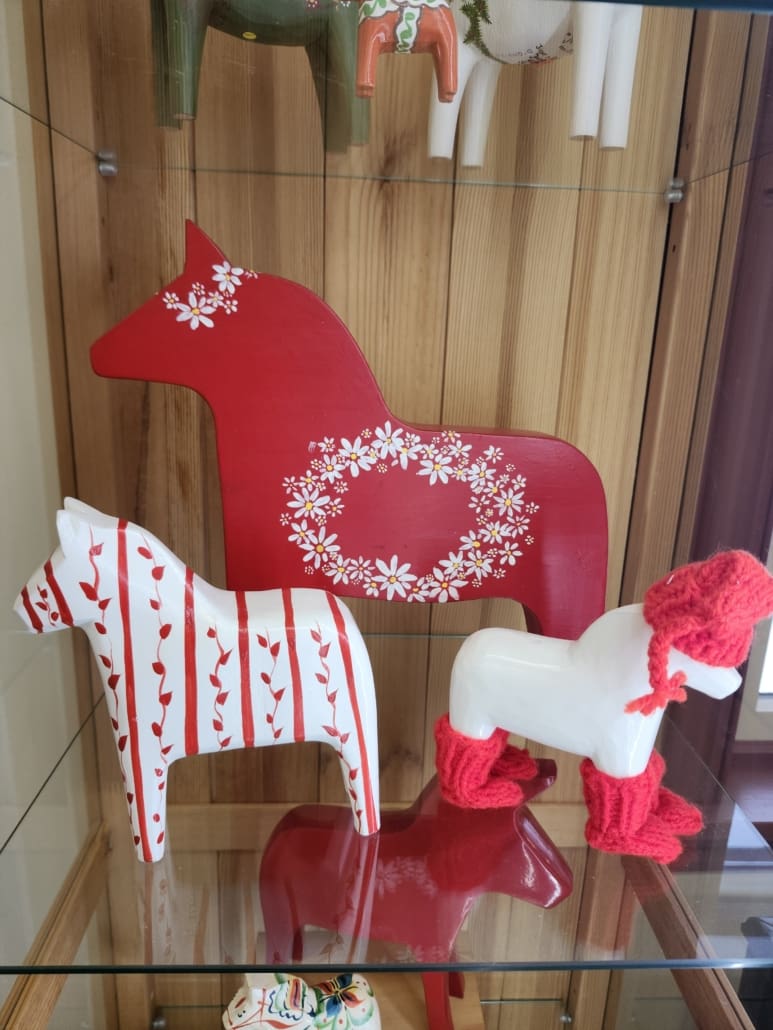
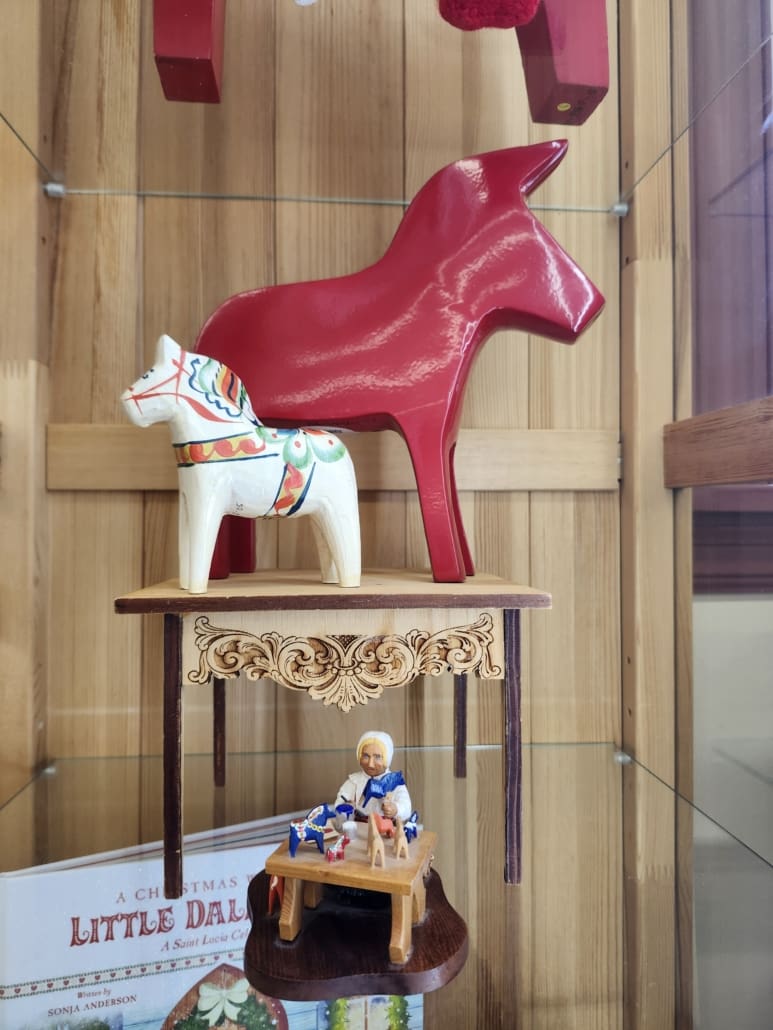
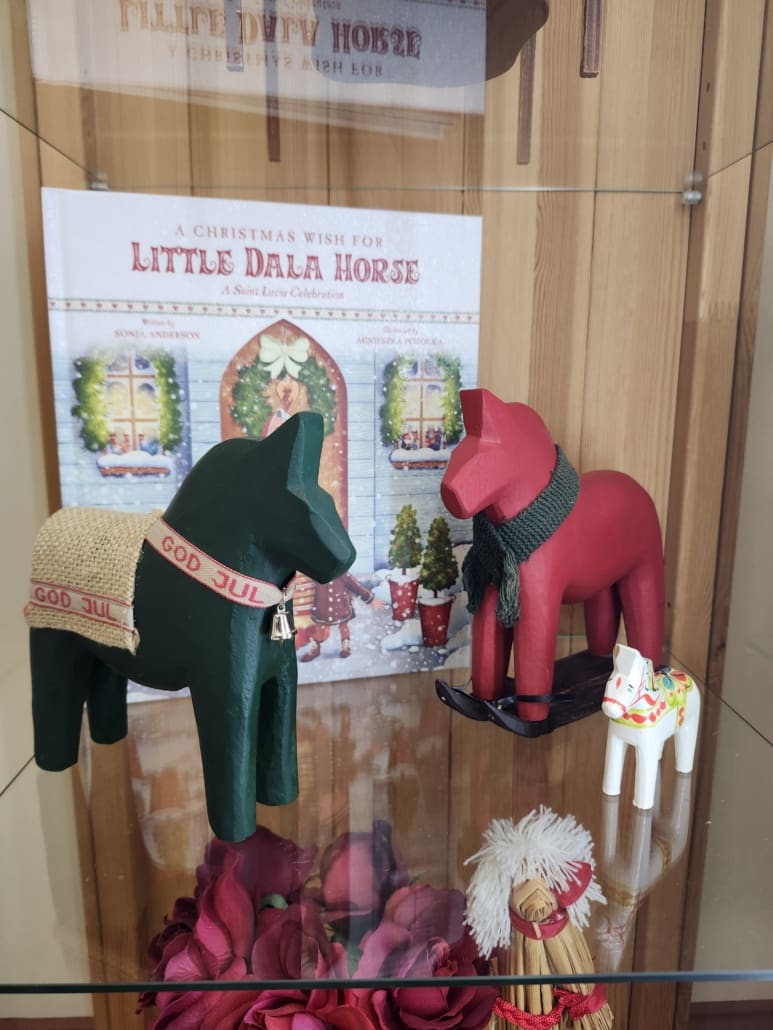

Dala Horse Cabinet
This cabinet features a curated selection of specialty Dala horses from the collection. The examples on display include figures in novelty poses and winter-themed designs, as well as traditionally painted horses adapted to complement a holiday aesthetic.
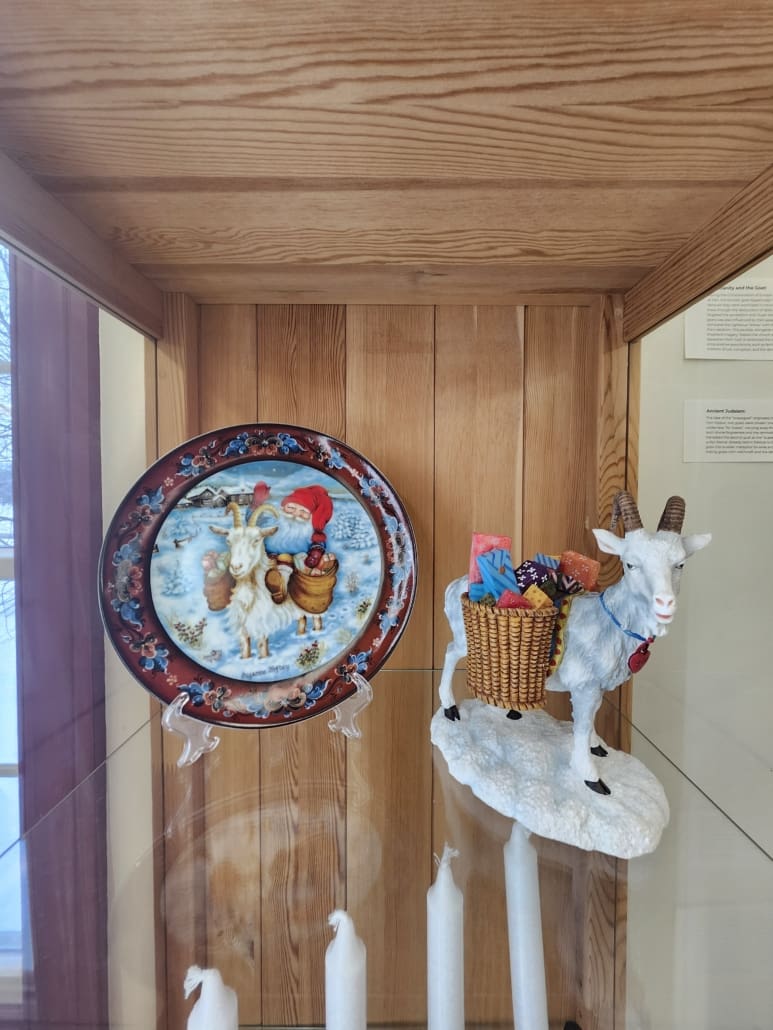
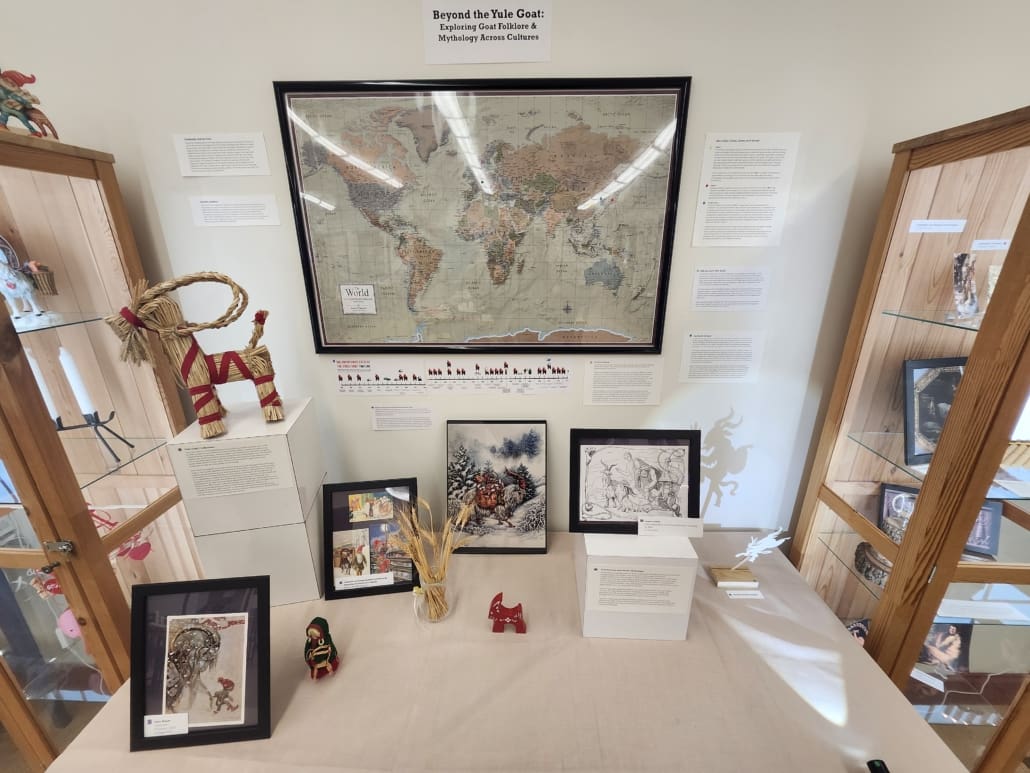
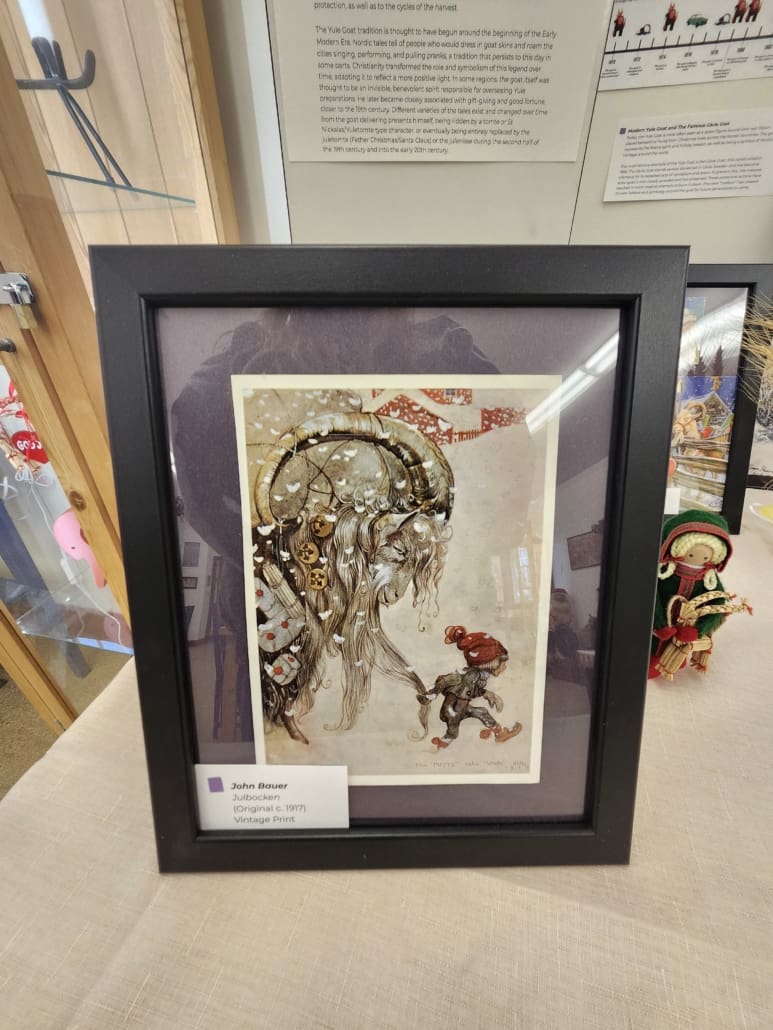
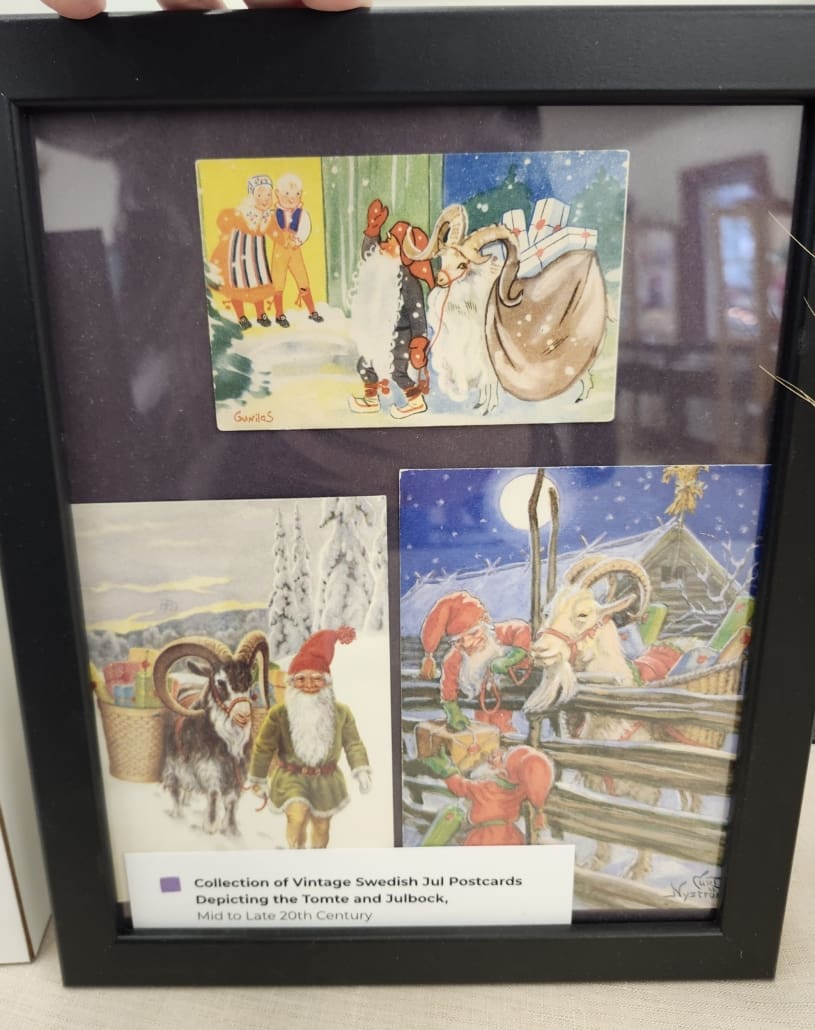
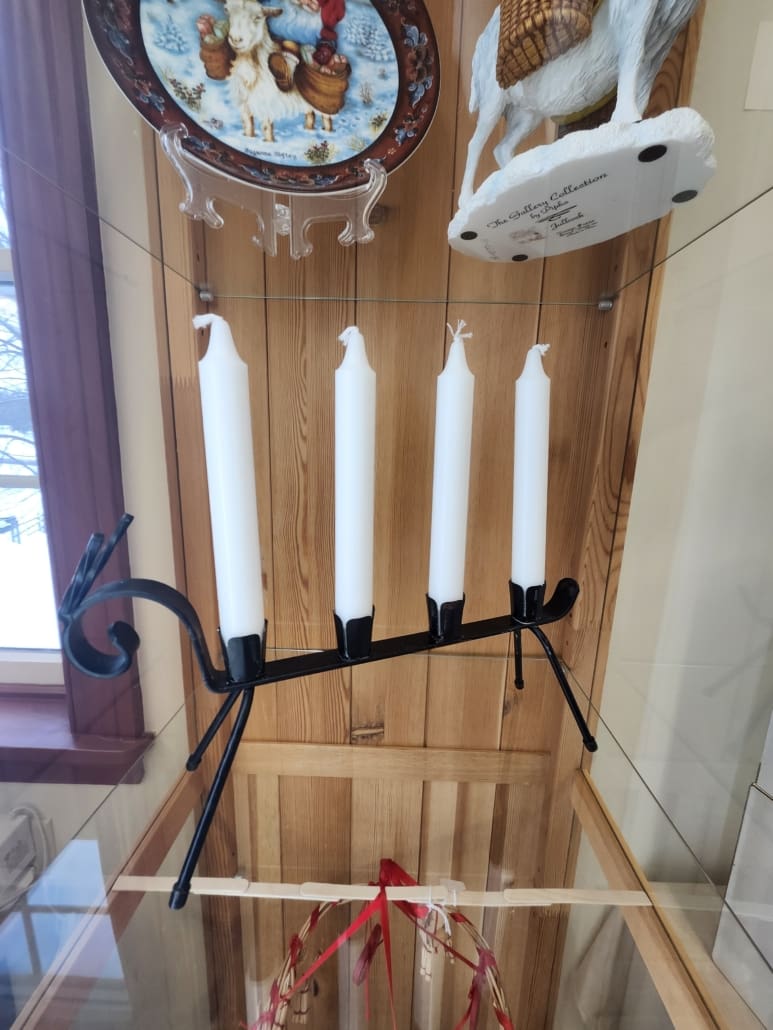
Julbock / Yule Goat Display
This display was curated to highlight the folkloric history of the Yule Goat. It explores the development of related traditions across multiple regions, examining the symbolic significance of goats within different cultural contexts. This exhibit is expanded upon in greater detail in the accompanying section, Beyond the Yule Goat: Exploring Goat Folklore and Mythology Across Cultures.
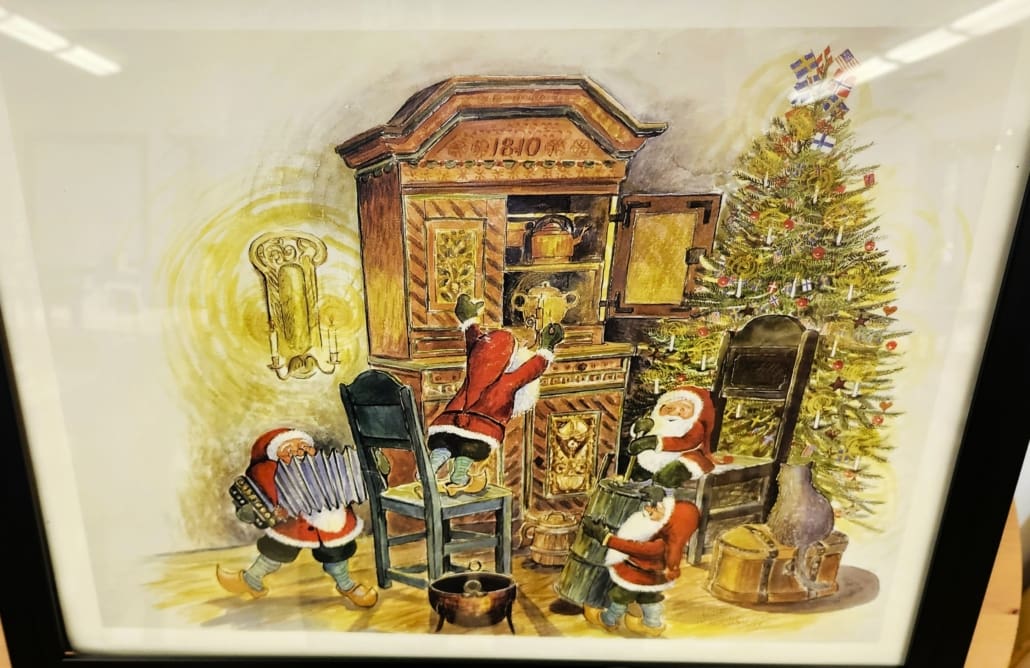
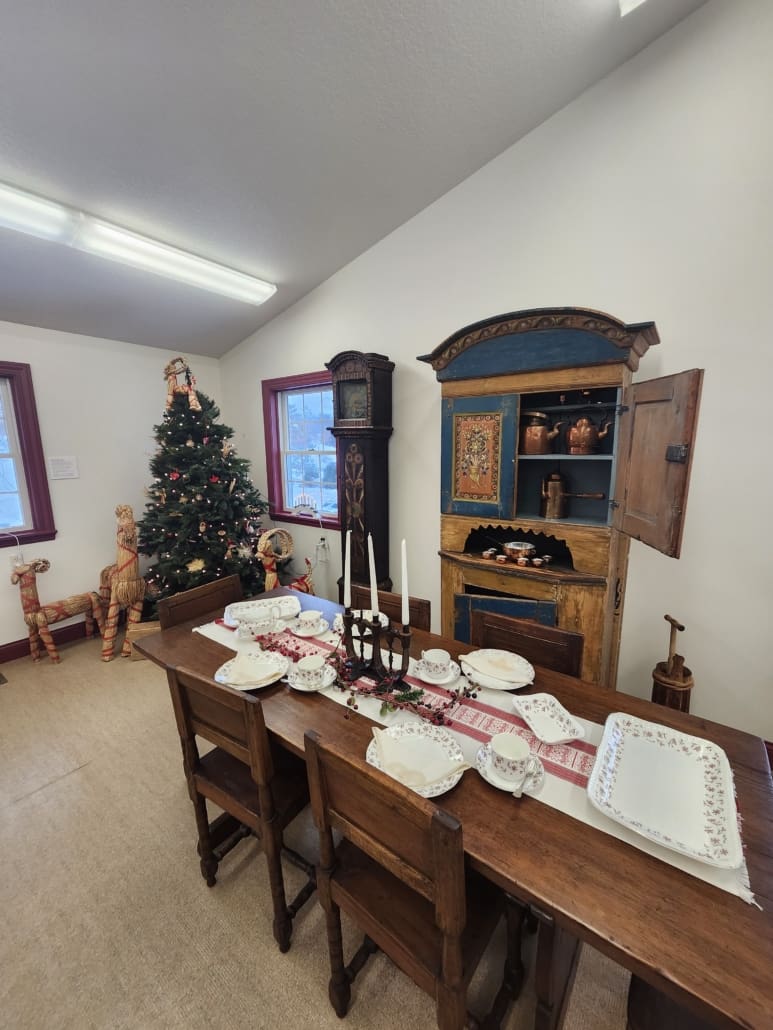
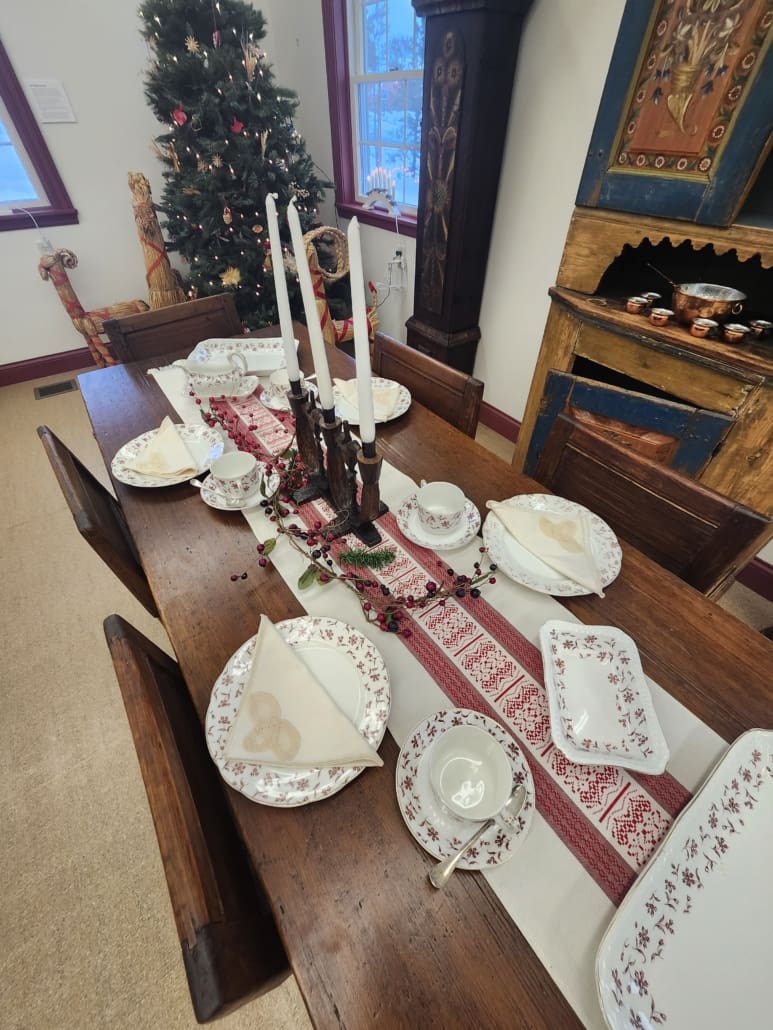
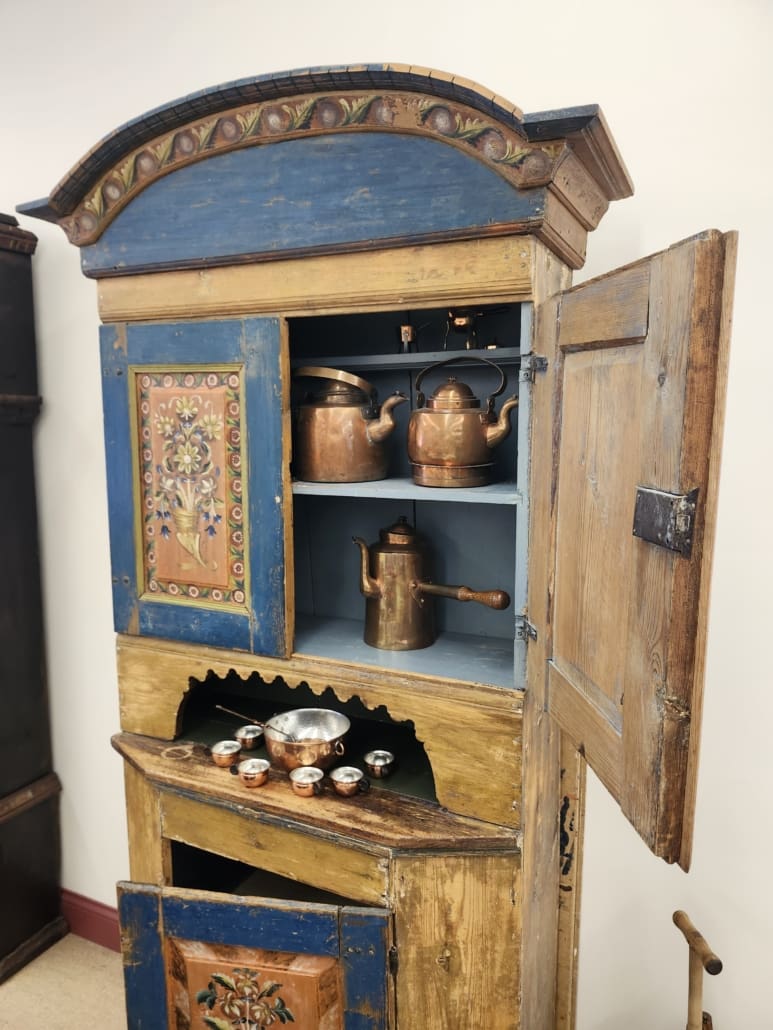
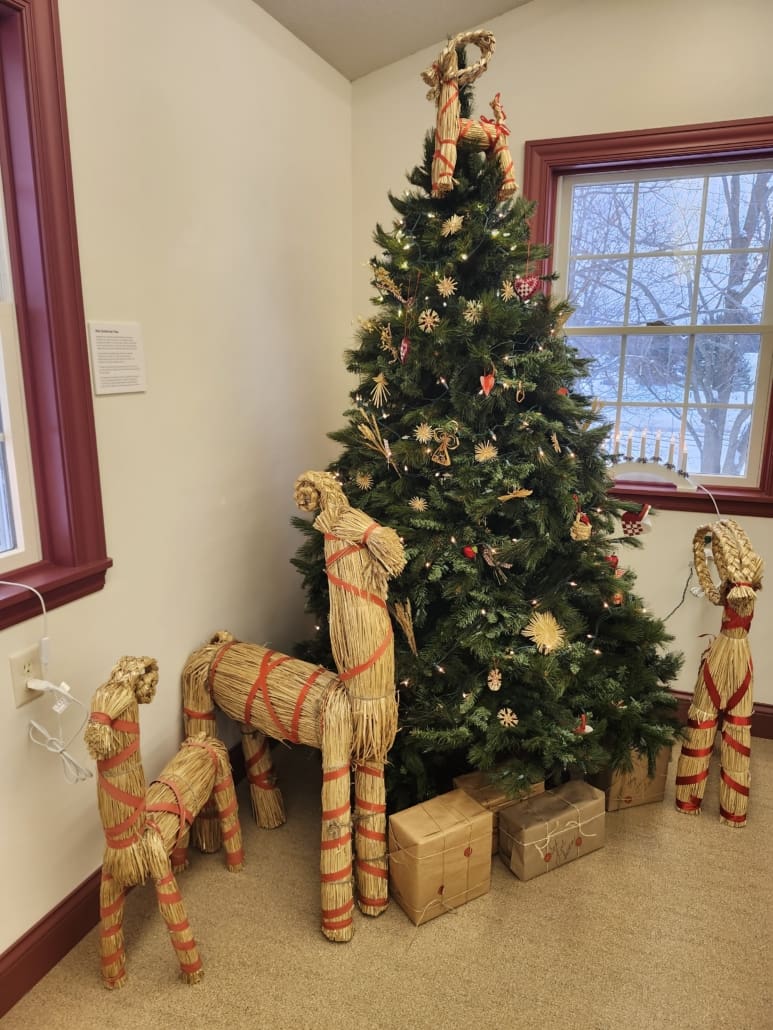
Festive Kitchen Tomte Display
This display features multiple artifacts arranged to loosely emulate a festive painting from our collection. Our artifacts are arranged to display a holiday-decorated living and dining room during the holiday season, while also evoking the classic mischievous nature of the tomtes that ransack the inspiration painting that is displayed beside the tableau.
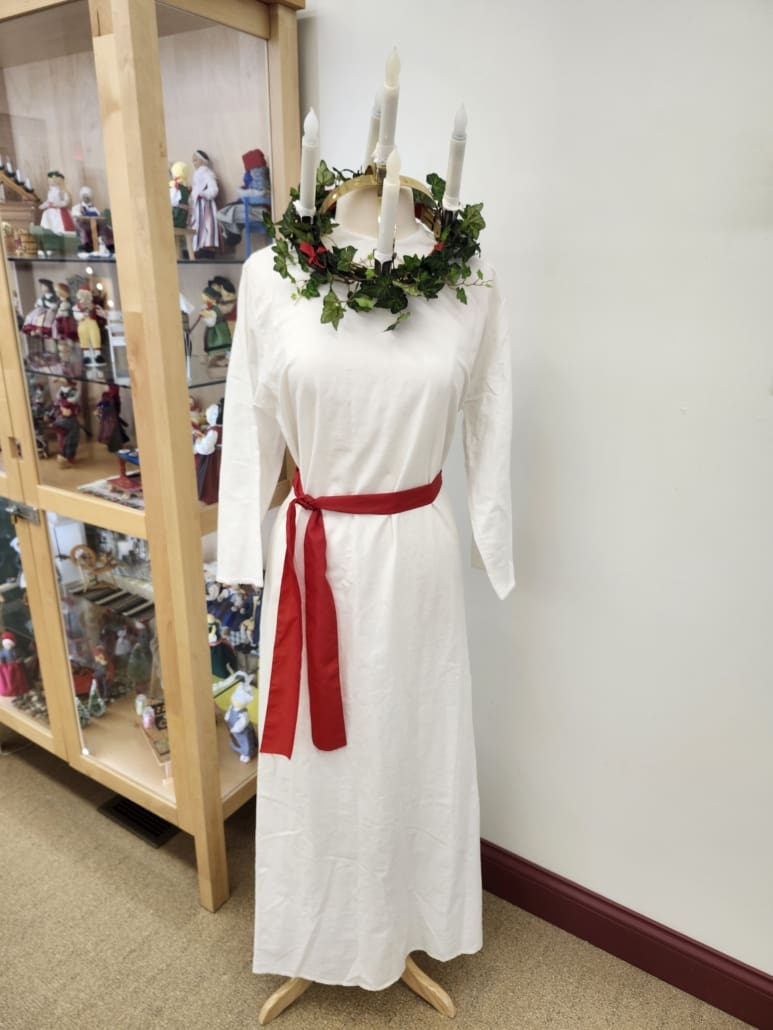
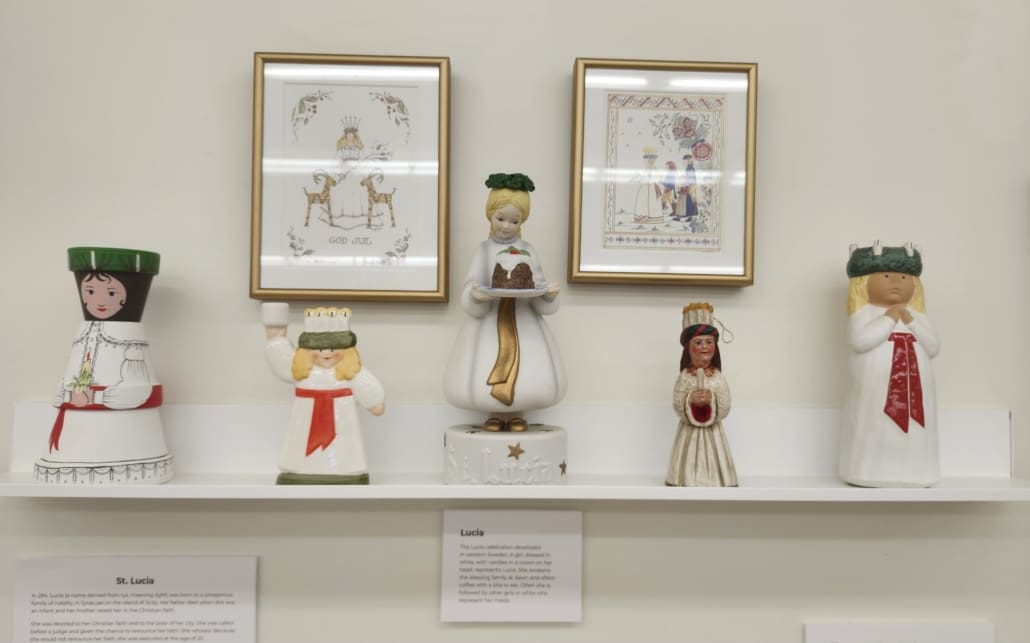
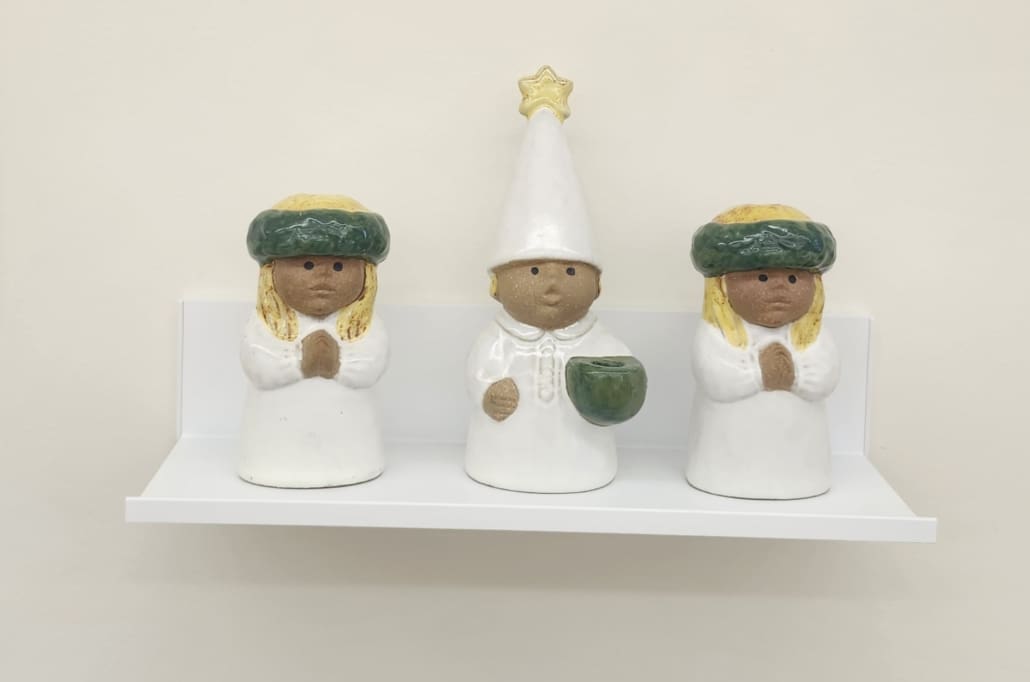
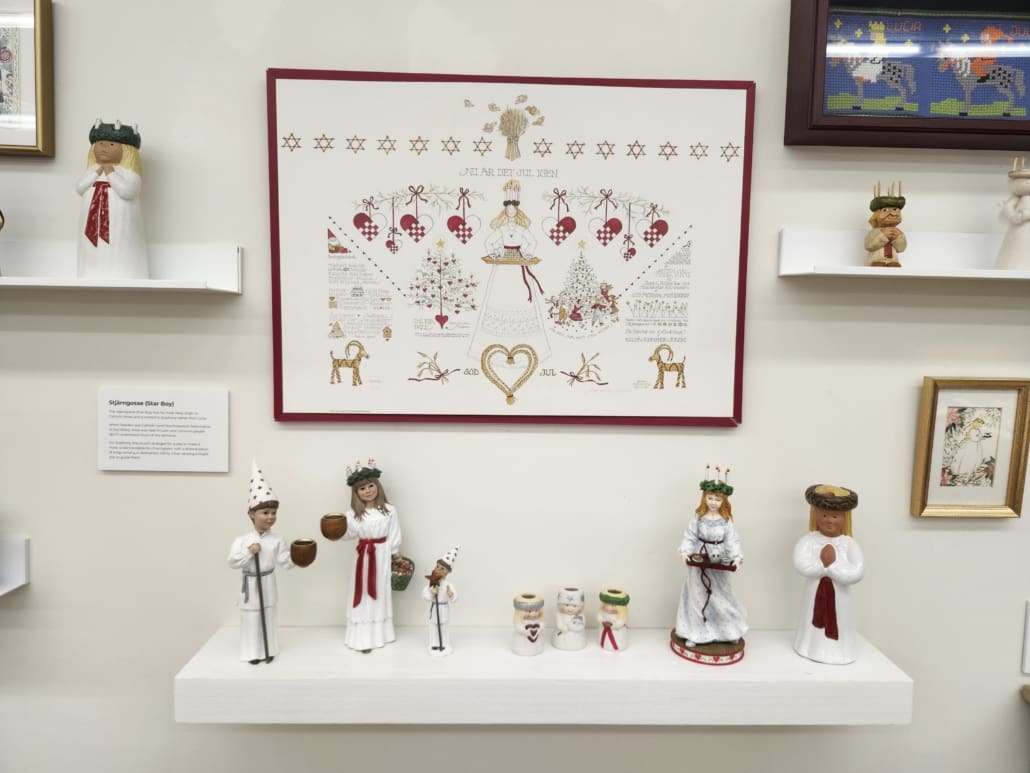
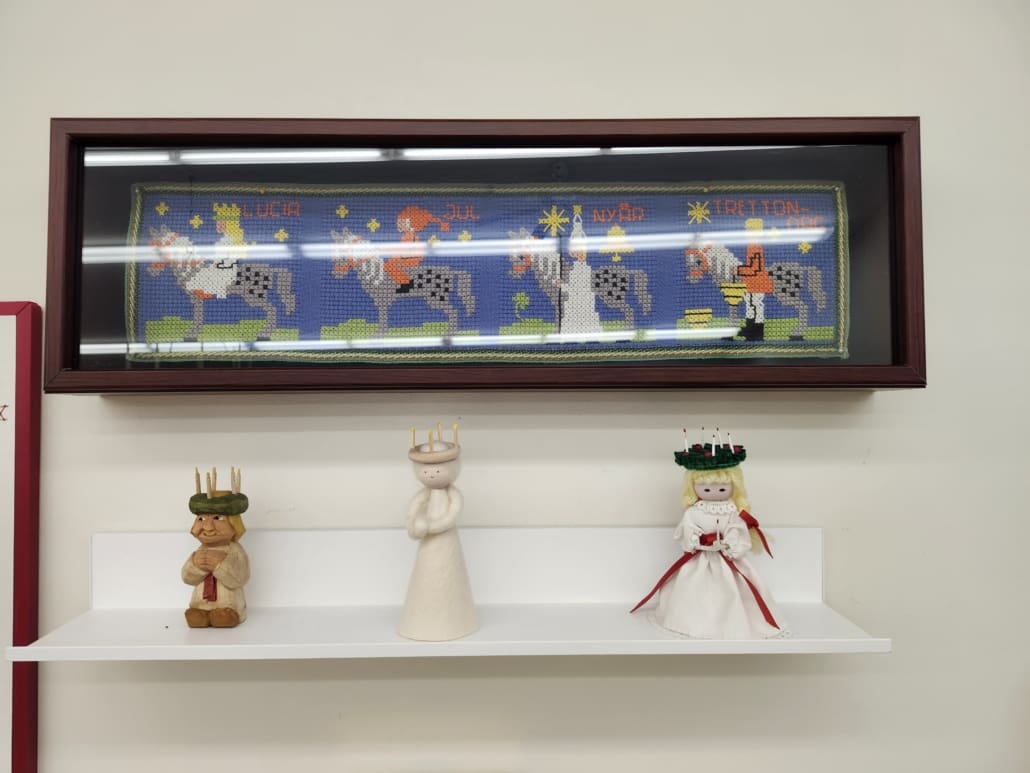
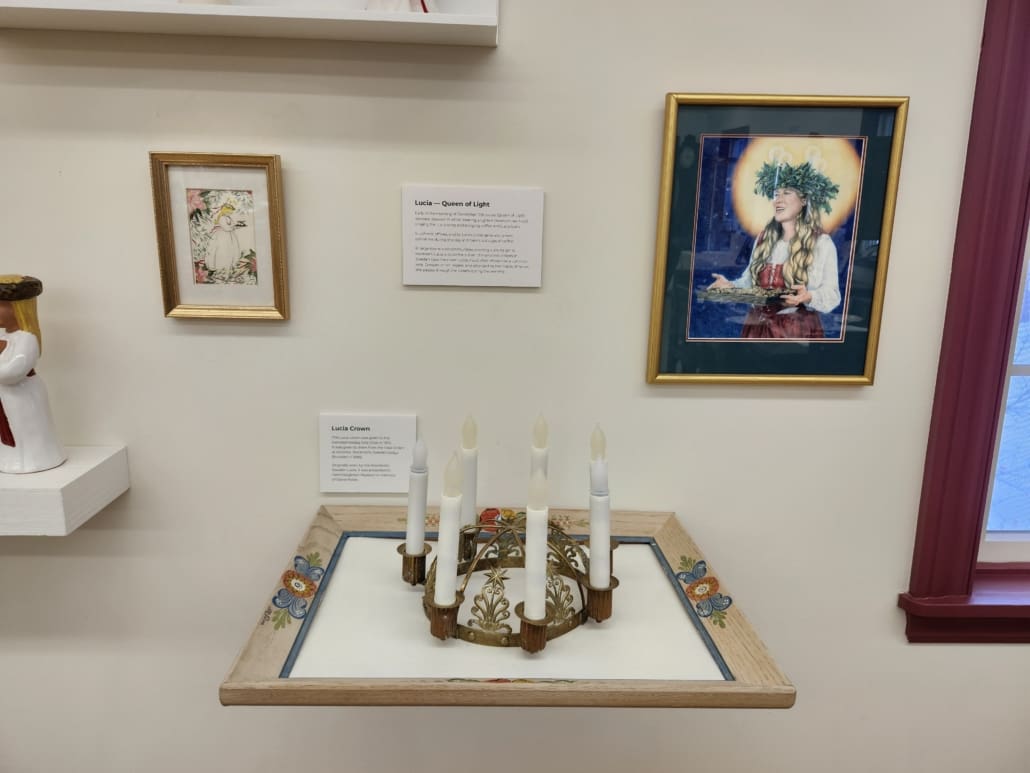
Saint Lucia and Star Boy Display
This wall display features art, postcards, garments, and figurines of the iconic Swedish Christmas holiday figures Saint Lucia and Star Boy.
Saint Lucia
Saint Lucia is a central figure in the Swedish holiday season, celebrated on December 13 during the Festival of Light. Representing hope and the return of light during the darkest time of the year, Lucia is traditionally portrayed wearing a white gown with a crown of candles and leads processions of song and ceremony.
Star Boy (Stjärngosse)
The Star Boy, or Stjärngosse, is a traditional figure associated with Swedish Lucia processions and Christmas festivities. Dressed in white robes and wearing tall cone-shaped hats decorated with stars, Star Boys often accompany Saint Lucia, symbolizing the guiding star of the Nativity and participation in communal holiday celebrations.
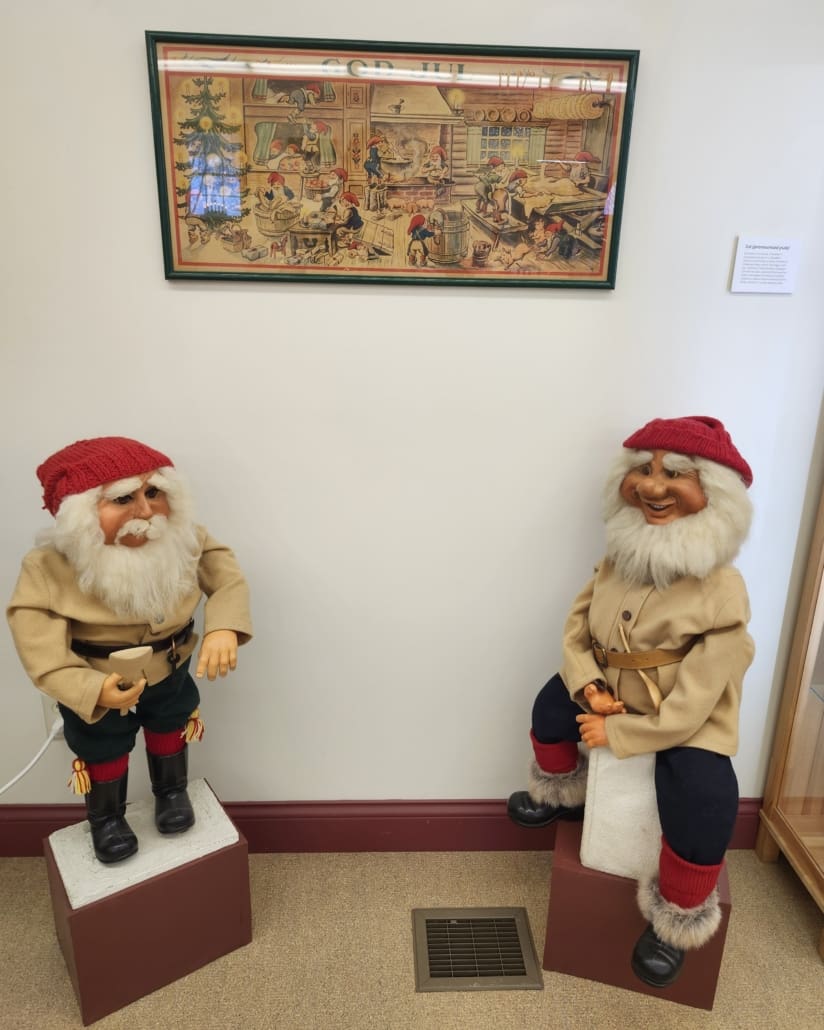
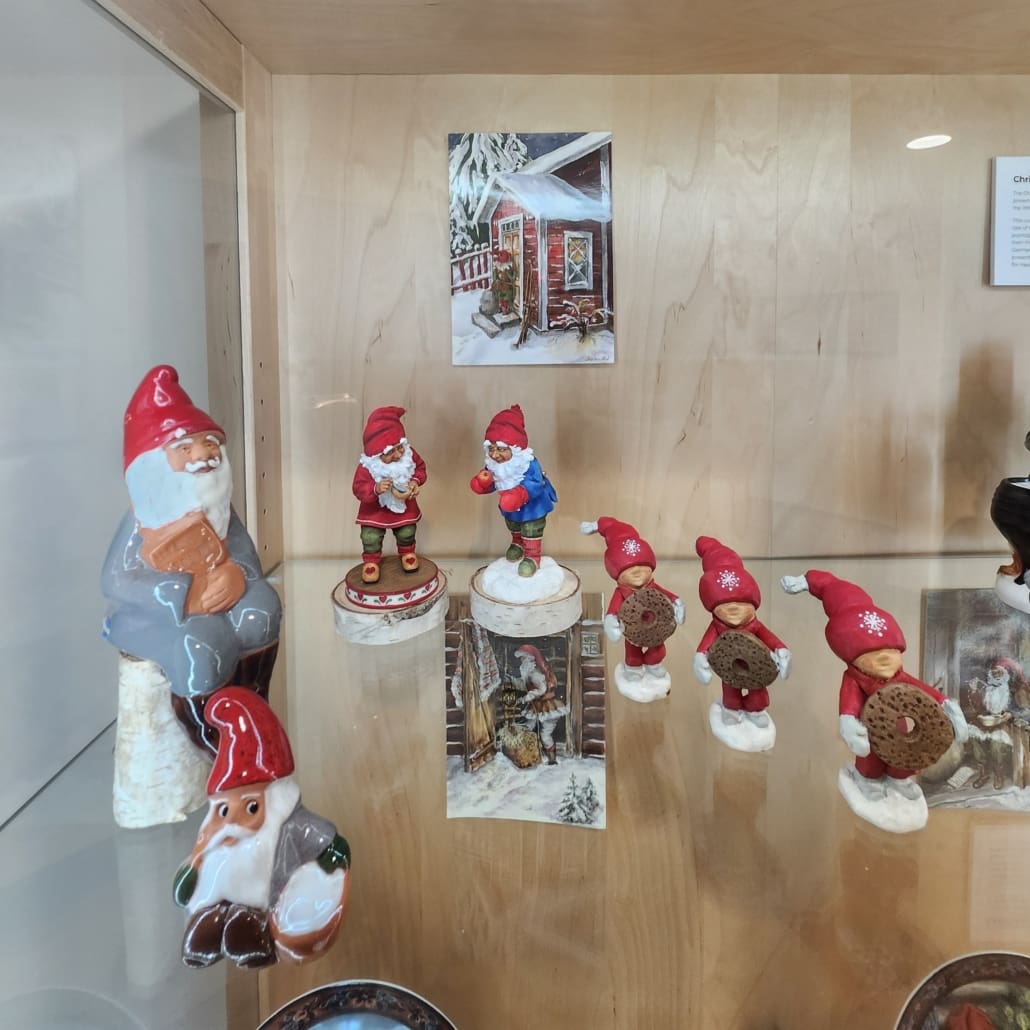
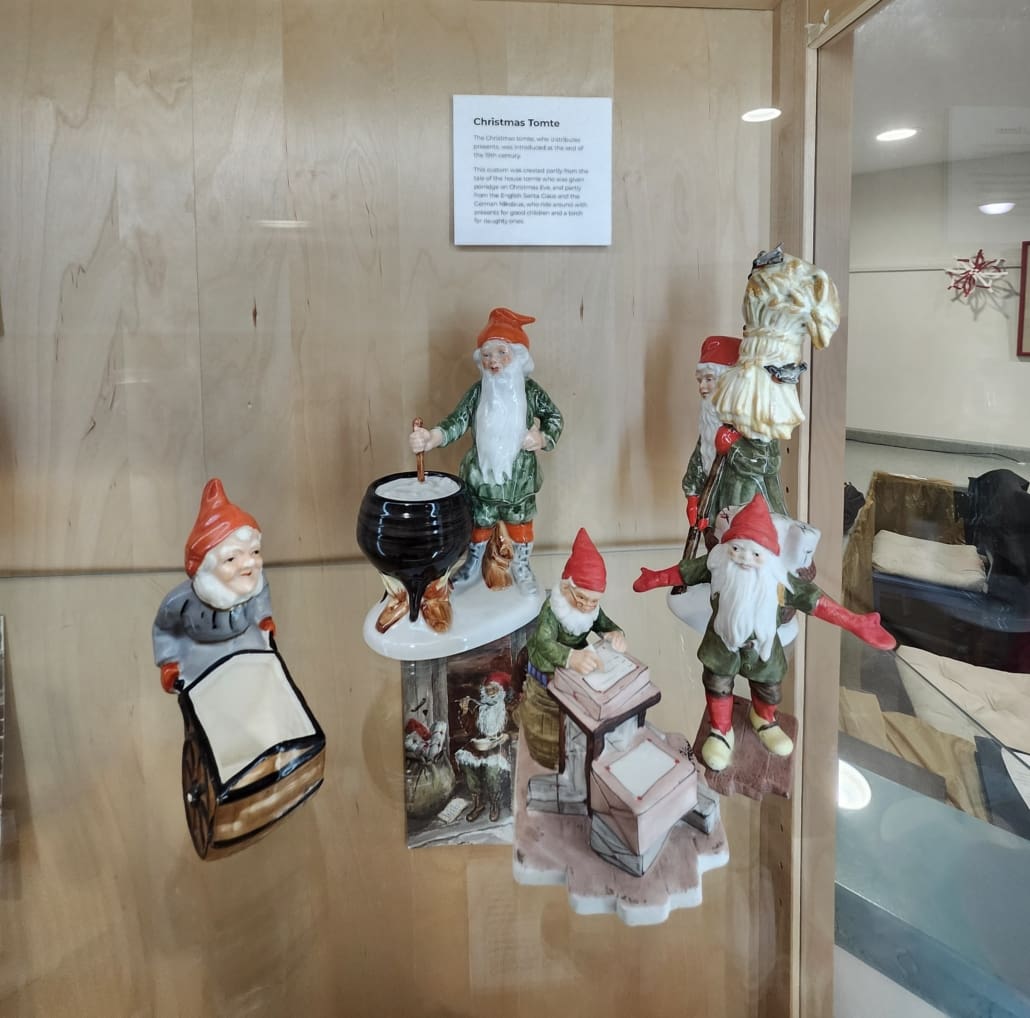
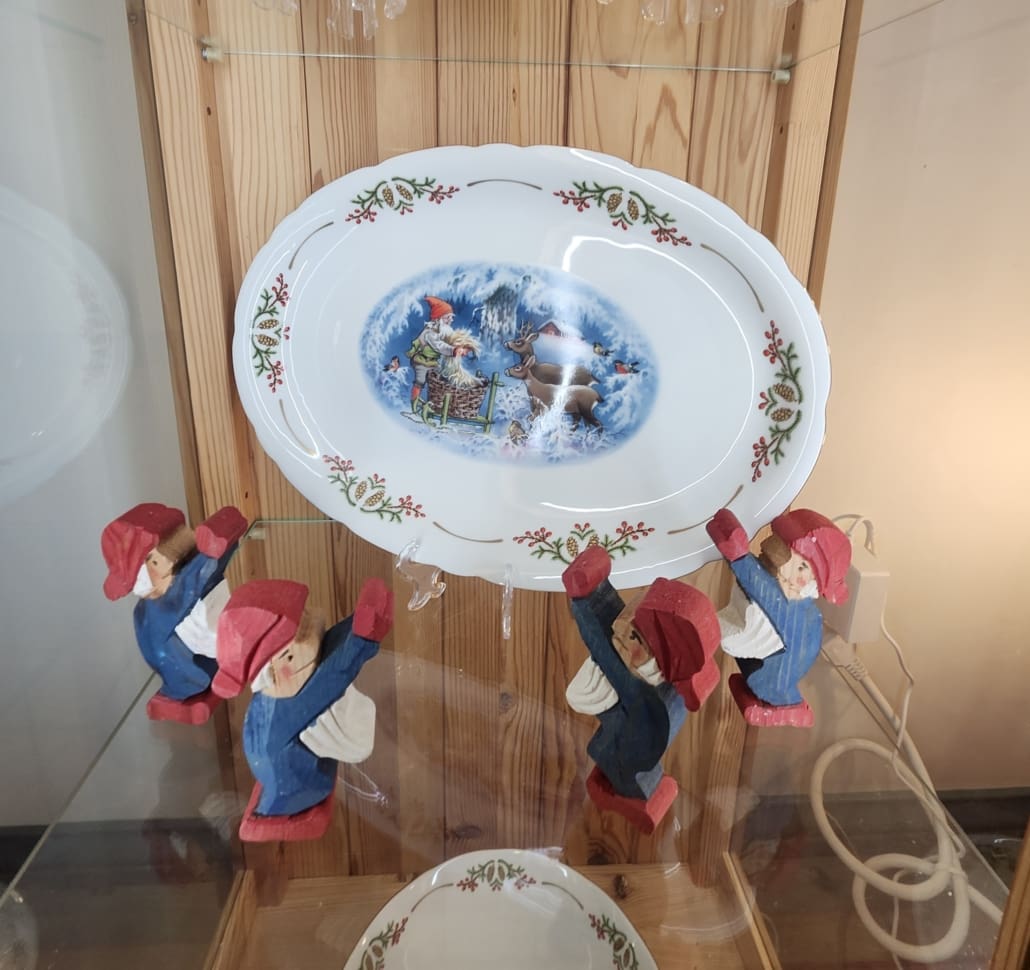
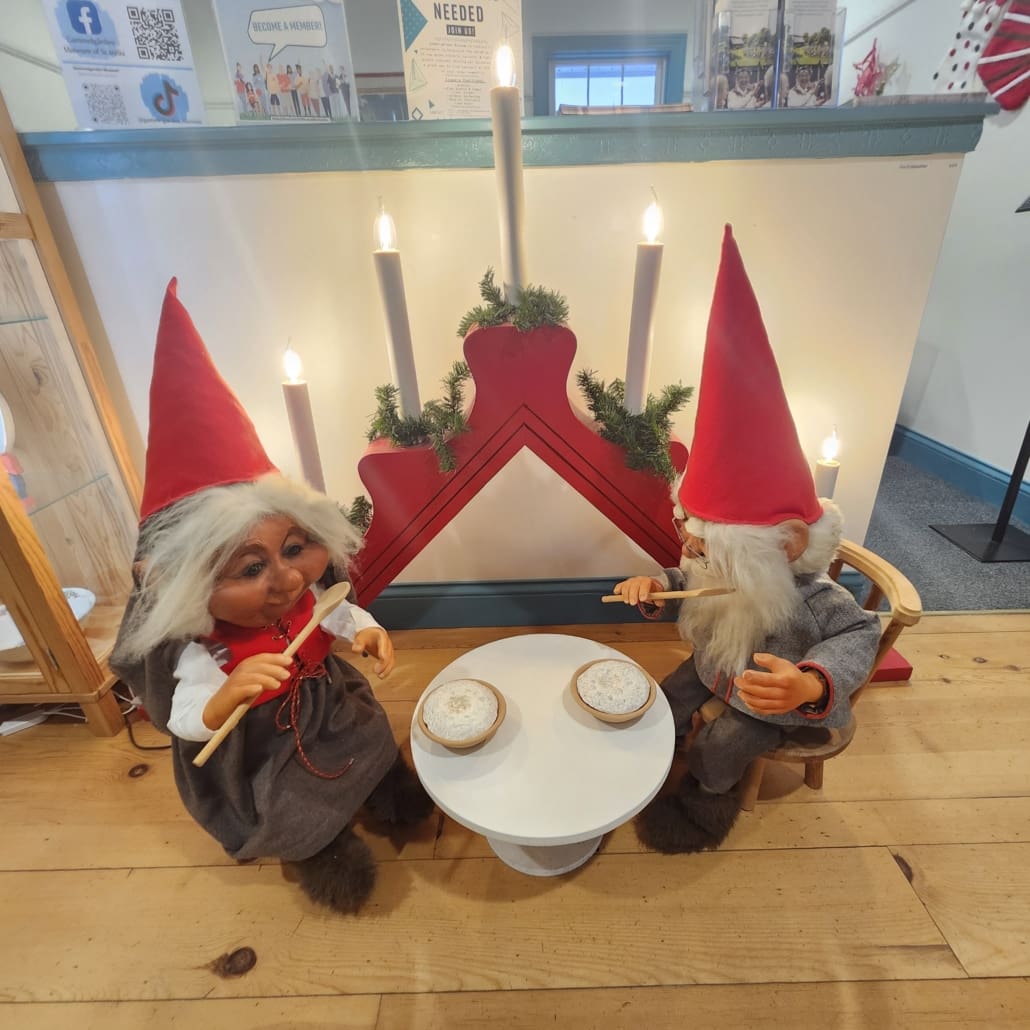
Various Tomte Displays