2026 Exhibits
Gammelgården Museum has several exhibits each year.
For artists and those who enjoy viewing art, Gammelgården has exhibits that showcase contemporary and historical artwork.
View these exhibits online or in person!
Gammelgården Museum has several exhibits each year.
For artists and those who enjoy viewing art, Gammelgården has exhibits that showcase contemporary and historical artwork.
View these exhibits online or in person!
Chip-Carved Woodwork (Skureut)
Chip carving, also known as kerbschnitt in German, is a decorative woodworking technique in which small chips are carefully removed from a flat surface using a knife or chisel, creating patterns through light, shadow, and texture. In Sweden during the 1700s and 1800s, chip carving was commonly used to embellish household objects such as chairs, tables, clocks, boxes, and utensils.
Intricate Swedish chip carving, known as Skureut, is characterized by precise, angled cuts that form geometric, flowing, or natural patterns and stylized motifs. This tradition appears frequently in Swedish folk art, including spoons, boxes, and furniture, and often reflects regional and cultural symbolism.
The practice of chip carving spread internationally through immigration and the establishment of woodworking schools. Today, chip carvers continue to benefit from centuries of accumulated knowledge passed down through apprenticeships and instruction, sustaining a living tradition of craftsmanship and shared cultural heritage.
Chip Carved Display Box
Square woen box with chip carving ornamentation on all four sides and the top. Three of the sides feature a carved diamond pattern. The fourth side features the carved diamond pattern with a curved tapered opening lined in red velvet. The top features an intricate dial surrounded by a leaf motif in each corner and a border of small lines. The opening of the box follows the circular pattern on one side, so that one side of the box slides open to reveal a false bottom. Below the sliding portion of the lid is a round compartment lined with red velvet, revealed when the box is turned upside down.
Chip Carved Cylindrical Wooded Box
A turned wooden box with a horizontal carved wood band around the center. There are engraved horizontal lines near the top and bottom. On the inside of the box, there is a visible wood eye that remains from the original wood piece.
Primstaff (Primstav)
A primstav is a wooden calendar stick used in the Norse Region, primarily Norway, Sweden, and Denmark to track the passage of days and mark important dates throughout the year. The traceable origins of the primstav date back to the mid-15th century, but historians believe its use could go back as far as the 11th century. Carved with notches and symbolic imagery along its length, the primstav functioned as a practical and mnemonic tool for timekeeping.
The carved symbols represent the saints’ days, seasonal markers, agricultural tasks, and folkloric observances, allowing users to remember significant moments in the year without written calendars.
Each side of the primstav corresponds to half of the year:
The calendar was traditionally turned over on October 14 and April 14, dates associated with the Old Style (Julian) calendar and the agricultural division of the year rather than astronomical solstices or equinoxes. They remained a useful tool in Nordic society up until the mid-18th century, and faded out of fashion with the introduction and widespread use of the modern Georgian calendar cycle. A small hole at the rounded end allowed the primstav to be hung for easy reference.
The Primstav reflects a blend of Christian liturgical timekeeping, seasonal labor cycles, and folk tradition, offering insight into how time was understood and remembered in pre-industrial Scandinavian society.
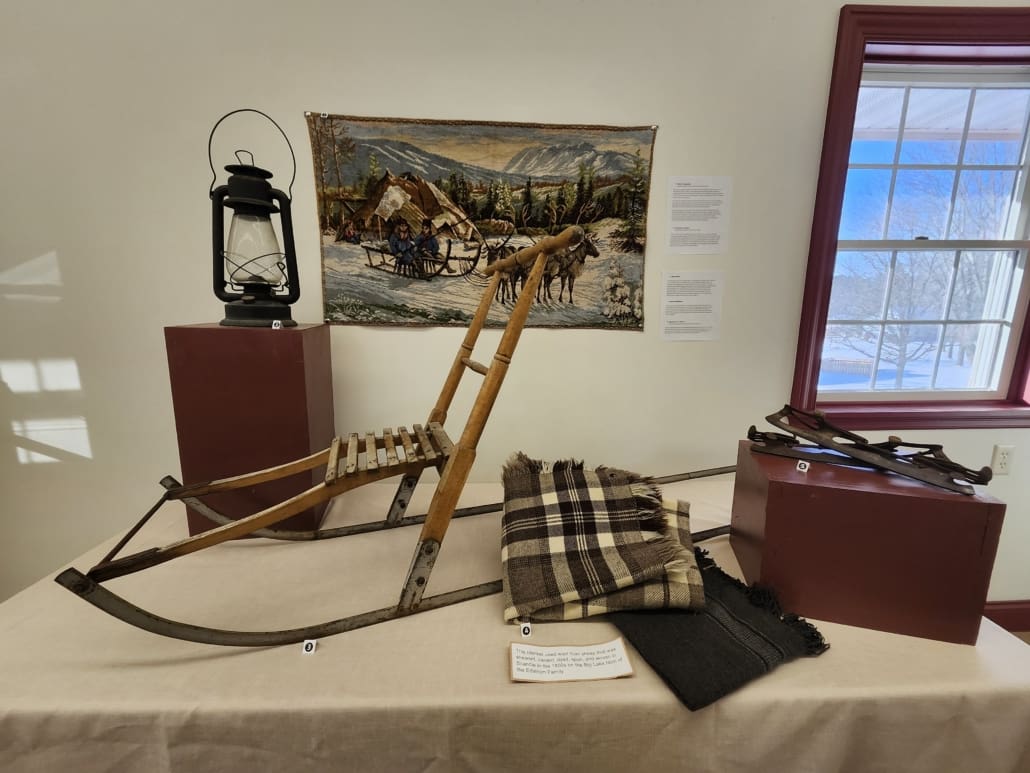
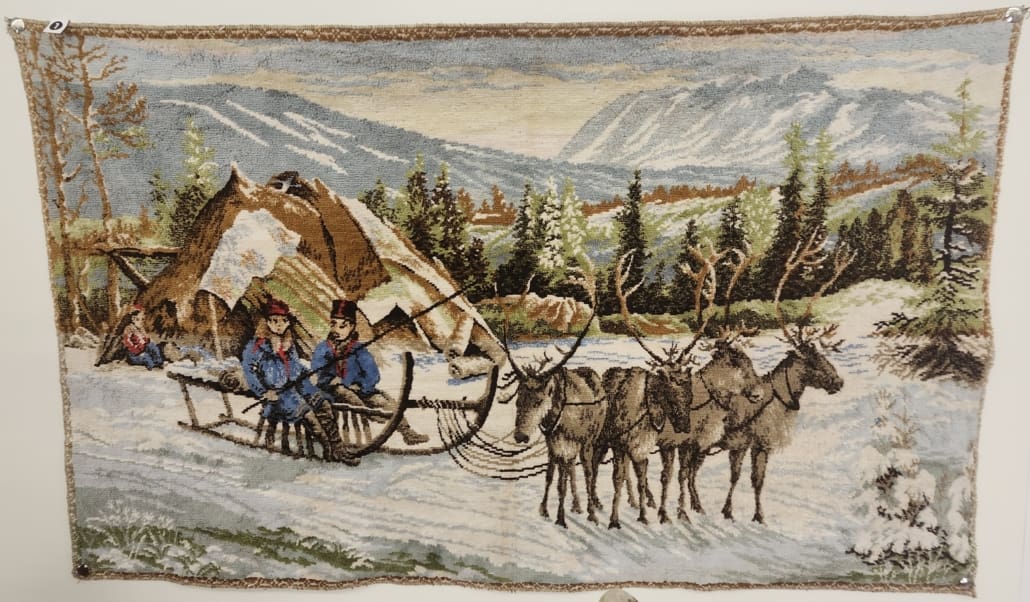
Winter Artwork
Swedish Winter Knitwear
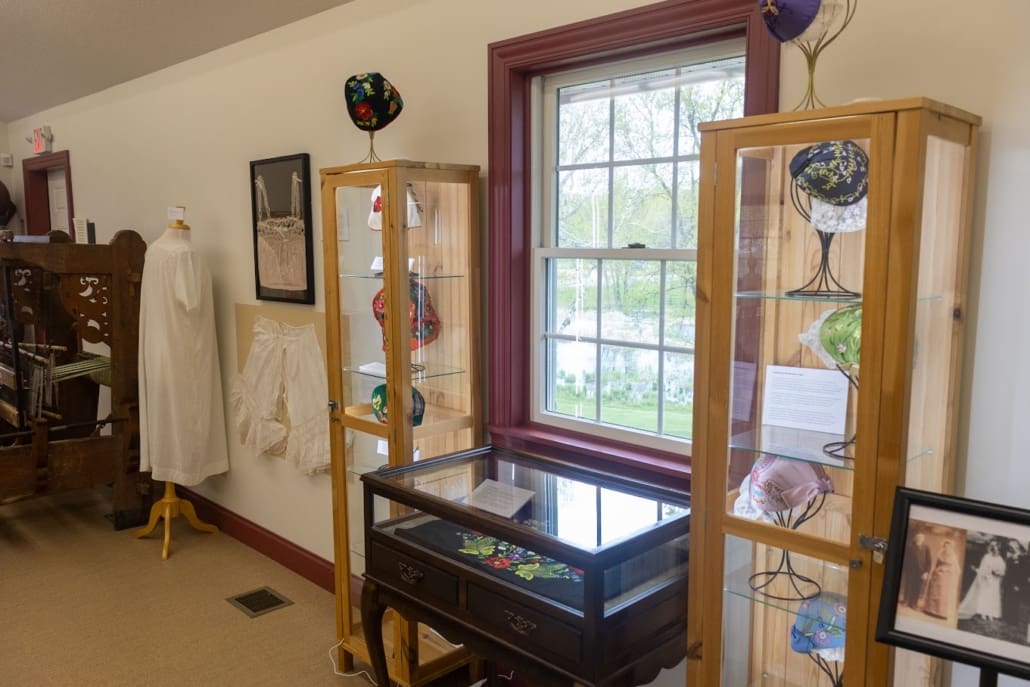
This cabinet features traditional Swedish knitwear created for warmth and everyday use during long winter months, including gloves, hats, and a decorative pouch. These textiles are adorned with intricate floral motifs and geometric patterns commonly found in regional Swedish design traditions. Beyond their practical purpose, such items reflect skilled handwork, local materials, and the cultural importance of textile production in Swedish domestic and folk life.
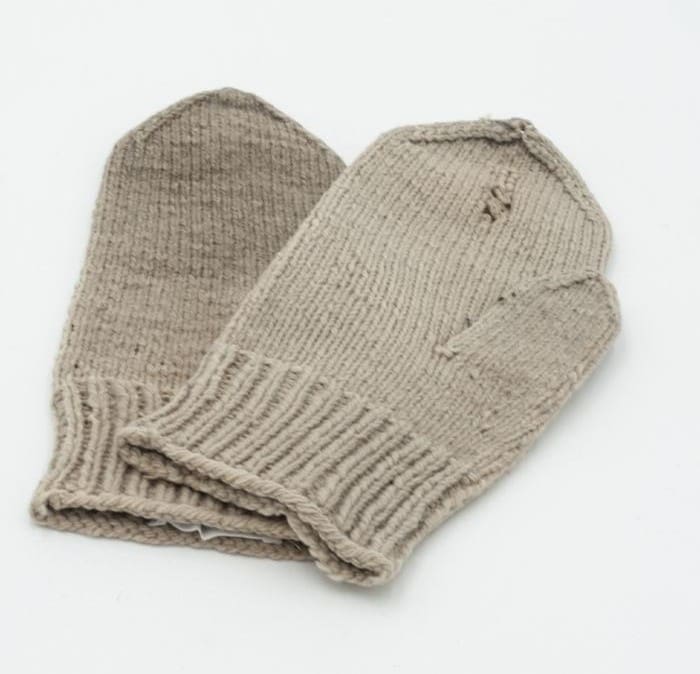
Påsöm Styled Mittens
This pair of mittens is embroidered on both the top and thumbs. It is a lovely example of the embroidery known as Påsöm, the traditional embroidery of Dala-Floda from the region of Dalarna, Sweden, that began in the mid-1800s.
Using brightly colored wool yarn, these intricate flowers embellish garments worn by men and women and showcase the skill of the embroiderer.
During the mid-1800s, a boom occurred in the parish, as large amounts of forest were felled. As a result of the increased income, the use of folk dress/costumes took off again, unlike in many other Dala parishes. Påsöm-embroidered mittens, brim rings, and braces often were a gift from the bride to her future husband.
During the 1930s, Påsöm was a significant source of income for the district. The majority of women embroidered on merit. It was fashionable to have wool yarn embroidered textiles in homes, such as draperies, rocking chair rugs, shelf strips, and desktop wallpapers.
Sámi Nutukas
Nutukas are traditional Sámi footwear made from reindeer skin and fur, reflecting generations of adaptation to Arctic and sub-Arctic landscapes. The soft, flexible leather supports natural movement, while the fur provides essential insulation in harsh winter conditions.
A distinctive feature of nutukas is the upturned toe; the unique beaked toe of Sámi boots differentiates nutukas from mukluks and other styles of Arctic footwear. Although the shape of the curved-up beak can vary slightly by region, they all served the same purpose of helping to hold a traditional binding strap onto a pair of skis. The upturned toe helps to keep the boot from sliding back and out of the binding as the ski kicks back to propel itself. The design also helps prevent the wearer from catching the front of the shoe on snow, ice, or uneven terrain.
Historically, nutukas were worn with woven grass or wool insoles to improve warmth and absorb moisture. Their lightweight and flexible design reflects the Sámi people’s deep understanding of their environment and their close relationship with the reindeer, an animal central to Sámi culture, economy, and daily life.
Top Hat
Carnahan and Brown, Jamestown, New York
This top hat was made by Carnahan and Brown, a hat, fur, and cloak making company based in Jamestown, New York, believed to have open during the Victorian period. The hat appears to be constructed from a fine fur felt, thought to be beaver, a material commonly used in top hats during the 19th century.
Beaver felt was prized for its durability and smooth finish, making it a popular choice for formal headwear of the period. This hat reflects both Victorian fashion and the role of regional manufacturers in producing high-quality goods
Sámi Four Winds Hat
This traditional four winds hat was worn by Sámi men, often for ceremonial or formal occasions. Its four-cornered shape represents the four corners of the earth, reflecting early Sámi beliefs. Traditionally, a blue color, to symbolizes the sky. Red, yellow, and white decorative elements are common in Sámi dress, where colors and patterns often indicate a person’s place of origin, clan, or marital status.
Traditionally, the hat’s corners were stuffed with down to hold their shape and could also be used to store small items. This example, made in the early 2000s, uses modern materials, including manufactured wool cloth, cotton braids, cotton lining, and synthetic fur, reflecting an adaptation of traditional forms to contemporary materials.
From the Eleanor Edman Sámi Collection, 2013