
From a One-Room Schoolhouse to an Elementary School
In 1857, Washington County District No. 2 was organized to offer classes for the growing number of settler children. Until then, people held informal classes in various local homes.
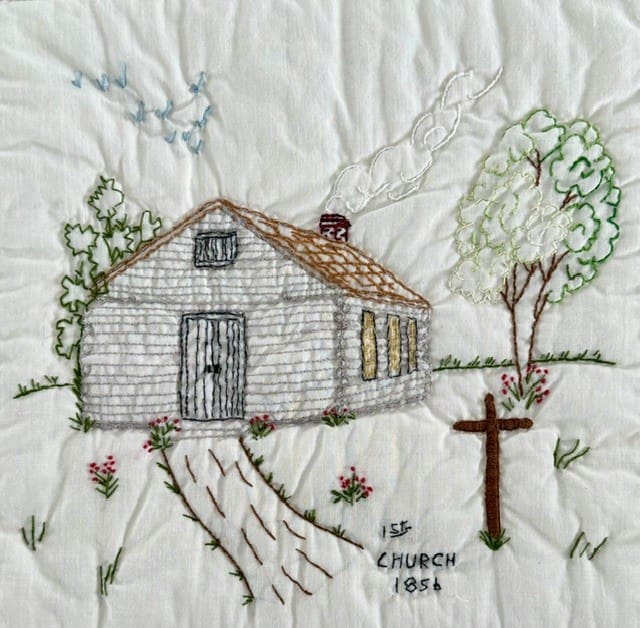
A major milestone came in 1860, when the school district acquired the former Elim Lutheran Church building, a traditional Swedish log structure built in 1856 from more than 200 mixed-hardwood logs, with pegged walls and notched-and-pegged corners. The building served as a schoolhouse for 39 years until 1899, when Frank Forsell bought it, dismantled it, and moved it to his Scandia farm. (The building stored hay until 1981, then moved to Gammelgården and was restored in 1982 as the Gammelkyrkan, or Old Church.)
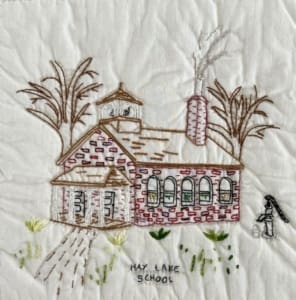
Before the building moved to the Forsell farm, local residents began constructing what would become the area’s first brick one-room schoolhouse in 1895. Sadly, one of the lead contributors, Peter Rosell, was carrying a load of bricks intended for the school when he broke through ice on the St. Croix River and drowned.In 1896, the Hay Lake School was completed, which included a classroom and stage. For decades, 36-48 children attended classes there. A single teacher taught students through eighth grade.
The Hay Lake School operated until the end of the 1963 school year, when it closed after Scandia Elementary School opened.
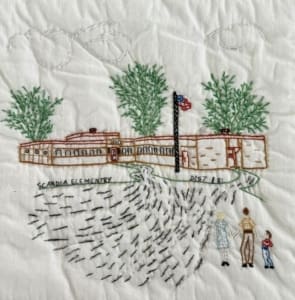
After sitting vacant for years, the brick schoolhouse was restored in 1970 and is now listed on the National Register of Historic Places.Today, this educational journey is captured in textile art at Gammelgården, with all of these historic schools — from the original log cabin church building to the brick schoolhouse to the modern elementary school — depicted on an 80″x90″ hand-embroidered and hand-quilted quilt currently on display at the Museum as part of the “Common Threads – Celebrated Stitches” exhibit running through October 24th.

